Haplogroup R1b1a1b1a1a1a2b2a

– 4 min read


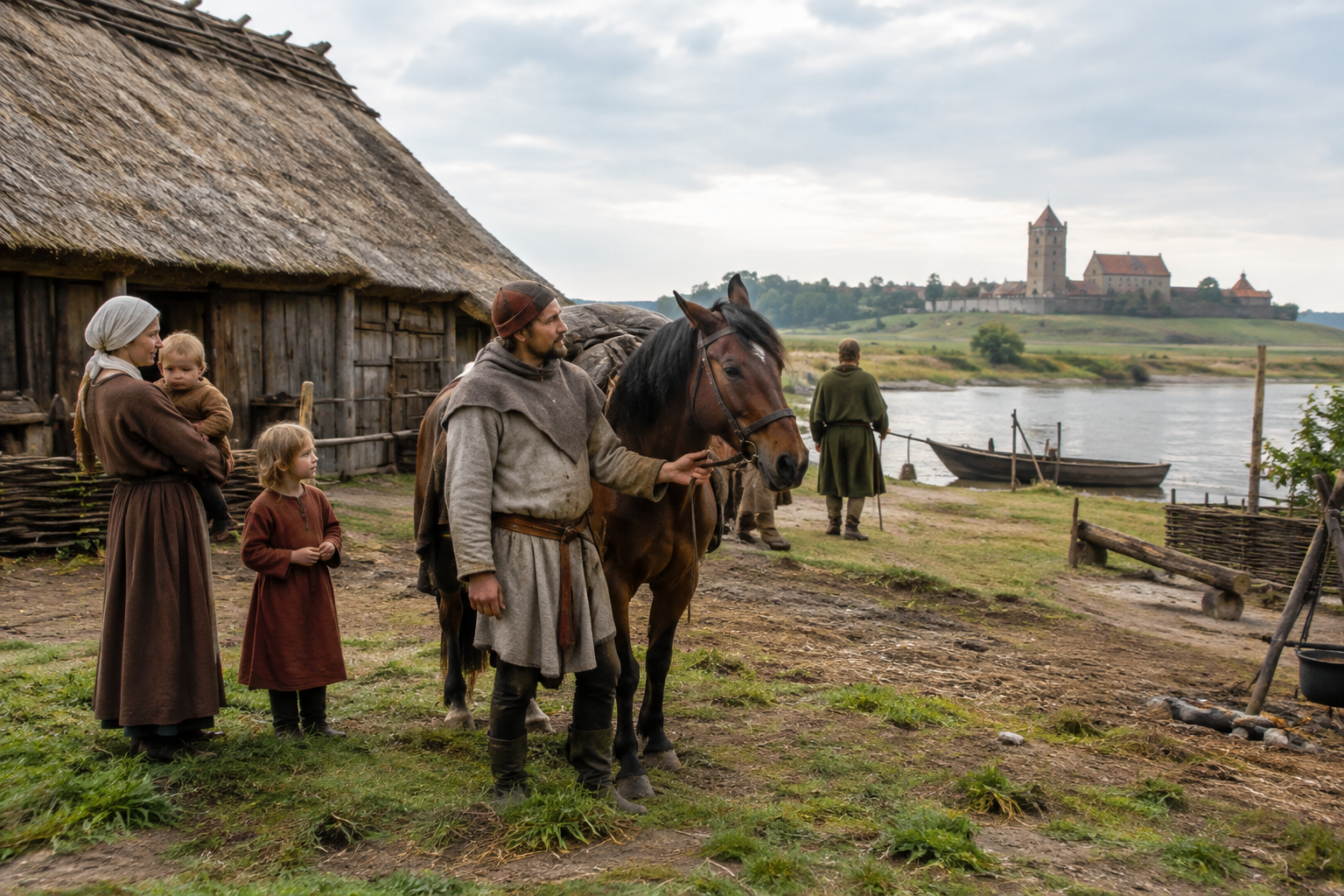
One of the clearest ancient signposts for the Y-DNA haplogroup R1b1a1b1a1a1a2b2a in this evidence set comes from medieval Denmark: individual CGG100751, dated to around AD 1325 and associated with Tjærby in Randers Municipality. That is already enough to make the case interesting. We are not dealing here with a misty prehistory reconstructed from guesswork, but with a man from a documented medieval landscape of parishes, fields, lordship, and churchyards in eastern Jutland.
That matters because this haplogroup sits within the immense wider R1b family, one of the major paternal lineages in western Eurasia, yet the branch named here is much narrower. A Y-DNA haplogroup traces one direct paternal line only, not a person's whole ancestry, language, or identity. Even so, when a specific sub-branch turns up in a real excavated individual like CGG100751, it gives us a firmer historical footing than broad modern frequency maps ever can.
Randers Municipality lies in a part of Denmark shaped by long continuity from the Viking Age into the high and late Middle Ages. By the early 14th century, eastern Jutland was neither isolated nor static. It was threaded into regional trade, royal administration, parish organization, and the agricultural routines that sustained medieval Danish society.
So when CGG100751 appears in this setting, the significance is not that he was a king, raider, or founder figure; there is no basis for saying any such thing. The significance is almost the opposite. He looks like evidence for the everyday historical depth of this paternal line in Denmark: a lineage present not only in grand migration narratives, but in the lives of people buried within settled medieval communities.
A recent ancient-DNA study of Danish material, available as research on ancient individuals from Denmark, is relevant here because it places such burials into a broader archaeological and genomic frame. Without overclaiming for one man, the value of CGG100751 is that he anchors this branch in an actual medieval population rather than in retrospective family legend.
The long label R1b1a1b1a1a1a2b2a reflects a very specific position on the Y-chromosome tree. Readers are often tempted to collapse such a branch back into the whole story of R1b in Europe, but that is precisely where caution is needed. The broader R1b family has a deep and complicated history across western Eurasia, with many branches spreading at different times and in different directions. A medieval Danish occurrence does not mean this exact subclade can simply be projected unchanged back into every earlier phase of Scandinavian prehistory.
In other words, the parent lineage is old and widespread; the exact branch in this article is narrower and historically more specific. The evidence here supports an association with medieval Denmark through CGG100751. It does not by itself prove when this subclade first arrived in Jutland, how common it was, or whether it spread through one family, several unrelated local male lines, or much older population processes.
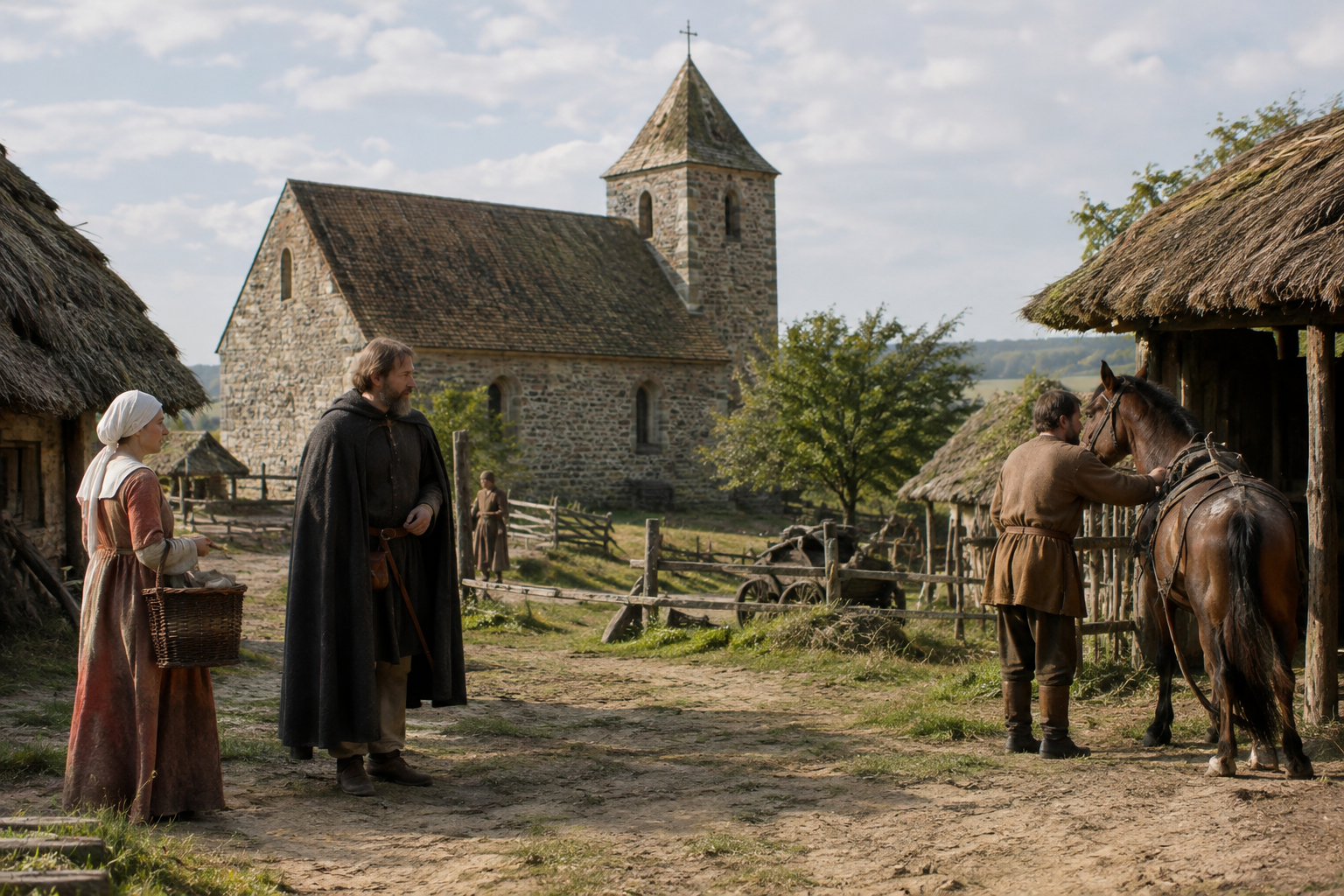
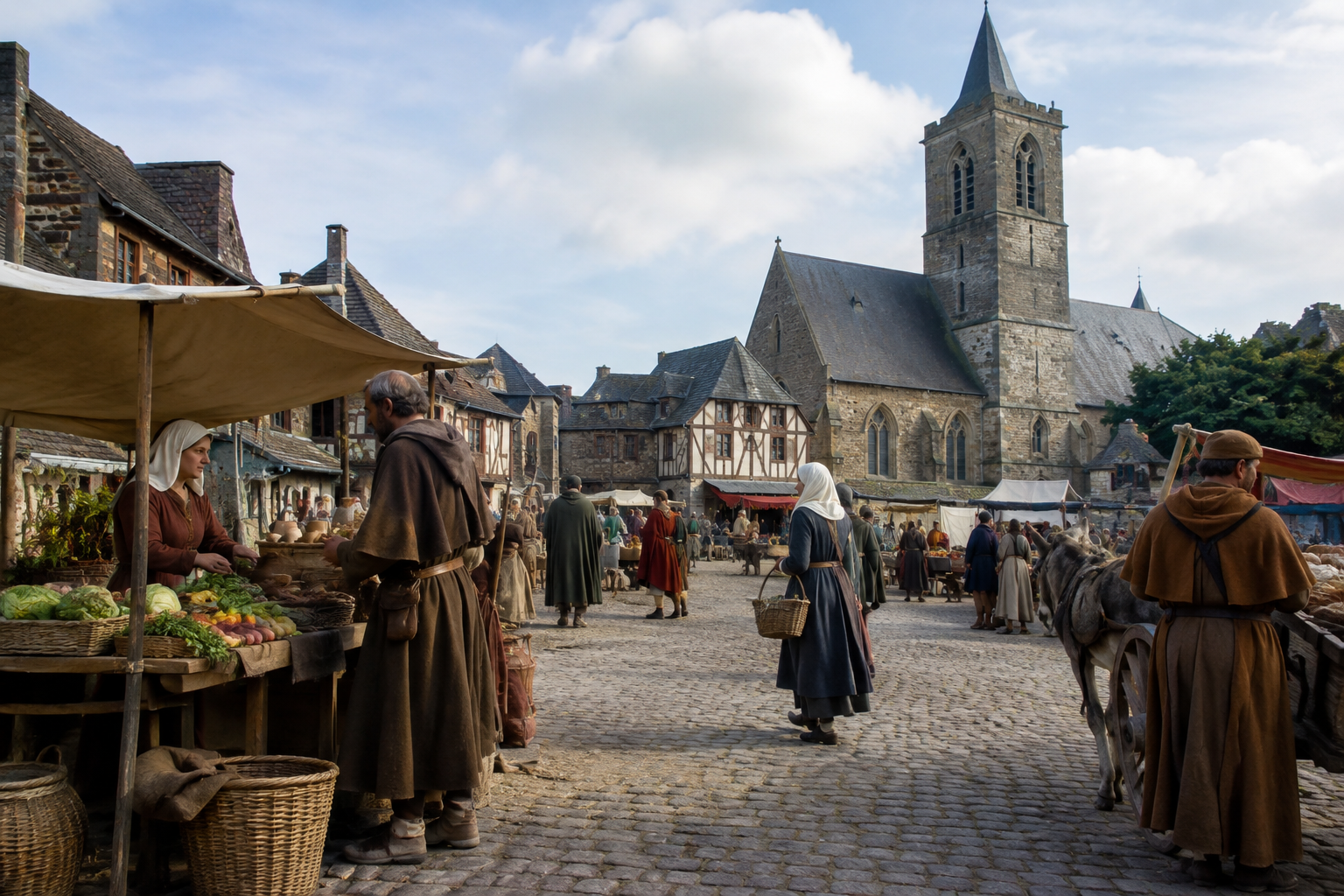
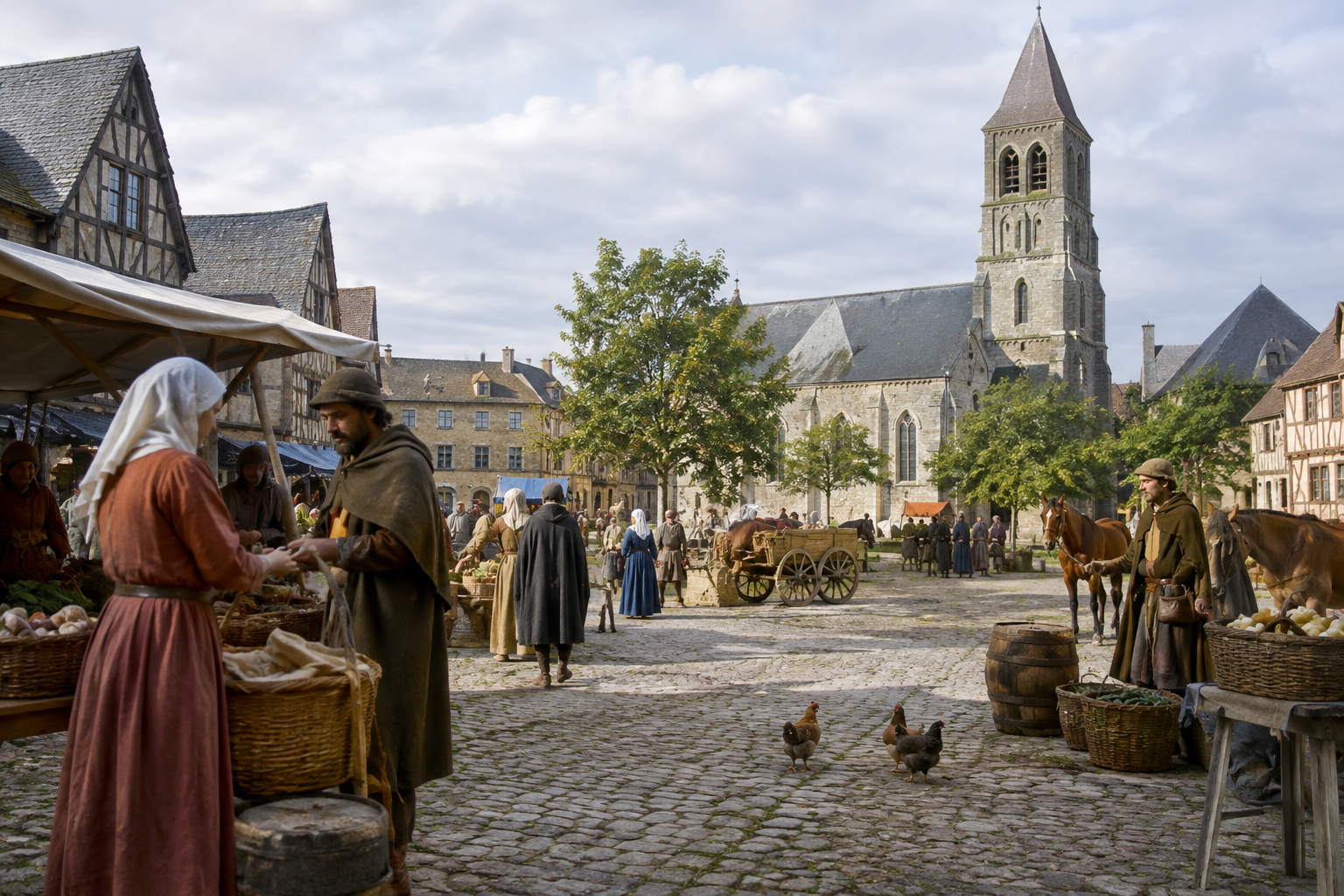
There is a habit, especially in popular writing, of treating Scandinavian DNA as if it all belongs to the Viking Age. But a burial dated around AD 1325 belongs to a rather different world. Denmark by then was a Christian kingdom with established dioceses, landed elites, and a countryside organized through villages and parishes. The old heroic age of ship burials and runestones had long since given way to a society whose records were more likely to be charters and church connections than sagas of overseas adventure.
That makes CGG100751 useful in another way. He reminds us that paternal lineages survive through ordinary continuity as much as through famous episodes of migration. A haplogroup found in medieval Denmark may reflect descendants of earlier Scandinavian populations, but it also belongs to the later reshaping of society through marriage networks, inheritance, disease, local mobility, and demographic recovery after crisis.
Denmark Before the Middle Ages
At first glance, a single ancient male line may seem slight evidence. In archaeology, though, even one securely placed individual can be valuable if the context is clear. CGG100751 gives this haplogroup a concrete date, a real municipality, and a historical horizon in which to think about it. That is far better than treating modern surname clusters or national averages as if they were ancient facts.
It also helps correct a common misunderstanding about ancient DNA. The point is not to turn one skeleton into an entire people. The point is to establish that a particular paternal branch was present in a particular place at a particular time. Once that is done, the historical questions become sharper: was this lineage locally persistent, part of broader North Sea exchange, or one thread among several male lines in medieval eastern Jutland?
Those larger answers require more samples than we have here. But the discipline advances precisely by building from such anchored cases.
Although this sample comes from Denmark, medieval Jutland was part of a much wider North Sea zone. People, goods, and ideas moved between Denmark, northern Germany, the Low Countries, Norway, England, and beyond. That does not let us assign CGG100751 to a specific migration route, but it does place his paternal line in a region where continuity and movement were both normal features of life.
For many R1b-derived lineages in northern Europe, this is the real historical backdrop: not one dramatic founding event, but centuries of overlapping contacts. Ports, market towns, ecclesiastical ties, military service, and marriage across coastal regions all helped shape the male-line landscape of the later Middle Ages. In that sense, a medieval Danish carrier of R1b1a1b1a1a1a2b2a belongs to a recognizably Scandinavian world, but also to a connected northern European one.
If you belong to R1b1a1b1a1a1a2b2a, this medieval Danish individual does not tell you that your direct paternal ancestor was specifically from Tjærby, nor that your family must be Danish. What it does offer is something more disciplined and, in its way, more satisfying: firm evidence that this paternal branch was present in medieval Denmark by around AD 1325.
That is a small but real historical foothold. It places the lineage inside the lived world of medieval Scandinavia, among communities that were local, Christian, agricultural, and connected to the wider North Sea. For anyone tracing this branch today, CGG100751 is not the whole story - but he is a genuine historical witness to one chapter of it.

Comments