Haplogroup R1b1

– 6 min read


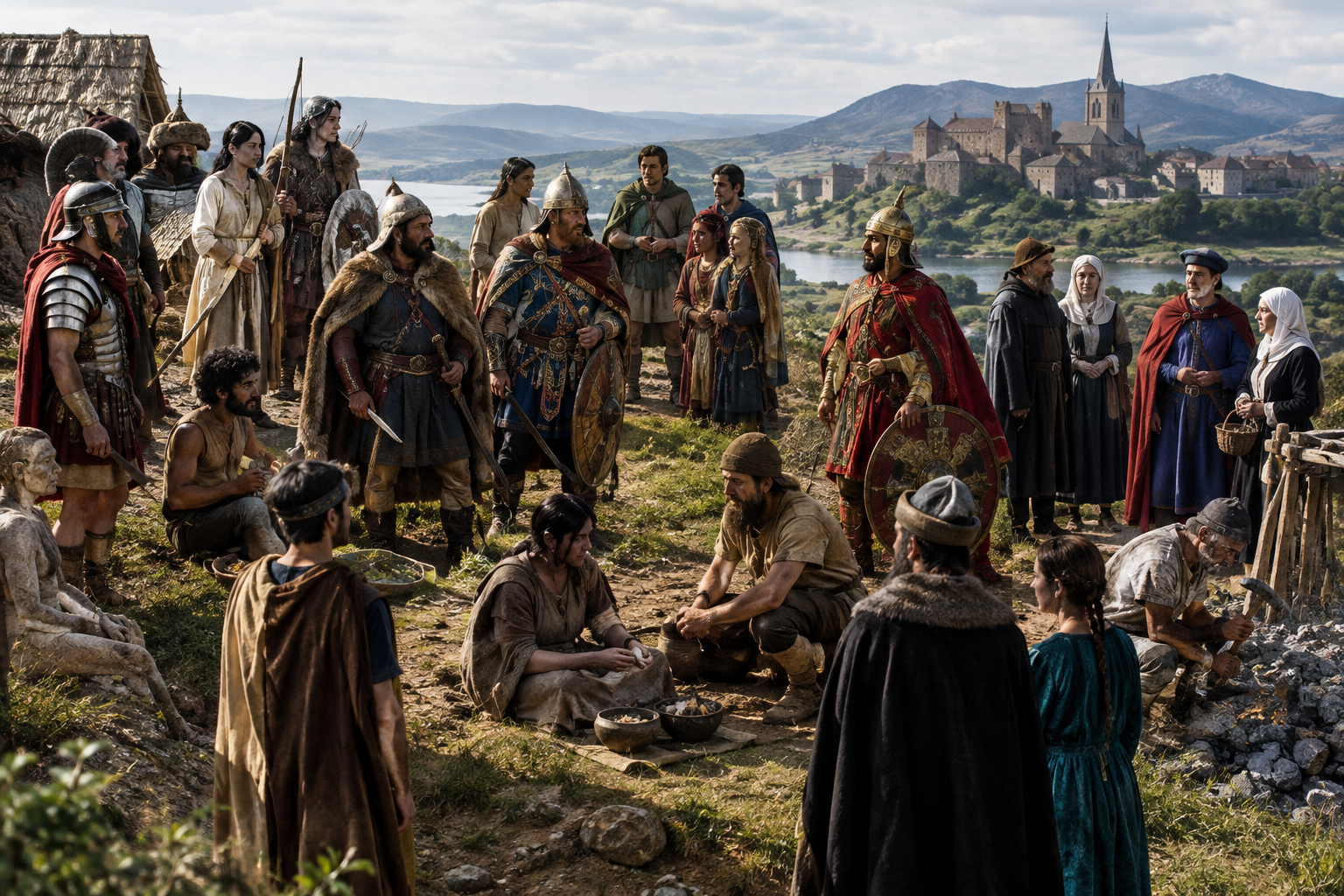
There is something wonderfully humbling about a broad Y-DNA lineage like R1b1. It does not belong to one kingdom, one people, or one age. Instead, it turns up in graves and settlements scattered across very different worlds: early farmers in Iberia, Bronze Age burials on the steppe, Roman-era Britain, Lombard-period Italy, medieval Belgium, and even early modern Sweden. If you want a reminder that paternal lineages can travel a very long way while history keeps changing its costumes, R1b1 is a fine place to start.
Y-DNA haplogroups trace a direct paternal line: father to son to son across generations. They are powerful historical tools, but they are only one thin line in a person's ancestry, not the whole picture. In the case of R1b1, we are dealing with a major branch within the wider haplogroup R1b family, one of the most historically significant paternal groupings in western Eurasia. Ancient DNA has shown that lineages within this broader family appear in a striking range of prehistoric and historic settings. What makes R1b1 so interesting is not that it "belongs" to any one civilization, but that it lets us watch paternal continuity, movement, and reshuffling over thousands of years.
With a broad designation like R1b1, caution matters. It would be wrong to pour the entire later history of all R1b branches straight into this one label. But even so, R1b1 sits within a paternal family that has deep importance in the population history of Europe and parts of Eurasia. Ancient DNA studies have linked branches of R1b to major prehistoric developments, including the spread of farming into western Europe in some cases, and in other cases to later Bronze Age expansions associated with steppe-derived populations. The exact path depends very much on which downstream branch one is actually looking at.
The supplied samples show just how early and geographically wide this story can be. At Els Trocs in ancient Spain, sample I0410 dated to 5066 BC places this paternal line in a very early Neolithic setting in Iberia. That matters because it reminds us that western Europe already contained diverse paternal lineages long before the great political names of antiquity arrived. Then there is Urzi12 from Ancient Romania Urziceni, dated to 4000 BC, showing the lineage further east in the Balkans and Carpathian sphere. By the Middle Bronze Age, sample ERG007 from Russia Kurgan Ergeninskiy, dated to 2500 BC, places R1b1 in a steppe burial context, a reminder that this paternal background could also appear in the mobile worlds of herders, wagons, and kurgans.
Taken together, these finds do not prove one simple migration route. They do show that lineages classified at this broad level were present across a large swathe of Europe and the western steppe from very early on.
Learn How Ancient DNA Decodes History
The Iberian evidence is particularly striking. Besides I0410, we have I3484 from Bronze Age Castillejo del Bonete Iberia dated to 2124 BC, and I0257 from Bronze Age Cerdanyola Barcelona dated to 2489 BC. These are not from the same exact community or moment, but together they suggest that paternal lines within this broad cluster were present in Iberia across a very long span, from early farming communities into the Bronze Age. One can almost see the historical problem unfolding: are we looking at local continuity, incoming male lines, or a mixture of both? Usually, the answer is some blend of all three.
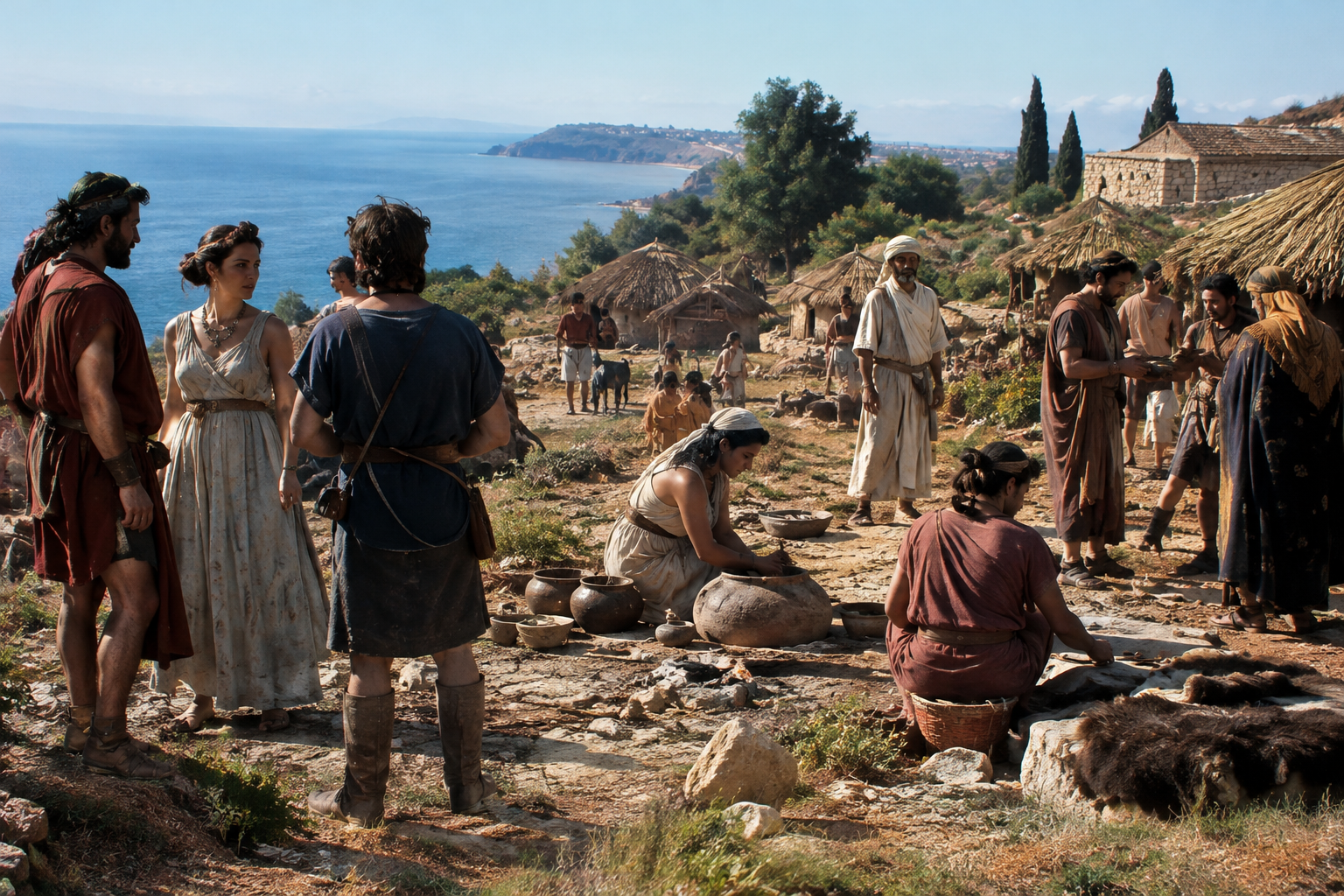
The sample I3743 from Nuragic Seulo Bronze Age Sardinia, dated to 2041 BC, adds another Mediterranean setting. Sardinia is often treated as a world apart, but of course it never was entirely isolated. A paternal lineage found there during the Bronze Age hints at the web of maritime contacts, local continuities, and occasional incoming movements that shaped island populations too.
And then the steppe returns in the background through ERG007. Kurgan burials have long fascinated archaeologists because they speak of rank, mobility, and changing social orders. An R1b1 sample in such a context does not let us identify a named tribe, but it does place this paternal line inside one of the major zones of Bronze Age transformation.
Explore Neolithic to Bronze Age Catalonia
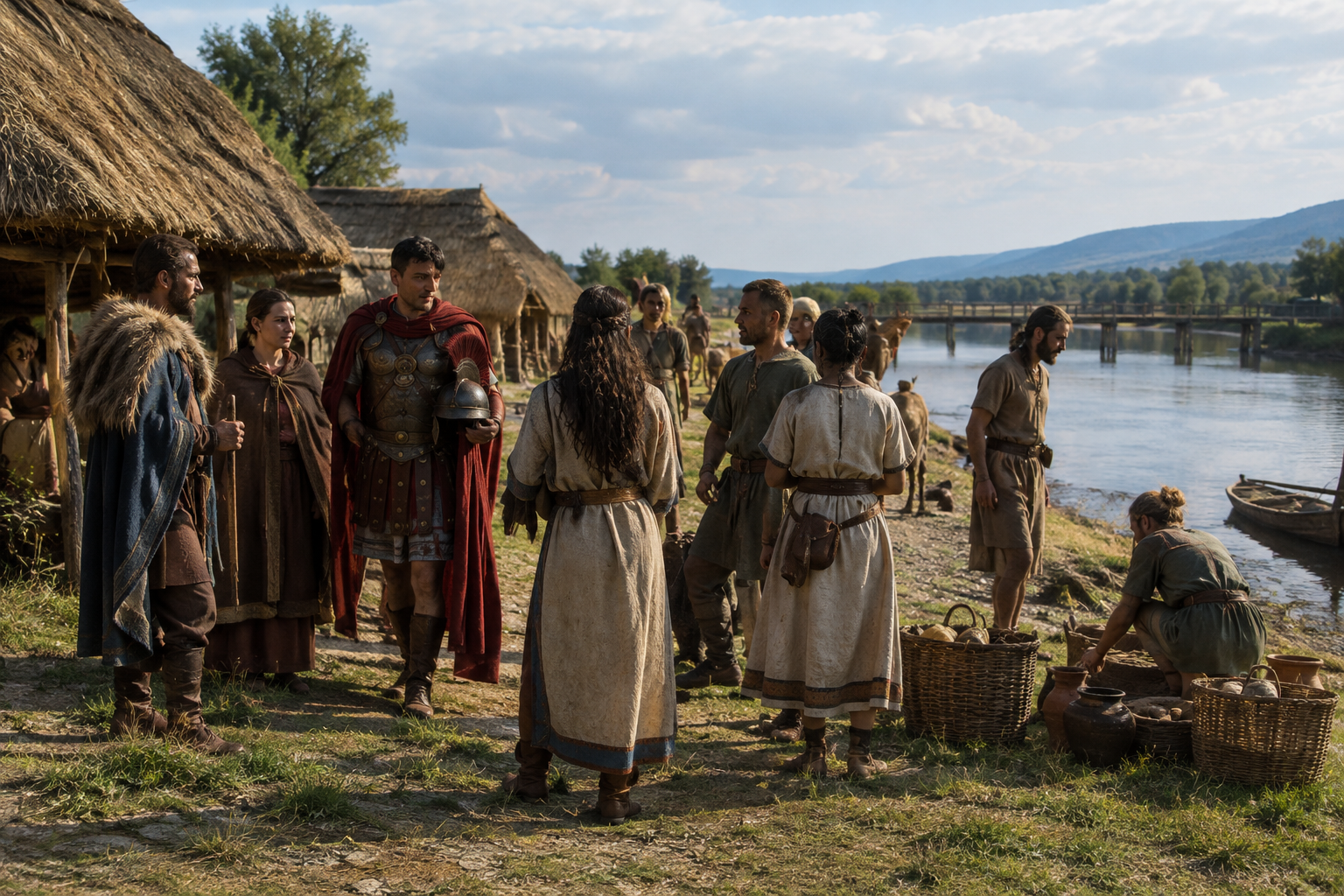
By the Roman and post-Roman periods, the story becomes even livelier. Sample DUX009 from Roman Era Cambridgeshire Duxford, dated to 200 AD, shows this paternal background in Roman Britain. That alone should make us wary of neat ethnic labels. A man buried in Roman Cambridgeshire could have been local, descended from earlier British populations, or part of the extraordinary human traffic of the empire.
On the Danubian frontier, samples FVD002 and FVD005 from Late Roman Empire Pannonia Hungary Fonyod, both dated to 440 AD, sit close in time to the turbulent age of TGH028, the Hun Invader Hungary Danube-Tisza sample dated to 450 AD. Soon after comes HNJ002 from Avar Elite Hungary Hajdunanas, dated to 650 AD. This is the old Roman frontier after Rome: Huns, successor populations, and Avar elites passing through or ruling over territories where older provincial communities still remained. The presence of R1b1 in this zone across several contexts is precisely the sort of evidence that warns against simplistic ideas of total population replacement.
Then there is the extraordinary Lombard cemetery at Collegno in northern Italy. Samples COL_143, COL_143b, COL_143x, COL_128, COL_098, and COL_050, all dated to 580 AD, place this paternal line among individuals associated with the Lombard era, including warrior elite burials. This is a splendid archaeological reminder that early medieval identities were social and political as much as biological. A cemetery can look "Lombard" in burial custom and status display while still containing a range of ancestries and paternal backgrounds.
Further west, I3866 from Post-Roman Era Barcelona, dated to 650 AD, shows the lineage in another transforming world: post-imperial Iberia, where Roman traditions, local populations, and incoming powers overlapped.
Discover Post-Roman DNA in Hungary
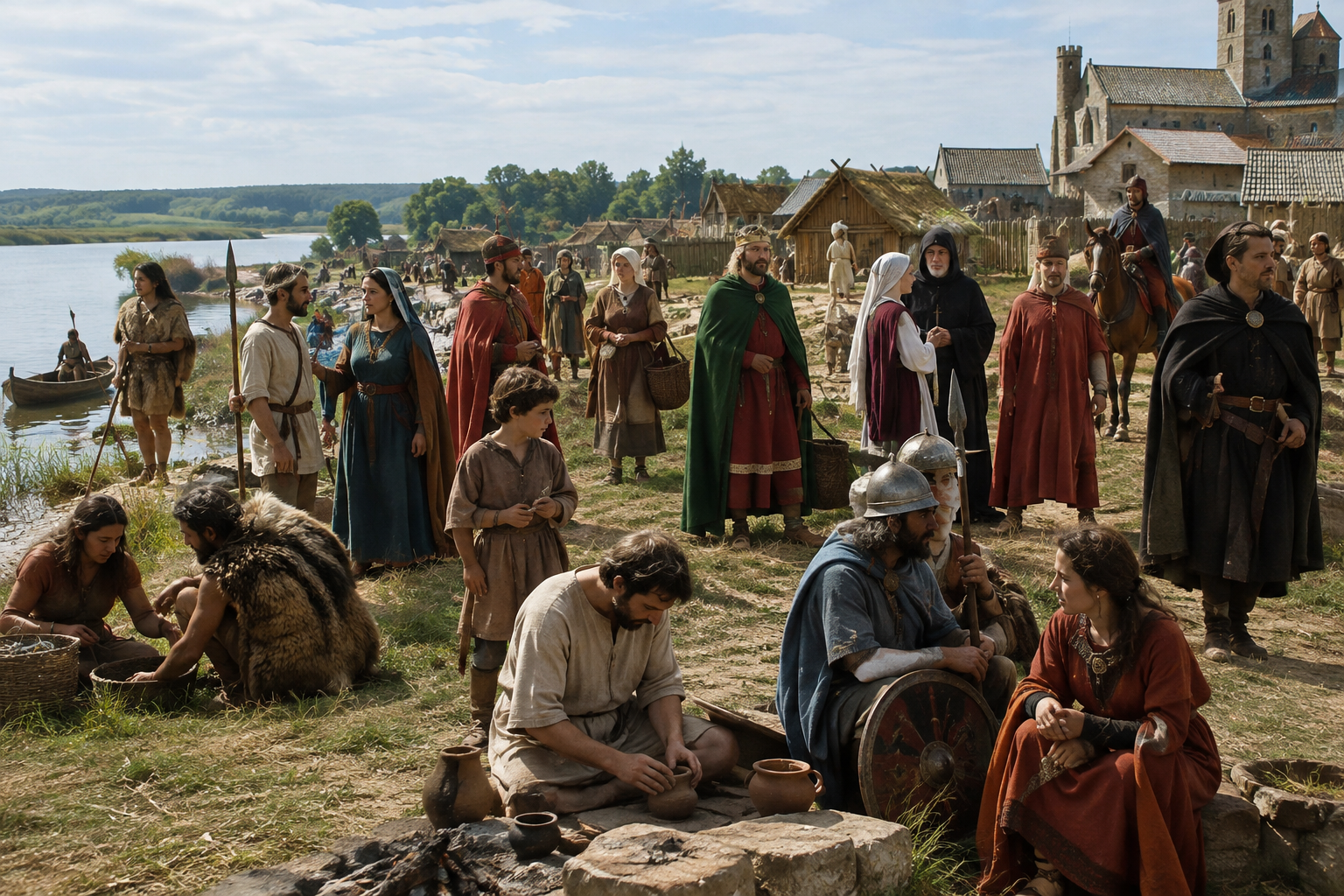
By the Middle Ages, R1b1 appears not in glamorous conquest burials alone, but in ordinary urban life. The cluster from Sint-Truiden in Belgium is especially revealing: ST0415 from 900 AD, the so-called outsider burials ST1307, ST1078, and ST1241 also from 900 AD, and ST2073 from Medieval Belgium Sint-Truiden Groenmarkt dated to 1050 AD. Here the interest lies not in any one dramatic event, but in settlement history. Medieval towns drew in people. Some were local, some newly arrived, some perhaps socially marked as outsiders in death. Yet paternal lines could be shared across these categories.
That is one of the useful correctives ancient DNA offers to written history. Chronicles love kings, raids, and saints. Genetics often shows us continuity beneath the noise, and variety where texts prefer tidy labels.
The story does not stop in the Middle Ages. Sk6990 from the Sala Silver Mine Sweden, dated to 1610 AD, demonstrates that the lineage remained part of Europe's later working populations too. By then, of course, centuries of migration, war, marriage, and local inheritance lay behind any one man's Y chromosome.
Read About Medieval Sint-Truiden DNA
No associated noble family or castle details were supplied here, and that absence is worth stating plainly. It means we should resist the temptation to manufacture aristocratic connections simply because R1b1 is old, widespread, and found in historically important regions. A broad Y-DNA haplogroup can appear in peasants, miners, warriors, monks, merchants, and nobles alike. Without documented family-level evidence, no ancient sample can be turned into the founder of a later dynasty by wishful thinking.
Still, the historical setting of these samples helps explain why later noble houses across Europe might have emerged in regions where paternal lines like R1b1 had been present for millennia. Medieval lordship did not arise in an empty landscape. Castles, abbeys, and family seats were planted onto territories already shaped by Neolithic settlement, Bronze Age mobility, Roman administration, and post-Roman migration. Genetics and castle history meet best not in fantasy pedigrees, but in geography: the same valleys, plains, and frontier corridors could host both ancient burials and later noble power.
What makes R1b1 so compelling is its breadth. From I0410 in Neolithic Spain to Sk6990 in early modern Sweden, it appears in a remarkable range of times and places. That does not make everyone with R1b1 closely related in any meaningful genealogical sense. Shared broad haplogroups can stretch back far beyond recorded family history. But it does mean that men carrying this paternal lineage, or branches within it, were part of some of the biggest population changes in European and western Eurasian history.
For family historians, that is the real excitement. Your direct paternal line may connect not to one romantic legend, but to a far more interesting truth: a long, messy, well-traveled human past. Ancient DNA cannot prove that you descend from a Lombard warrior at Collegno or a man in Roman Cambridgeshire. It can, however, place your paternal line within the same very large historical landscape.
If you want to explore that landscape for yourself, MyTrueAncestry can help you compare your DNA with ancient samples and historical populations from across the ancient world. Those matches do not automatically prove direct descent from a specific individual or noble house, but they can offer a fascinating new perspective on where your ancestors' deep roots may lie.
Comments