Haplogroup R1a1a1b2a2b2b

– 6 min read


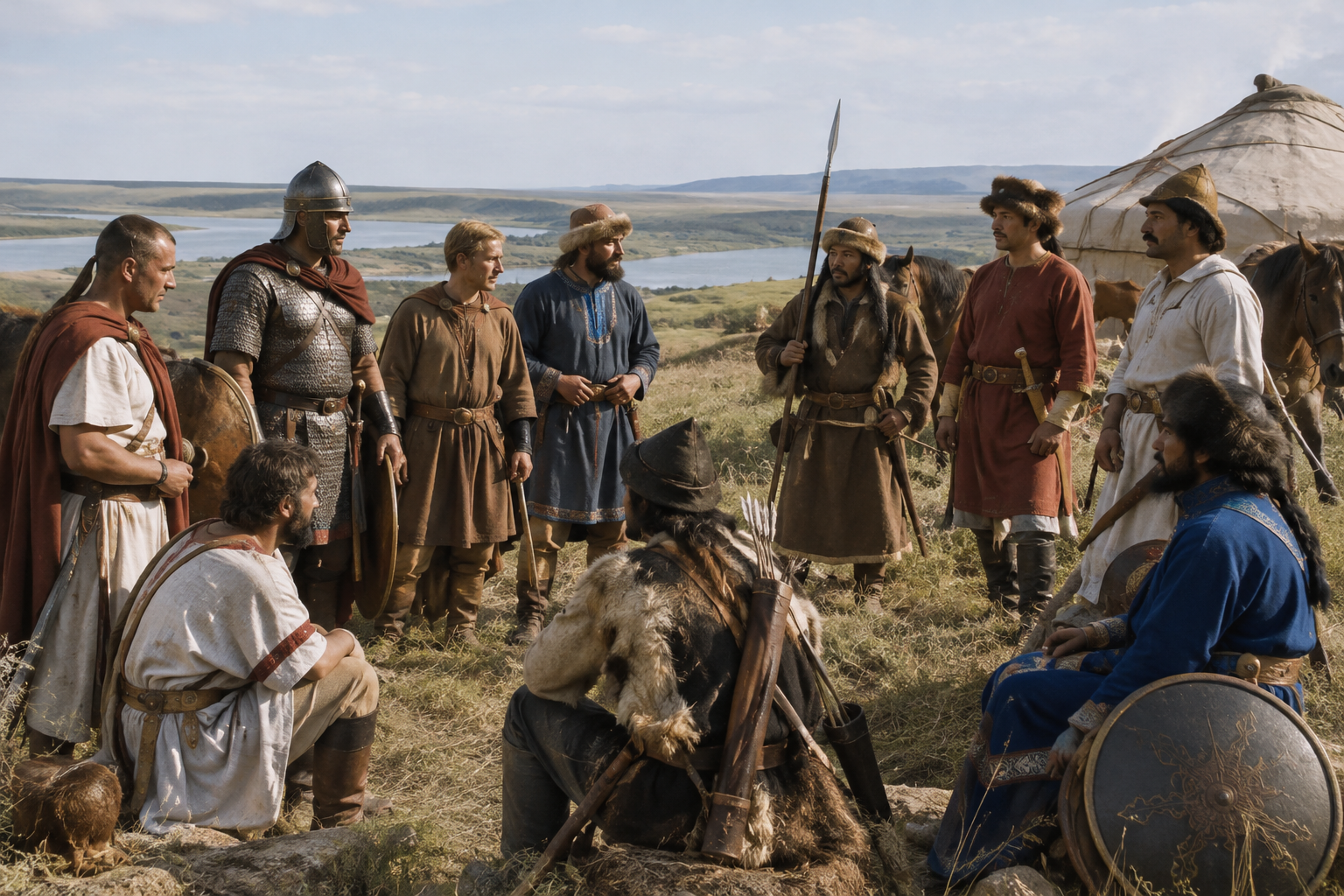
Some Y-chromosome lineages sit quietly in the family tree until ancient DNA gives them a stage. Haplogroup R1a1a1b2a2b2b is one of those lineages. It belongs to the larger R1a branch, a major paternal lineage with a long and complicated history across Eurasia, but this narrower subclade becomes especially interesting because the ancient men associated with it appear in a remarkably wide arc: from the Sargat world of Iron Age western Siberia to Sarmatian contexts near the Black Sea, from the Late Roman Balkans and Hungary to Merovingian Bavaria and the Onogur-Bulgar steppe.
That spread tells us something important straight away. Y-DNA traces one direct paternal line only: father to father to father. It does not describe a person's whole ancestry, culture, language, or identity. Still, when the same paternal branch appears in several different archaeological settings, it can illuminate patterns of mobility that written history only partly captures. In this case, the story seems to run through the great corridor of the Eurasian steppe and into the mixed frontier societies of late antiquity and the early Middle Ages.
Within the wider Y-chromosome tree, R1a is often discussed in connection with prehistoric and historic populations of eastern Europe, the steppe, and parts of Central and South Asia. But a highly specific branch such as R1a1a1b2a2b2b should not simply be handed the entire biography of its much older parent lineage. What matters here is the evidence for this subclade's appearance in historically meaningful places and times.
The supplied ancient samples point less to a single kingdom or people than to a zone of contact: the forest-steppe, the Pontic-Caspian region, the Carpathian Basin, and the Roman frontier world. That makes this haplogroup especially useful for thinking about movement, alliance, recruitment, and settlement. Men carrying related paternal lines could be found among steppe confederations, frontier communities, and post-Roman populations without all belonging to the same ethnic group in any simple sense.
For readers interested in the deeper background of how archaeogenetics reconstructs such histories, MyTrueAncestry's overview of the field is a good companion piece.
The earliest sample in this set is SMV002, from Iron Age Shmakovo Sargat Culture, dated 350 BC. The Sargat world, in the forest-steppe east of the Urals, is exactly the sort of place where archaeologists expect mixed influences: steppe pastoral connections, local traditions, and long-distance exchange. A paternal lineage like R1a1a1b2a2b2b appearing here hints at an eastern part of the story that cannot be reduced to Europe alone.
Then the trail moves westward into Sarmatian contexts. chy002, from Sarmatian Russia dated 140 AD, and DA134, from the Sarmatian Black Sea dated 50 AD, place this lineage in the orbit of Iranian-speaking steppe groups who dominated much of the grasslands north of the Black Sea. The Sarmatians were not static tribes pinned neatly to one map; they were mobile, politically flexible, and deeply entangled with neighboring worlds, including Rome.
That matters because Sarmatian and related steppe movements helped knit together the route between the Eurasian interior and the Roman frontier. A paternal lineage turning up in both the steppe and the Danubian zone is exactly the kind of evidence that makes the old frontier maps look less like hard borders and more like filters.
Readers who want more on this zone of interaction may enjoy the Black Sea perspective in Ancient DNA and Migrations in the Northern Black Sea Region.
By late antiquity, this paternal line appears in places where empires, migrants, and military networks overlapped. VVG2697, from Late Antique Roman Viminacium Serbia dated 350 AD, comes from one of the great cities and military centers of the Danubian Roman world. Viminacium was not a provincial backwater. It was a node of imperial logistics, trade, garrison life, and cross-border contact. A Y-line found there may reflect local continuity, military recruitment, migration from beyond the frontier, or families already established in this intensely mixed region.
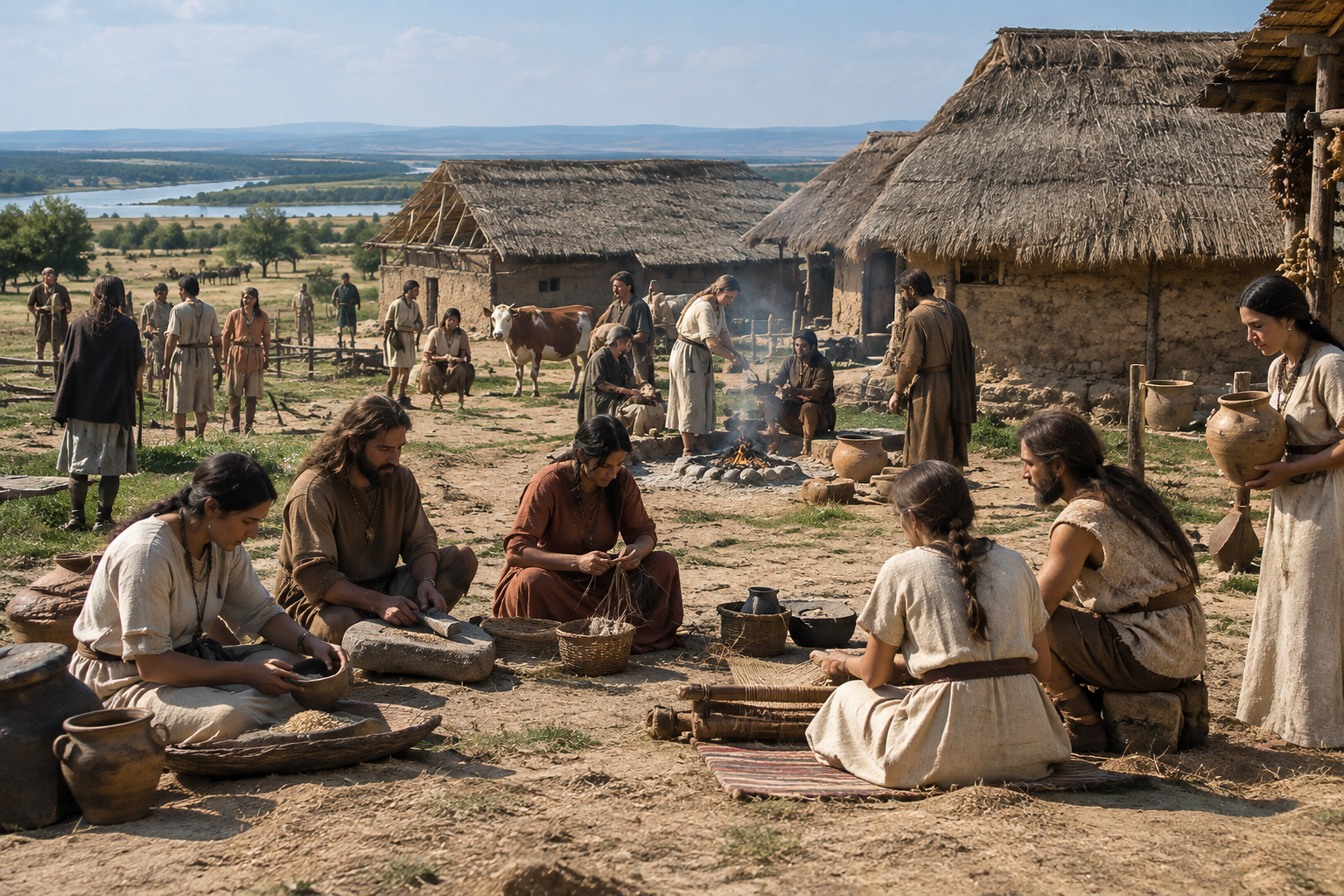
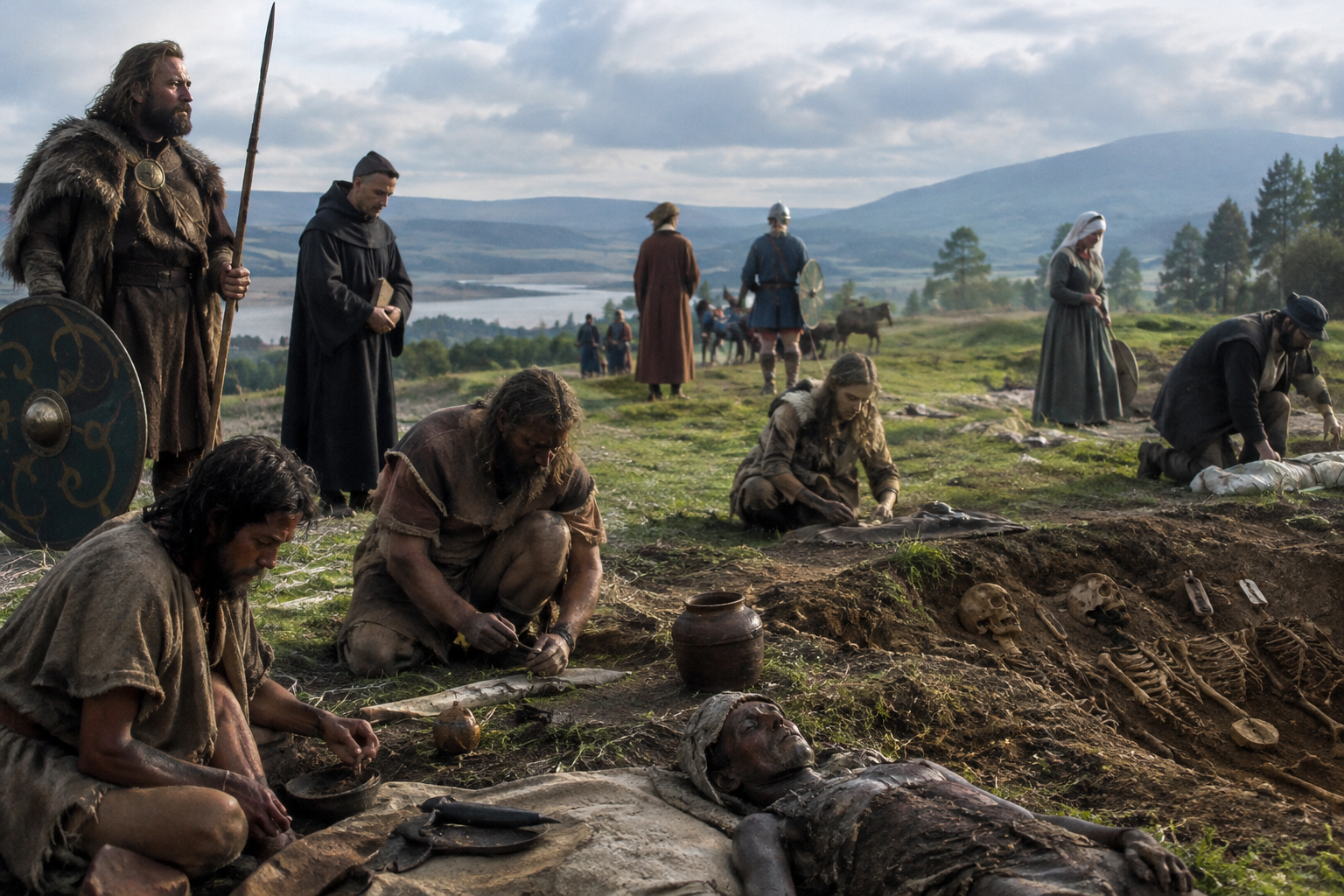
The Hungarian evidence is equally revealing. RKO021, from Late Roman Hungary Rakoczifalva Bagi Foldek dated 250 AD, is followed centuries later by RKO018 and RKF248, both from Migration Period Hungary Rakoczifalva dated 650 AD. One should not leap from shared haplogroup to direct ancestry, but the recurrence of this paternal branch in the same broad region across Roman and post-Roman centuries is striking. It suggests that some lines connected with steppe or frontier populations became part of the long-term human landscape of the middle Danube.
That is one reason the Carpathian Basin remains so fascinating to genetic historians: it was not merely invaded and replaced over and over. It was a place where lineages accumulated, persisted, and were reassembled into new political worlds.
For more on this setting, see MyTrueAncestry's article on post-Roman Hungary.
One of the most provocative samples here is BUR003, from the Late Xiongnu Empire Mongolia dated 100 AD. This does not prove that everyone carrying this haplogroup was "Xiongnu," nor does it let us draw a straight genealogical line from Mongolia to every later European carrier. But it does show that this paternal branch, or a close part of its family, existed far to the east in a major imperial steppe setting.
That eastern appearance becomes especially intriguing when set beside DA142, from the Onogur-Bulgar Rostov Steppes dated 770 AD. Between those two points lies the complicated history of steppe confederations, alliances, collapses, and re-formations. Historians rightly argue over how far later Hunnic, Bulgar, Avar, or other groups inherited people from earlier eastern polities. Ancient DNA does not settle all those debates, but it does show that paternal lines could travel astonishing distances across them.
This is where the tidy ethnic labels of textbooks start to wobble. The same Y-line can move through different language groups, political federations, and burial customs. Ancient DNA is often most useful precisely where it complicates the categories rather than confirming them.
If that wider question interests you, there is a natural next read in Unlocking the Origins of the European Huns.
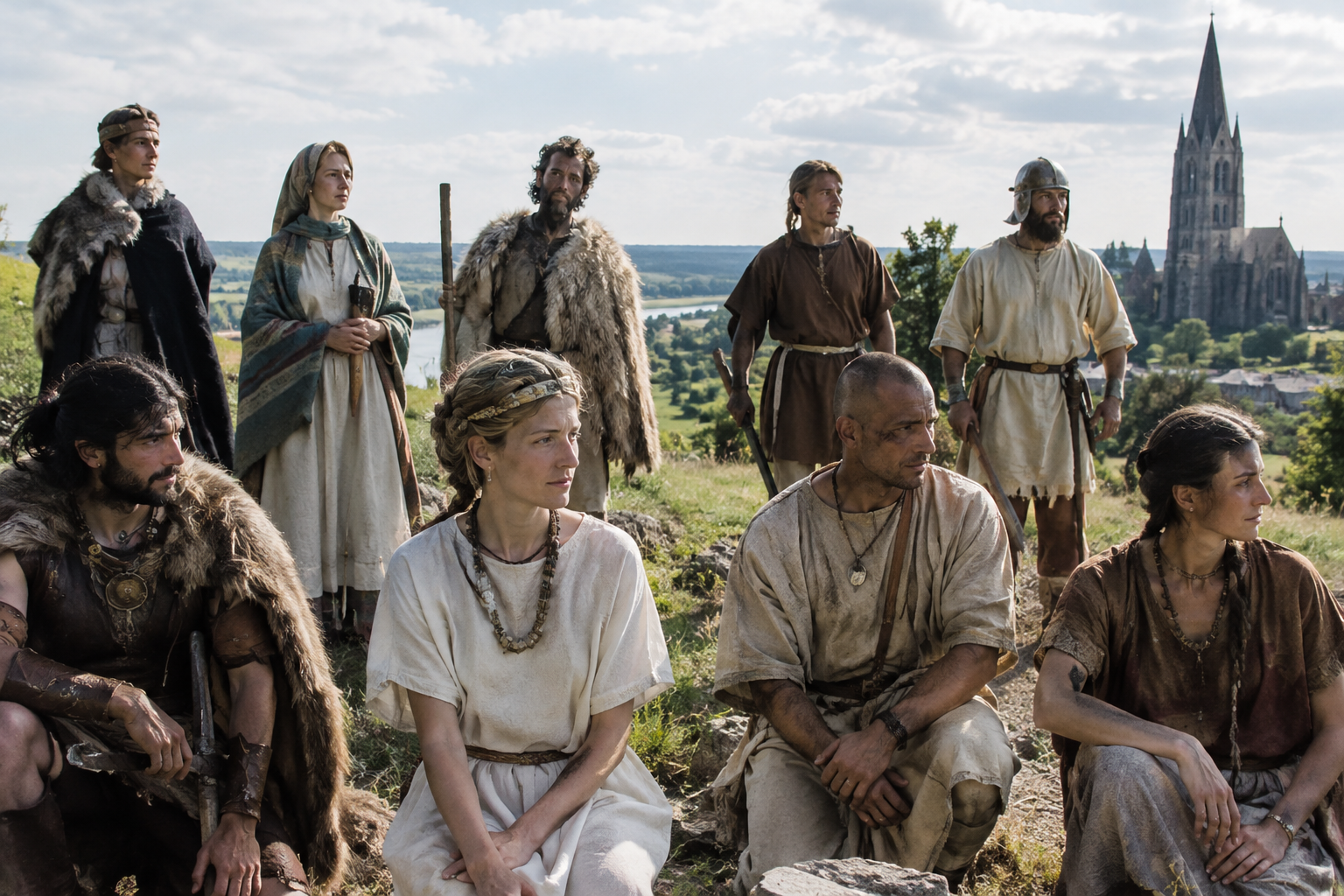
The westernmost early medieval appearance in this sample set is Alh_151, from Merovingian Period Bavaria Altheim Germany dated 600 AD. By this point we are in a Christianizing, post-Roman Europe of local elites, warrior retinues, and communities built from generations of migration and intermarriage. A lineage with steppe and Danubian associations turning up in Bavaria should not surprise us. Merovingian Europe was not genetically sealed off from events farther east; it had been shaped by centuries of movement through military service, diplomacy, marriage, and settlement.
So what does R1a1a1b2a2b2b reveal? Not a single tribe. Not a single nation. Not one tidy medieval surname. Instead, it marks a paternal history that seems repeatedly at home in contact zones: among Iron Age steppe-connected societies, Sarmatian worlds, Late Roman frontier communities, and early medieval populations from Hungary to Bavaria.
In this case, no associated noble families or castles were supplied in the input. That is worth stating plainly, because restraint is part of good historical genetics. It would be easy, and wrong, to fill the gap with grand claims about royal houses or aristocratic descent. A Y-haplogroup can sometimes help frame the background of a dynasty when specific testing exists, but without that evidence, castles remain history and memory rather than proof.
Still, the regions touched by these samples, especially Hungary, the Balkans, and the steppe borderlands, later became the setting for powerful medieval lordships and fortified seats. The important point is that ancient DNA gives us access to much older layers of paternal history beneath those later noble landscapes. It reminds us that long before heraldry and charters, men with lineages like R1a1a1b2a2b2b were already moving through the same broad regions where medieval power would later take stone form.
R1a1a1b2a2b2b is a good example of how a narrow Y-DNA branch can illuminate movement without oversimplifying identity. The evidence here spans SMV002 in the Sargat sphere, Sarmatian individuals such as chy002 and DA134, Roman frontier and Danubian samples like VVG2697 and RKO021, and early medieval individuals including RKO018, RKF248, Alh_151, and DA142. That is a serious historical spread.
For anyone who carries this haplogroup today, the lesson is not that you "are" Sarmatian, Xiongnu, Bavarian, or Bulgar. The lesson is subtler and more interesting: your direct paternal line may belong to a branch that once moved through some of the most dynamic crossroads of Eurasian history. Genetics, archaeology, and history together can show the routes; they cannot by themselves write your family tree in full.
If you have tested your DNA, MyTrueAncestry can help you explore whether your results show affinities to ancient individuals like these and to the populations among whom they lived. Those comparisons can open remarkable windows onto the past, even when they do not prove direct descent from any one ancient man or medieval family.
Comments