Haplogroup R1a1a1b2a2b2
– 5 min read


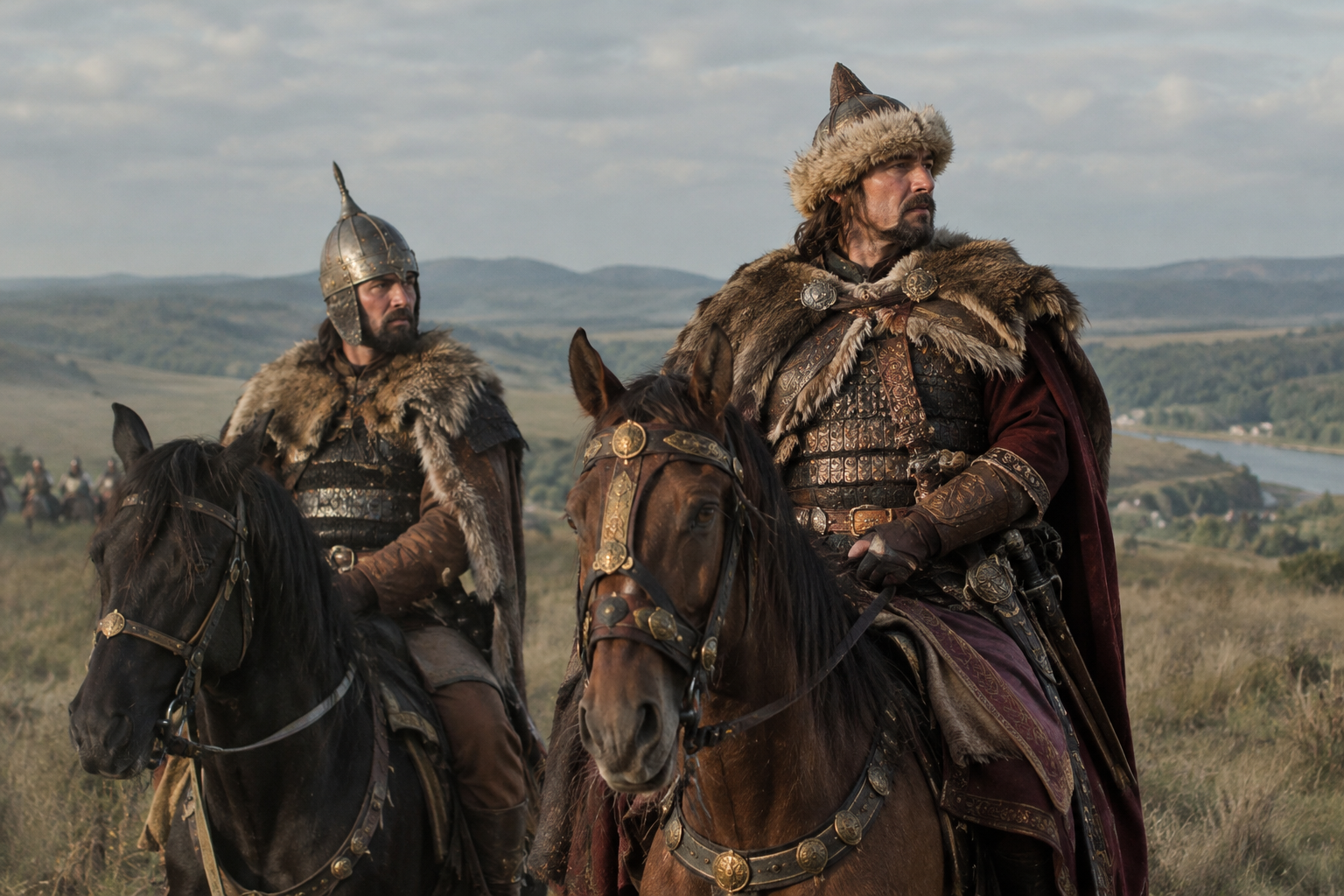
At Karos in northeastern Hungary, one of the most famous cemeteries of the 10th-century Hungarian Conquest period, an elite male identified as K2-61 was buried around AD 950. He belongs to the world of the mounted warrior aristocracy that arrived in the Carpathian Basin and rapidly became the political core of early medieval Hungary. For people researching the Y-DNA haplogroup R1a1a1b2a2b2, that matters because this lineage appears here in a burial context that is not vague or legendary, but sharply historical: a conqueror-age cemetery tied to the first generations of Magyar power.
The other striking appearance comes from an earlier horizon altogether: sample A181029, from an elite grave in North Transdanubia, dated to around AD 450 and associated with the Hunnic period. That does not make every bearer of this branch a "Hun," still less a Magyar or a member of any single people. But it does place this paternal line in two highly charged settings in the Carpathian Basin, five centuries apart, both linked to mobile military elites on the steppe frontier of Europe.
R1a1a1b2a2b2 is a very narrow paternal branch inside the much larger R1a family. Y-DNA follows one direct male line only: father to son to son. So a match to this haplogroup does not define a person's whole ancestry, language, or identity. What it can do, when ancient samples are available, is show that one thin paternal thread appears in particular historical settings.
In this case, the settings are revealing. Both known ancient examples provided here come from the Carpathian Basin, and both are attached to elite burials from periods shaped by steppe-connected power. That is a more specific and more interesting point than the old habit of assigning an entire haplogroup to a single ethnicity.
An ancient DNA study examining conquest-period and earlier burials in the region has helped clarify just how mixed and historically layered these communities were, combining local European, steppe, and eastern connections rather than fitting into neat modern boxes. For the broader context of the Hungarian elite world, see research published on medieval Hungary's elite genomes.
Karos is not just any cemetery. It is one of the key archaeological sites for the early Hungarian conquerors, the groups who entered and consolidated control in the Carpathian Basin during the late 9th and 10th centuries. Graves from Karos have long stood at the center of discussions about military retinues, social rank, and the formation of the Hungarian polity.
Within that setting, K2-61 matters because he anchors R1a1a1b2a2b2 in a burial population already known for its elite character. We should be careful here: one male line in one cemetery does not prove that this branch dominated the conquering population, nor that it marked a royal house. But it does show that this lineage was present among men buried with the status and visibility of the conquest-period upper stratum.
That is especially important because the conqueror cemeteries do not speak of a simple, uniform biological group. Archaeology and genetics together point instead to coalitions: mounted elites, kin groups, followers, and allies assembled through movement across the Eurasian steppe and then transformed in the Carpathian Basin. A haplogroup found at Karos is therefore part of a social and political story, not just a biological one.
If you want the bigger historical backdrop to these burials, MyTrueAncestry's piece on the Hungarian Conquest is a useful companion.
The earlier sample, A181029, comes from North Transdanubia in western Hungary and is dated to around AD 450, in the Hunnic period. This was the age when the Carpathian Basin sat at the center of a violently changing political landscape, with the Hunnic empire drawing together peoples, military households, and local power brokers from across a vast zone stretching far beyond modern Hungary.
To say that A181029 comes from a Hun invader elite grave is to place him in that archaeological horizon, not to solve every question about his ancestry or identity. Hunnic-period burials in Europe often reflect a political world of alliances and mixed origins rather than a biologically homogeneous people. Even so, the recurrence of this branch in such a grave is noteworthy. It suggests that the paternal line later seen at Karos was already present in a much earlier elite milieu of the same broad region.
That continuity of presence is not the same as proven direct descent. Five centuries is a very long time, and many different groups moved through the Carpathian Basin in between. But when the same narrow Y-line appears once in a Hunnic-period elite context and again in a Hungarian conqueror elite context, it becomes harder to dismiss the branch as a trivial local accident.
For readers interested in the wider genetic background to this turbulent era, MyTrueAncestry's article on the origins of the European Huns adds useful context.
There is a historical reason these two samples matter together. The Carpathian Basin was one of Europe's great receiving grounds for mobile powers from the east. Sarmatians, Huns, Avars, and later Hungarians all used it as a strategic heartland. Its plains linked steppe movement with the Roman world, the Balkans, and central Europe. If a paternal branch was circulating among steppe-linked warrior elites, this is precisely the sort of region where we might expect to see it recur.
That does not mean the branch "belongs" to Hungary in any modern national sense. It means that the archaeology places it in a zone where political authority was repeatedly built through mobility, cavalry warfare, and elite networks. In plain English: this haplogroup shows up where history was being made by people on the move.
A broader study of the 5th- to 11th-century population history of the region, including the post-Roman centuries that connect the Hunnic age to the Hungarian Conquest, is available through ancient DNA research on the Carpathian Basin and the post-Roman world. That wider background helps explain why lineages found here often resist tidy ethnic labels.
There is always a temptation, especially with Y-DNA, to jump straight from an ancient elite burial to a famous ruling family. In this case, the evidence does not justify that leap. No noble house or royal dynasty is securely tied here to R1a1a1b2a2b2 by the material provided, and it would be bad history to pretend otherwise.
What we can say is stronger than it may first sound. This branch is documented in men placed within elite burial settings in two major historical moments of the Carpathian Basin: the Hunnic period and the Hungarian Conquest period. That is a pattern of social context, and social context matters. It tells us this was not merely a hidden village lineage surfacing by chance in one isolated grave.
For another angle on how ancient DNA is reshaping early medieval history in the region, see the MyTrueAncestry article on Hungary's Árpád dynasty burials.
So what is the most responsible reading of R1a1a1b2a2b2? Not that it proves descent from Attila, and not that it confers automatic conqueror nobility. Rather, the ancient evidence places this paternal branch in the orbit of elite male burials from two different steppe-connected power systems in the Carpathian Basin. That is a very particular historical signature: military aristocracy, frontier politics, and repeated reordering of power in early medieval Europe.
For someone exploring this haplogroup today, that is the real value of the ancient record. It suggests that one branch of your direct paternal line was present in societies where mobility, alliance, and rank mattered enormously, and where the Carpathian Basin served as one of the great hinges between the Eurasian steppe and Europe.






Comments