Haplogroup R1a1a1b2a2a3c
– 5 min read


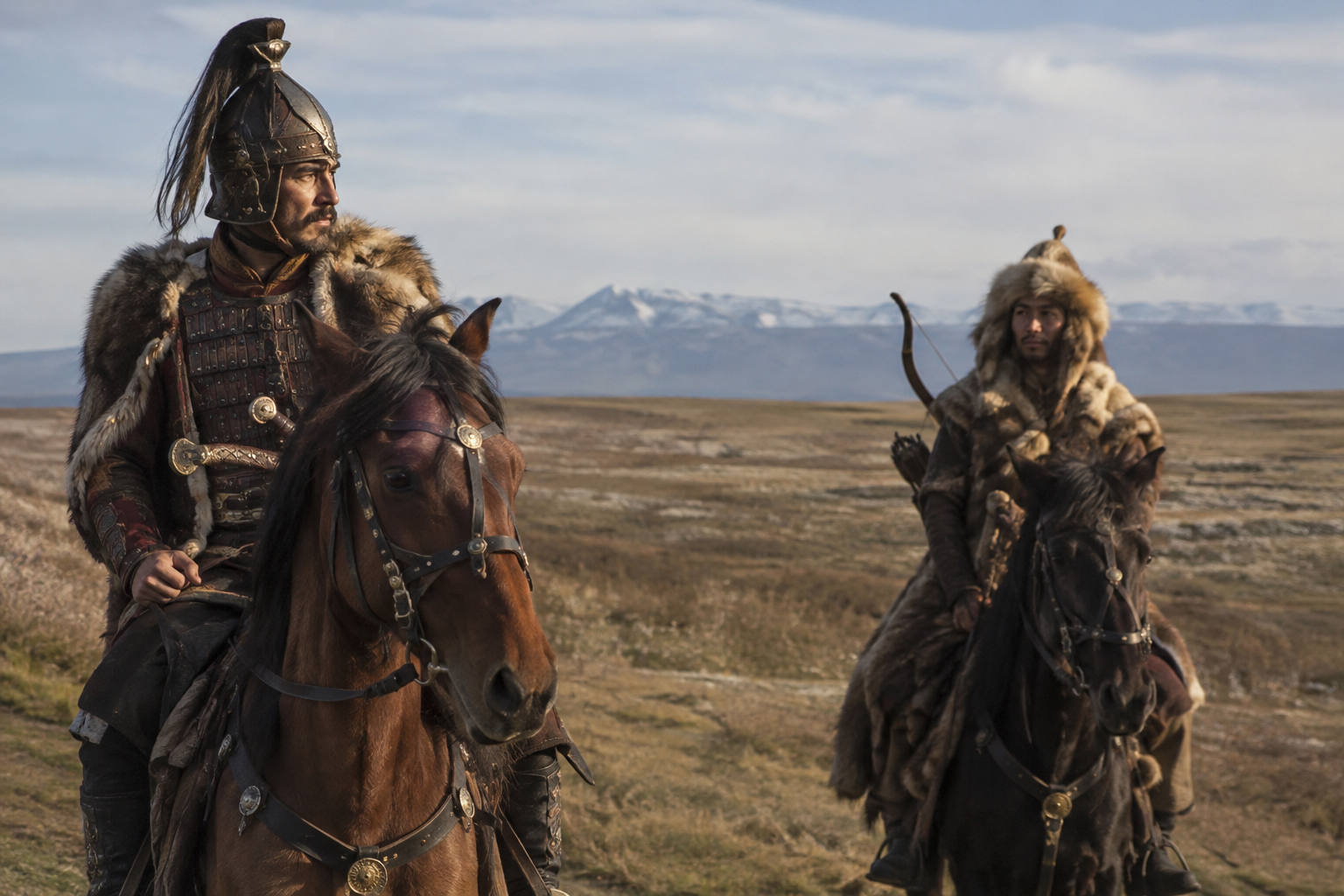
One of the clearest ancient appearances connected with the Y-DNA haplogroup R1a1a1b2a2a3c comes from the Eurasian steppe world: the Pazyryk-related individual from Berel in Kazakhstan, sample I0563, dated to around 200 BC. Berel is one of those places where archaeology forces us to think on a large scale. It sits in the Altai zone, at a crossroads between Inner Asia, the steppe, and the mountain corridors that linked communities over astonishing distances.
That matters because this haplogroup is not just a label on a modern test result. In the ancient record, it turns up in settings that are historically mobile, politically fluid, and often elite in character. Another supplied case, MSG-1, an elite warrior buried in the Danube-Tisza region of Hungary around AD 450, places the same branch in a very different world: the turbulent age of the Huns in Europe. Taken together, these finds do not tell us everything about the branch, but they do show something precise and valuable: this paternal line appears in societies shaped by steppe connections stretching from the Altai to the Carpathian Basin.
The Berel site is best understood as part of the wider Pazyryk cultural sphere of the Iron Age Altai. These were communities famous for their kurgan burials and for the extraordinary preservation sometimes found in frozen tomb contexts, though one must be careful not to transfer every famous Pazyryk detail to every individual grave. For sample I0563, what we can safely say is that he belongs to that eastern steppe archaeological setting and dates to about 200 BC.
In historical terms, that is already revealing. The Altai in this period was not an isolated backwater. It was part of a zone where herding economies, mounted mobility, long-distance exchange, and shifting political alliances all met. A paternal lineage associated with R1a1a1b2a2a3c appearing here fits a broader picture in which some R1a branches were present among steppe populations, but the exact subclade should still be handled carefully. A narrow terminal branch is not the same thing as the whole history of R1a, and no single burial can stand for all steppe peoples.
A useful parallel in the MyTrueAncestry community is the discussion of elite steppe lineages in Iron Age contexts.
An ancient DNA study of the region published at http://www.nature.com/articles/ncomms14615 helped establish just how mixed and wide-ranging Iron Age steppe populations could be. That larger lesson is important here. A Y-chromosome lineage traces one direct paternal line only; it does not reduce a person, or a burial culture, to a single origin story.
The haplogroup in this article, R1a1a1b2a2a3c, is a very specific downstream branch name. Readers often know that R1a as a broader family has a long and complicated history across Eurasia, but that broad history should not simply be poured into a much narrower subclade as if they were interchangeable. The responsible point is smaller and sharper: this branch is represented here in two ancient contexts tied to steppe-linked populations, one in Iron Age Kazakhstan and one in Migration Period Hungary.
That is enough to make the branch historically interesting. It suggests that at least some lines ancestral to men carrying this haplogroup today were part of the networks that moved through the great corridor of the Eurasian grasslands. It does not, by itself, prove ethnic identity, language, or descent from any famous ruling house.
The second supplied ancient individual is MSG-1, described as a Hun elite warrior from the Danube-Tisza region of Hungary and dated to around AD 450. Here the setting has changed dramatically. We are no longer in the Iron Age Altai, but in the late Roman and Migration Period Carpathian Basin, when the Hunnic empire dominated much of central and eastern Europe.
This is precisely the sort of evidence that makes archaeogenetics so useful. Written sources on the Huns are fragmentary, hostile, and often fascinated by power rather than population history. A burial like MSG-1 offers another kind of evidence: a biological thread running through a historically documented but ethnically complex political world. The Hunnic sphere was not a single tribe marching intact from one point of origin. It was a coalition zone, drawing in groups, retainers, and local elites across huge distances.
Research on the Carpathian Basin and steppe-connected populations has increasingly emphasized that complexity. One relevant study can be found here: https://www.sciencedirect.com/science/article/pii/S0960982222007321#app2. Without overstating what any one paper proves for one sample, the broader picture is clear enough: the Hunnic and post-Hunnic period in Hungary cannot be understood without movement, mixture, and continuing eastern connections.
If we place I0563 and MSG-1 side by side, the most striking thing is not that they are identical in culture. They are not. One belongs to the Pazyryk-Berel world of Iron Age Kazakhstan; the other belongs to a Hunnic-period elite context in Hungary some six and a half centuries later. The real significance lies in the repeated appearance of this paternal branch within societies shaped by eastern steppe mobility.
That does not mean a simple father-to-son chain can be drawn from Berel to Hungary. History is never so obliging. But it does mean that R1a1a1b2a2a3c sits comfortably within a real archaeological landscape of movement across Inner Asia and into Europe. For family historians, that is a more interesting result than any tidy myth of a single homeland.
The Danube-Tisza region in the fifth century AD was especially important because it was where Roman frontier politics, local post-imperial communities, and incoming steppe power met each other. A man buried there as an elite warrior with this paternal line belongs to that frontier drama in a very literal way: not as a story in a chronicle, but as a body in the ground.
Huns, Goths, and Turbulent Frontiers
Ancient DNA is most persuasive when separate finds begin to form a pattern. Here the pattern is still a small one, but it is meaningful. One ancient carrier linked to R1a1a1b2a2a3c appears in the Altai-associated Pazyryk sphere around 200 BC; another appears in a Hunnic elite setting in Hungary around AD 450. That gives this branch a documented foothold in two major steppe-connected historical worlds.
It also helps correct a common misunderstanding. People sometimes imagine paternal haplogroups as markers of fixed peoples moving unchanged across time. The archaeology says otherwise. The same Y-line can pass through different languages, confederations, and political identities. What persists is the paternal line itself; what changes around it are alliances, burial customs, and historical labels.
For someone researching a present-day paternal line in R1a1a1b2a2a3c, the most defensible takeaway is not a promise of royal descent or a neat ethnic badge. It is something better grounded: this branch has credible ancient associations with steppe-linked populations ranging from Iron Age Kazakhstan to the Hunnic world of fifth-century Hungary. In other words, its known ancient story belongs to the long, restless history of Eurasian mobility, where power, migration, and ancestry rarely stayed in one place for long.


Comments