Haplogroup R1a1a1b2a2a3

– 6 min read


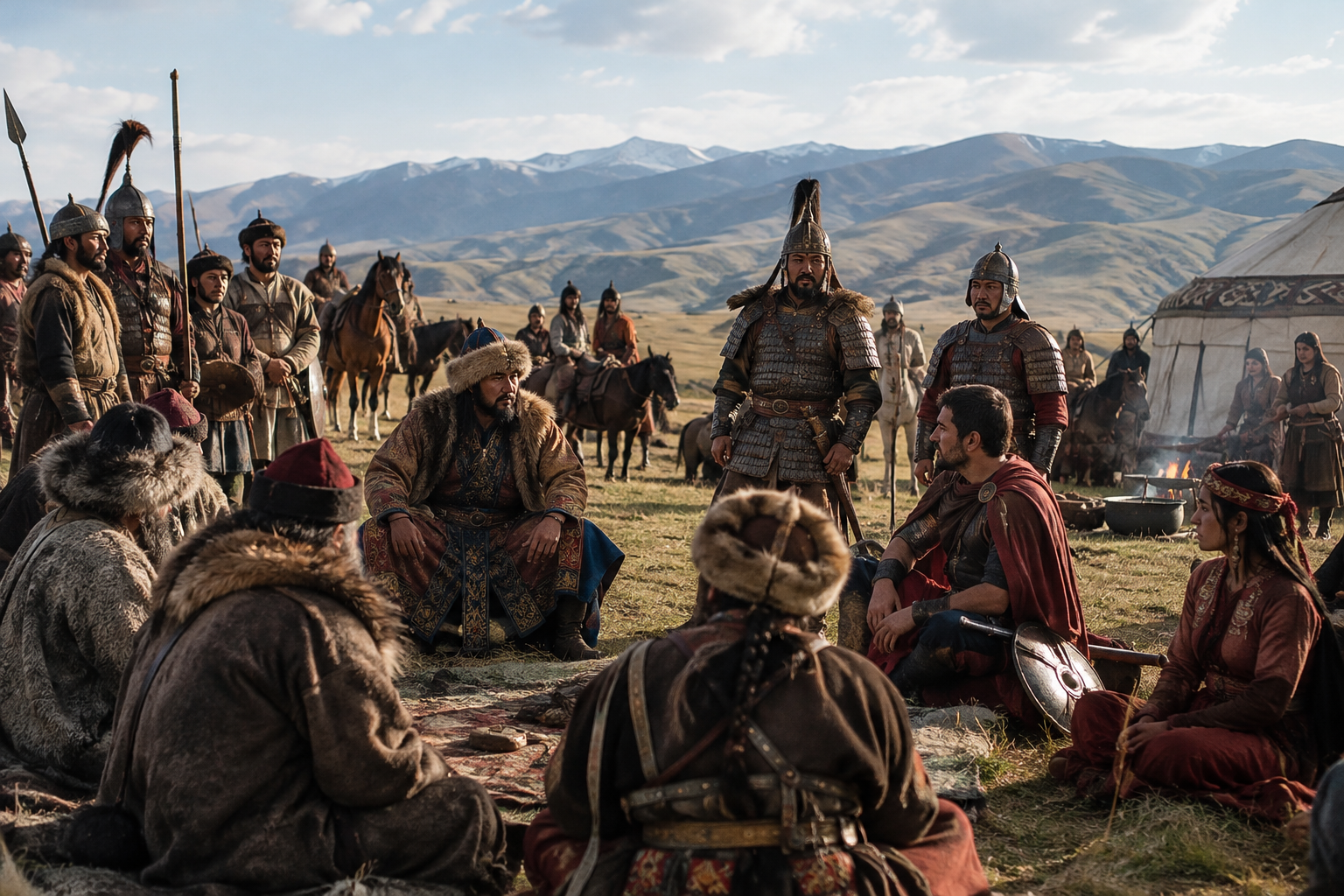
Some Y-DNA branches are famous because they turn up in obvious places: medieval kings, named dynasties, church crypts, battle graves. Haplogroup R1a1a1b2a2a3 is interesting for a rather different reason. Its story emerges across the great corridor of Eurasia, from Bronze Age burials in southern Siberia and the western steppe to Iron Age Saka and Scythian elites in Kazakhstan, and then onward into Late Antique and early medieval worlds stretching toward the Black Sea and the Carpathian Basin.
That makes it a fine example of what Y-DNA can and cannot do. Y-DNA haplogroups trace one direct paternal line only: father to father to father. They are powerful for studying deep male-line ancestry, migration, and population history, but they do not represent a person's total ancestry. In the case of R1a1a1b2a2a3, the evidence points us toward a paternal lineage moving through steppe-connected societies over a very long span of time. What it offers is not a tidy tale of one people becoming another, but a glimpse of continuity, mobility, and reinvention across centuries.
The broader haplogroup R1a is well known across parts of Eurasia, especially in regions touched by prehistoric and historic steppe movements. But one must be careful here: the history of a very specific subclade such as R1a1a1b2a2a3 cannot simply be equated with the full history of all R1a lineages. Narrow branches often had their own local expansions, bottlenecks, and historical trajectories.
What the supplied ancient DNA does suggest is that this lineage, or closely related paternal lines, had a notable presence in the eastern steppe zone and its connected worlds. Several of the earliest samples come from Bronze Age contexts in the Krasnoyarsk region and nearby steppe spheres, including I3396 from Russia Bronze Age Krasnoyarsk Orak Ulus Sharypovsky District, dated to 1650 BC, I3394 from the Russia Bronze Age Krasnoyarsk Orak burial place, also dated to 1650 BC, and I6718, again from the Orak burial place, dated to 1543 BC. Alongside them are I3392, listed as Late Bronze Age Krasnoyarsk Russia, and I3389, described as Andronovo Karasuk Late Bronze Age, both dated to 1650 BC, as well as I3767 from Western Steppes Andronovo Late Bronze Age, dated to 1760 BC.
That cluster matters. It places this paternal signal in a Bronze Age world often associated archaeologically with mobile pastoralists, regional exchange, and the cultural horizons linking the western steppe, the Altai, and southern Siberia. It does not prove a single tribe or language. But it does place the lineage squarely inside the kind of landscape where long-distance movement was normal.
Readers interested in the wider setting of these steppe societies may want to explore the broader picture in the MyTrueAncestry article on the region's archaeology and genetics.
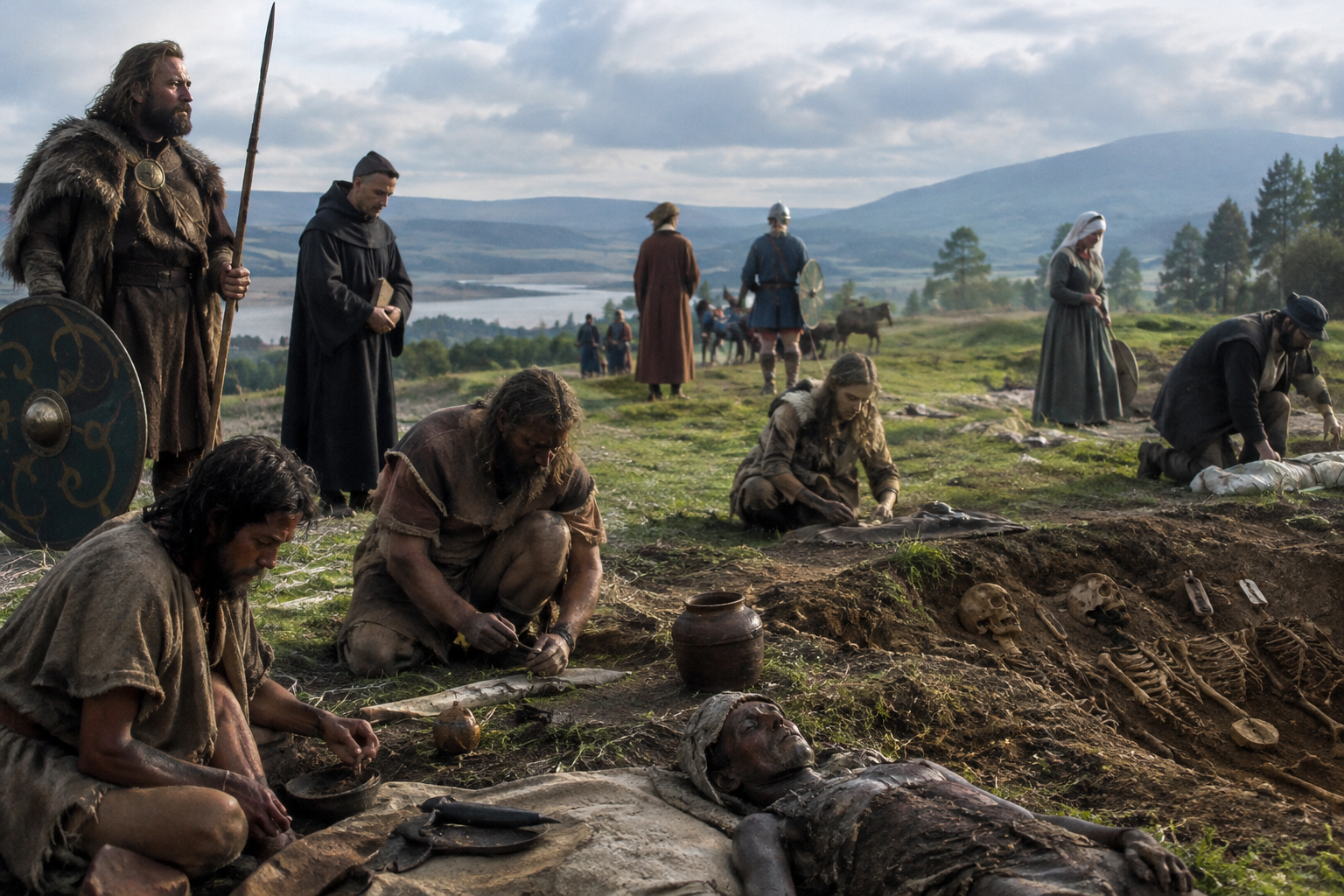
By the Iron Age, the same general paternal thread appears in some rather striking graves. There is ESZ008, an Elite Scythian Saka individual from Eleke Sazy in East Kazakhstan, dated to 550 BC. There is BKB002 from a Scythian Grave of the Tasmola Iron Age in Bakybulak, Central Kazakhstan, dated to 716 BC. And there is TAL004, from a High Ranking Saka Scythian Grave at Taldy, Kazakhstan, dated to 650 BC.
These are not anonymous data points dropped on a map. They come from societies famous for mounted mobility, rich burial customs, and political networks that tied together huge distances across the Eurasian steppe. To find related paternal signatures in elite Scythian and Saka contexts is a reminder that steppe aristocracies were not conjured out of thin air. They were built from earlier populations, older lineages, and regional traditions that had already been in motion for centuries.
Still, caution is needed. Sharing a Y-DNA branch does not make every buried warrior part of one dynasty, still less one ethnic label in the modern sense. Ancient DNA is best at showing patterns of connection and persistence. The graves tell us about status and culture; the Y chromosome tells us about one line of male inheritance; neither alone can do the whole job.
If you want to dig deeper into elite Iron Age burials and what genetics can and cannot reveal about them, this companion article is especially relevant.
The later samples show just how far the horizon had widened. Two individuals from Chandman Mountain, identified as Wusun, CHN008 and CHN012, are dated to 25 AD. Another sample, I4531, comes from Roman Era Samsun in Black Sea Anatolia and is dated to 282 AD. Then we meet DA243, listed simply as Alan, dated to 485 AD. And by 650 AD, the haplogroup appears in early medieval elite contexts with RKC022 and RKC016, both described as Avar Elite Hungary Rakoczifalva, as well as ULI001 from Uliastai River Lower Terrace Turk, also dated to 650 AD.
This is where the history becomes especially evocative. Wusun, Alans, Turks, Avars, Roman provincial populations around the Black Sea: these are not the same thing, and they should not be collapsed into one neat category. But they all belonged, in different ways, to the connected worlds of Inner Eurasia and its frontiers. The paternal lineage represented by R1a1a1b2a2a3 seems to surface repeatedly in exactly those zones where empires met mobile confederations, where cavalry mattered, and where identities were constantly being assembled and reassembled.
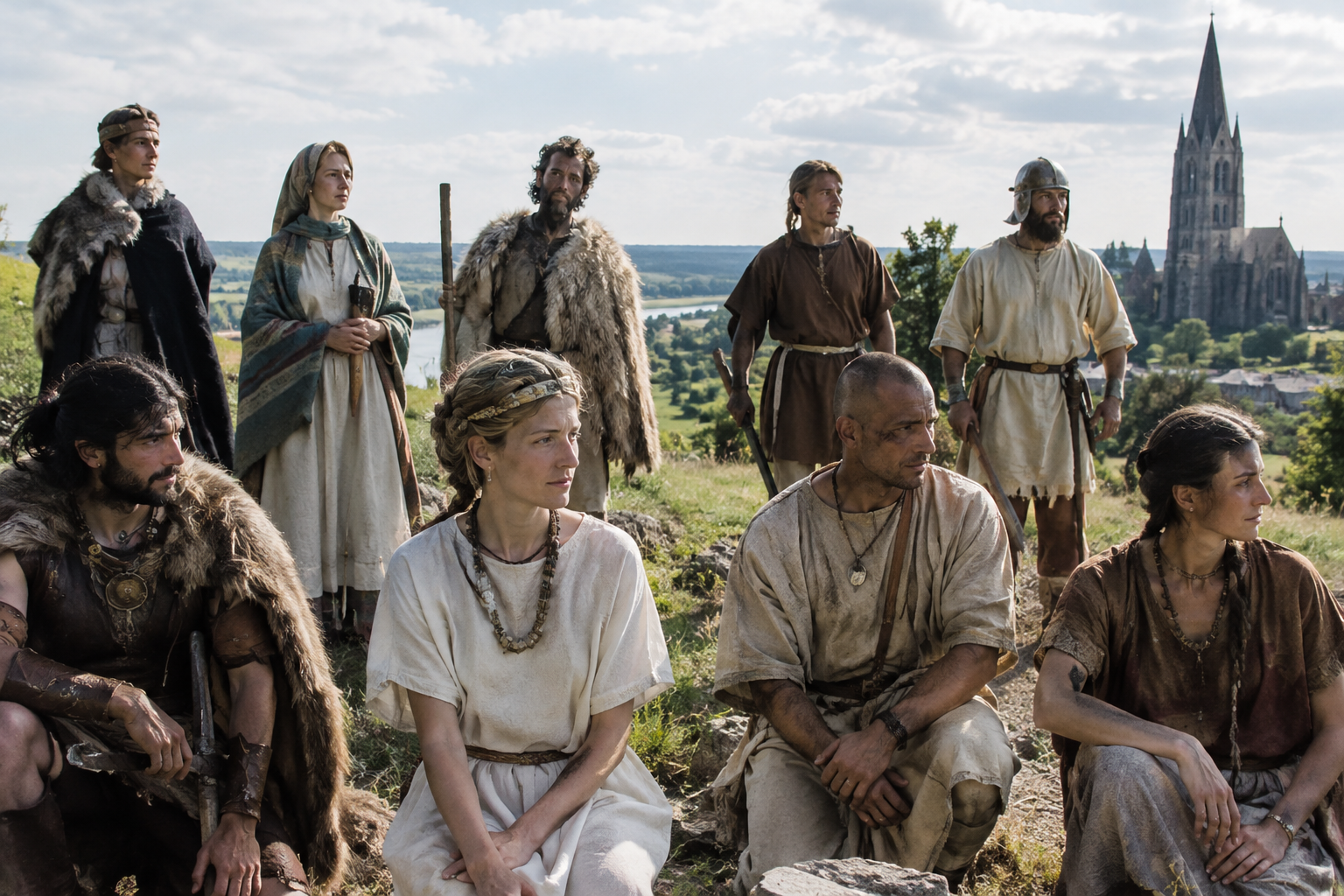
The Avar elite samples, RKC022 and RKC016, are particularly revealing in a European context. They show how lineages with deeper steppe associations could appear in high-status burials in the Carpathian Basin. That does not make every later Hungarian noble house a descendant of them. But it does underline a larger historical truth: medieval Europe did not spring from isolated local villages. It was shaped by centuries of movement from the steppe, the Black Sea, and beyond.
For readers curious about how this eastern horizon connects with Hungarian history, the MyTrueAncestry community has an excellent article on the Magyar conquest-era background.
Explore Hungarian Conquest DNA
In this case, the supplied field for associated noble families and castles is effectively empty, which is worth stating plainly rather than dressing up. That means there is no responsible basis here for attaching R1a1a1b2a2a3 to a named medieval dynasty, a specific castle, or a documented noble pedigree.
That may feel like a disappointment, but in fact it is a useful lesson. Written genealogy and ancient DNA operate on rather different scales. Noble houses leave charters, seals, castles, lawsuits, and tomb effigies. Ancient paternal lineages leave signals in bone and teeth from much older burials, often centuries or millennia before any family surname existed. Sometimes those worlds can be linked quite tightly. Often they cannot.
And even where a later noble family is historically associated with a haplogroup, that does not prove every branch of that family carried it, or that everyone sharing the haplogroup belongs to that house. Genetics is one line of evidence, not a magic key to every castle gate.
For a wider look at how steppe-related and post-Roman populations intersected in Central Europe, another relevant community article helps set the scene.
Read About Post-Roman Central Europe
What makes R1a1a1b2a2a3 so intriguing is not that it can be pinned to one modern nation or one famous dynasty. Quite the opposite. Its value lies in showing how a paternal line can persist across very different archaeological and historical settings: Bronze Age communities in the Krasnoyarsk and Andronovo sphere, Iron Age Saka and Scythian elites in Kazakhstan, Wusun-era burials, an Alan individual, a Roman-era sample from Black Sea Anatolia, and early medieval Avar and Turk-associated contexts.
That is a history of movement, yes, but also of survival through change. Men carrying related paternal lines could belong to different political orders, speak different languages, bury their dead in different ways, and still preserve one thin thread of shared male-line ancestry. Ancient DNA lets us see that thread where written sources are silent.
So if your own Y-DNA falls within a branch like this, the lesson is not that you are "Scythian" or "Avar" in any simple sense. It is that one of your direct paternal lines may connect, at great depth, to the long human traffic of the Eurasian steppe and its borderlands. That is more interesting, and more historically honest, than any easy label.
MyTrueAncestry helps bring these discoveries into personal focus by comparing your DNA with ancient individuals from real archaeological sites. A match to ancient populations or samples can offer a fascinating perspective on your ancestry, even though it does not by itself prove direct descent from a particular ancient person, tribe, or noble family.
If you want to see whether your DNA shows links to steppe populations, Iron Age elites, or other ancient worlds discussed here, upload your DNA and start exploring.
Comments