Haplogroup R1a1a1b1a3a2a1

– 4 min read


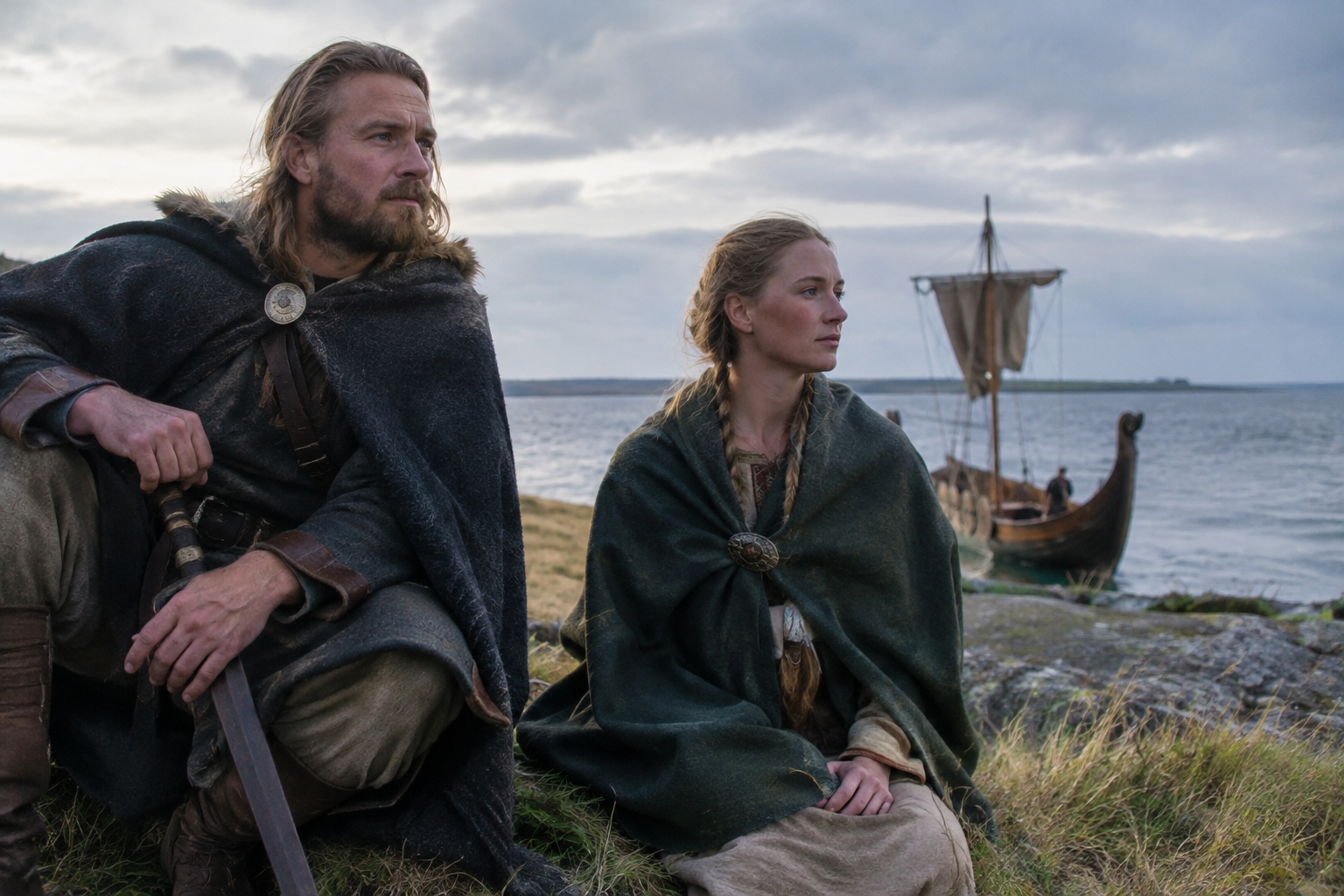
On Oland in Sweden, a man identified as VK354 was living in the late Viking Age, around AD 986. He is one of the more precise anchors for the Y-DNA haplogroup R1a1a1b1a3a2a1 in the ancient record given here: not a legendary founder, not a saga hero, but a real excavated individual from a very real island in the Baltic world.
That matters because this branch sits deep inside the wider R1a family, a major paternal lineage found across large parts of Eurasia. Y-DNA follows one direct male line only, so it does not sum up a person's whole ancestry, language, or identity. But when a branch such as R1a1a1b1a3a2a1 appears in Viking-Age contexts, it gives us a sharp little clue about how paternal lines moved through the seaways, war bands, and settlements of the Baltic.
Oland was no backwater. Stretching along Sweden's southeast coast, it sat close to the maritime routes that tied Scandinavia to the eastern Baltic, the Slavic coast, and the river systems leading farther inland. A man like VK354 belonged to a world of movement: ships, exchange, raiding, alliance, and seasonal travel across water that connected rather than divided communities.
With the evidence here, it would be wrong to dress VK354 up with invented weapons, status, or family ties. What can be said is simpler and more useful. His presence shows that the paternal line represented by R1a1a1b1a3a2a1 was part of the Scandinavian-Baltic population landscape by the end of the first millennium AD. In other words, this is not just an abstract haplogroup on a tree. It is a lineage carried by at least one man living in the Viking Age on a strategic Baltic island.
A broader ancient DNA investigation of Viking-period populations is linked through research on ancient genomes from the Viking world. Even without claiming details that are not explicitly available here, that larger context helps place VK354 in a period when Scandinavian populations were anything but isolated. The Viking Age was not genetically uniform, and that is precisely why individual paternal lines are so interesting.
The second key individual here is VK498 from Salme II-XXXII on Saaremaa, dated to about AD 725, in the Vendel Age. This is an earlier horizon than VK354, and it comes from one of the most discussed early Scandinavian-associated sites in the eastern Baltic. Salme is important because it belongs to the world just before the classic Viking Age fully takes shape.
Saaremaa, the large island off present-day Estonia, stood on the same maritime network that linked eastern Sweden, the Gulf of Finland, and the wider Baltic. The Salme burials have become famous because they illuminate conflict, mobility, and seaborne groups in this zone. Even stripped down to the essentials provided here, VK498 is highly revealing: the same narrow paternal branch associated with the later Swedish sample also appears in this earlier Baltic island context.
That does not prove that VK498 and VK354 were close kin, nor that every carrier of this lineage belonged to a single people or political group. But it does suggest continuity of a paternal line within the Scandinavian-Baltic sphere across roughly two and a half centuries, from the Vendel Age into the mature Viking Age.
Baltic connections in early medieval Finland
R1a1a1b1a3a2a1 is a very specific label, much narrower than simply saying "R1a." That distinction matters. The wider R1a lineage has a long and complicated prehistoric history across Eurasia, but those vast movements cannot simply be pasted onto this exact subclade without direct evidence. The ancient individuals listed here do not license a grand tale from the Bronze Age steppe to every later shoreline.
What they do support is more grounded, and arguably more interesting. This paternal branch appears in two island settings central to northern seafaring history: Saaremaa in the eighth century and Oland in the late tenth. Both sites sit within the busy eastern arc of the Scandinavian world, where contact with Finnic, Baltic, and Slavic-speaking regions was normal.
That maritime geography matters because the Baltic was not just a stage for Viking expansion westward. It was also a dense corridor of eastern movement, recruitment, exchange, and settlement. A paternal lineage found in both Saaremaa and Oland fits neatly into that historical reality.
There is a temptation, when looking at Y-DNA, to imagine tidy ethnic boxes. Archaeology is much less accommodating. Oland and Saaremaa were island societies, yes, but they were also crossroads. Men buried there may have been local, mobile, or part of wider seaborne networks that blurred any simple distinction between homeland and frontier.
Seen together, VK498 and VK354 point toward a branch that was at home in that world. The earlier sample from Salme suggests that this paternal line was present in the eastern Baltic already in the Vendel period, when elite martial contacts across the sea were intensifying. The later sample from Oland shows the branch still present in the Scandinavian sphere during the late Viking Age, by which time Baltic traffic had become part of an enormous northern network reaching from the North Atlantic to the river routes of Eastern Europe.
For readers with a paternal line in R1a1a1b1a3a2a1, this is the heart of the matter. The ancient evidence here does not pin your ancestry to one tribe, one kingdom, or one saga. It does, however, place this branch in the lived human geography of the Baltic islands during the centuries when Scandinavian maritime power was being made.
With only two ancient individuals, caution is essential. Yet these are not random dots on the map. VK498 from Vendel Age Saaremaa Salme II-XXXII and VK354 from Viking Age Oland together give R1a1a1b1a3a2a1 a distinct early medieval profile: Baltic, insular, and tied to the Scandinavian seaborne world. It is a modest footprint, but a historically meaningful one.
For someone exploring this paternal lineage today, that is a useful kind of evidence. It suggests that one branch of your direct male line was present among the men moving through, living on, and perhaps helping shape the Baltic world between the eighth and tenth centuries AD.






Comments