Haplogroup R1a1a1b1a2b3

– 5 min read


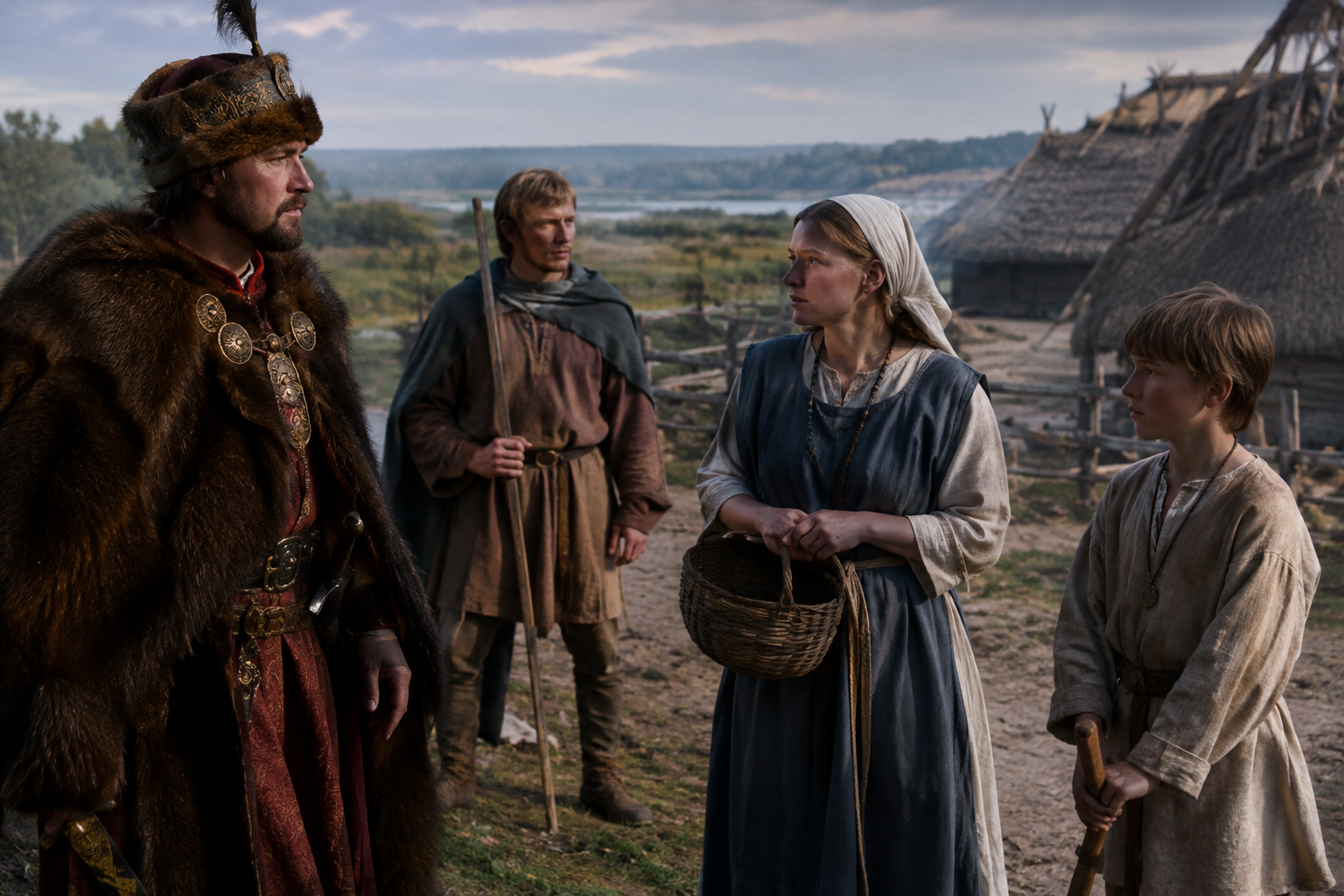
At Kunpeszer in Hungary, a man buried around AD 609 has become one of the more intriguing signposts for the Y-DNA haplogroup R1a1a1b1a2b3. He is recorded as sample KUP015, described as part of a Germanic-associated Avar elite grave. That label alone tells you this was not a simple world of neat ethnic boxes. In the early seventh-century Carpathian Basin, imperial power, steppe traditions, local communities, and mobile warrior groups were all rubbing against one another.
That is exactly why this haplogroup is so interesting in the ancient record we have here. Rather than appearing in one tidy cultural setting, R1a1a1b1a2b3 turns up in a Bronze Age individual from Estonia, in an early medieval elite burial in Hungary, and in medieval western Slavic settlers in what is now Sachsen-Anhalt in Germany. Y-DNA traces one direct paternal line, not a whole identity, but this small cluster still suggests a lineage that moved through very different historical worlds.
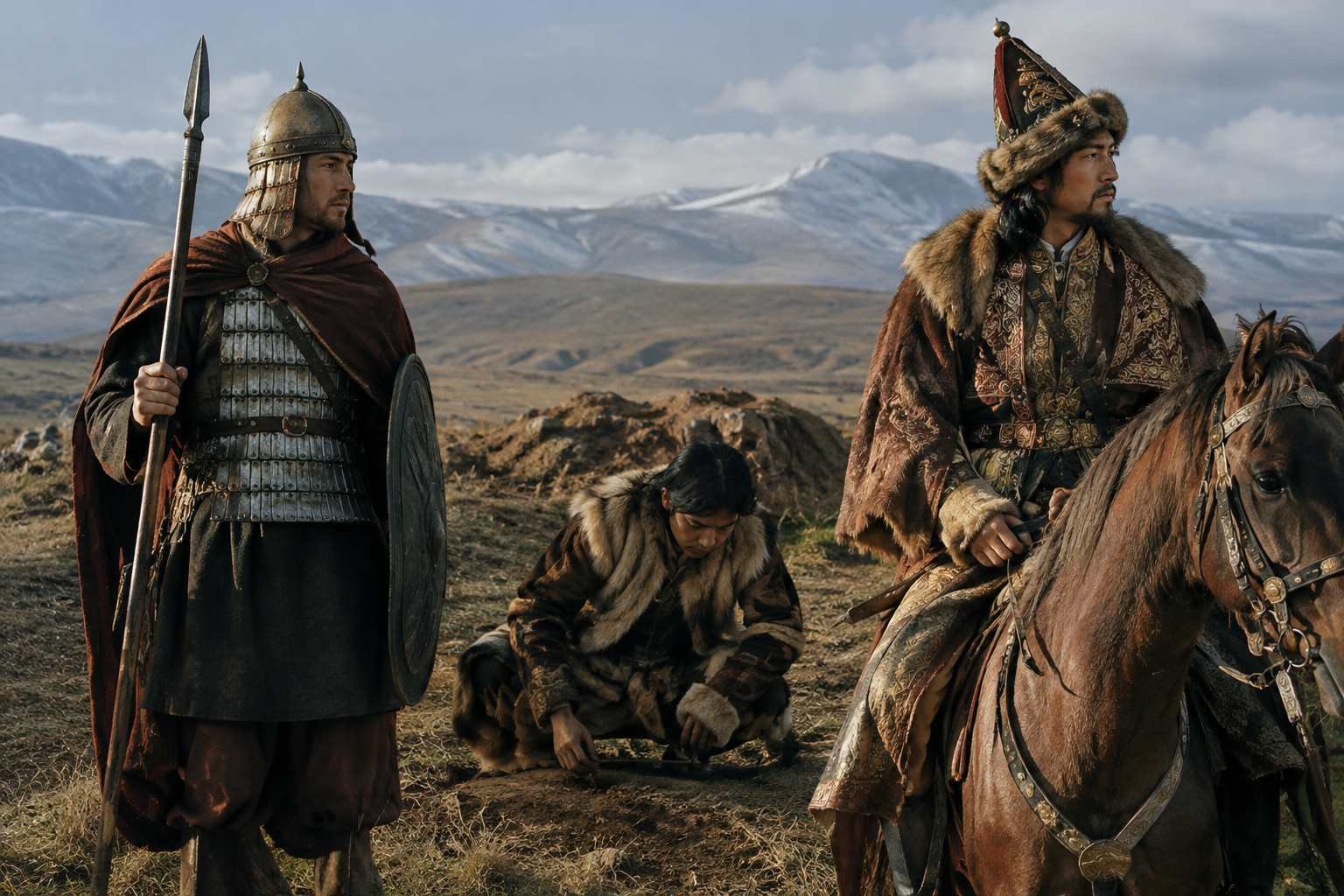
The Kunpeszer sample KUP015, dated to about AD 609, sits in a period when the Carpathian Basin was politically dominated by the Avar Khaganate. But the archaeology and genetics of that world have repeatedly shown that "Avar" was not a single biological type. Elite cemeteries could include people with varied ancestry profiles and quite different paternal backgrounds, reflecting alliances, incorporation, and the messy realities of power on the frontier between steppe polities and post-Roman Europe.
That makes KUP015 valuable not because he can be turned into a mascot for one people, but because he shows this paternal branch present in a high-status milieu shaped by both steppe and European connections. A major ancient DNA study of the region, published in Cell, helped underline just how diverse these early medieval communities could be. For R1a1a1b1a2b3, Kunpeszer places the lineage inside a historically charged zone where mobility was not exceptional but normal.
There is also a useful caution here. The grave is described as Germanic Avar elite, but that should not be flattened into a claim that this haplogroup was somehow "the" lineage of Germanic groups, or Avars, or any ruling clan. One burial gives us one paternal thread. What it does show is that this thread was woven into the complicated fabric of early medieval Hungary.
A quite different setting appears at Niederwünsch in Sachsen-Anhalt, where two samples, NDW071 and NDW039, are dated to around AD 1100 and described as western Slav settlers. By this point we are in the medieval eastward-contact zone of the German lands, where Slavic-speaking communities had long occupied broad areas east of the Elbe and Saale, and where frontier society was formed through settlement, lordship, conversion, and gradual political transformation.
The importance of having two individuals from the same site associated with this haplogroup is not that they must have been close kin; we cannot assume that from the summary alone. The point is subtler and, in some ways, stronger. It suggests that this paternal line was not just passing through in a single exceptional individual, but present within a local medieval community identified archaeologically as western Slavic.
That matters because medieval central Europe was full of overlapping populations whose labels in chronicles do not always map neatly onto biology. In Niederwünsch, R1a1a1b1a2b3 appears in a settlement context tied to western Slavic presence inside what later became firmly German territory. It is a fine reminder that frontiers are usually inhabited places before they become national myths.
The oldest sample in this set is X15, dated to around 1100 BC in Bronze Age Estonia. Now, this is where one must be especially careful. A Bronze Age date in the eastern Baltic does not mean we can draw a straight, triumphant arrow from this man to every later carrier of the same branch. But it does give the article something precious: time depth.
By the Late Bronze Age, the eastern Baltic was already part of wider northern European exchange systems. Communities there were not isolated relics perched at the edge of the map. They were involved in regional networks of metal, amber, ideas, and marriage. Finding this haplogroup in Bronze Age Estonia shows that one branch later seen farther south and west in medieval contexts was already present in the Baltic long before the better-documented political formations of the first millennium AD.
A genetic study of ancient Baltic-region populations published in Current Biology helped show how deep and regionally complex these northern histories are. Even when a precise subclade history remains incomplete, the Estonian sample anchors R1a1a1b1a2b3 in a prehistoric landscape that mattered enormously for later European population history.
Baltic Connections in Early Medieval Finland
The larger haplogroup behind this name, R1a, is one of the best-known paternal lineages in Eurasia, especially across parts of eastern Europe, central Europe, and the steppe zone. But that broad fame can be misleading. R1a1a1b1a2b3 is a much narrower branch, and the evidence in hand here is not a licence to transfer every grand narrative about R1a onto this precise subclade.
What can be said, based on these samples, is more measured and more interesting. This branch appears in three very different contexts: Late Bronze Age Estonia, an elite seventh-century grave in Avar-period Hungary, and western Slavic-associated medieval settlement in central Germany. That combination points to a paternal line at home in the broad north-central and east-central European world, and one capable of turning up in both local communities and politically mobile frontier settings.
In other words, this is not the story of a single migration event. It is a story of persistence across changing archaeological landscapes: Baltic Bronze Age societies, post-Roman steppe-facing polities, and medieval Slavic settlement zones.
If all we had were KUP015 from Kunpeszer, we might be tempted to tell a frontier-warrior story. If all we had were NDW071 and NDW039 from Niederwünsch, we might make it a Slavic medieval story. If all we had were X15 from Estonia, we might leave it in the Bronze Age Baltic. The point of putting these finds together is that the haplogroup refuses to stay in one neat compartment.
That is often how the past actually behaves. Paternal lines can survive enormous shifts in language, allegiance, burial custom, and political order. The men carrying them may have lived as Bronze Age Baltic villagers, early medieval elites under Avar rule, or medieval western Slavic settlers in eastern Germany, without any contradiction at all. History is not obliged to arrange itself around our modern categories.
For someone exploring a present-day paternal line assigned to R1a1a1b1a2b3, the clearest insight from these ancient finds is continuity across the Baltic and east-central European historical zone, with appearances in both prehistoric and medieval settings. The strongest lesson is not that this branch belonged to one tribe or one kingdom, but that it endured across very different societies and frontiers. In that sense, its ancient record is less a badge of a single identity than a trace of long-term presence in one of Europe's most mobile and entangled regions.

Comments