Haplogroup R1a1a1b1a1a1a

– 6 min read


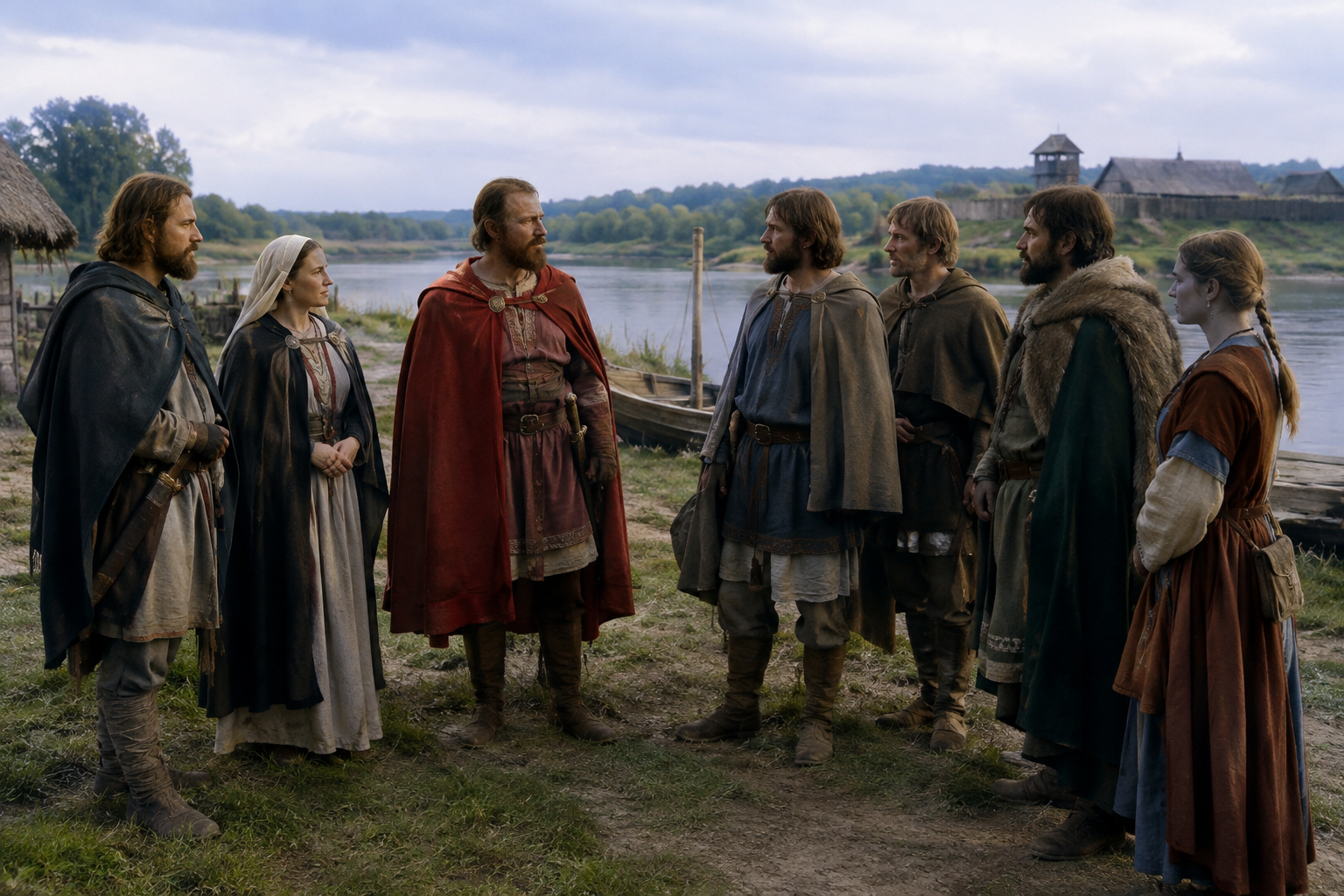
Some Y-DNA branches announce themselves with a neat, famous story. R1a1a1b1a1a1a does not quite do that. It is a very specific paternal subclade within the wider R1a family, and that is exactly what makes it interesting. When a branch becomes this narrow, the historian has to stop pretending that one simple label explains whole peoples, languages, or kingdoms. Instead, what we get is something better: a close look at how one paternal lineage appears in real archaeological contexts, in real places, over many centuries.
Y-DNA traces the direct paternal line only: father to son to son. It does not describe a person's full ancestry, still less their whole identity. But in the right circumstances it can illuminate patterns that written history alone cannot. In the case of R1a1a1b1a1a1a, the most striking supplied evidence comes from the lands between Croatia and medieval Poland, from the age of post-Roman upheaval to the world of the Piasts. That is a wonderful historical corridor: Goths, frontier communities, early medieval settlement, fortified centers, and the emergence of dynastic power.
Broadly speaking, this branch sits within haplogroup R1a, one of the major Y-chromosome lineages found across parts of Europe and Eurasia. The deeper history of R1a is much older and wider than this particular subclade, and we should not lazily pour the whole story of R1a into one narrow descendant branch. Still, the medieval samples here suggest that this line was part of the paternal landscape of east-central Europe, and perhaps of some of the mobile populations moving through the Balkans and the Carpathian world in late antiquity and the early Middle Ages.
The wider R1a family is often discussed in connection with prehistoric and Bronze Age movements across the Eurasian steppe and into Europe. That broad background matters, but only with caution. For a subclade such as R1a1a1b1a1a1a, the safer question is not "what civilization did it belong to?" but "where do we actually see it in securely dated remains?"
What the supplied evidence points to is not a single ethnic label but a zone of continuity and movement stretching from the Balkans north into Polish lands. That is historically plausible terrain for repeated reshaping of paternal lineages. Roman power weakened, Gothic groups moved through the region, local communities persisted, new political orders formed, and by the eleventh and twelfth centuries fortified Piast centers stood across Poland. A lineage could survive all that without belonging to just one people forever.
In other words, R1a1a1b1a1a1a is best understood here not as the badge of one tribe, but as a paternal thread appearing in several historical settings. Ancient DNA lets us watch that thread appear in the record rather than merely guessing where it might have been.
The southern end of the story begins in Croatia. One notable sample is I26748, described as a Visigoth/Ostrogoth Era Croatia Sisak Pogorelec Sisak individual dated to 400 AD. Sisak, the Roman Siscia, was no sleepy backwater. It sat in a strategic zone where imperial administration, military movement, and post-Roman migration met. A paternal lineage found in that setting cannot be reduced to one tidy label. Was it carried by a man tied to Gothic-era movements, by someone from the local provincial population, or by a community already mixed by frontier life? The responsible answer is that the context is suggestive, not conclusive. But it shows this paternal branch present in a key late antique Balkan landscape.
A second Croatian sample, VEM054, comes from Early Medieval Croatia Velim-Velistak and is dated to 750 AD. That pushes the story into the early medieval period, after the collapse of Roman rule and amid the formation of new local societies in Dalmatia and the inland Balkans. Taken together, I26748 and VEM054 hint that this paternal line was not a one-off appearance. It was present in the region across centuries of profound political change.
Then the evidence shifts north in a particularly exciting way. Several supplied samples come from Santok in the Lubusz Province, near Gorzw Wielkopolski, dated to 1100 AD: PCA0502, PCA0510, PCA0513, PCA0517, and PCA0380. Santok was one of the important strongholds of early Piast Poland, sitting at a strategic junction of rivers and routes. It has often been described as a frontier gate of the Piast realm. To find repeated appearances of the same paternal branch in that milieu is precisely the sort of thing that makes ancient DNA historically valuable. It suggests this lineage was not merely passing through the map, but part of a settled and politically significant medieval population.
Other Polish samples extend that picture: PCA0309 from Medieval Poland Konskie Sub Carpathia, and PCA0533 plus PCA0557 from Medieval Piast Era Poland Silesia Milicz, both dated to 1100 AD. These finds spread the evidence across different parts of medieval Poland. The cumulative effect is important. Rather than one isolated man, we are looking at a paternal line appearing in several Piast-era settings.
The Croatian and Polish evidence together encourages a historical question: how do we connect a late antique Balkan appearance with later medieval Polish examples? Not by claiming direct descent from one excavated man to another. That would be absurd. But by noticing that the lands between the Balkans, the Carpathians, and the North European Plain were linked for centuries by migration, warfare, alliance, and settlement.
The Gothic-era sample from Sisak sits comfortably beside the broader picture of mixed late antique communities in southeastern and central Europe. Readers interested in that world may enjoy MyTrueAncestry's discussion of Gothic complexity in Goths as a Multi-Ethnic Community: Ancient DNA. One of the great lessons of archaeogenetics is that Gothic communities were not biologically uniform blocs marching about with identical ancestry profiles. They were often socially and genetically mixed.
That matters here because it stops us from making crude assumptions. A paternal branch in a Gothic-era context does not become "a Gothic haplogroup" for all time. What it can show is that this lineage was among the men living in, or moving through, that historical world. By the high Middle Ages, the same branch turns up in Piast Poland, where fortified settlements, church organization, and dynastic rule had transformed the landscape.
The supplied noble-family field appears blank here, so there is no responsible way to assign this haplogroup to a named later noble house or to a particular castle lineage. Better to say so plainly than to invent one. But the absence of a family list does not leave us empty-handed, because the Piast-era archaeological settings themselves are bound up with the history of strongholds and dynastic centers.
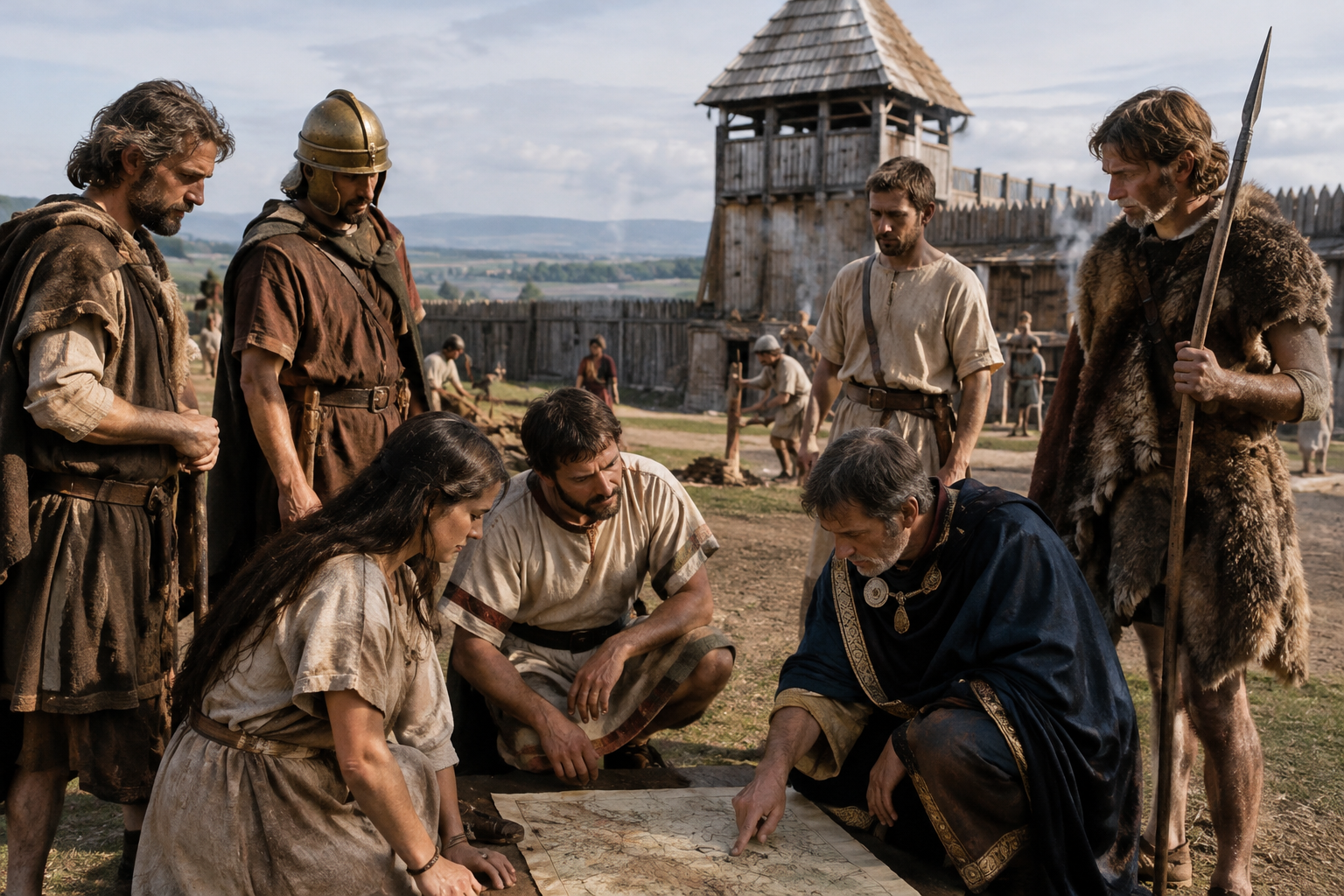
Santok is the obvious example. Long before later stone castles came to dominate the European imagination, places like Santok mattered as defended seats of power. Ramparts, river crossings, control of movement, tribute, administration: this was the machinery of rulership. In such places ancient DNA gives us access not just to kings, but to the men who formed the paternal fabric of frontier society.
Milicz in Silesia and the Konskie area in Sub Carpathia remind us that Piast Poland was regionally varied. Silesia looked west and south as well as toward the Polish heartland; Sub Carpathia opened onto another set of routes toward the Carpathian world. The appearance of this same lineage across these regions may reflect continuity, movement between Piast centers, or both. What it does not prove is that every elite family in those regions shared one paternal ancestor.
For readers curious about broader medieval dynastic context, the Piast story is explored further in another community article on foreign founders and royal links, which nicely shows how genetics and genealogy can illuminate one another without collapsing into fantasy.
Explore Piast Royal Connections
So what does R1a1a1b1a1a1a reveal? First, that a very specific paternal lineage can be tracked in ancient and medieval Europe through securely identified individuals such as I26748, VEM054, PCA0502, PCA0510, PCA0513, PCA0517, PCA0380, PCA0309, PCA0533, and PCA0557. Second, that the geography of those finds matters: Croatia and Poland are not random dots, but parts of a connected historical zone shaped by post-Roman change and medieval state formation.
Third, it reminds us that ancient DNA works best when it is modest. Shared haplogroups do not prove noble descent. They do not certify ethnicity. They do not turn archaeology into family legend. What they do offer is a firmer sense of who was present in particular regions, and how paternal lines could persist, spread, or reappear across centuries.
If you want to see the Polish evidence set against a broader eastern European backdrop, MyTrueAncestry also has useful reading on Slavic population history and medieval regional change. That is often where the real excitement lies: not in claiming too much, but in seeing how written history and buried DNA begin to talk to one another.
If your own Y-DNA falls within the R1a world, a branch like R1a1a1b1a1a1a can open a window onto frontier Croatia, Piast strongholds, and the shifting paternal history of medieval east-central Europe. MyTrueAncestry lets you compare your DNA with ancient individuals and historical populations, offering clues to deep ancestry and regional connections, while not claiming direct descent from any one excavated person or dynasty.
Upload your DNA and see whether your results connect with the ancient worlds behind sites like Sisak, Velim-Velistak, Santok, Milicz, and beyond.

Comments