Haplogroup R1a1a

– 6 min read


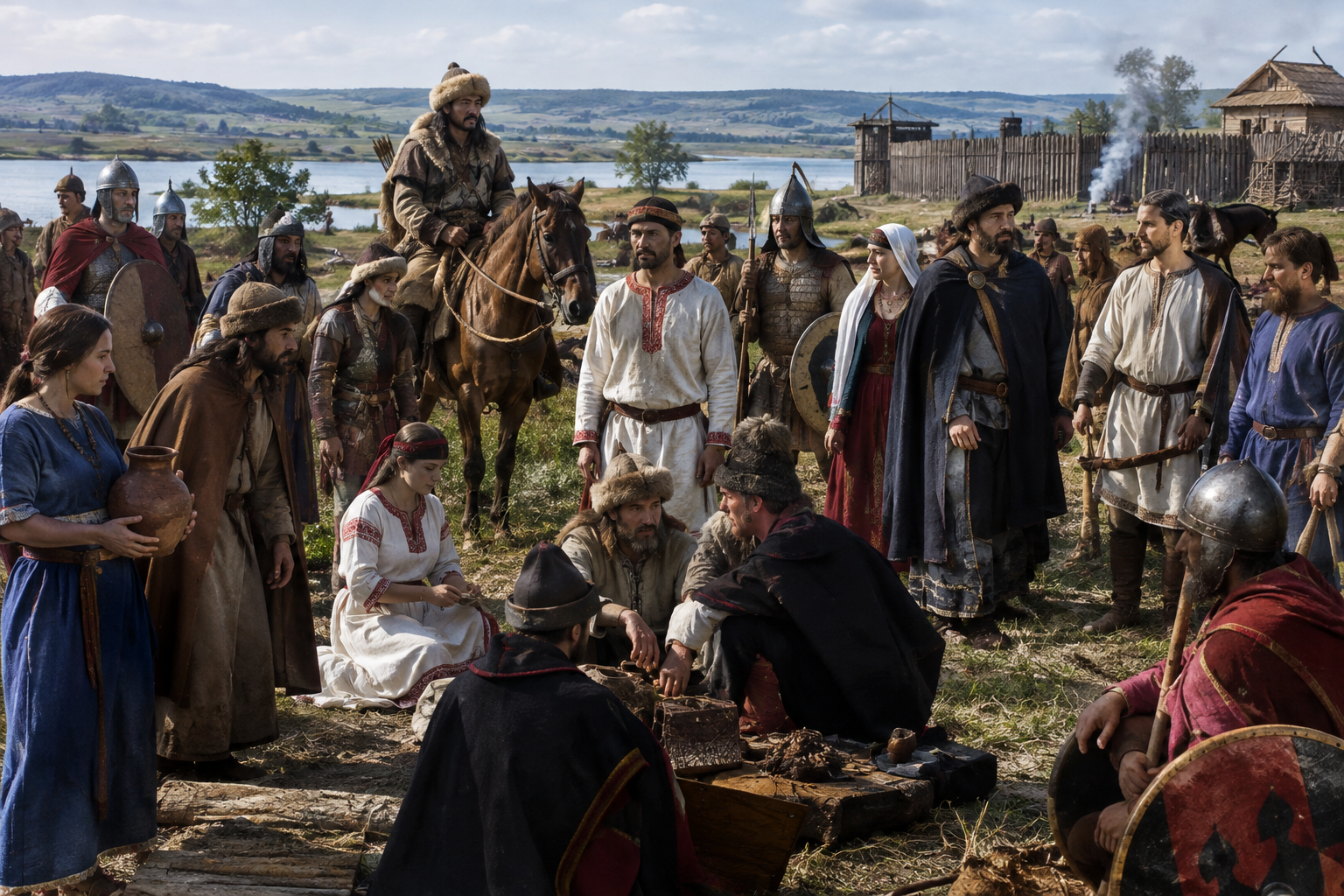
There are some Y-DNA haplogroups that sit neatly inside one chapter of history. R1a1a is not one of them. It turns up in a far broader and more unruly story: Bronze Age communities in Central Europe, Iron Age groups on the north Pontic steppe, Gothic-era burials in Poland, post-Roman and Longobard-period Pannonia, Viking Age Scandinavia, medieval Russia, and Piast-era Poland. If you want a paternal lineage that forces us to think across frontiers rather than inside them, this is it.
That is also why R1a1a matters to ancient DNA research. Y-DNA haplogroups trace one very particular line of descent: the direct paternal line, father to son to son. They do not describe a person's full ancestry, culture, or identity. But because they follow that narrow line so well, they can illuminate long-range patterns of movement and continuity that written history alone can miss. In the wider Y-chromosome tree, R1a1a belongs to one of the major paternal branches found across large parts of Eurasia, with many downstream subclades that took very different historical paths. So when we talk about R1a1a, caution matters: the broad branch is real, but its finer history lies in the details.
The deeper history of R1a1a is often discussed in relation to prehistoric Eurasia, especially the long corridor stretching from Central Europe into the steppe and beyond. Ancient DNA has made that discussion much sharper. Rather than relying only on modern distributions, we can now watch paternal lineages appear in actual burials from different centuries and regions.
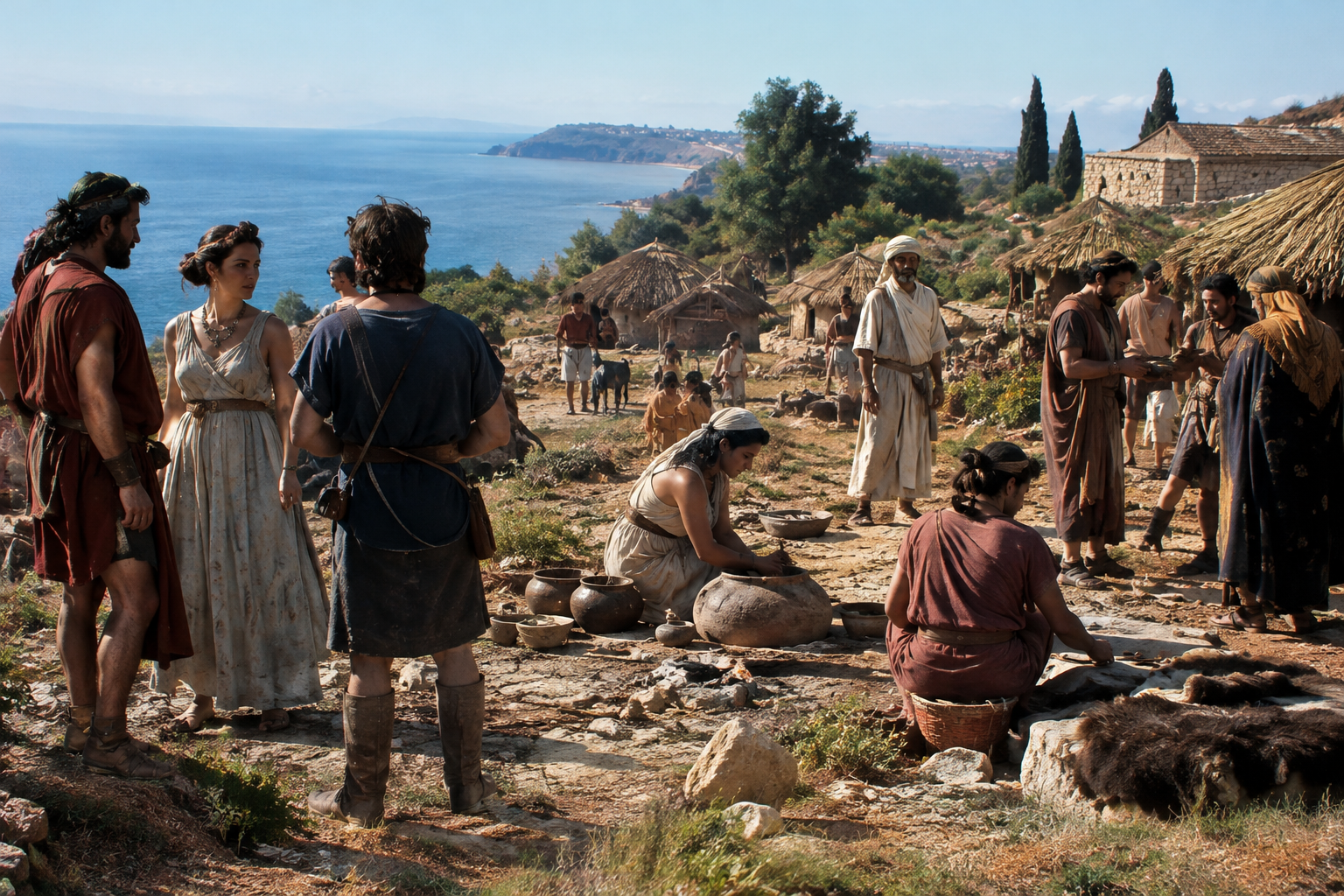
The supplied evidence hints at just such a spread. In Central Europe, we find early examples in Bronze Age Czech Moravska Nova Ves Year:2100 BC ID:I5042, Early Bronze Age Poland Hrebenne Lublin Year:2130 BC ID:poz792, and Early Bronze Age Poland Sandomierz Swiniary Stare Year:1950 BC ID:poz534. Later still, Late Bronze Age Poland Zerniki Gorne Year:1450 BC ID:poz661 suggests that paternal lines within this broad haplogroup were present across parts of Bronze Age Poland over many centuries. That does not by itself prove uninterrupted descent from one community to the next, but it does place R1a1a firmly in the landscape of prehistoric Central and East-Central Europe.
Move southeast, and the same broad lineage appears in the north Pontic world: Pre-Cimmerian Hillfort Dykyi Sad Mykolaiv Ukraine Year:1100 BC ID:UKR150, Early Iron Age Ukraine Germanic Petrykiv Ternopil Year:800 BC ID:UKR170, and Scythian Hillfort Bilsk Poltava Year:400 BC ID:UKR083. Then farther east again, there is Eastern Scythian Kazakhstan Year:650 BC ID:MJ51. This is not a tidy ethnic tale in which one haplogroup "belongs" to one people. It is better understood as evidence that related paternal branches were circulating across the worlds of hillfort farmers, steppe riders, and frontier societies that linked Europe with Inner Asia.
Some of the most revealing samples are those that show R1a1a turning up in moments of obvious movement. One example is Gothic Wielbark Poland Kowalewko Oborniki Year:200 AD ID:PCA0002. The Wielbark cultural horizon has long featured in debates about mobility around the Baltic and into the Black Sea zone. A sample like PCA0002 does not solve those arguments by itself, but it does show this paternal lineage among a population central to discussions of Gothic-period connections between northern and eastern Europe.
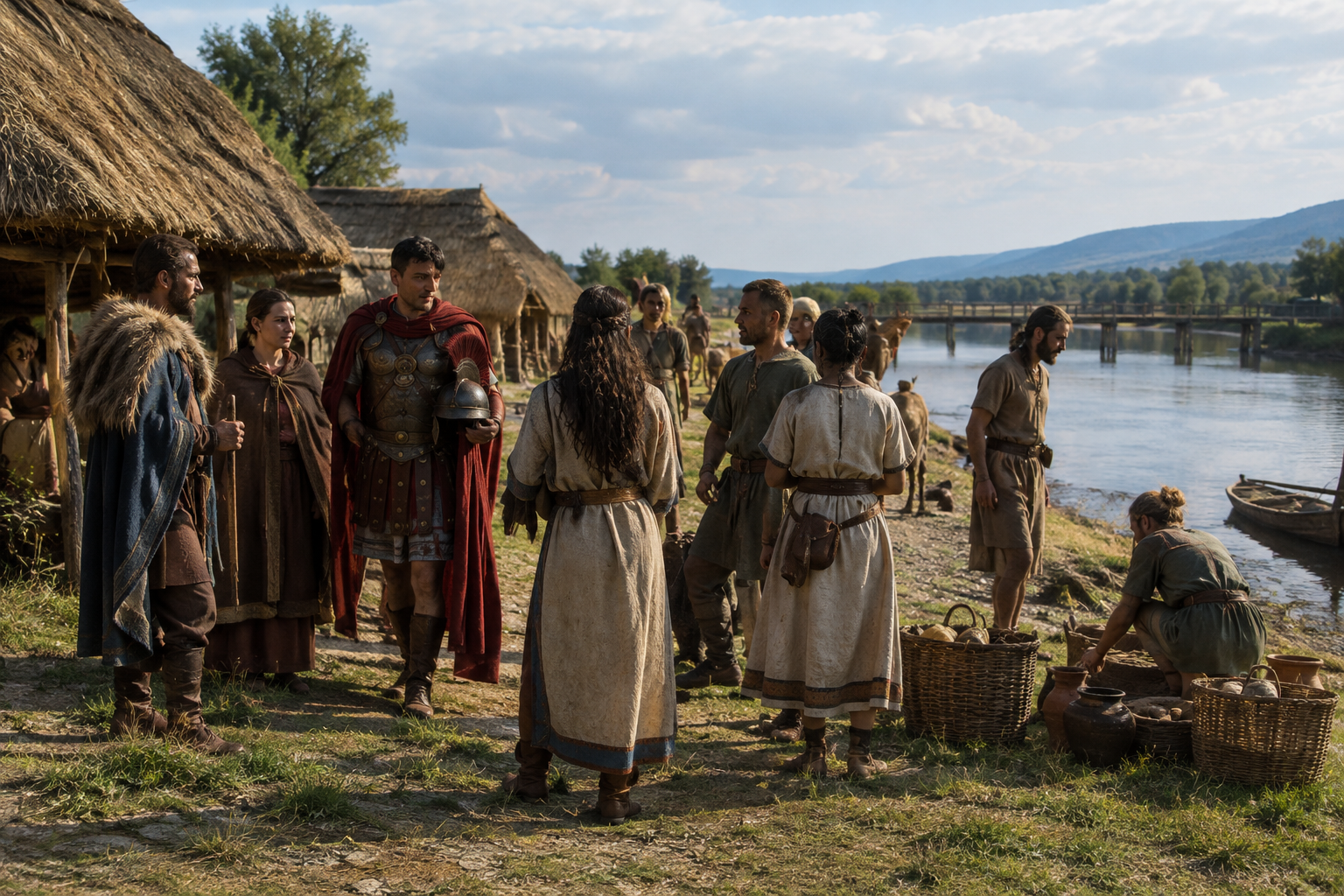
Then there is the Carpathian Basin in late antiquity and the early Middle Ages. Here the evidence is strikingly dense: Germanic Post Roman Pannonia Savaria Szeleste Barbaricum Hungary Year:525 AD ID:SZL035, Longobard Period Pannonia Savaria Szeleste Barbaricum Hungary Year:525 AD ID:SZL018, Post Roman Period Szeleste Savaria Pannonia Prima Hungary Year:525 AD ID:SZL080, and later Migration Period Hungary Rakoczifalva Year:650 AD ID:RKO004 and Migration Period Hungary Rakoczifalva Year:650 AD ID:RKF265. This cluster places R1a1a in precisely the sort of mixed, post-imperial world where Roman provincial survivors, incoming groups, military retinues, and shifting loyalties met on the ground.
That is one of the great gifts of archaeogenetics. It reminds us that the old Roman frontier did not separate neat blocks of humanity. It was porous, unstable, and crowded. Men carrying related paternal lineages could end up in Gothic Poland, in post-Roman Pannonia, or in Longobard-era settings without those places being culturally identical.
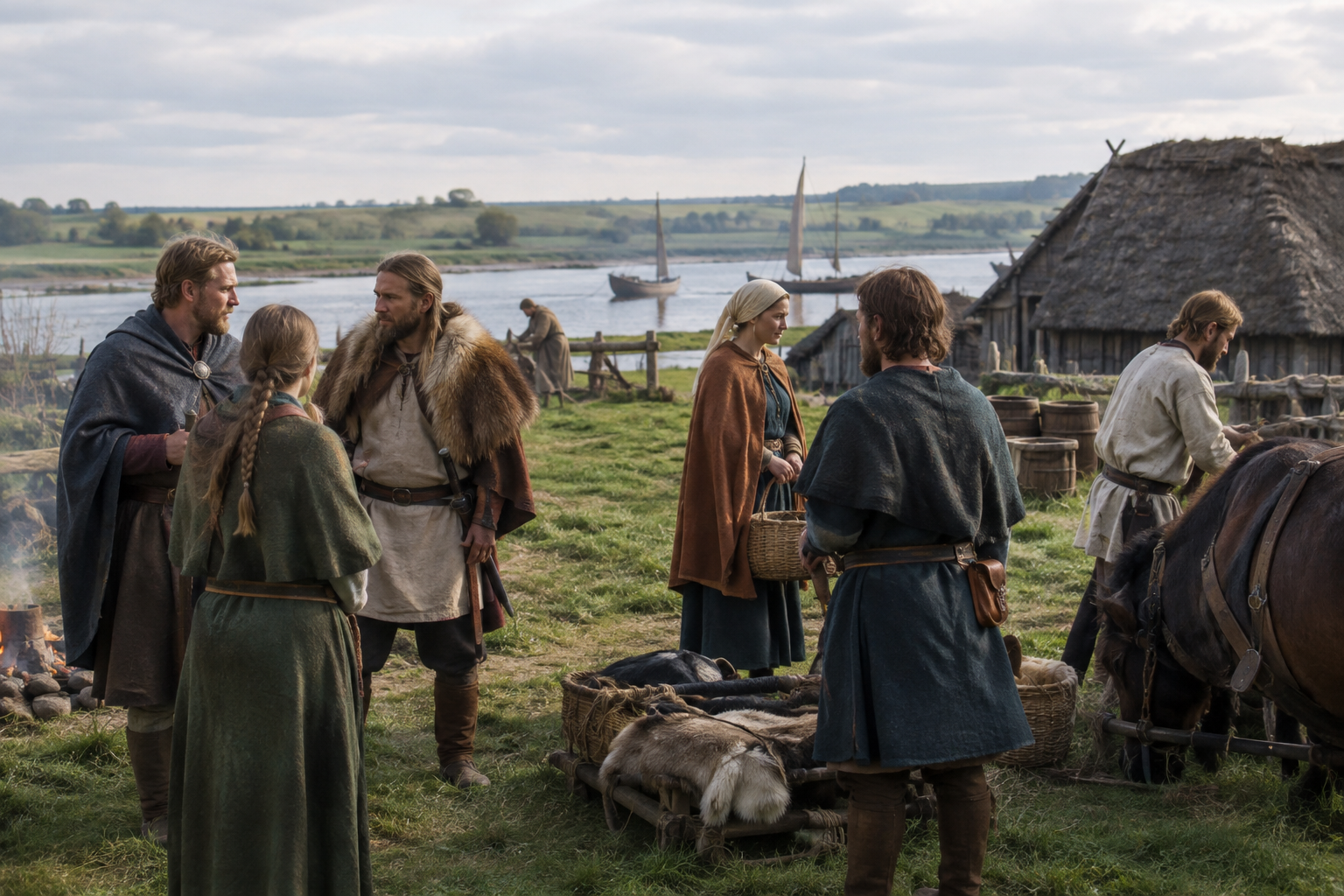
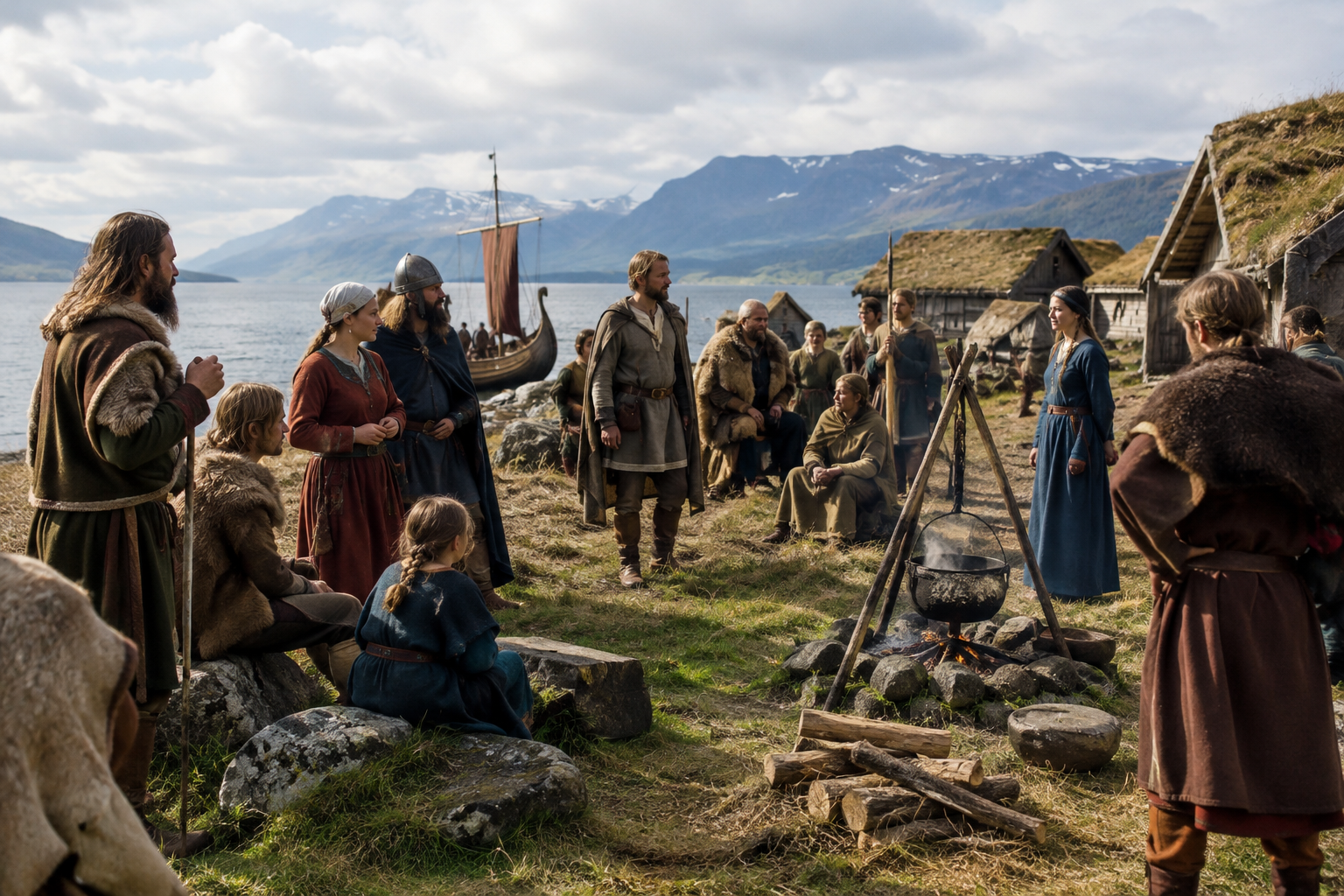
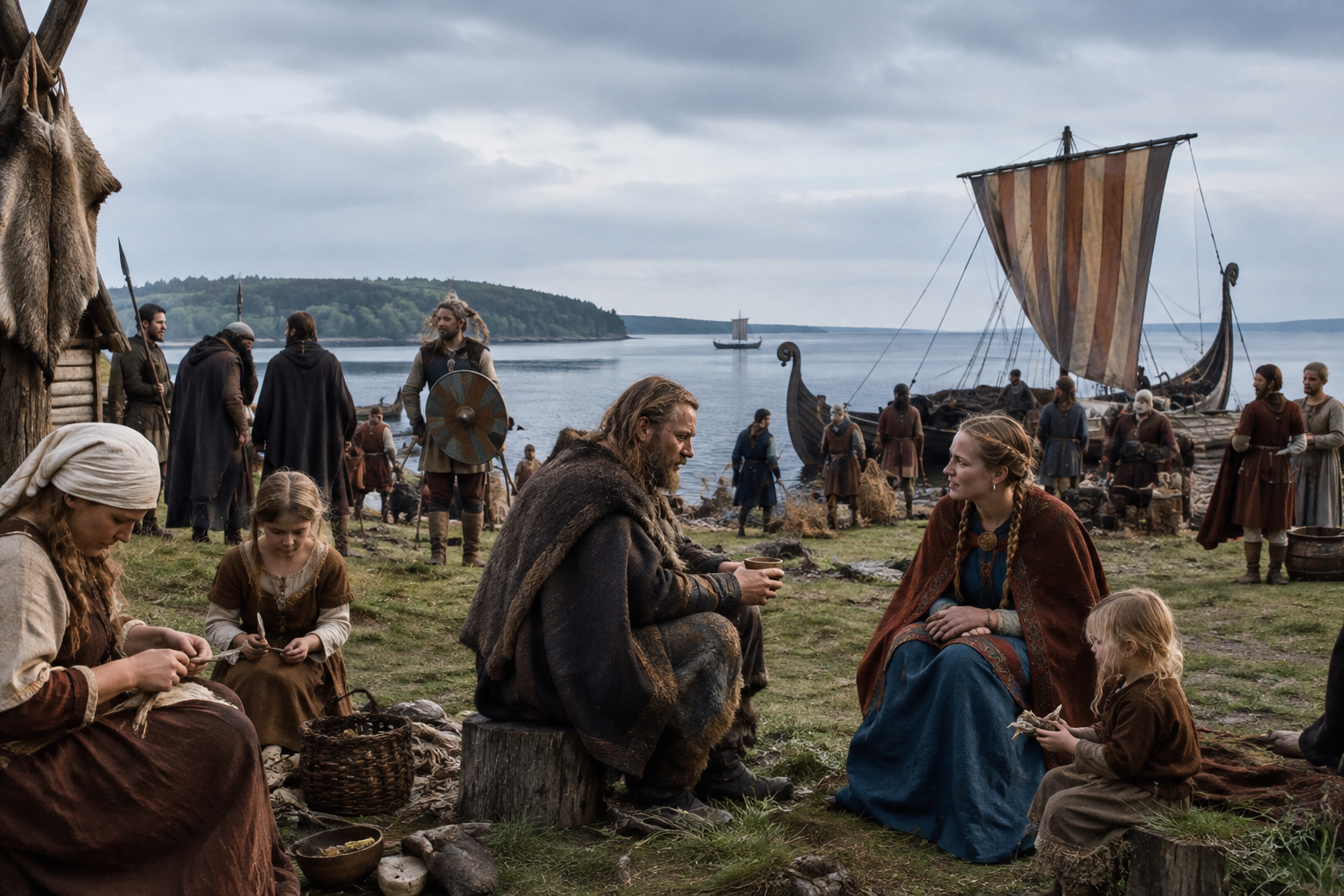
By the early medieval period, the story broadens again. R1a1a appears in Viking Age Oppland Norway Year:950 AD ID:VK421 and in the famous Viking Age Axe Warrior Bodzia Poland Year:997 AD ID:VK153. The Bodzia burial is especially evocative because it belongs to that lively zone where Scandinavian, Slavic, and wider eastern connections overlapped. A shared broad haplogroup between a Norwegian sample and a high-status burial in Poland does not prove close kinship, of course, but it does underline how widely some paternal branches had spread by the Viking Age.
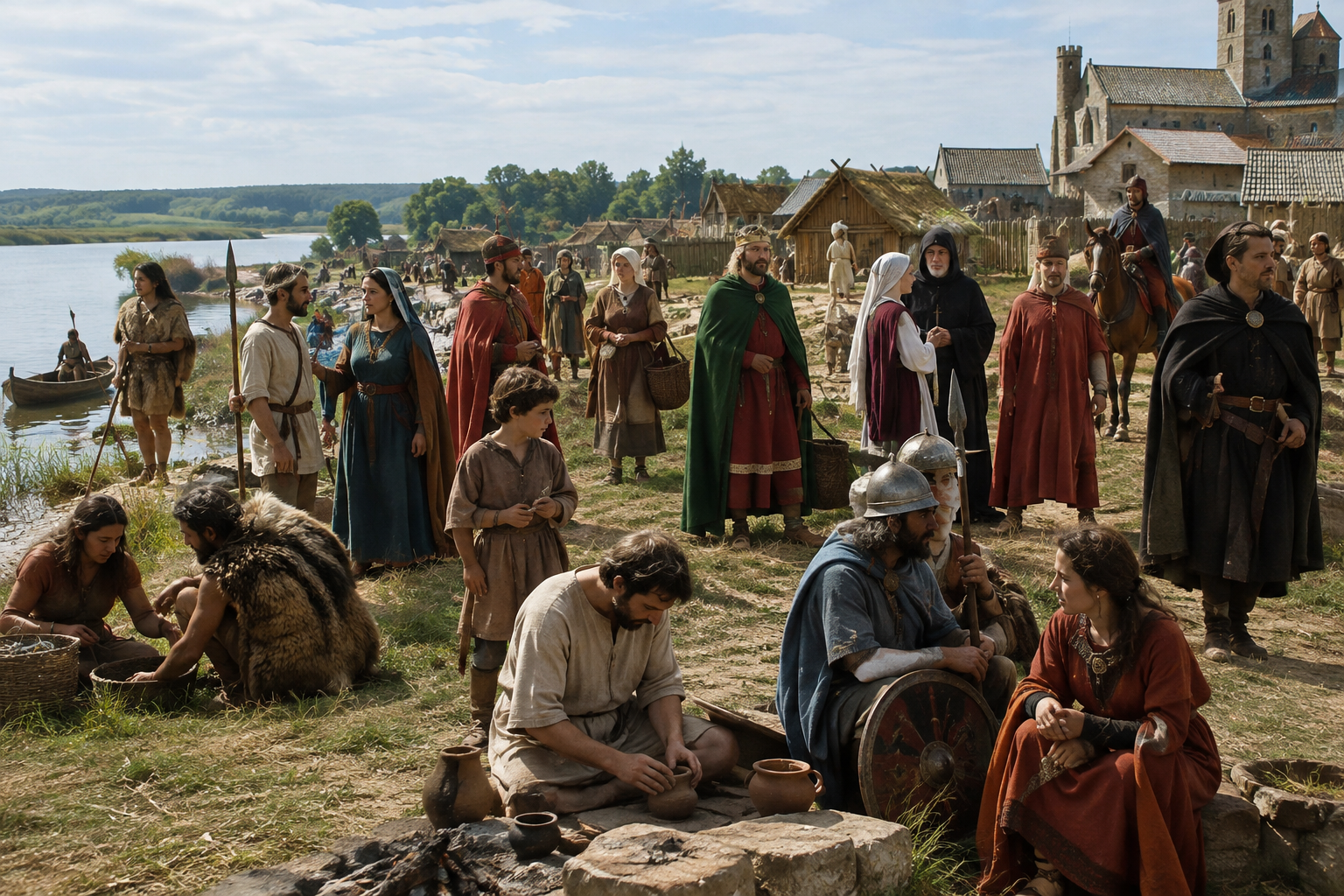
In medieval eastern Europe the pattern continues with Medieval Russia Shekshovo Year:1000 AD ID:SHE005, while in Poland there is an especially interesting series: Medieval Poland Piast Dynasty Lad Year:950 AD ID:PCA0187, Piast Dynasty Greater Poland Oblaczkowo Lad Year:1100 AD ID:PCA0218, Medieval Piast Era Poland Silesia Milicz Year:1100 AD ID:PCA0560, and Medieval Poland Lubusz Rumin Year:1100 AD ID:PCA0244 and PCA0246. Together these samples show that R1a1a was not simply a relic of prehistory. It remained part of the paternal landscape in the centuries when medieval kingdoms, Christian institutions, and dynastic politics were taking shape.
There is also an eastern and steppe-facing dimension that should not be ignored. Late Kushan Empire Central Asia Year:220 AD ID:L5139 and L8629, alongside Turkic Tribe Steppes Year:732 AD ID:DA94, demonstrate that the wider history of this haplogroup cannot be boxed inside Europe. R1a1a belongs to a much larger Eurasian story, one in which Central Asia was not a distant fringe but a crucial zone of contact.
The medieval material naturally tempts us toward dynasties. If R1a1a appears in Piast-era contexts, can we leap from ancient burials to royal houses, noble families, and their strongholds? This is exactly where careful history is needed. A broad haplogroup can link men across enormous spans of time and territory without proving that one was the direct ancestor of another. Even within a documented dynasty, not every claimed branch, cadet line, or later associated noble house can be genetically assumed to match.
Still, the historical setting matters. In the lands of Greater Poland, Silesia, and Lubusz, paternal lines such as R1a1a formed part of the human background from which medieval elites emerged. Castles, fortified seats, and dynastic burial places preserved memory in stone, while Y-DNA preserves a different sort of record in biology. The two records are not the same thing, but together they give us a fuller sense of continuity and change. A medieval stronghold tells us where power was staged; ancient DNA can sometimes tell us something about the men who moved through that world.
That is why Piast-associated samples are so compelling. They sit at the meeting point of archaeology, dynastic history, and genetics. They do not allow us to assign every later noble family in the region to one paternal line. What they do allow is a more grounded picture of the male lineages present in the political heartlands of early medieval Poland.
The most interesting thing about R1a1a is not that it can be made to stand for one people, one language, or one heroic migration. Quite the opposite. Its ancient DNA trail shows how misleading those tidy labels can be. Here is a paternal lineage found in Bronze Age Central Europe, Iron Age Ukraine, Scythian-linked settings, Gothic-period Poland, post-Roman Hungary, Viking Age Norway, medieval Russia, and Piast Poland, with extensions into Central Asia and the steppe. That is not a single tribe marching through history. It is a lineage embedded in many societies.
For family historians, that is worth lingering over. Written genealogies usually begin late and privilege the famous. Y-DNA reaches behind the documents, though only along one narrow paternal thread. It can show that a lineage was present in a region long before the first charter, castle, or coat of arms. But it cannot, on its own, prove that a modern tester descends from a Scythian rider, a Viking warrior, or a Piast nobleman simply because they share the broad label R1a1a.
What it can do is something subtler and, in many ways, more interesting: place your paternal line inside the great human muddle of Eurasian history.
If your Y-DNA belongs to R1a1a, or if you are simply curious about how ancient DNA can illuminate paternal ancestry, MyTrueAncestry lets you compare your results with archaeological samples from the Bronze Age, Iron Age, Viking Age, and medieval world. Those matches may offer remarkable historical context, even when they do not prove direct descent from a particular ancient individual or noble family.
Upload your DNA and see whether your ancestry connects most closely with the worlds of Bilsk, Bodzia, Pannonia, Piast Poland, or the wider steppe.
Comments