Haplogroup R1

– 7 min read


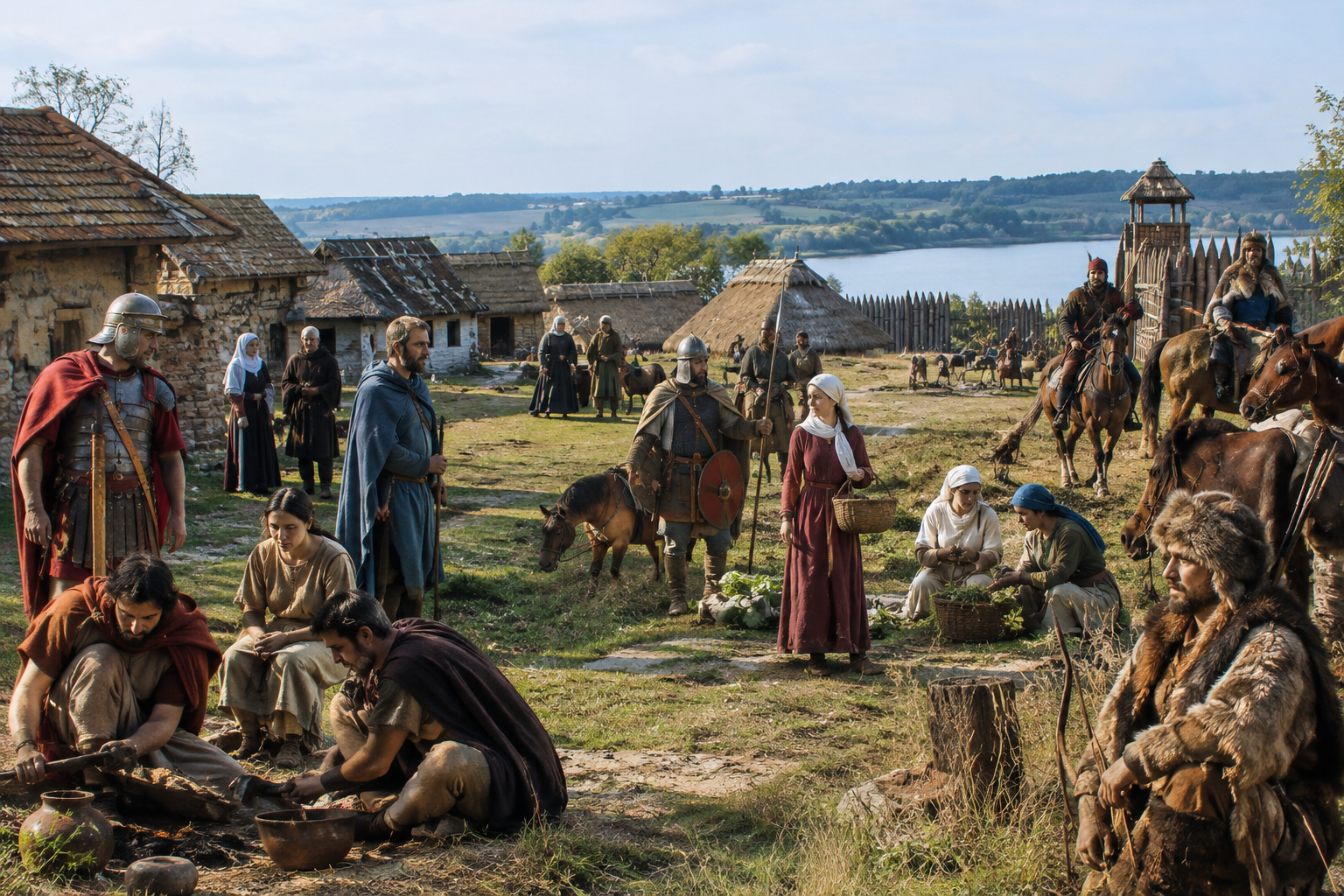
Haplogroup R1 is one of those deceptively simple labels that opens an enormous historical door. On the Y chromosome, R1 is a deep paternal lineage, ancestral to branches that would later become important across much of Eurasia. That matters because Y-DNA follows one narrow line - father to son to son again - and so it can preserve clues about movements of men, families, and populations across very long stretches of time. It does not describe a person's whole ancestry, still less a whole identity, but it is often remarkably good at showing where one thread of the historical fabric has been pulled and rewoven.
What makes R1 especially interesting is not a single kingdom, tribe, or language, but its breadth. In the ancient DNA record it appears across a striking range of landscapes: Mesolithic and Neolithic eastern Europe, Bronze Age Britain, Iron Age steppe worlds, Roman and post-Roman frontier zones, and medieval towns from England to Poland and Sweden. That does not mean all these men belonged to the same close family. Quite the reverse. It shows how an old paternal trunk can branch and rebranch until it turns up in very different societies indeed.
In the wider Y-chromosome tree, R1 sits above later branches that became widespread in Europe and parts of Asia. For a broad lineage like this, it is important not to collapse everything into one story. The earliest history of R1 belongs to prehistory, long before written names, heraldry, or castles. Its significance lies in how ancient DNA has placed related paternal lines among hunter-gatherers, later farming-era populations, and the mobile communities of the Eurasian steppe.
Some of the earliest signposts in the material supplied come from eastern Europe. NEO494, from Ancient Ukraine Vasilevka dated to 8705 BC, reminds us that lineages within the broader R world were already present among very early post-Ice Age populations. Another early marker, NEO210 from Ancient Russia Golubaya Krinitsa dated to 5278 BC, shows R1-associated paternal ancestry in a later prehistoric context further east. These finds do not allow us to draw a neat arrow across a map and declare a single migration route. They do, however, anchor R1 in the long prehistoric story of northern and eastern Eurasia.
The Baltic region joins that picture too. Tamula3 from Ancient Tamula Estonia, dated to 3700 BC, places this paternal background in a zone that would remain important for later exchanges between forest, coast, and inland Europe. What is striking here is continuity of geography rather than continuity of family. The regions in which R1 appears early are also regions that keep reappearing in later prehistoric and medieval population history.
Explore North Pontic ancient migrations
By later prehistory, the story becomes broader and more dramatic. We find R1-linked paternal lines in worlds connected with mobility, exchange, and sometimes spectacular distance. 11KBM1, the Tarim Basin Mummy Xiaohe dated to 1900 BC, belongs to one of the most arresting archaeological settings in Eurasia: the dry basinlands of far western China, where preservation has made ancient individuals feel almost unsettlingly present. This sample is a reminder that paternal lineages connected to the wider R1 family were not confined to Europe. They were part of the great east-west human networks of the Bronze Age.
At the western edge of Europe, I5470 from Bronze Age Leith Edinburgh Scotland dated to 1535 BC shows the same broad paternal heritage on the North Sea fringe. It is a useful corrective to tidy historical thinking. The men who carried branches under R1 could be found in the steppe corridor and on the Scottish coast, in burial traditions and lifeways that had very little in common beyond deep ancestry and the fact of human movement.
Then come the Iron Age steppe horizons. MJ53 from Eastern Scythian Kazakhstan dated to 650 BC, DA194 from Western Scythian Hungary dated to 550 BC, Rise492 from Iron Age Russia dated to 300 BC, and DA144 from the Sarmatian Black Sea dated to 50 AD all show R1 turning up in the great belt of mobile societies between the Black Sea and Central Asia. Add BRE026 from Saka Period Kazakhstan Berel dated to 330 AD, and one sees how often this paternal background appears in the steppe and near-steppe worlds associated with Scythian, Sarmatian, and Saka archaeology.
That does not make R1 a "Scythian haplogroup" in any exclusive sense. Ancient nomadic confederations were mixed and changing. But it does show that branches under this lineage were repeatedly involved in those societies.
Discover Scythian genetic history
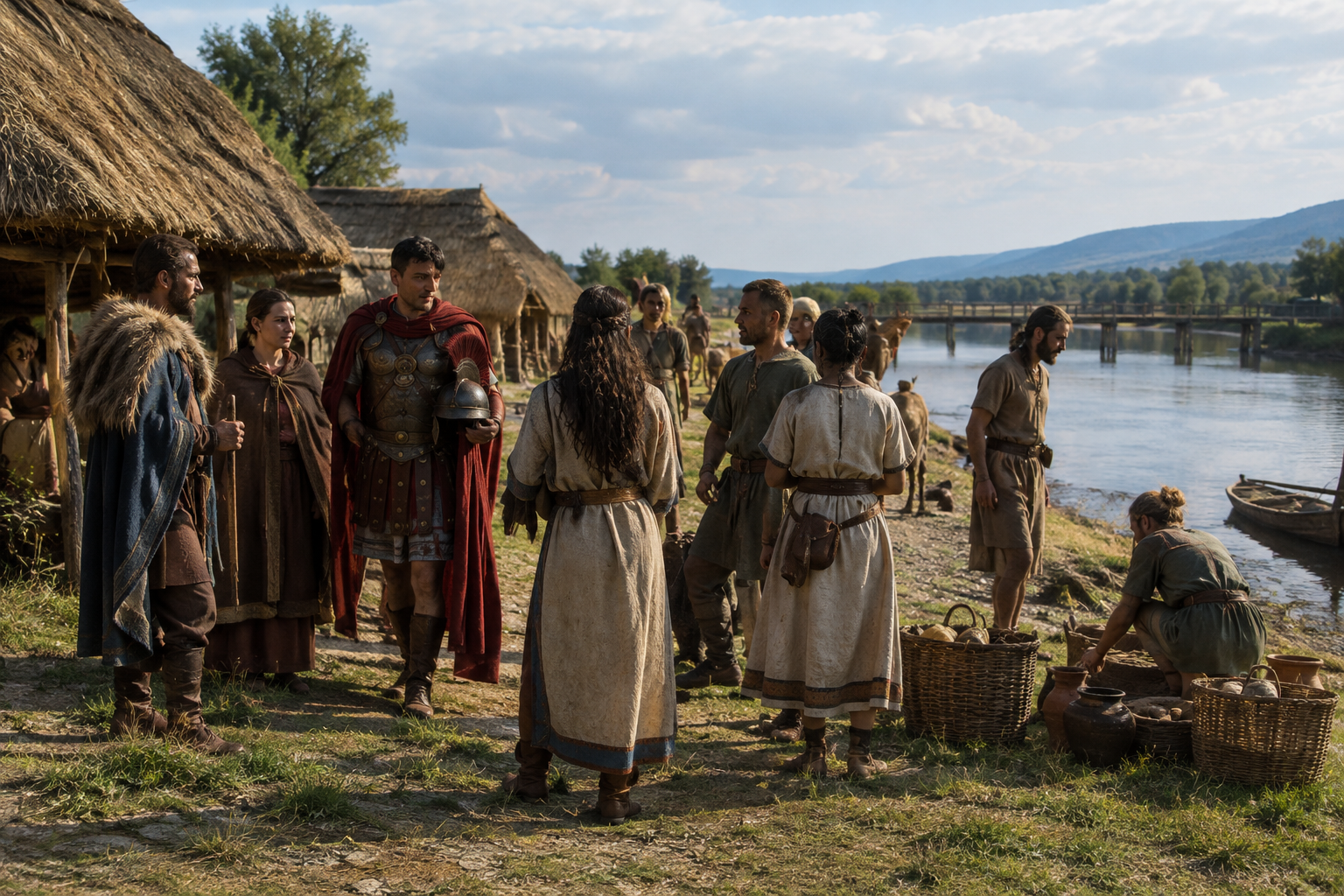
The Roman period gives us a rather different view: not open steppe, but roads, forts, hospitals, garrisons, and mixed towns. VIC003, the Roman Era Cambridge Outsider Vicars Farm dated to 200 AD, is especially suggestive. Even the label "outsider" tells a story of movement and difference within Roman Britain. One man, buried in Cambridgeshire, may reflect the extraordinary human mobility created by empire, trade, slavery, military service, and migration.
That same mobility appears at the far end of Roman and immediately post-Roman Europe. Three related entries from Post Roman Empire South Tyrol Malles Burgusio Santo Stefano dated to 450 AD - 2428a, 2428b, and 2428 - place R1 in an Alpine frontier world where Roman institutions, local communities, and incoming groups overlapped. Likewise KMU003, from Post Roman Pannonia Arrabona Kony Barbaricum Hungary dated to 550 AD, sits in the unsettled middle Danube zone, a place where imperial borders had become something more porous and more dangerous.
And then there is TGH010, the Hun Invader Hungary Danube-Tisza dated to 450 AD. One must be careful here. A shared broad haplogroup does not turn every bearer into a Hun, nor does it prove a direct paternal connection between steppe elites and later Europeans. But the presence of R1 in both steppe-associated contexts and central European post-Roman settings helps explain why this lineage appears across such a wide swathe of later medieval Europe.
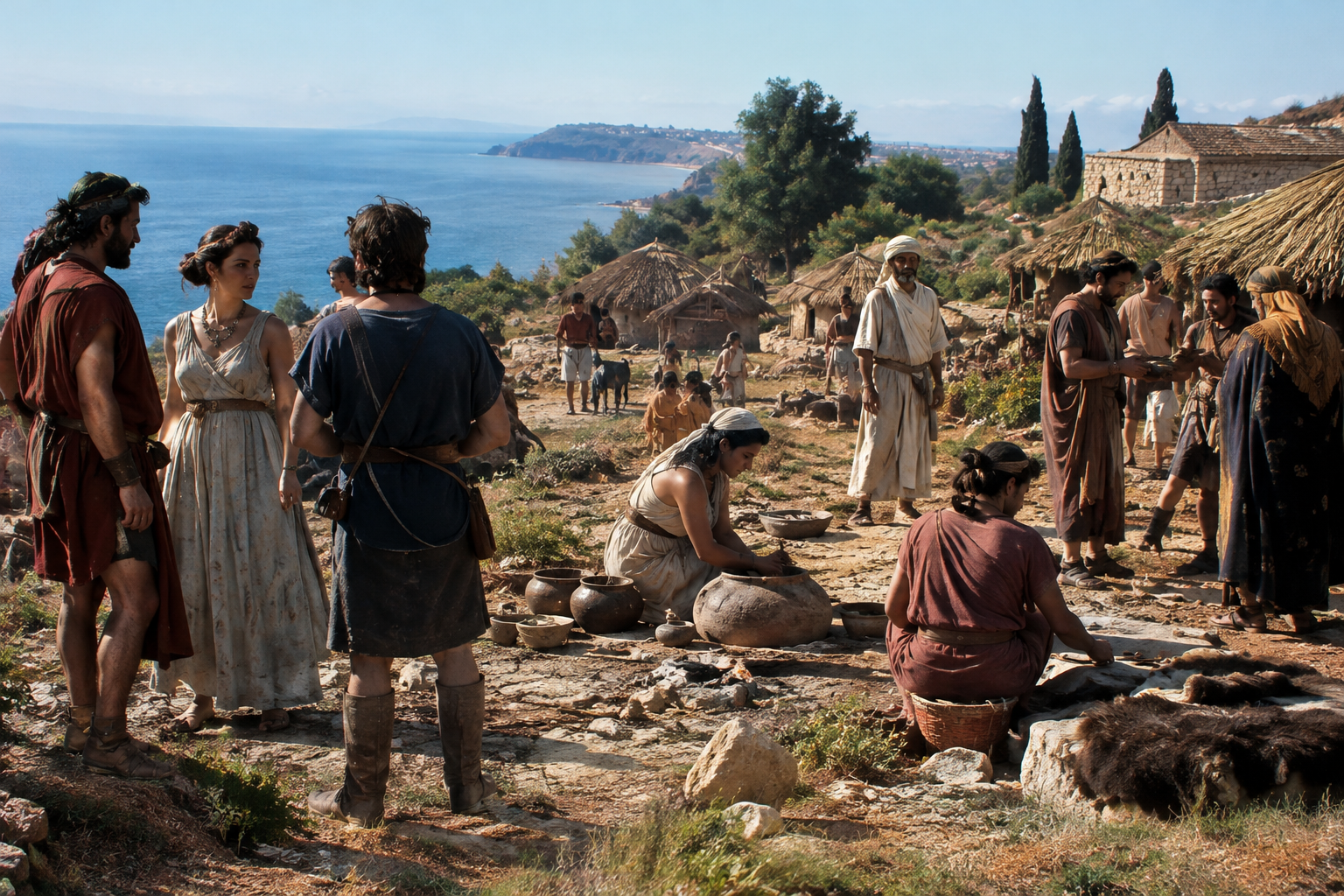
The Mediterranean appears too, unexpectedly but importantly. ASH067_ASH_IA1 from Ashkelon Philistine Minoan dated to 1150 BC is a sharp reminder that the ancient world was already interconnected in ways that genetics is only now making easier to see. Broad paternal lineages can crop up in surprising cultural settings.
Read about Roman Hispania's genetic legacy
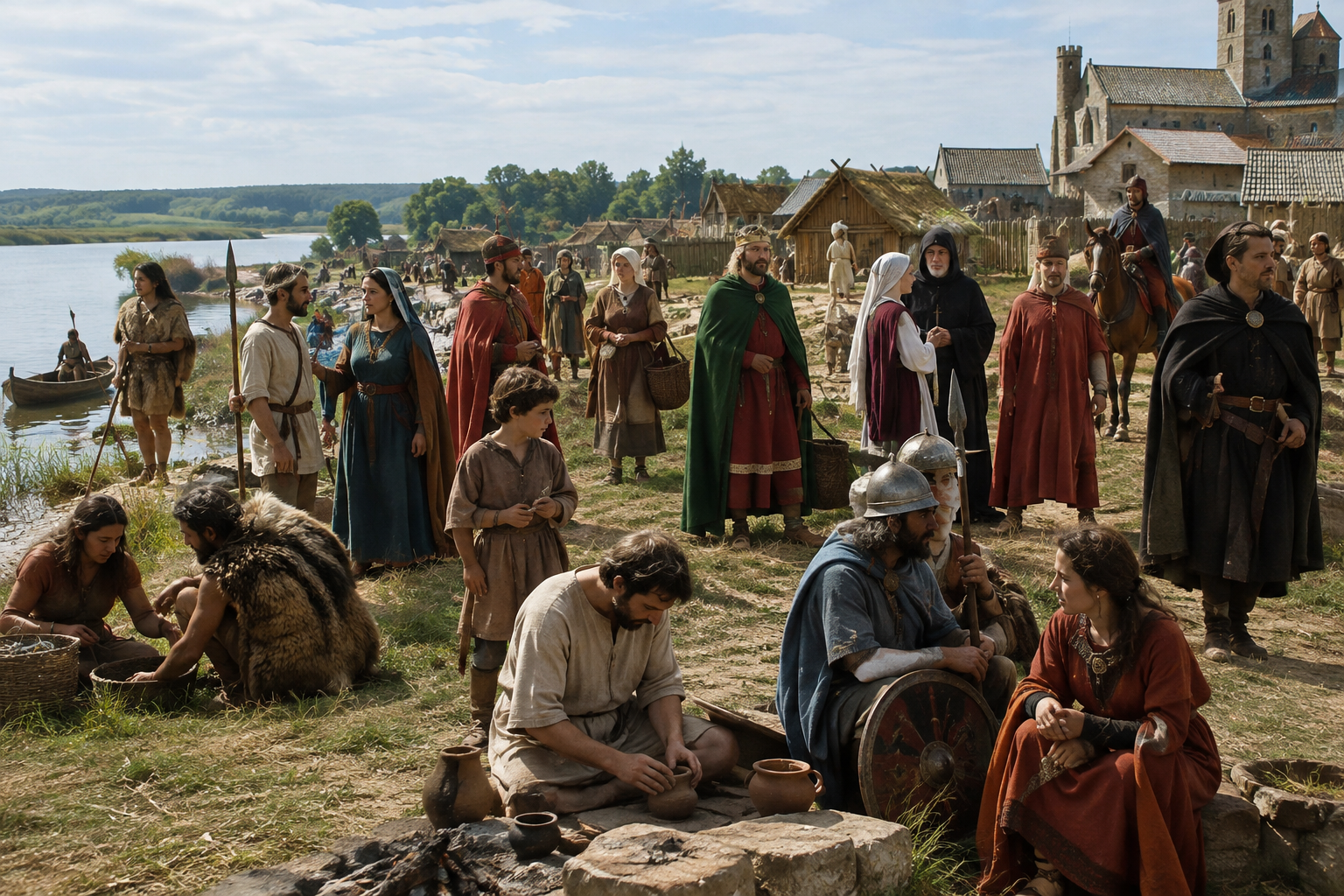
By the Middle Ages, R1 is no longer a matter of remote prehistoric horizons. It appears among named regions and historical societies. In England, SED011 from Anglo-Saxon Sedgeford England Norfolk dated to 600 AD shows the lineage in the period when post-Roman Britain was being transformed by new settlements and political cultures. Later medieval Cambridge adds ATP_PSN_104 and ATP_PSN_19 from Cambridge St Johns Hospital, both dated to 1250 AD, and ATP_PSN_934 from Cherry Hinton dated to 1055 AD. These are not kings or conquerors. They are precisely the sort of ordinary and semi-ordinary people whose remains allow genetics to correct the old habit of writing history only from the top down.
Scandinavia and Poland add more medieval anchors. mbv330 from Medieval Vasterhus Sweden dated to 1313 AD places R1 in a Scandinavian Christian setting, while PCA0559 from Medieval Piast Era Poland Silesia Milicz, PCA0571 from Medieval Kingdom of Poland Piast Dynasty Zielonka Poznan, and PCA0238 from Medieval Greater Poland Poznan, all dated to 1100 AD, bring us squarely into the lands of the Piasts.
That matters because medieval dynasties were rooted in regions, and regions often preserve much older population histories. It would be irresponsible to claim that a broad haplogroup like R1 proves direct descent from any ruling house. But when ancient DNA from medieval Poland turns up in the Piast sphere, it provides useful context for how paternal lineages could persist, diversify, and become part of later aristocratic and royal landscapes.
Explore Piast dynasty DNA findings
The supplied noble-family field is empty here, which is actually a useful reminder of method. Genetics does not need a grand castle to be meaningful, and castles do not by themselves prove a lineage. In many MyTrueAncestry stories, noble houses and their strongholds help preserve the memory of regional paternal lines, but in this case the ancient individuals carry the narrative more honestly than any forced aristocratic association would.
Still, the medieval samples from England, Sweden, and Poland belong to the same historical world that later produced chartered families, fortified seats, monastic estates, and dynastic burial grounds. What ancient DNA adds is a view beneath heraldry. Written genealogies usually begin late and privilege elites. Y-DNA and archaeology can reveal the deeper background of the men who lived in those same regions centuries earlier - sometimes in hospitals, village cemeteries, frontier settlements, or warrior graves rather than great halls.
So what does haplogroup R1 reveal? Above all, age and spread. It is a paternal lineage with roots deep in Eurasian prehistory and a documented presence in a remarkable range of later contexts: Mesolithic or early Neolithic eastern Europe, Bronze Age Britain, the steppe cultures of Kazakhstan and Hungary, Roman Britain, post-Roman Alpine and Danubian frontiers, Anglo-Saxon England, medieval Scandinavia, and Piast Poland.
That breadth is exactly why caution is needed. Sharing R1 with an ancient individual does not make someone a Scythian, a Hun, a Piast, or an Anglo-Saxon. It does not prove descent from a noble house. What it can do is place one direct paternal line within a very old human story, one shaped by migration, settlement, conquest, disease, trade, and local continuity. Ancient DNA gives us a way to see those long connections without pretending they are simple.
If your own Y-DNA falls within R1 or one of its downstream branches, the real fascination lies in comparison: which regions recur, which eras light up, and which ancient individuals stand nearest on the tree. That is where genetics becomes most historical - not as mythmaking, but as evidence.
Upload your DNA to MyTrueAncestry to explore whether your results show links to ancient individuals like VIC003, SED011, PCA0571, or the steppe-era samples from Kazakhstan and Hungary. Those matches may offer powerful clues about your deep paternal past, while still remaining different from proof of direct descent from any specific ancient person or noble family.
Comments