Haplogroup R

– 6 min read


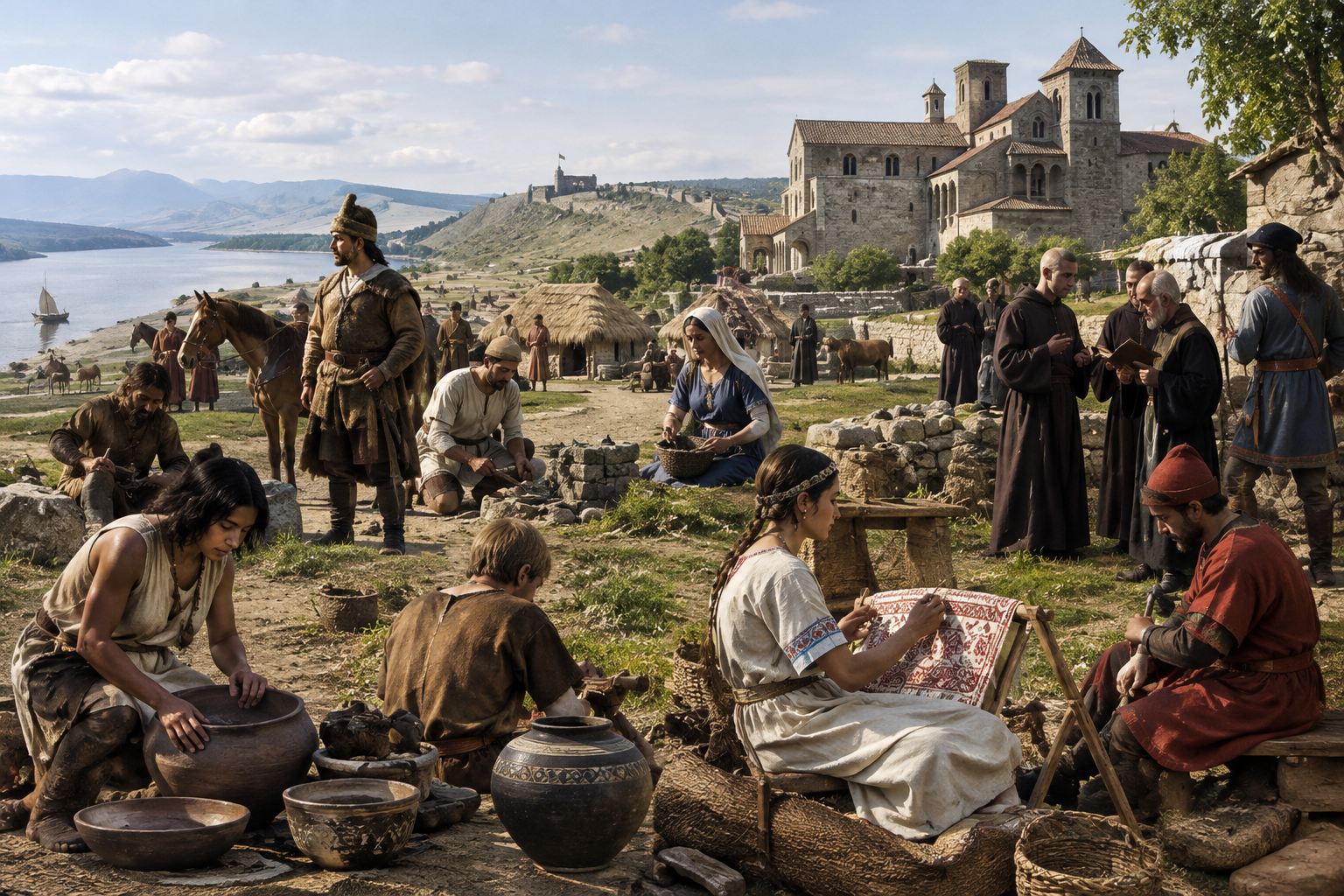
Haplogroup R is one of the great paternal lineages of Eurasian history, but it is also one of the easiest to misunderstand. Because it sits high up on the Y-chromosome tree, it includes a vast number of downstream branches spread across different regions, periods, and peoples. In other words, saying someone belongs to haplogroup R is a bit like saying they come from a family with many ancient, far-flung branches. It tells us something important about direct paternal ancestry, but it does not tell the whole story of a person's ancestry, identity, language, or social class.
What makes haplogroup R so historically interesting is precisely that breadth. Ancient DNA has found branches of R in settings as different as Neolithic villages, Bronze Age cemeteries, Iron Age steppe burials, medieval towns, and royal contexts. The result is not one tidy tale of a single people marching across a map, but a more intriguing picture: a paternal lineage that appears again and again in very different historical worlds, from early farmers near the Caucasus to Corded Ware communities in northern Europe, from Scythian elites in Kazakhstan to medieval England, Portugal, and Poland.
Y-DNA haplogroups trace a direct paternal line: father to son to son over many generations. They are valuable because they preserve one narrow but durable thread through the past. Haplogroup R belongs within the larger Y-chromosome tree of Eurasian paternal lineages and includes famous downstream branches that today are especially associated with parts of Europe and Eurasia. But the broad parent haplogroup R is older and wider than any one modern nation, ethnicity, or dynasty.
That matters here. The samples supplied for this article show R appearing in several different archaeological and historical settings. Some may belong to different sub-branches within R rather than to the same recent paternal family. So the proper question is not, "Were all these men part of one people?" It is, "What does the recurring appearance of R tell us about long-term male-line continuity, migration, and settlement across western and central Eurasia?"
Explore How Ancient DNA Decodes History
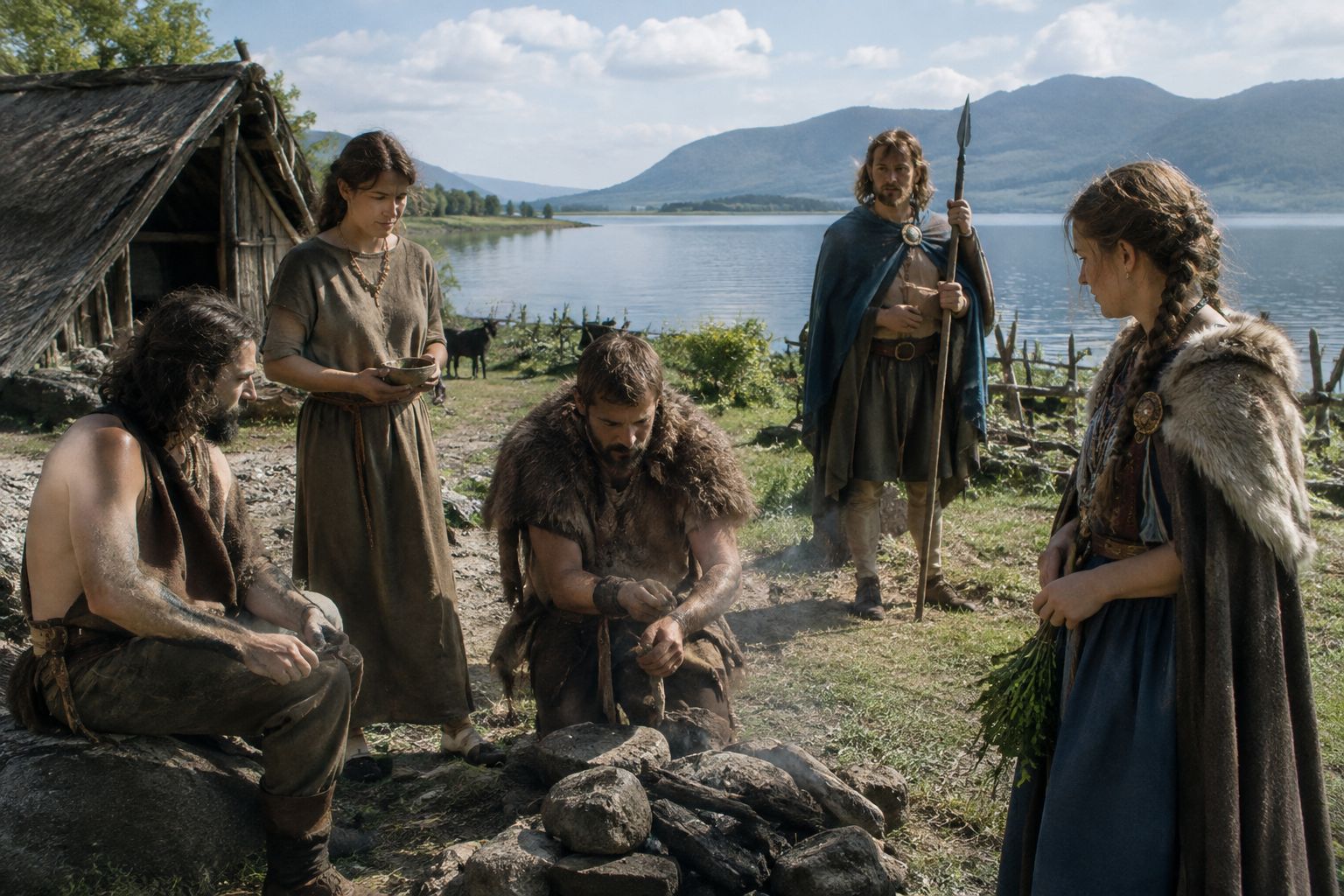
The earliest supplied appearances of haplogroup R in this dataset are striking because they sit in places central to some of the biggest debates in prehistory. Sample I1945 from Neolithic Iran Ganj Dareh, dated 7500 BC, places R in the Zagros world of early farming communities. Not far away in broader geographical terms, ARO006 from Neolithic Georgia Arukhlo Shomutepe-Shulaveri, dated 5500 BC, shows the lineage in the South Caucasus, another key region in the spread of early agricultural lifeways.
These are not proof that haplogroup R "began" in one exact spot. That would go beyond the evidence here. But they do show that branches of R were already present in some of the earliest settled societies of western Asia and the Caucasus. Those regions were not historical backwaters. They were crossroads where mobile herders, early farmers, and later metalworking communities interacted for millennia.
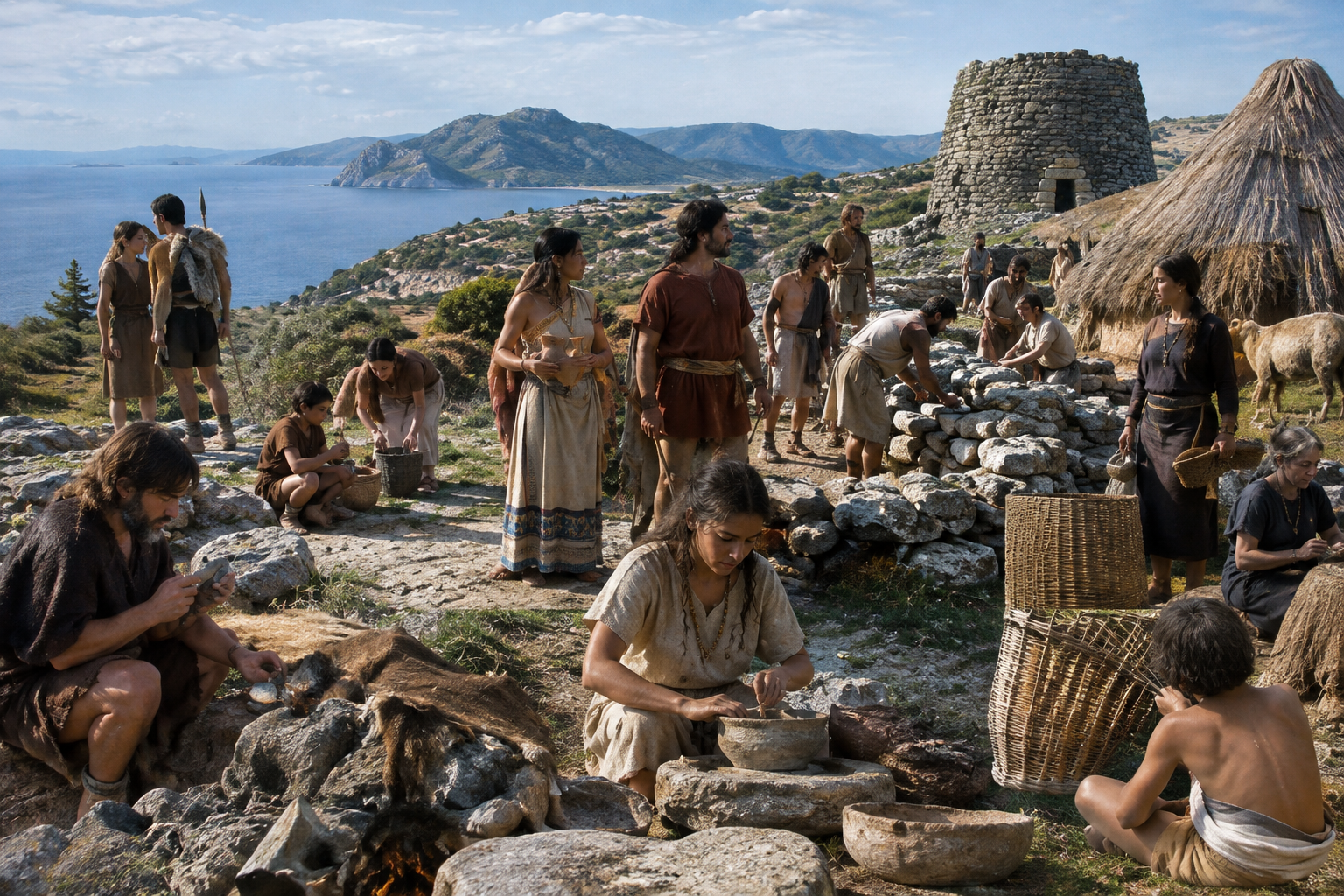
Further west, I4655 from Chalcolithic Romania Schela-Cladovei, dated 6814 BC, and I0559 from Neolithic Germany Baalberge Quedlinburg, dated 3537 BC, show R turning up in prehistoric Europe as well. By the Bronze Age, the pattern becomes even more geographically expansive. I4248 from Samborzec Bronze Age Poland, dated 2290 BC, and Rise42 from Corded Ware Marbjerg Denmark, dated 2081 BC, place haplogroup R in contexts linked to major transformations in European population history.
The Corded Ware horizon in particular often appears in discussions of steppe-related ancestry and the reshaping of paternal lineages across much of Europe. A sample like Rise42 does not make every branch of R a "Corded Ware lineage," but it does remind us that some branches of R were part of the male lines moving through the cultural and social networks of Bronze Age northern Europe.
Discover Corded Ware Scandinavia
Then the story takes a turn eastward. SHI004, an Elite Scythian Saka Iron Age Shilikty East Kazakhstan individual dated 650 BC, shows haplogroup R in an aristocratic steppe context. This is exactly the sort of discovery that reminds us why broad paternal lineages matter. By the Iron Age, branches of R were not confined to one agricultural heartland or one corner of Europe. They were present among mobile and high-status groups deep in the Eurasian steppe zone.
That fits with the wider picture of steppe mobility, political confederations, and elite burial traditions. Yet it should not be turned into a simplistic ethnic badge. Scythian and Saka worlds were complex, and shared haplogroups do not erase that complexity. Still, SHI004 is a vivid sign that branches of R participated in the male-line histories of steppe elites as well as farming societies.
Equally intriguing is I2189, a Late Bronze Age Outlier Canaanite Megiddo individual dated 1570 BC. An "outlier" in a great Bronze Age city like Megiddo immediately catches the eye, because such people hint at mobility, marriage networks, mercenary service, trade, or personal displacement. Haplogroup R here does not make Bronze Age Canaan "an R population"; rather, it reveals how widely dispersed some paternal branches had already become in the ancient Near East.
By the medieval period, haplogroup R appears not in one spectacular imperial tomb alone, but in the ordinary and revealing institutions of daily life. In England, ATP_PSN_507 from the Augustinian Friars, dated 1290 AD, ATP_PSN_498 from Cambridge St Johns Hospital, dated 1250 AD, and ATP_PSN_1219 from Late Medieval England Clopton Cambridgeshire, dated 1300 AD, show branches of R among men living in the ecclesiastical and urban landscapes of medieval society.
There is something refreshingly sobering about this. Genetics often tempts people into thinking only of kings and conquerors. But medieval paternal history also belongs to friars, hospital inmates, craftsmen, laborers, and townsmen. A haplogroup that once appeared in Neolithic Iran or Bronze Age Denmark can later surface in a Cambridge hospital burial. That is the real power of ancient DNA: not to prove a fairy-tale descent, but to reveal long continuities and unexpected survivals.
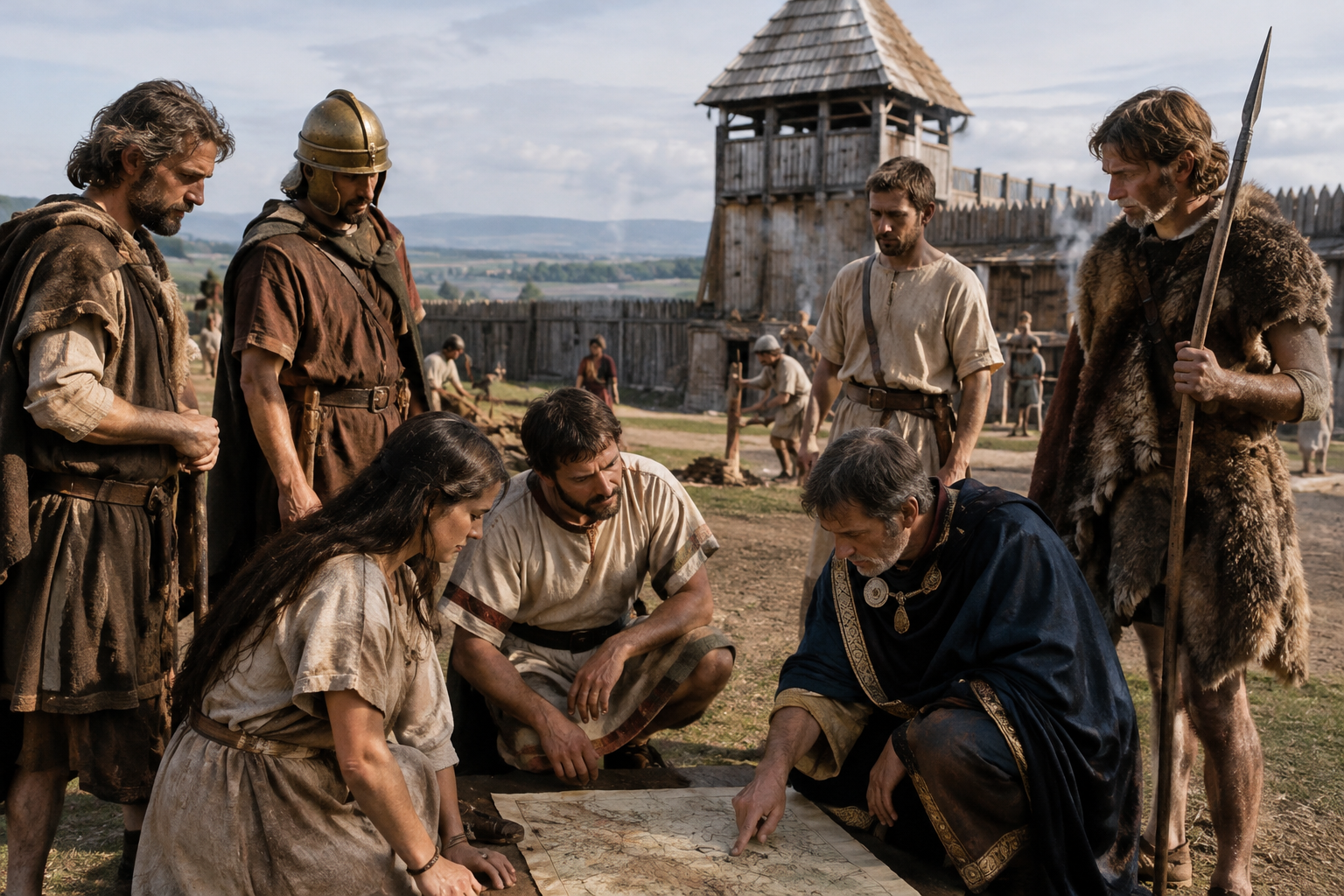
In Iberia, LP128_1 from Medieval Portugal Umayyad Caliphate Loule Quinta da Boavista, dated 1250 AD, places R in the mixed political and cultural world of the medieval Algarve, where Islamic and Christian spheres overlapped and shifted. In Poland, PCA0338 from Medieval Piast Dynasty Poland Ostrow Lednicki, dated 1100 AD, brings the lineage into a dynastic setting connected with one of medieval Europe's formative ruling houses.
That does not mean everyone associated with the Piasts carried the same branch of R, nor that a broad haplogroup proves dynastic identity. But it does place one branch of this paternal family inside the political geography of early medieval Poland, where fortress-islands, churches, and princely centers helped shape a kingdom.
Explore the Piast Dynasty DNA Story
The input for noble families and castles is blank here, and that in itself is worth saying plainly. Without supplied family or castle data, it would be irresponsible to invent ties between haplogroup R and any particular noble house, clan, or ancestral seat. Too much popular DNA writing jumps from a broad Y-haplogroup to a coat of arms, a castle, and a famous surname as though the connection were automatic. It is not.
What we can say is that a haplogroup as broad and historically widespread as R almost certainly intersects, somewhere in its many downstream branches, with countless later noble and royal lineages across Europe and parts of Eurasia. But that is a statement about scale, not proof about any one documented family.
The better historical lesson is this: castles, dynasties, and surnames preserve memory over centuries, while Y-DNA preserves one paternal thread over much longer spans. Sometimes the two can be compared directly, especially when ancient or historical remains are genetically tested. More often, they operate at different levels. Written genealogy tells us who inherited a title; Y-DNA tells us something narrower and older about paternal descent. Each is useful, and each has limits.
Haplogroup R, taken broadly, reveals not a single tribe or civilization but a history of remarkable geographic reach. In the supplied evidence alone, it appears in early farming communities of Iran and Georgia, a Chalcolithic setting in Romania, Neolithic and Bronze Age Europe, an Iron Age elite burial in Kazakhstan, a Late Bronze Age outlier at Megiddo, medieval England, medieval Portugal, and dynastic Poland.
That sweep is exactly why broad haplogroups must be handled carefully. Shared membership in haplogroup R does not make these individuals close relatives in the genealogical sense. It does not prove common ethnicity, language, or status. But it does show how one deep paternal umbrella can span very different human stories. Under that umbrella are migrations, local continuities, social upheavals, and the plain fact that male lines can persist through enormous historical change.
If you want to think more about how such lineages appeared in medieval Iberia, especially in regions shaped by shifting Islamic and Christian rule, the Portuguese context of LP128_1 makes a good companion to broader work on the peninsula.
Explore the Genetic History of Portugal
MyTrueAncestry offers a way to explore these long-range connections for yourself. By comparing your DNA to ancient individuals and historical populations, you may discover links that place your ancestry in a much deeper archaeological setting. Those matches do not necessarily prove direct descent from any one ancient person or noble family, but they can open a fascinating window onto the worlds your ancestors moved through.
Comments