Haplogroup Q2b

– 5 min read


At Loebanr in the Iron Age Swat region, one male individual dated to around 880 BC, sample I5400, gives us one of those small but telling pieces of evidence that ancient DNA does so well. He is not a king from a chronicle or a hero from epic poetry. He is simply a buried man from an upland society at the crossroads between South Asia, Central Asia, and the Iranian world, and he is one of the ancient clues linked to Y-DNA haplogroup Q2b.
That matters because Q is a wider paternal lineage more often discussed in connection with northern Eurasia and, in broader form, with the peopling of the Americas. But Q2b is a much narrower branch, and the ancient evidence here is not about grand myths of a single migration sweeping across continents. Instead, the samples point to something more historically interesting: a paternal line present in the mountain corridors of the northwest of the subcontinent during the first millennium BC, in places where trade, conquest, ritual, and local continuity all overlapped.
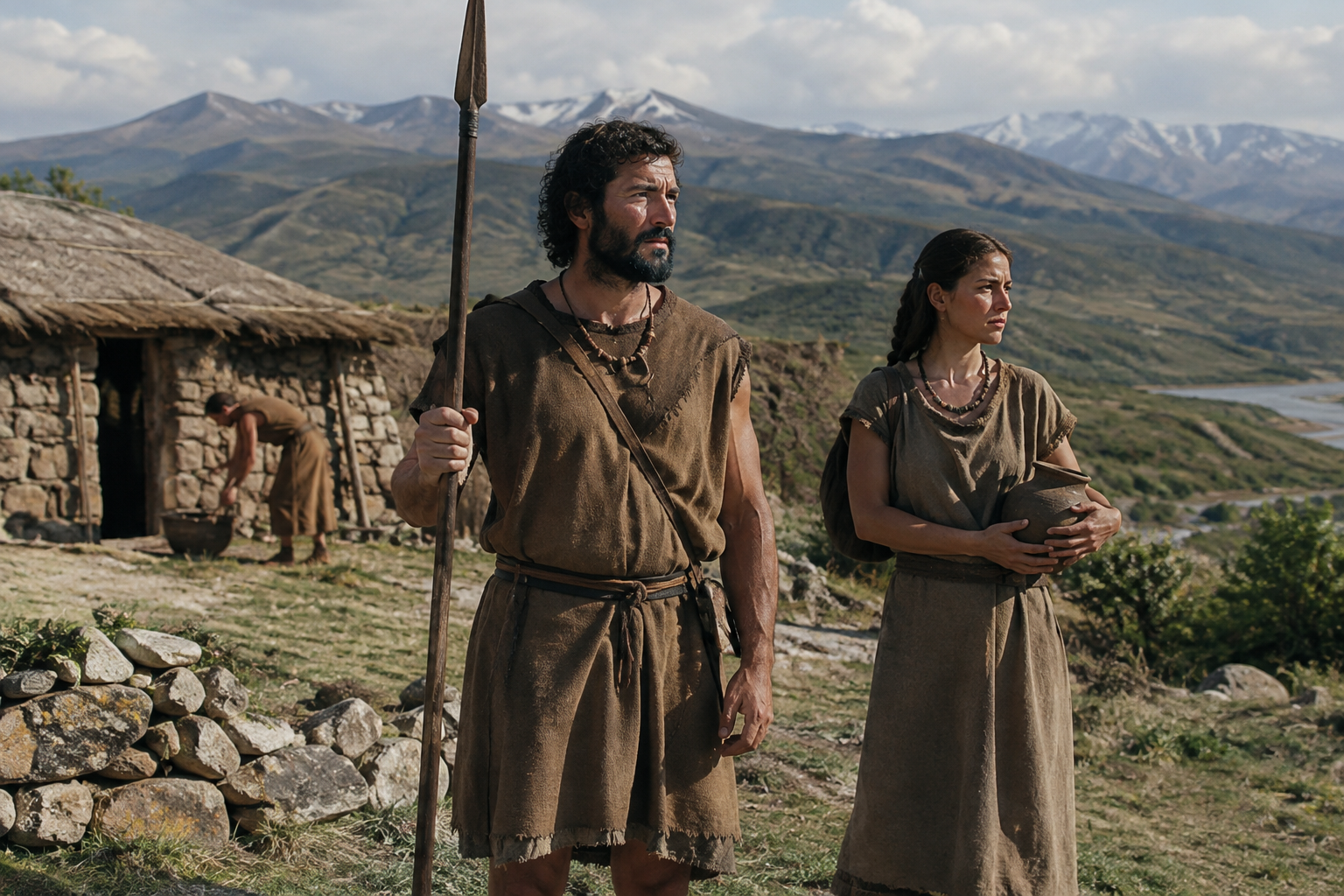
The sample I5400 comes from Iron Age Loebanr, in the Swat Valley zone of present-day northern Pakistan. Around 880 BC places him in a period when this region was already far from isolated. The valleys of Swat sat in a strategic landscape linking the highlands to the plains, and linking communities influenced by the Iranian plateau, Inner Asia, and the northwestern subcontinent.
For a haplogroup article, it is tempting to turn one burial into a migration story with arrows on a map. Better to resist that. What Loebanr really shows is that a Q2b-associated paternal line was present in an Iron Age population of this frontier region. That is already significant, because it anchors the branch archaeologically in a real community rather than leaving it floating as an abstract modern test result.
An ancient DNA study connected with these regional materials helped establish how complex the human history of the Swat area was, with continuity, mixture, and shifting contacts rather than a single clean replacement. The research trail associated with these samples can be followed here: https://www.biorxiv.org/content/biorxiv/suppl/2018/03/31/292581.DC1/292581-1.pdf.
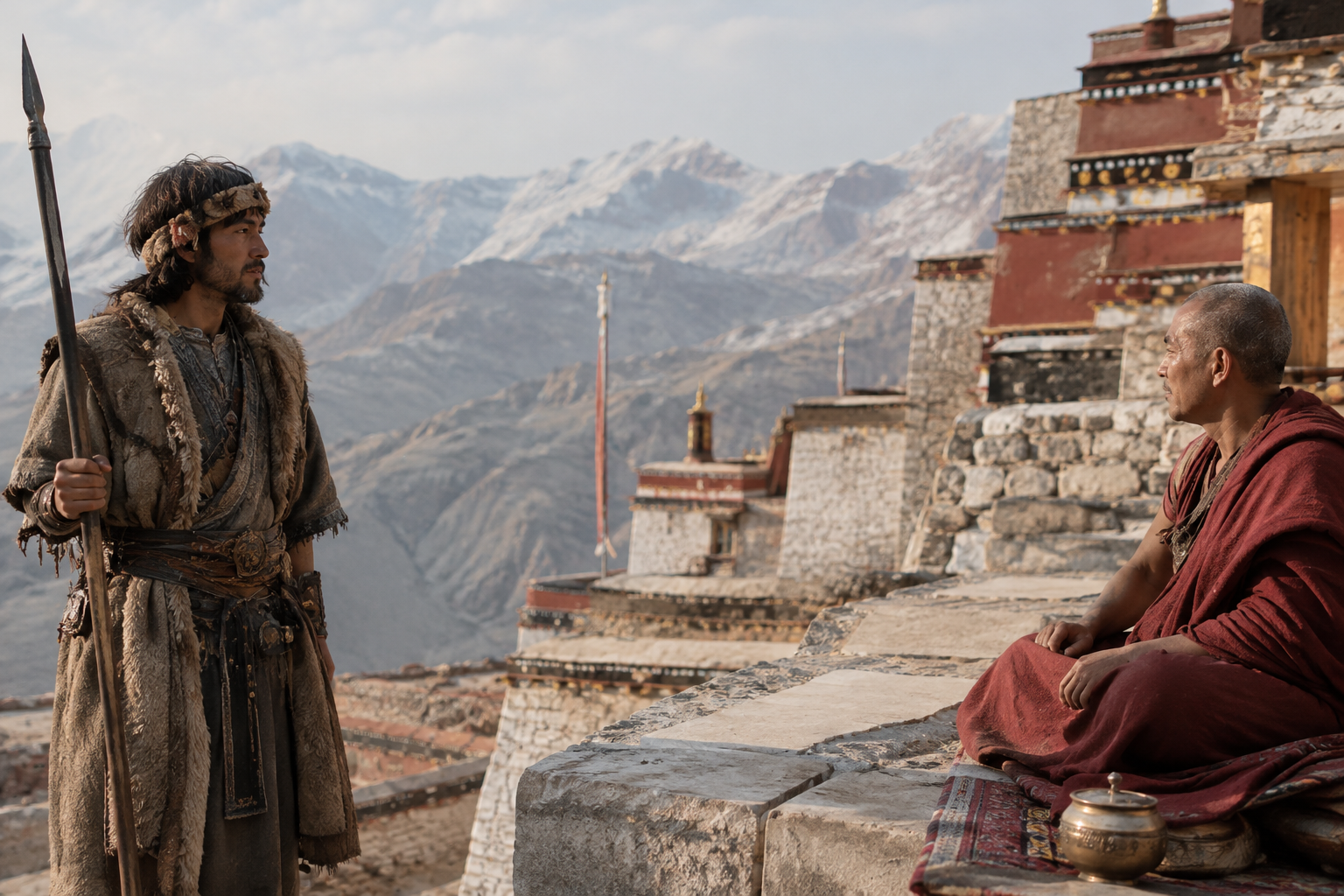
The second ancient male linked here is I7718, from Saidu Sharif Buddhist Monastery, dated to around 350 BC. That is a striking contrast with Loebanr. We are still in the wider Swat region, but now the archaeological setting belongs to a world in which Buddhist institutions were beginning to form part of the cultural landscape.
This does not mean that Q2b was a specifically "Buddhist" lineage, of course. Y-DNA tracks one direct paternal line only. But the presence of a Q2b-associated male in this context shows that the branch persisted into a very different historical moment. Between roughly the late second and mid first millennium BC, the region saw profound cultural change without every paternal line vanishing and being replaced.
That continuity is the real story. In many parts of Eurasia, the first millennium BC is a period when archaeologists and historians can watch local traditions, new religions, long-distance trade, and imperial pressures all interacting at once. A lineage like Q2b appearing in both Iron Age and later early historic Swat is exactly the sort of evidence that reminds us real populations were layered and durable.
Swat is not just another dot on the ancient DNA map. It is one of the key meeting grounds of ancient Eurasia. Armies could pass through it, merchants could pass through it, monks could pass through it, and so could ideas, crops, technologies, and families. That makes it exactly the kind of place where unusual or less common paternal branches may appear in the record without needing any melodramatic explanation.
For Q2b, the pattern from these two samples suggests a branch present in a region of contact rather than confinement. Loebanr and Saidu Sharif are not evidence for a single dynasty, nor for an unbroken documented pedigree. What they do offer is a geographically coherent glimpse of Q2b in the northwestern subcontinent across several centuries.
And that geographical coherence matters. One isolated ancient assignment can be intriguing but hard to interpret. Two occurrences in the same broad region, in different archaeological settings and separated in time, begin to suggest that this was not a random one-off presence. It may reflect a paternal line that had become part of local population history in the Swat zone by the Iron Age and remained there into the era of Buddhist institutional life.
It is worth being careful here. The article's haplogroup is Q2b, not the whole of haplogroup Q. The larger Q family is ancient and widely distributed across northern Eurasia, with different branches taking very different historical paths. One should not simply borrow the full story of haplogroup Q and paste it onto Q2b as though every sub-branch shared the same later history.
What the ancient evidence here supports is narrower, but in some ways more useful. It places Q2b-associated paternal ancestry in archaeological populations of the Swat region during the first millennium BC. That is a historically rich setting: the edge of the Iranian cultural sphere, near routes leading toward Bactria and the steppe, yet also deeply tied to South Asian developments.
If you carry Q2b today, these ancient men do not tell you that your paternal line belonged to one named tribe or one language community. Ancient DNA is not that tidy. But they do place your branch in a documented landscape where frontiers were porous and identities were made from repeated contact as much as from isolation.
One of the pleasures of archaeology is that it keeps puncturing our tidy categories. Modern readers often want ancient people sorted quickly into boxes: Iranian, South Asian, steppe, Buddhist, local, foreign. But the Swat evidence resists that. These were people living in a region where several worlds met, and their DNA reflects that complexity better than any slogan can.
That is why Q2b is so interesting in this context. Not because it proves some dramatic conquest, and not because it can be recruited into a prestige narrative, but because it appears in precisely the kind of population where mixed connections are historically expected. The paternal line was present among communities shaped by mountain geography, long-distance exchange, and changing religious life.
In that sense, Q2b belongs to the archaeology of corridors as much as to the archaeology of homelands. It shows up not in a vacuum but in one of Eurasia's great connective zones.
The most distinctive thing about the ancient evidence for Q2b is its placement in the Swat region across different first-millennium-BC settings, from Iron Age Loebanr to Saidu Sharif. That does not give a royal pedigree or a single ethnic label. It gives something better grounded: a paternal branch attested in a real frontier society where local continuity and wider Eurasian connections existed side by side.
For someone researching Q2b today, that means your direct paternal line may have deep roots in the old contact zones between South Asia, Central Asia, and the Iranian world. The ancient record is still thin, but these samples show that the branch was already part of that historical landscape long before the great medieval and modern reshufflings of population.
Comments