Haplogroup Q1b1a3a1

– 5 min read


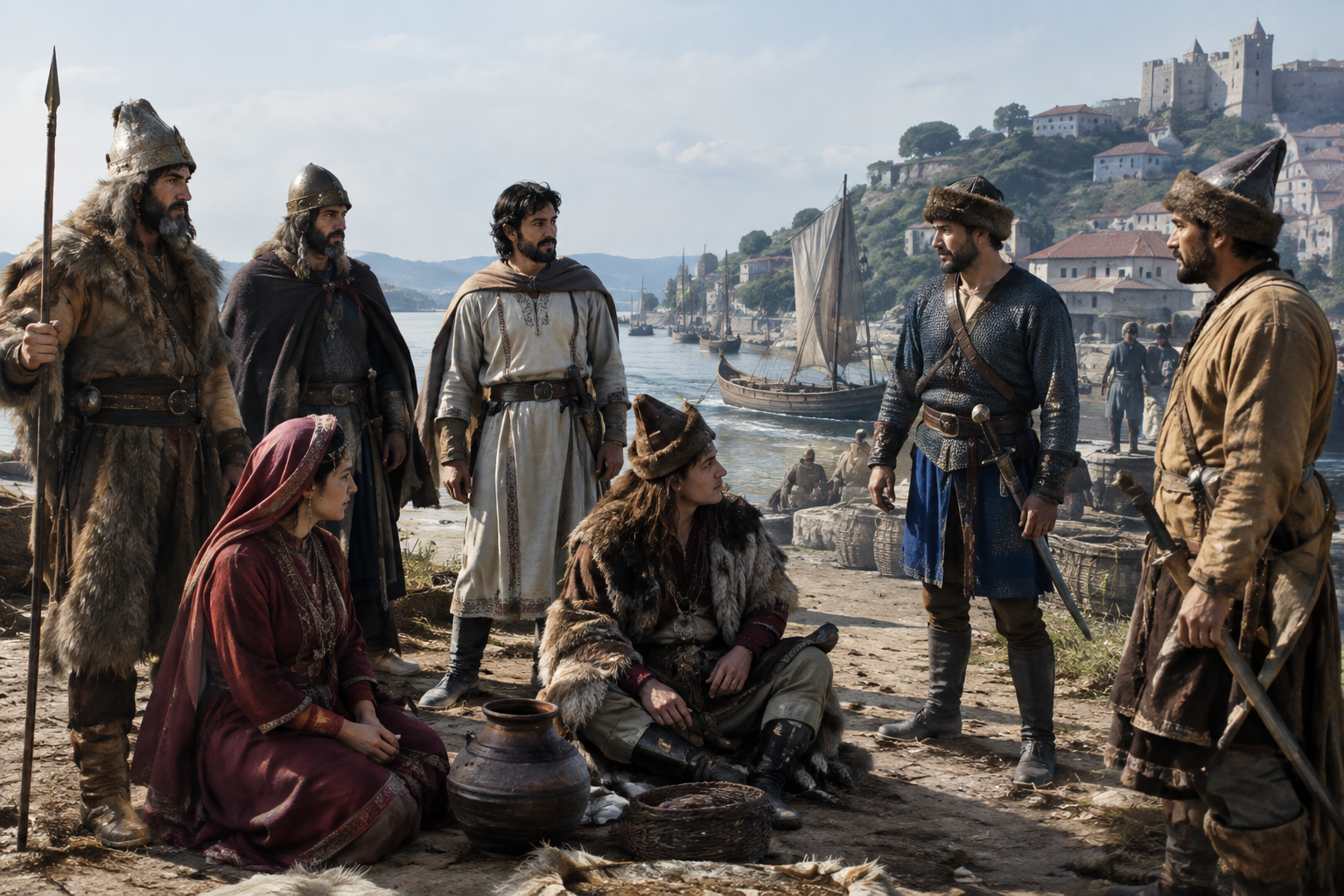
At Eleke Sazy in eastern Kazakhstan, one of the most striking Iron Age burial landscapes of the steppe has yielded an individual dated to around 260 BC: sample ESZ012. That matters here because this burial places the Y-DNA haplogroup Q1b1a3a1 in a world we can actually picture historically: the mounted societies of the eastern steppe, in a region often linked with Saka and Scythian-era communities.
That is the first useful thing to say about Q1b1a3a1. It is not a label floating in the abstract. In the ancient evidence tied to this article, it appears in steppe and steppe-connected contexts stretching from the Black Sea zone to Central Asia, and then much later in medieval Iberia. Y-DNA tracks one direct paternal line only, not a person's whole ancestry, but even that narrow line can be revealing when it turns up repeatedly in very different historical settings.
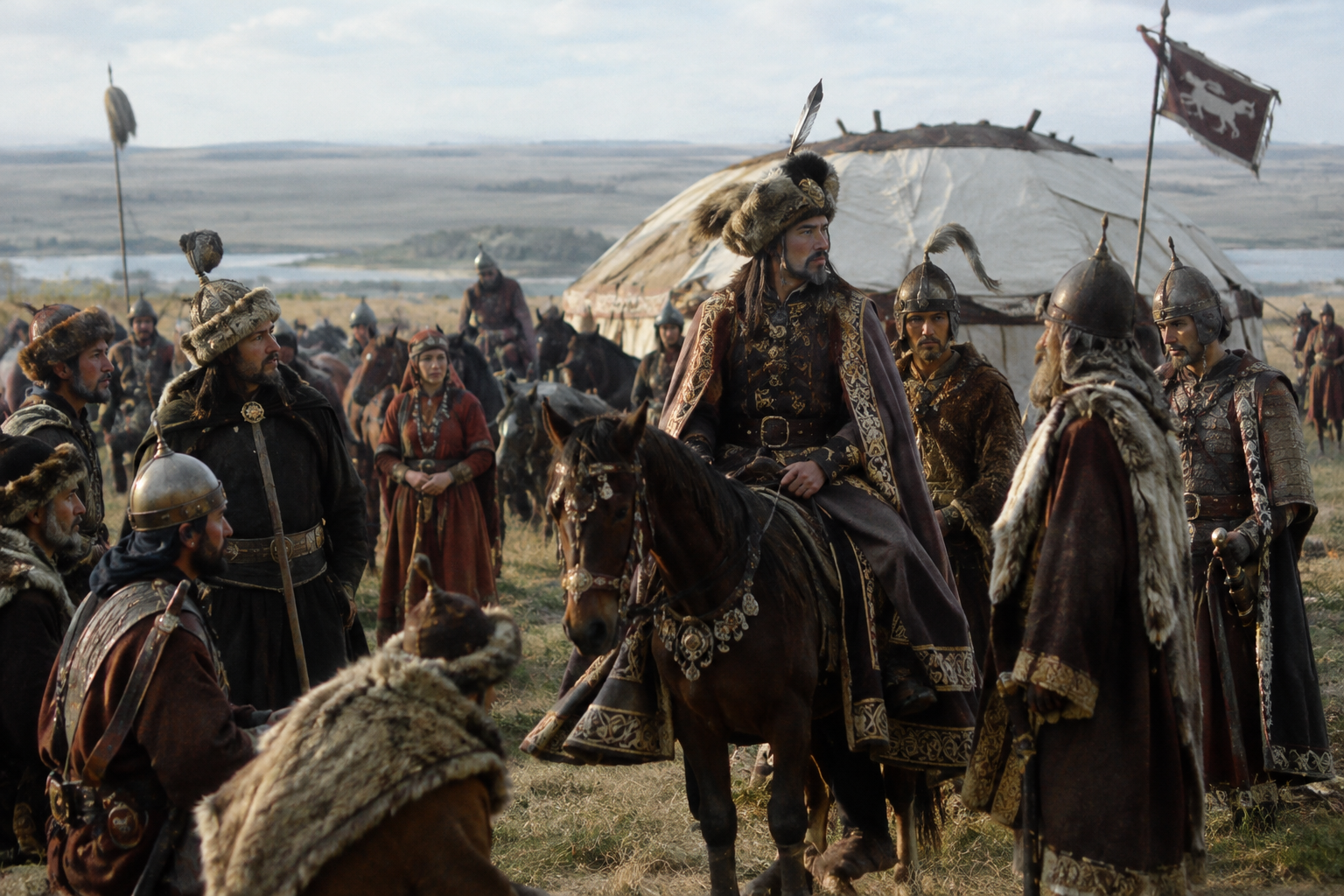
Eleke Sazy has become an important site for understanding elite and non-elite life in the early nomadic cultures of the eastern Kazakh steppe. Sample ESZ012, dated to about 260 BC, sits in a period when mobile pastoral societies connected the Altai, the Tianshan, and the wider Iranian-speaking steppe world. For a haplogroup like Q1b1a3a1, that eastern placement is significant because it anchors the branch in a region where steppe populations were anything but isolated.
Archaeology has long shown that these societies were connected by exchange, mobility, and shared burial traditions, but ancient DNA adds a sharper edge. A genetic study of Iron Age Scythian-related populations across the steppe, published in Nature, helped establish just how mixed and regionally varied these communities were. That broader picture is important when thinking about Q1b1a3a1: the lineage's appearance in steppe graves does not point to a single tribe or a simple ethnic label, but to paternal continuity within a highly mobile world.
Another sample in this eastern and inner Asian orbit is ALN003 from the Iron Age Alai Nura burial, dated here to around AD 300. Although later than ESZ012, it still belongs to the long afterlife of steppe traditions in Central Asia. Put those two together and you begin to see something sturdier than a one-off appearance: Q1b1a3a1 seems to belong, at least in part, to the paternal landscape of Inner Asian and steppe-facing populations over several centuries.
The branch does not only appear far to the east. Two earlier individuals from what is now Ukraine widen the map considerably: MJ35, identified as Western Scythian and dated to around 580 BC, and MJ38, identified as Early Sarmatian and dated to around 600 BC. These are valuable not because they prove one neat migration from point A to point B, but because they show the same paternal branch turning up on the western steppe frontier in the first millennium BC.
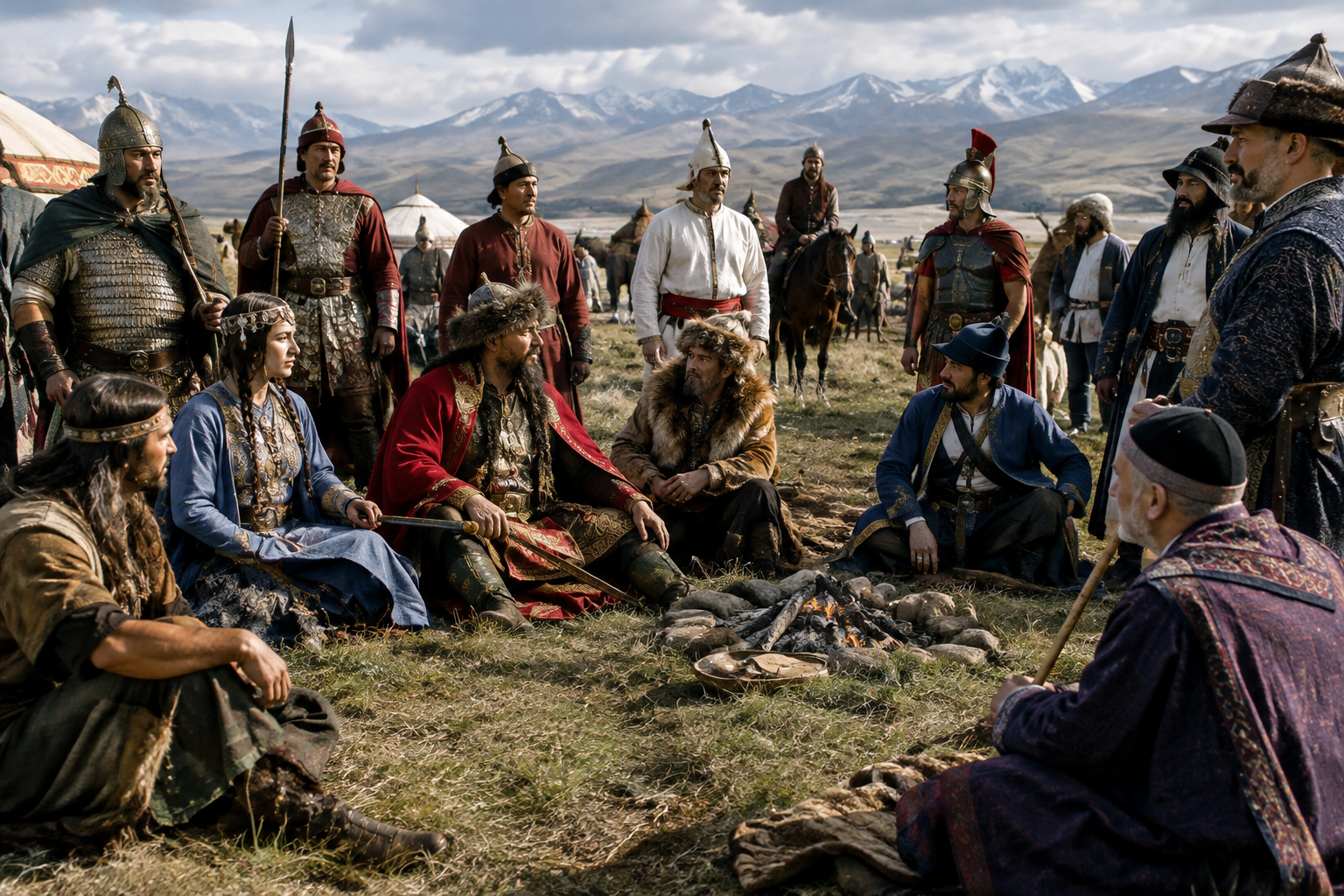
This is precisely the period when classical authors struggled to describe the peoples north of the Black Sea, and when archaeologists now prefer to think in terms of interacting confederations, burial zones, and regional traditions rather than tidy ethnic blocks. A lineage such as Q1b1a3a1 appearing in both Scythian and Sarmatian-labelled contexts should make us cautious about reading ancient political names as if they were biological containers. The paternal line may persist even while alliances, languages, and material culture change around it.
That makes the western steppe evidence especially interesting for men who carry Q1b1a3a1 today. Your direct paternal line may connect, at least distantly, to populations living in the broad Scythian-Sarmatian zone, but the ancient record suggests movement across that whole belt rather than ownership by any one famous people.
The sample DA161, from the Early Medieval Alan Caucasus and dated here to about AD 650, provides another important waypoint. The Alans are historically crucial because they stand at the intersection of steppe history, Caucasian geography, and late antique politics. They appear in Roman, Byzantine, and later medieval sources, but genetically they were never likely to have been a sealed-off population.
Q1b1a3a1 in an Alan-period context suggests that this paternal line remained part of the human landscape of the steppe-Caucasus corridor into the early Middle Ages. That corridor mattered enormously. It linked the north Pontic grasslands, the Caspian basin, and the passes into Transcaucasia. It was a place where horse-borne confederations, traders, soldiers, and displaced groups all moved through the same terrain, sometimes violently and sometimes gradually.
Research on ancient populations of the Caucasus and adjacent steppe has repeatedly shown that the region absorbed multiple streams of ancestry over time rather than preserving a single unchanged population. In that setting, Q1b1a3a1 looks less like a local curiosity and more like one of the paternal threads woven through the long history of Eurasian frontier societies.
Then comes the surprise. Sample LP123_6, from Santarem Rua dos Barcos in the medieval Kingdom of Portugal and dated to around AD 1300, places this same haplogroup in Iberia. That does not mean a medieval Portuguese man with Q1b1a3a1 was somehow a "Scythian" in any simple sense. It does mean that a paternal line with deep roots in steppe-connected ancient contexts had, by the high Middle Ages, found its way into a western European urban setting.
Santarem is exactly the sort of place where such complexity should not shock us. Medieval Iberia was a zone of conquest, trade, resettlement, religious plurality, and long-distance contacts. Populations moved through the peninsula under Roman rule, Visigothic kingdoms, Islamic polities, and Christian expansion. A recent ancient DNA study of medieval Iberian burials, published in Genome Biology, underlines how varied local ancestry could be in this period.
So the significance of LP123_6 is not that it offers a romantic straight line from a kurgan to Portugal. It is that Q1b1a3a1 belongs to the real medieval population history of Iberia as well as to earlier steppe worlds. For family historians, that is a useful corrective. Rare paternal branches do not stay politely in one homeland.
Some haplogroups are easy to caricature. Q1b1a3a1 is not one of them. In the evidence assembled here, it appears in western Scythian Ukraine, in an early Sarmatian context, in Iron Age and post-Iron Age Central Asia, in the Alan Caucasus, and in medieval Portugal. That is a pattern of breadth, not simplicity.
The safest historical reading is that this branch was part of the paternal diversity of Eurasian steppe and steppe-adjacent populations for many centuries, and that later historical processes carried it farther west into medieval Europe. The branch's presence in one sample does not prove a dynasty, a tribe, or a language. But repeated appearances across the steppe world do suggest that men from this paternal line participated in the movement-filled history of Inner Eurasia and its borderlands.
If you belong to Q1b1a3a1, the most distinctive thing the ancient evidence offers is not a single homeland but a historical corridor. This paternal line appears tied, at least in the current record, to populations moving through the great arc from the Black Sea steppe to Central Asia and the Caucasus, with a later appearance in medieval Portugal. In other words, it is a lineage with a convincingly mobile past.
That is often the real value of ancient DNA. It does not hand out ready-made identities, but it can place a paternal line inside the lived history of particular regions and periods. For Q1b1a3a1, that history is one of steppe worlds, frontier connections, and eventual arrival in places far beyond them.
Comments