Haplogroup Q1b1a3a

– 5 min read


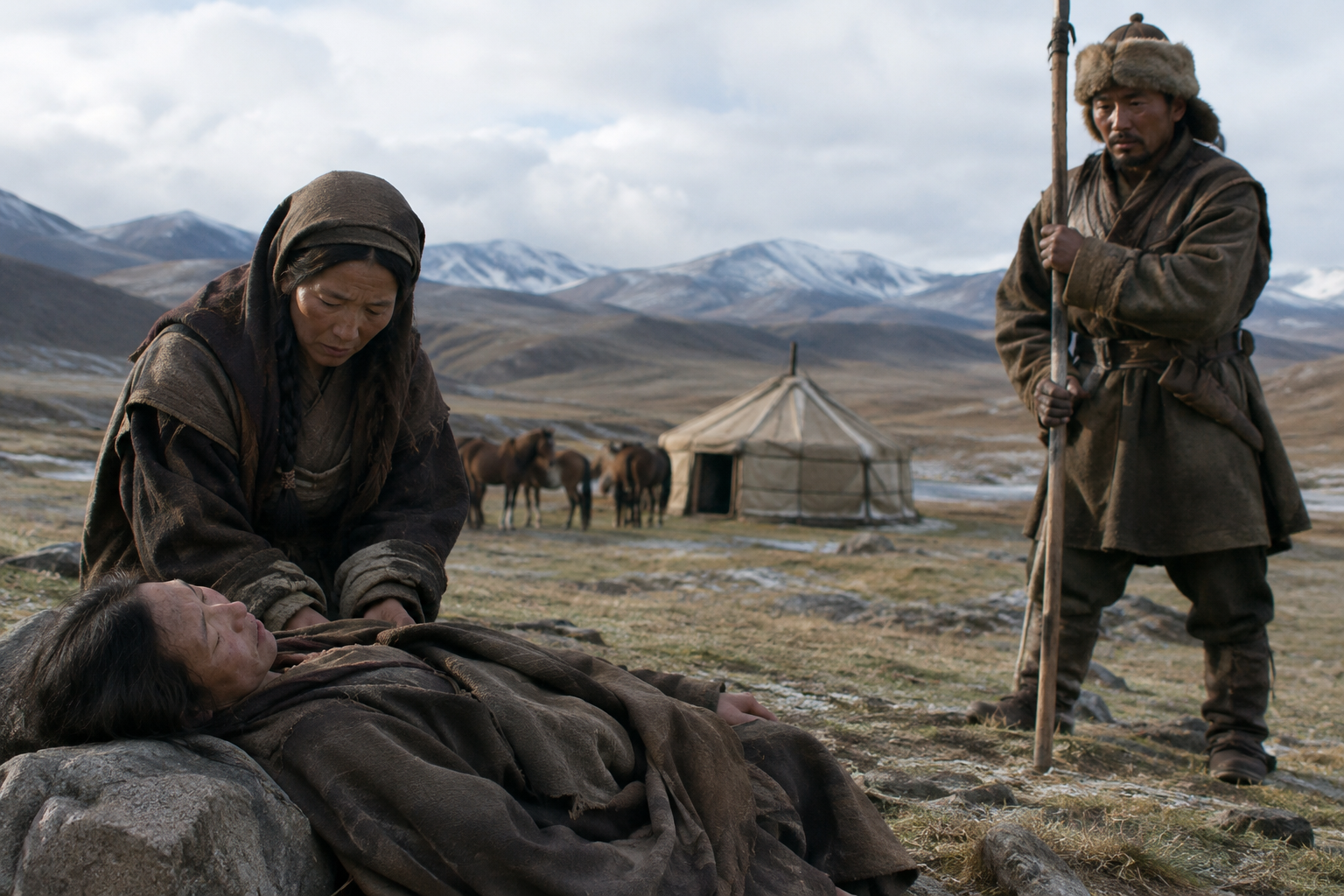
One of the more arresting appearances of haplogroup Q1b1a3a comes from a grave linked to the plague outbreak in medieval Kyrgyzstan. The individual BSK002, dated to AD 1338, belongs to a moment that has drawn unusual attention because cemeteries in the region have been studied in connection with the history of Yersinia pestis, the bacterium that caused plague. Even when the disease story takes center stage, though, the Y chromosome quietly adds another layer: it places this man on a paternal line with deeper roots across Inner Asia.
That is what makes Q1b1a3a so interesting in the ancient record. It is not a lineage that turns up in these inputs as a grand imperial stamp spread everywhere at once. Instead, the evidence here is narrower and more revealing: one man in 14th-century Kyrgyzstan, another much earlier man in Late Bronze Age Mongolia, and between them a broad historical corridor of steppe movement, exchange, and reshaping of communities over more than two millennia. Y-DNA traces one direct paternal line only, not a person's total ancestry, but sometimes a single line is enough to show how durable male descent groups could be in the steppe world.
BSK002 is the best starting point because the date and context are so sharp. AD 1338 places him in the centuries when the Tian Shan region sat within long-distance networks linking China, Central Asia, and lands farther west. A genetic study associated with the Kyrgyzstan plague burials, published in Nature, helped focus attention on this setting as part of the wider history of plague's emergence and spread.
For a haplogroup article, however, the real value of BSK002 is that he anchors Q1b1a3a in a historically documented medieval population of Central Asia. This was not an isolated mountain world cut off from events. Medieval Kyrgyzstan stood at the crossroads of trade, migration, pastoral mobility, and imperial aftershocks. A Q-lineage here fits a broader picture in which paternal ancestry in Inner Asia could remain regionally persistent even while languages, political loyalties, and whole confederations shifted repeatedly.
Ancient plagues and epidemic DNA
It is also worth being precise. The article haplogroup is Q1b1a3a, but ancient assignments do not always arrive with identical resolution across studies and databases. The responsible point is not to force an oversized conclusion from one burial, but to note that this medieval Kyrgyzstan individual is associated with the branch and shows it present in a population that mattered enormously to Eurasian history.
The older sample, ARS005 from Arbulag Soum in Mongolia, dated around 1060 BC, gives the lineage real chronological depth. Now we are in the Late Bronze Age, long before the Mongol Empire, before Turkic expansions, and before the medieval caravan worlds that usually dominate popular imagination. The importance of this sample is simple but substantial: it places a related paternal branch in the eastern steppe over 2,000 years earlier than BSK002.
Mongolia in the Late Bronze Age was not culturally static. This was a landscape of herding economies, regional interaction zones, and changing patterns of mobility that tied the eastern steppe to wider developments across Inner Asia. A preprint dataset connected with ancient Mongolia and neighboring regions, available at bioRxiv supplementary materials, has helped scholars piece together just how mixed and dynamic these populations were.
ARS005 matters because it prevents us from treating the medieval Kyrgyzstan evidence as a late accident. Whatever the precise branching history of Q1b1a3a, the supplied ancient record suggests a paternal presence stretching from Bronze Age Mongolia into medieval Central Asia. That is not proof of an unbroken local dynasty, still less of one family. It is, however, good evidence that this branch belonged to the long demographic history of the eastern and central steppe.
At the broader level, haplogroup Q is one of the important paternal lineages of northern Eurasia and the Americas. But that wider fame can be misleading if it is carelessly pasted onto every sub-branch. Q1b1a3a is not the same thing as the whole of haplogroup Q, and the ancient samples here do not justify a sweeping claim about every migration ever associated with Q.
What they do support is a more specific picture. This branch appears in two places that belong unmistakably to the Inner Asian world: Late Bronze Age Mongolia and medieval Kyrgyzstan. That pattern makes historical sense. Steppe populations often maintained distinct paternal lines across long spans of time even while absorbing new ancestry, forming new alliances, and moving through different political identities. In other words, a Y lineage can outlast the labels historians later give to peoples.
This is particularly important in Eurasia, where readers are often tempted to equate a haplogroup with a single ethnic name: Scythian, Xiongnu, Turk, Mongol, Kyrgyz, or something else equally tidy. Archaeology and genetics are rarely so obliging. A paternal branch can move across cultures, languages, and confederations without belonging exclusively to any one of them.
If we place ARS005 and BSK002 on a map, the distance between them is considerable, but the historical terrain between them is not empty. It includes the Altai, eastern steppe zones, mountain corridors, and the wider Inner Asian networks through which herders, warriors, traders, and families moved for centuries. The significance of Q1b1a3a here lies less in one dramatic migration story than in this durable corridor of connection.
That makes the lineage especially relevant for people whose paternal ancestry points toward Central Asia, southern Siberia, or adjacent steppe regions. The evidence does not say, "your line came from this exact tribe." It suggests something more archaeologically useful: that men belonging to this paternal branch were part of populations living within the great interaction zone of Inner Asia from at least the Late Bronze Age into the late medieval period.
Northern Eurasia through ancient DNA
That is a valuable distinction. The steppe was not merely a highway for sudden invasions. It was also a social landscape in which communities reproduced themselves over generations, keeping some paternal lines in circulation while whole cultural worlds rose and fell around them. Q1b1a3a, on present evidence, looks like one of those lines.
Two ancient samples are not a population census, and no careful archaeologist should pretend otherwise. Yet two well-separated finds can sometimes be more informative than a longer but repetitive list. Here they show temporal depth, geographic coherence, and a plausible historical setting. ARS005 gives us an eastern steppe Bronze Age anchor; BSK002 shows the branch still present in medieval Central Asia at a moment of global consequence.
The pairing also highlights how ancient DNA works best when it is read alongside archaeology rather than as a replacement for it. The sites differ sharply in period and context, but both belong to worlds defined by movement, exchange, and regional complexity. That is exactly where a lineage like Q1b1a3a becomes historically meaningful: not as a badge of simplistic identity, but as a thread visible across changing steppe societies.
Iron Age Kyrgyzstan and steppe ancestry
On the evidence here, Q1b1a3a is best understood as an Inner Asian paternal lineage with ancient roots in the steppe zone and a documented presence from Late Bronze Age Mongolia to medieval Kyrgyzstan. That does not turn every modern carrier into the descendant of one famous people or empire. It does suggest that your direct paternal line may belong to a remarkably old steppe-associated continuum, one that persisted through major changes in culture, disease history, and political power.
Comments