Haplogroup Q1a2a1

– 6 min read


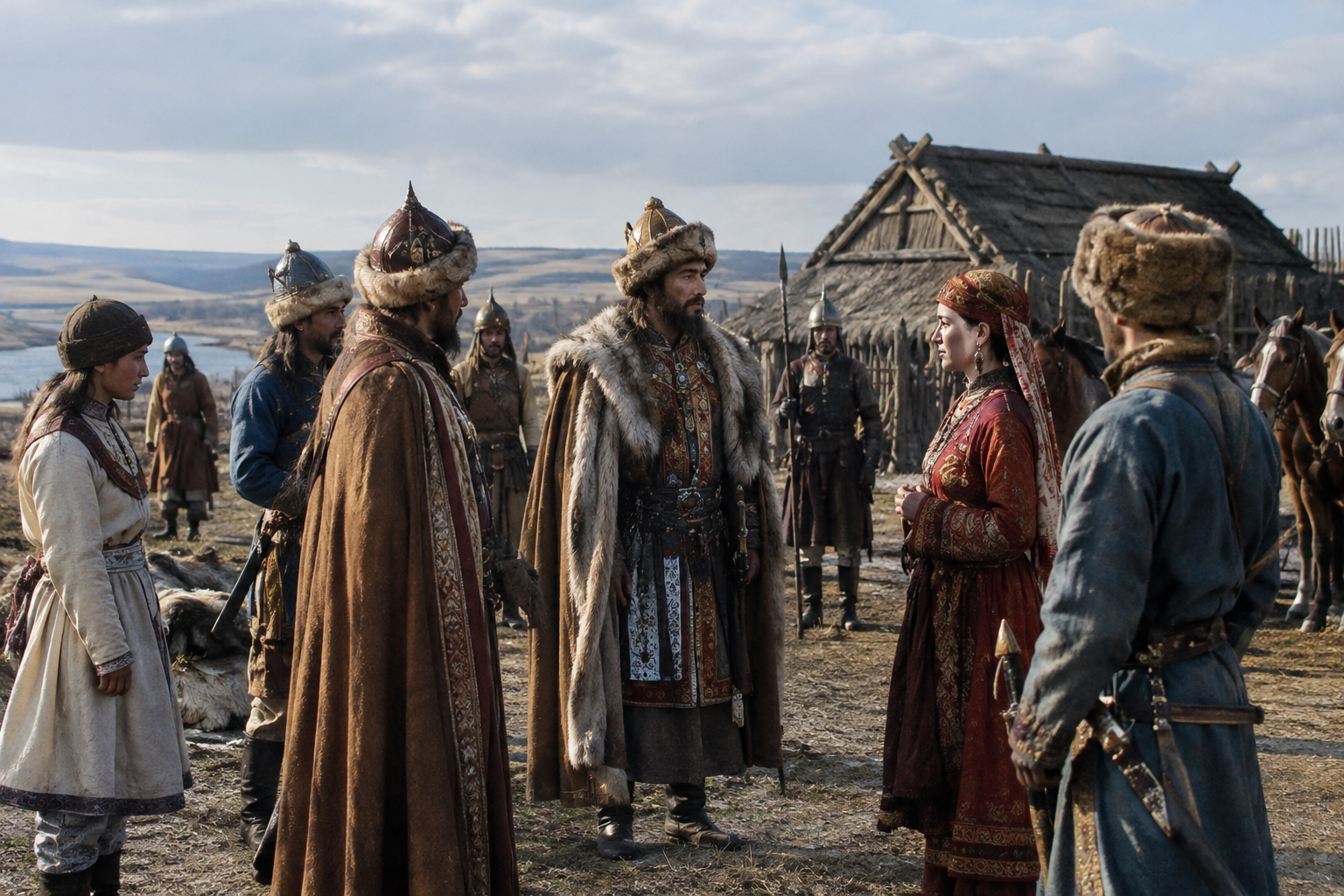
There is something wonderfully disorienting about haplogroup Q1a2a1. Many readers will know haplogroup Q as a paternal lineage famous in the peopling of the Americas, yet one branch of that much larger family also turns up in ancient Eurasian contexts that pull us straight into the world of steppe riders, Iron Age elites, Avar-period burials, and early medieval frontiers. It is a reminder that a Y-DNA label is not a national flag, nor a ready-made ethnic identity. It is a marker on one direct paternal line, one thread among thousands in a person's ancestry.
That is exactly why Q1a2a1 is historically interesting. In the ancient DNA record provided here, this lineage appears across a striking geographical arc: from Neolithic Russia to Iron Age Kazakhstan and Kyrgyzstan, and then into the Carpathian Basin and early medieval Croatia. What emerges is not a simple tale of one people marching neatly westward, but a more complicated story of long-distance movement, elite networks, and the persistence of paternal lines across changing cultures and political worlds.
Y-DNA haplogroups trace the direct male line: father to father to father. That makes them powerful tools for studying paternal ancestry, but also easy to misuse. Sharing Q1a2a1 with an ancient individual does not mean you are closely related to him in a genealogical sense, and it certainly does not prove descent from any named dynasty or noble house. What it can do is place your paternal line in a broad historical landscape.
Q1a2a1 belongs within haplogroup Q, a wider branch of the human Y-chromosome tree with deep roots in northern Eurasia. For this specific subclade, the material here points especially toward Inner Eurasian and steppe-linked contexts rather than toward the whole enormous history of haplogroup Q. That distinction matters. It is one thing to talk about the broad history of Q; it is another to talk responsibly about the narrower path of Q1a2a1.
The sample set suggests that by prehistory and later antiquity, paternal lines within this branch were present in zones stretching from forest-steppe Russia to eastern Kazakhstan, Kyrgyzstan, and eventually into the Avar and post-Roman worlds of central and southeastern Europe. Ancient DNA has been crucial here, because written sources alone cannot track male-line continuity over millennia.
Explore Ancient DNA and Archaeogenetics
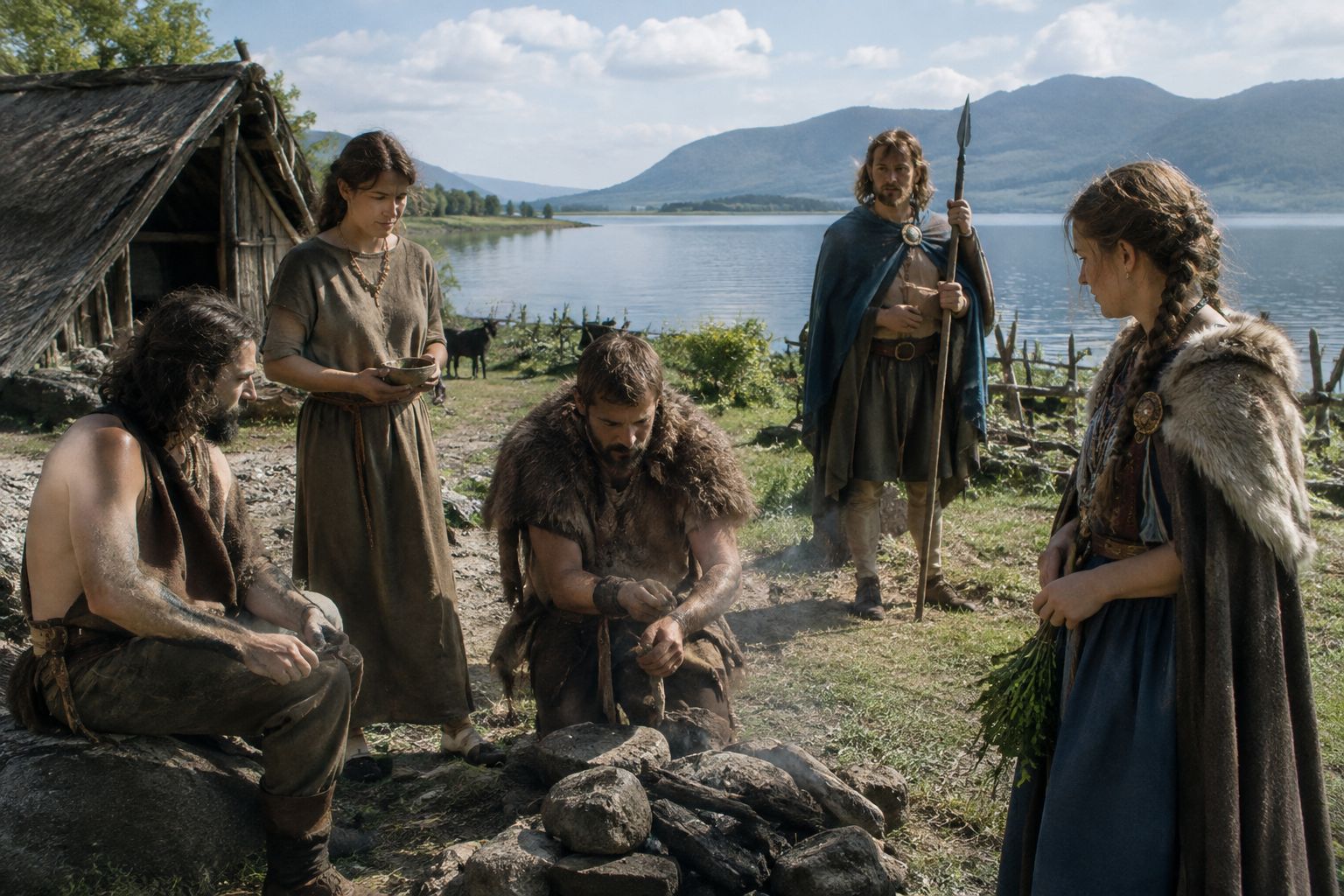
The oldest individual in this group is I13676, from Neolithic Russia Bolshemys Itkul Bolshoy-Mys, dated 3425 BC. That one sample does not give us a complete origin story for Q1a2a1, but it does show that lineages of this kind were present in northern Eurasia long before the great named confederations of the historical steppe. This is important, because it warns us against assuming that every later appearance of the haplogroup must represent a brand-new migration. Sometimes a lineage is already in the wider neighborhood.
By the Iron Age, the picture becomes more vivid. Two individuals from Shilikty, East Kazakhstan - SHI006 and SHI007, both dated 650 BC - come from Saka Scythian grave contexts. Here the paternal line appears in a world of mounted elites, elaborate burial traditions, and the great eastern steppe corridor. It is exactly the sort of archaeological setting where one would expect long-range mobility, political alliance, and status display to matter.
The same broader horizon is visible in KBO001 from Iron Age Karaoba Kazakhstan, dated 300 AD, and DA86, an Iron Age Turkic-Speaking Nomad Kyrgyzstan sample dated 450 AD. Neither sample licenses simplistic ethnic claims, but together they show a durable paternal presence across steppe and Inner Asian settings over many centuries. The labels changed - Saka, Scythian, Turkic-speaking nomad - while some male-line branches endured and moved through those shifting political landscapes.
For readers interested in this eastern steppe setting, MyTrueAncestry has a particularly relevant companion piece on Scythian elite lineages.
If the Kazakhstan and Kyrgyzstan samples show the steppe background, the Avar-period finds show what happened when such lineages reached the heart of Europe. Several individuals in the dataset come from Hajdunanas, Hungary, dated 650 AD: HNJ012, HNJ016, HNJ011, and HNJ014. Three are described as Avar Elite, while HNJ014 is labeled Pannonian Hungary Hajdunanas. There is also I16812, described as Avar Elite Early Medieval Hungary Year:650 AD, and ARK-29 from Late Avar Period Hungary Arkus-Homokbanya Year:800 AD.
That concentration is difficult to ignore. It suggests that paternal lines within or close to Q1a2a1 were not random curiosities in the Avar realm. They were present in individuals identified archaeologically as elite and remained visible into the Late Avar period. In historical terms, this places the lineage in the Carpathian Basin during a time when the Avar Khaganate linked central Europe to wider steppe traditions.
Now, one must be careful. Avar political identity was not reducible to one haplogroup, and the Avar world itself was mixed, layered, and changing. But these burials do reveal something important: paternal lines associated with the Eurasian steppe were part of the ruling and military landscape in early medieval Hungary.
That wider setting is explored further in related MyTrueAncestry articles on both the European Huns and medieval Hungary's elite. Readers curious about how steppe ancestry appears in the Carpathian Basin will find those discussions useful.
Explore the Origins of the European Huns
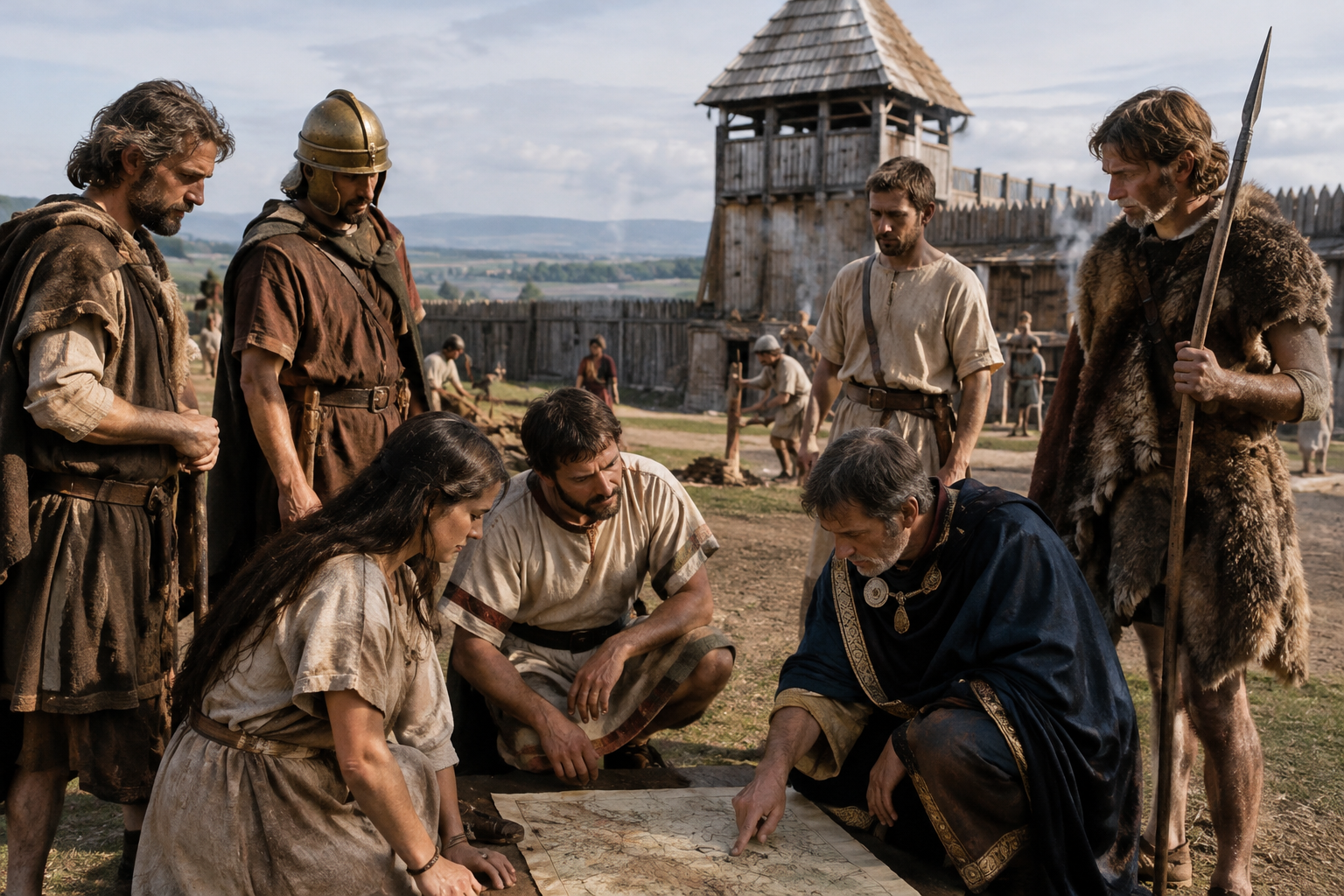
The westernmost sample in this group is I28400, from Early Medieval Croatia Nustar Dvorac, dated 800 AD. Even the place name is evocative: Dvorac, "castle" in Croatian, though in this context it is part of the archaeological location rather than proof of any dynastic continuity. Still, it plants the haplogroup in the early medieval Balkans, in a region where Roman, post-Roman, steppe, and emerging Slavic-era worlds overlapped.
This matters because it shows that the paternal line was not confined to Inner Asia or to the Avar core alone. By around 800 AD it also appears in Croatia, in a zone of contact and transformation. That is precisely where genetics helps most: not by replacing history, but by revealing unsuspected continuities and movements across the political boundaries that medieval writers cared about.
Readers interested in the regional picture may also want to compare this with MyTrueAncestry's article on paternal change and maternal continuity in Croatia.
Read About Ancient DNA in Croatia
Here the story becomes especially interesting, and also especially delicate. The prompt includes no usable specific data on associated noble families or castles beyond the empty heading itself, so there is no responsible way to assign Q1a2a1 to a named dynasty, clan, or fortress. That absence is worth stating plainly. Genetics is exciting, but restraint is part of good history.
What we can say is that lineages like Q1a2a1 moved through exactly the kinds of regions where later castles, noble seats, and frontier lordships would emerge: the Carpathian Basin, Pannonia, and the Croatian borderlands. Medieval strongholds in these regions often stood atop landscapes already shaped by Roman garrisons, Avar centers, migration-period routes, and older steppe-linked networks. Castles preserve political memory; DNA sometimes preserves paternal memory. The two are not the same thing, but they can illuminate the same terrain from different angles.
So if a later noble family in Hungary or Croatia turns up in historical records, ancient DNA does not allow us to point at an Avar elite burial and say, "there is the founder." What it does allow us to say is more subtle and, in some ways, more interesting: long before medieval genealogies were written down, some paternal lines already connected these regions to a much wider Eurasian world.
Q1a2a1 is a fine example of how a Y-DNA haplogroup can overturn modern assumptions. It reminds us that early medieval Europe was not sealed off from Inner Asia, that elite networks could carry paternal lines over enormous distances, and that the labels used by archaeologists - Neolithic, Saka, Scythian, Avar, early medieval Croatian - describe cultural settings, not immutable biological tribes.
Above all, this haplogroup shows why ancient DNA is so valuable. A written chronicle may tell us who ruled. A burial may tell us how status was displayed. A Y-chromosome can sometimes reveal that the men buried in those worlds belonged to paternal lineages with histories far older and far wider than any kingdom they served.
If your own Y-DNA belongs to Q1a2a1, that does not make you Scythian, Avar, or the heir to a lost castle. But it may place one branch of your family story in the same broad historical landscape as I13676, SHI006, SHI007, KBO001, DA86, HNJ012, HNJ016, HNJ011, HNJ014, I16812, ARK-29, and I28400. That is already an extraordinary thing to discover.
MyTrueAncestry lets you compare your DNA with ancient individuals from archaeological sites across the world, including the kinds of steppe, Avar, and early medieval populations discussed here. Those matches can offer remarkable historical perspective, even if they do not by themselves prove direct descent from a particular ancient person or noble lineage.
Upload your DNA and see whether your ancestry reaches into the same deep paternal landscapes traced by haplogroup Q1a2a1.
Comments