Haplogroup P312

– 5 min read


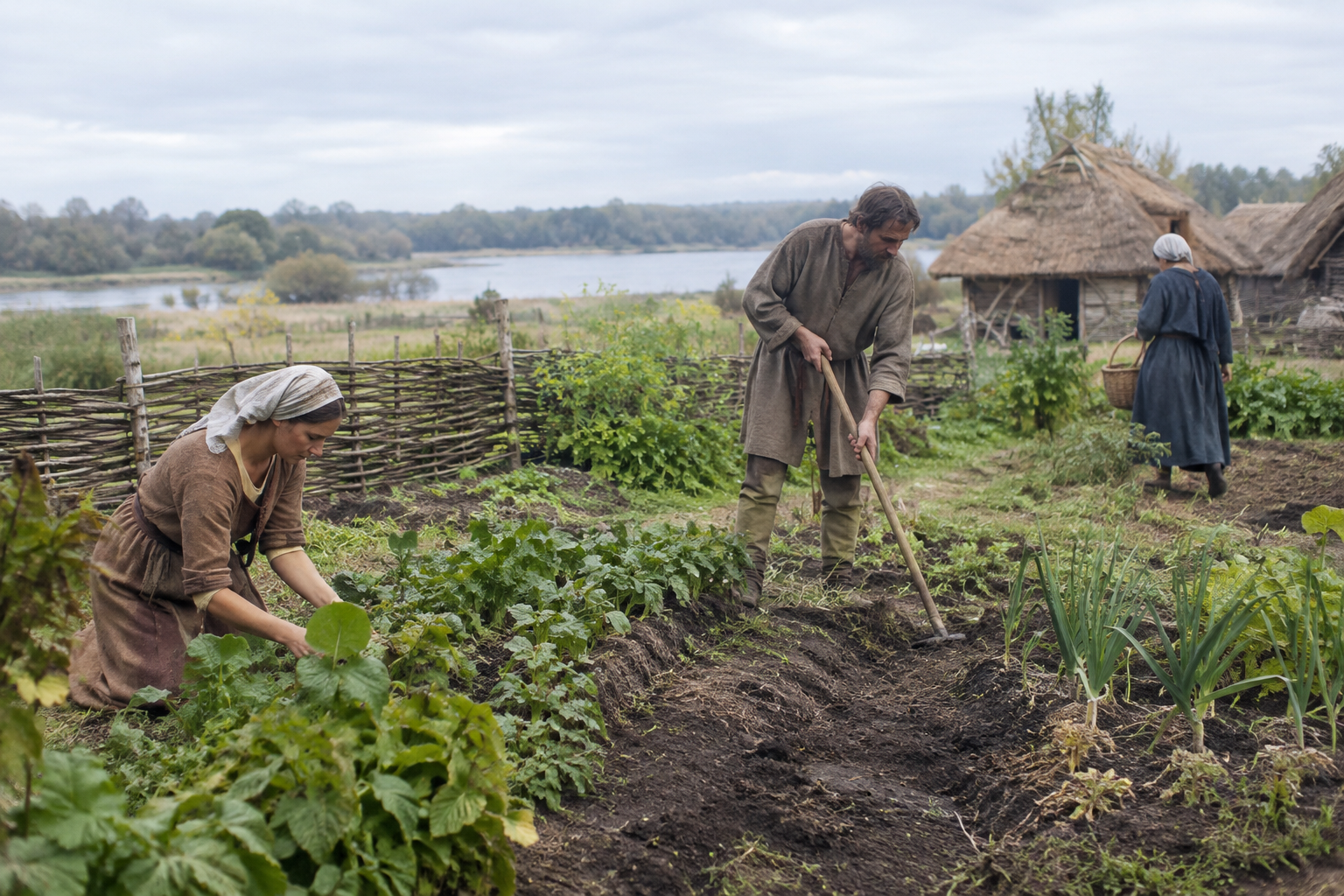
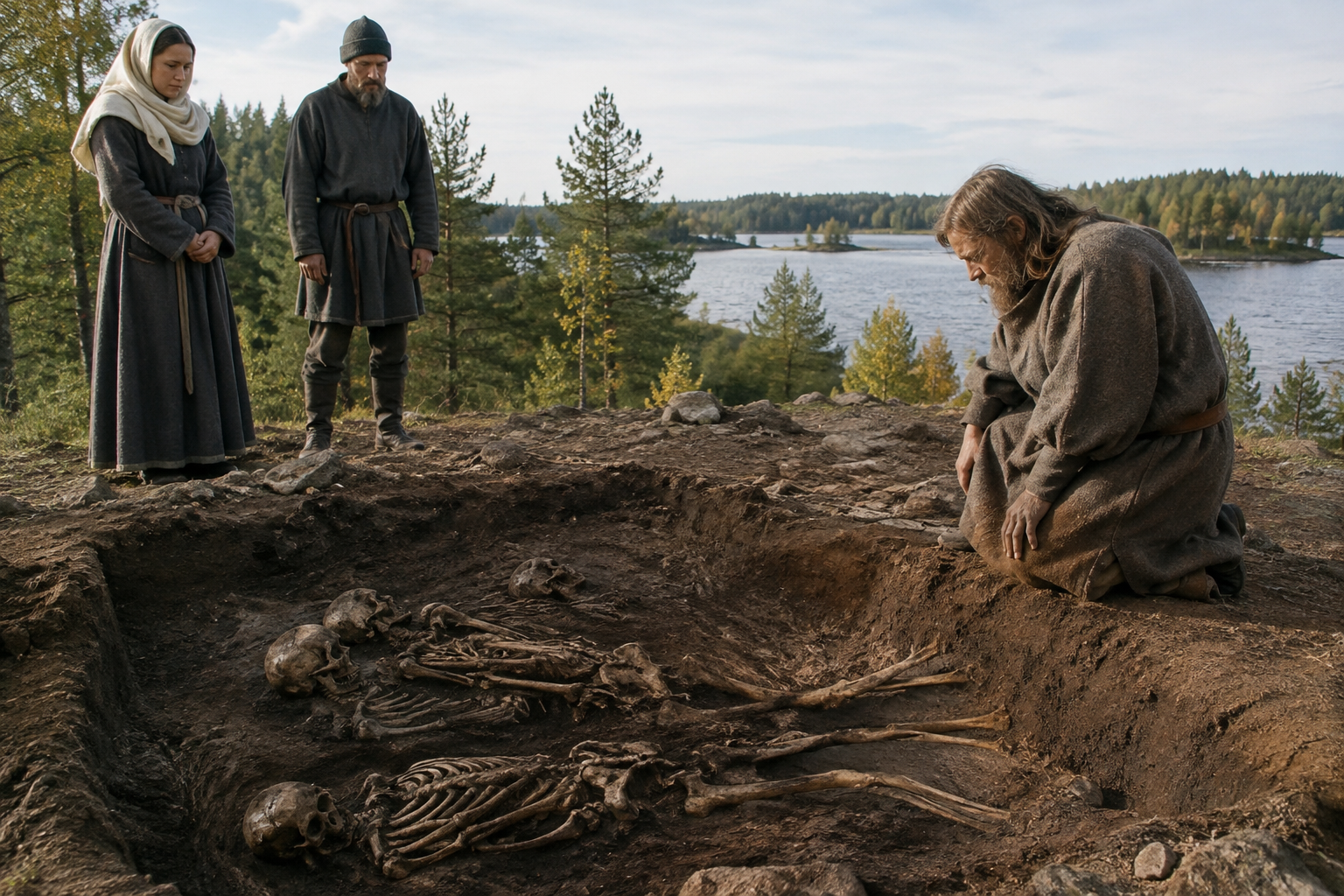
At Croft Gardens in Cambridge, one early medieval man has become a small but telling witness to a much larger European story. The individual identified as CRG023, dated to around AD 600, was buried in Cambridgeshire at a moment when post-Roman Britain was being remade by migration, local continuity, and new social identities. His reported Y-DNA assignment to P312 matters because P312 is one of the major branches within R1b that became especially prominent in western Europe, yet here it appears in an English burial from the centuries when the shape of early medieval England was still being negotiated.
That is the useful tension in this haplogroup. P312 is not a label for a people, a language, or a kingdom. It is a paternal line, tracing one direct male line out of many ancestors. But when an early medieval burial such as CRG023 carries that lineage, it gives us a concrete point where archaeology and genetics meet: not a mythic founder, but a man in a cemetery, in a real landscape, in a real century.
Cambridge in the early medieval period sat in a region shaped by deep Roman precedents and strong North Sea connections. By around AD 600, eastern England was no blank slate waiting for newcomers. It was already a lived-in, argued-over world of fields, routes, settlements, and burial grounds, where people with different ancestries and cultural affiliations were being drawn into new communities.
CRG023 belongs to that world. The sample description itself is spare: Early Medieval England, Cambridgeshire, Cambridge, Croft Gardens, around AD 600. Yet even such a concise record is valuable. It anchors haplogroup P312 not in vague speculation about "Celtic" or "Atlantic" populations, but in a documented burial from a region where ancient DNA has shown that early medieval communities could combine substantial continental northern European ancestry with local British roots.
An ancient DNA study of Roman and early medieval Britain has helped underline that complexity, showing that the centuries after Rome involved both continuity and significant demographic change rather than a single, simple replacement event. The broader research context linked with these remains can be followed through this associated ancient DNA project.
Roman and Early Medieval Britain DNA
P312 is a major western European branch of the wider R1b paternal family. In modern populations it is especially associated with parts of Iberia, France, Britain, and Ireland, and it also appears across much of western and central Europe. That distribution has made it tempting, over the years, to treat P312 as if it were a shorthand for entire historic populations. It is not.
What P312 can do is mark one paternal stream that became very successful over time. Ancient DNA has increasingly shown that such lineages often expanded dramatically during later prehistory, especially after the Bronze Age transformations that reshaped Europe. By the early medieval period, a lineage like P312 could turn up in very different political and cultural settings, because centuries of movement, marriage, conquest, and local survival had already scattered it widely.
So when we see P312 in CRG023, the sensible reading is not that this man can be cleanly assigned to a single ethnic story. The point is subtler and more interesting: one of the major paternal lines of western Europe was present in an early medieval burial community in Cambridge, participating in the making of England after Rome.
There is a habit in genetic history of chasing only the grandest finds: kings, warrior elites, spectacular cemeteries. But ordinary or lightly documented individuals are often the ones that make the best historians of population change. CRG023 does not need an elaborate grave narrative to be useful. His importance lies in his date and place.
Around AD 600, eastern England was part of the zone most often discussed in debates about Anglo-Saxon migration. For a long time, those debates were framed much too starkly, as if one had to choose between complete replacement and complete continuity. Ancient DNA has helped dismantle that old binary. Burials from this period can show ancestry profiles that vary even within the same region, and paternal lineages like P312 remind us that the men entering these communities were not all drawn from a single recent source.
Cambridgeshire is especially revealing because it sits between worlds: inland and riverine, but also open to eastern influence; Roman in inheritance, but early medieval in social form. A P312 lineage here is compatible with long-established western European ancestry in Britain, but it also fits the broader mixing and reshaping of lineages that characterized the centuries after the end of Roman rule.
To understand why CRG023 is part of a bigger pattern, it helps to step back into later prehistory. P312 is widely discussed in connection with the Bronze Age expansion of R1b lineages across western Europe, particularly in regions touched by Bell Beaker and related post-Neolithic movements. That does not mean every P312 man belonged to the same archaeological culture, still less that culture and chromosome are interchangeable. It does mean that this branch had already been spreading and diversifying for many centuries before the first English kingdoms emerged.
In that sense, CRG023 is not an origin point but a late chapter in a long story. By AD 600, P312 had had ample time to become part of the paternal background of multiple western European populations. Britain, with its prehistoric ties to the continent, its Roman-era mobility, and its early medieval migrations, was exactly the sort of place where such a lineage could persist, reappear, or be introduced again through different routes.
That wider prehistoric backdrop is worth keeping in mind when reading early medieval samples. A P312 result in England does not automatically point to one event, one invader, or one named tribe. It points instead to the accumulated effects of many earlier population processes whose traces were still alive in individual men centuries later.
One reason P312 attracts attention is that people often want paternal haplogroups to settle cultural arguments. Was someone "native"? Was he "Anglo-Saxon"? Was he descended from Iron Age Britons, from migrants across the North Sea, or from a family whose paternal line had crossed the Channel long before written history? On present evidence, CRG023 cannot answer those questions by himself.
What he can do is warn us against tidy labels. Early medieval cemeteries in England were used by communities whose identities were social and political as much as biological. A Y-chromosome line can survive through cultural change, language shift, intermarriage, and migration. A man buried in an early medieval English cemetery may carry a paternal line with much older roots in western Europe without that fact making his life any less part of the early English world.
This is why site-based ancient DNA matters so much. It reconnects big lineage names to actual human settings. Instead of talking about P312 as an abstraction floating above a map, we meet it at Cambridge, around AD 600, in one excavated individual. That is a more modest story than old nationalist fantasies, but far more convincing.
If your paternal line belongs to P312, the strongest historical lesson is breadth, not narrowness. This is a lineage with deep roots in western Europe and a long presence in regions including Britain. The early medieval sample CRG023 from Croft Gardens shows that P312 was part of the human landscape of England by around AD 600, during one of the most formative periods in the island's post-Roman history.
That does not make every P312 tester a direct reflection of early medieval Cambridge. But it does place your paternal line in a lineage family that was already thoroughly woven into western European history long before surnames, parish registers, or dynasties. In archaeology, that is often the most valuable kind of result: not a fantasy of certainty, but a real foothold in the past.
Comments