Haplogroup O2a2b2a

– 5 min read


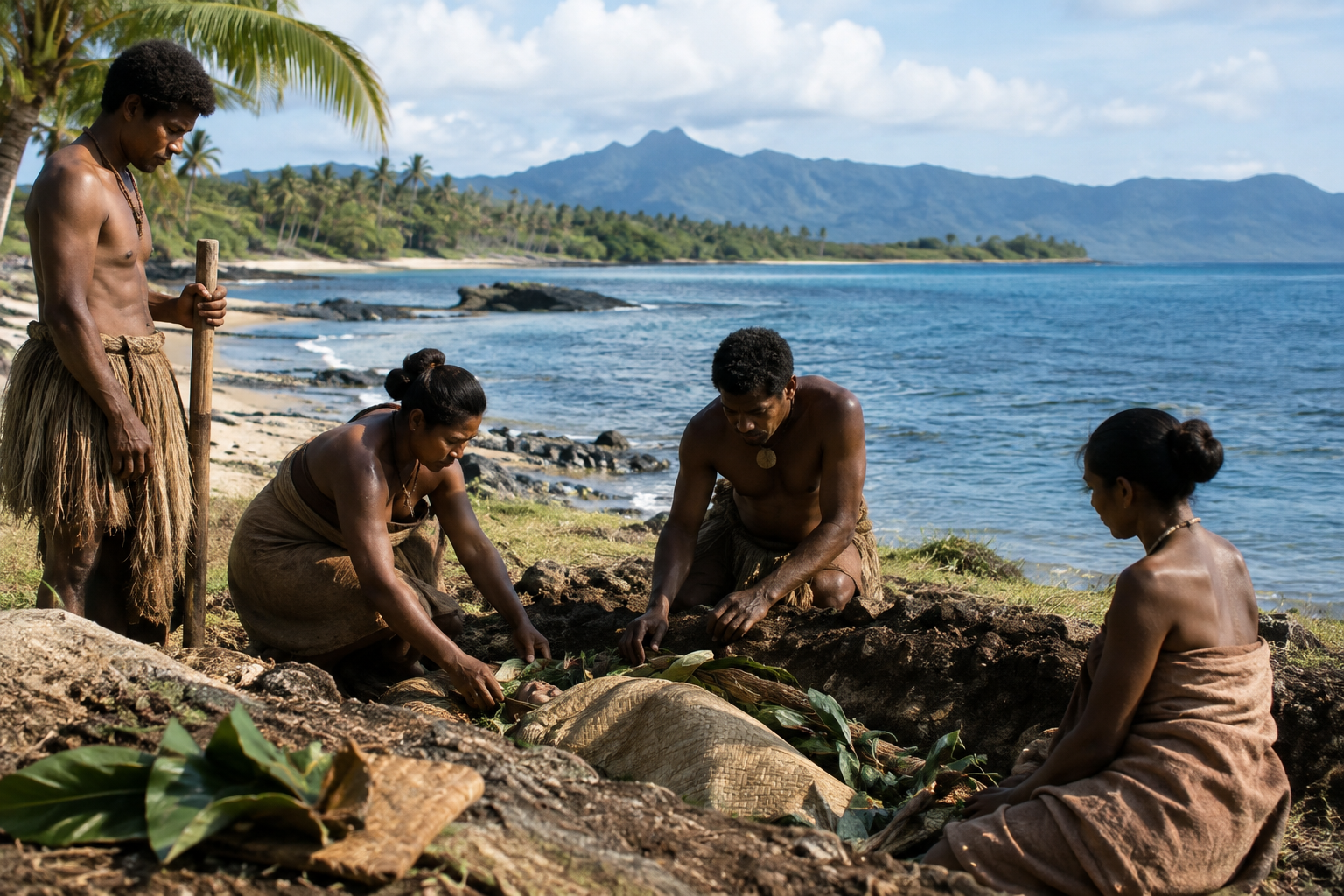
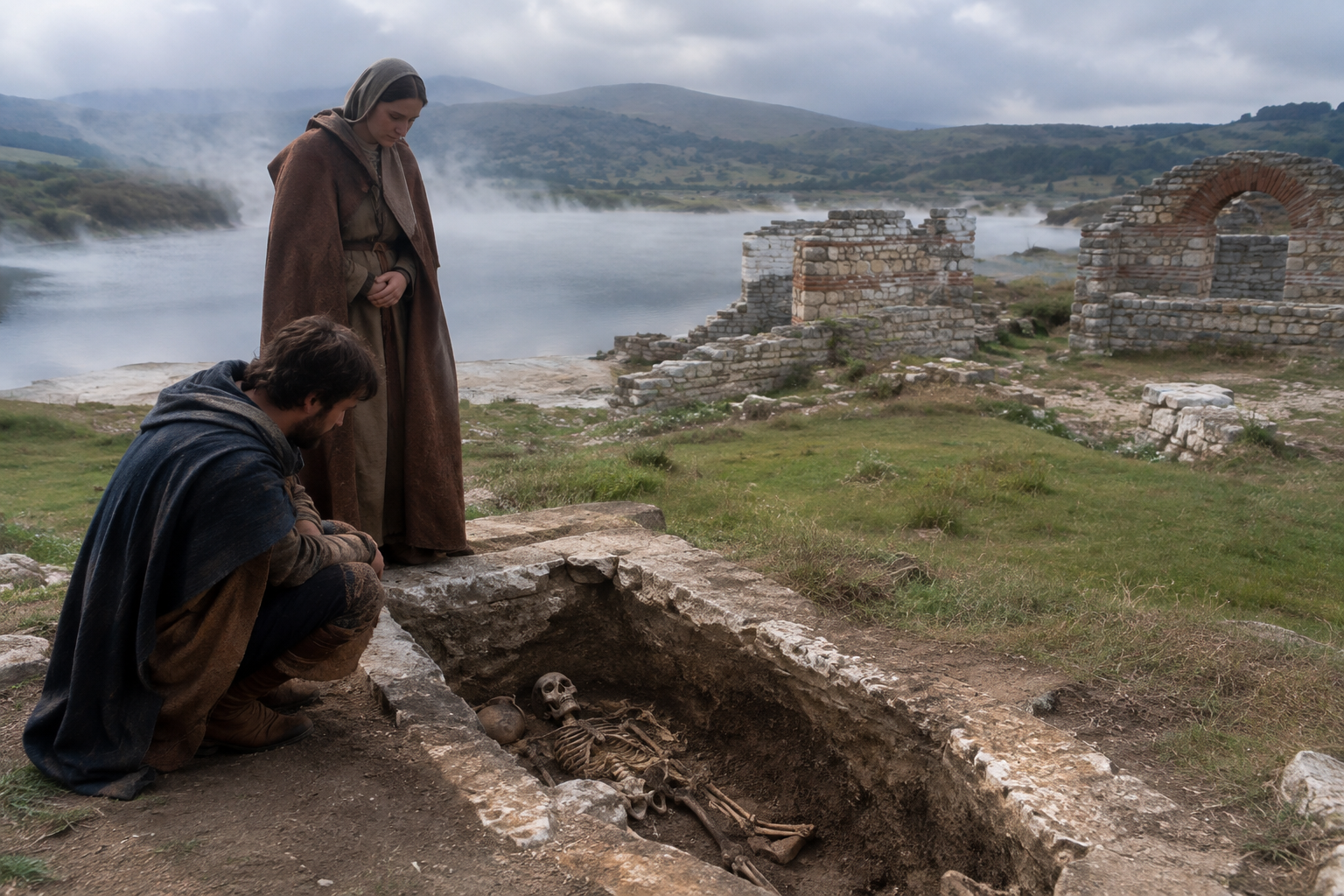
At Sigatoka on the south coast of Viti Levu, one ancient burial has given O2a2b2a a rare and very concrete archaeological foothold in the Pacific. The individual recorded as SIG002, dated to around AD 595, comes from Fiji rather than from the East or Southeast Asian mainland where broader branches of haplogroup O are usually discussed. That alone makes the find interesting: it places a paternal line associated with O2a2b2a inside the human story of island settlement, voyaging, and community formation in Remote Oceania.
That matters because Y-DNA traces one direct paternal line only, not a person's whole ancestry. Even so, when a branch like O2a2b2a turns up in an ancient burial from Fiji, it gives us something far better than modern distribution maps or sweeping migration slogans. It gives us a man, a place, and a date.
Sigatoka is one of the best-known archaeological landscapes in Fiji, especially for understanding the early centuries of life in the archipelago after the first settlement of Remote Oceania. The burial identified as SIG002 belongs to that wider world of coastal communities linked by seafaring, exchange, and local adaptation. Around the 6th century AD, Fiji was already part of a long-established island network, but its communities were not frozen relics of first settlement. They were living societies with their own local histories.
That is why SIG002 is so useful. An ancient Y-chromosome result from Fiji is not just a dot on a map; it helps anchor paternal ancestry in a region where archaeology and genetics must be read together very carefully. Island Southeast Asia, Near Oceania, and Remote Oceania were connected by repeated movements of people over long periods, and paternal lineages can illuminate only one strand of that much larger picture.
An ancient DNA study connected with this broader research area, published on ancient populations of Oceania and their histories, is relevant here because it reflects the sort of genomic framework within which a burial like SIG002 is interpreted: not as an isolated curiosity, but as part of a wider human landscape shaped by movement, mixture, and continuity.
The temptation with any haplogroup article is to turn a lineage into a people. Historians and archaeologists have spent a long time learning not to do that. O2a2b2a is a paternal branch within the wider O haplogroup family, one that is strongly associated in broad terms with East and Southeast Asian paternal history. But a narrower label such as O2a2b2a should not automatically be given the entire history of its parent branches without sample-specific evidence.
So the safe and useful point is this: by the late 1st millennium AD, a paternal line reported here as O2a2b2a was present in Fiji. That supports what Pacific archaeology has long suggested from ceramics, settlement patterns, language history, and now genetics: the peopling of Oceania was never a single simple event. It involved inherited ancestry from earlier movements, later reshaping within island worlds, and population histories that were regional rather than uniform.
In other words, if your own paternal line falls under O2a2b2a, SIG002 does not prove that your direct ancestors were Fijian. But it does show that this branch, or a closely associated reported assignment, belonged to real men living in Pacific island societies by about AD 595.
It is easy to speak of Pacific settlement as if everything important happened at the moment a canoe first landed. Archaeologically, that is much too neat. By the time of SIG002, Fiji had already moved far beyond the earliest colonizing phase. Communities had developed local traditions, burial landscapes, and regional identities. The significance of a sample like this lies precisely there: it belongs to the history of established island populations, not just to the drama of first arrival.
That distinction matters for genetics. A Y-DNA lineage found in a 6th-century Fijian burial may reflect deep ancestry carried into the islands generations earlier, or subsequent demographic processes within Fiji and neighboring archipelagos, or both. Ancient DNA helps because it fixes at least one point in time. Without such burials, we are left guessing from modern populations alone.
That wider pattern is seen elsewhere in island research too. Studies of Pacific and island Southeast Asian populations increasingly show that human movement across the sea was layered and often sex-biased, with paternal and maternal histories not always telling the same story. A Fijian Y-chromosome assignment therefore sits best inside a broader archaeological argument about communities, kinship, voyaging networks, and long-term admixture.
With only one ancient individual named here, caution is essential. SIG002 is not "the" haplogroup of Fiji, still less of Oceania. He cannot stand for every burial at Sigatoka, every community on Viti Levu, or every episode in Fijian prehistory. Yet one securely placed ancient male can still be historically important, because ancient DNA is often sparse in tropical regions where preservation is difficult.
That scarcity is part of the story. Warm, humid environments are hard on ancient remains, and the Pacific has not yielded ancient genomes in the same abundance as cooler parts of Eurasia. Every credible result therefore carries unusual weight. In this case, O2a2b2a is not a theoretical lineage reconstructed backwards from the present; it is tied to an excavated burial from a documented Fijian site.
For readers following Pacific population history, the key lesson is not grandeur but precision. Archaeology gives us the site. Chronology gives us the period. Y-DNA gives us a paternal thread. None of those alone is enough, but together they begin to make the past less abstract.
The broader historical value of O2a2b2a lies in where this ancient appearance occurs. Fiji sits at a crossroads in the Pacific, between Near Oceania and the wider island world to the east. That makes any paternal lineage from an early historic or late prehistoric Fijian burial particularly informative. It can speak, cautiously, to the persistence of lineages carried through maritime expansion and to the reshaping of those lineages in island societies over centuries.
That does not mean the branch originated in Fiji, nor that all later carriers share a simple island narrative. It means only that the branch had reached, and was part of, a community there by around AD 595. For a haplogroup article, that is already a substantial thing to know.
The most distinctive thing about O2a2b2a here is not a royal pedigree or a grand conquest narrative, but a burial on the Fijian coast. SIG002 shows that this paternal line, or a reported assignment closely associated with it, was present in an established Pacific island community in the late 6th century AD. For anyone researching this haplogroup today, that is a reminder that paternal ancestry can connect not only to continents and empires, but also to the seaborne worlds of Oceania, where archaeology and DNA are slowly rebuilding histories once thought beyond reach.


Comments