Haplogroup O2a2b1a2a1a4a1a

– 4 min read


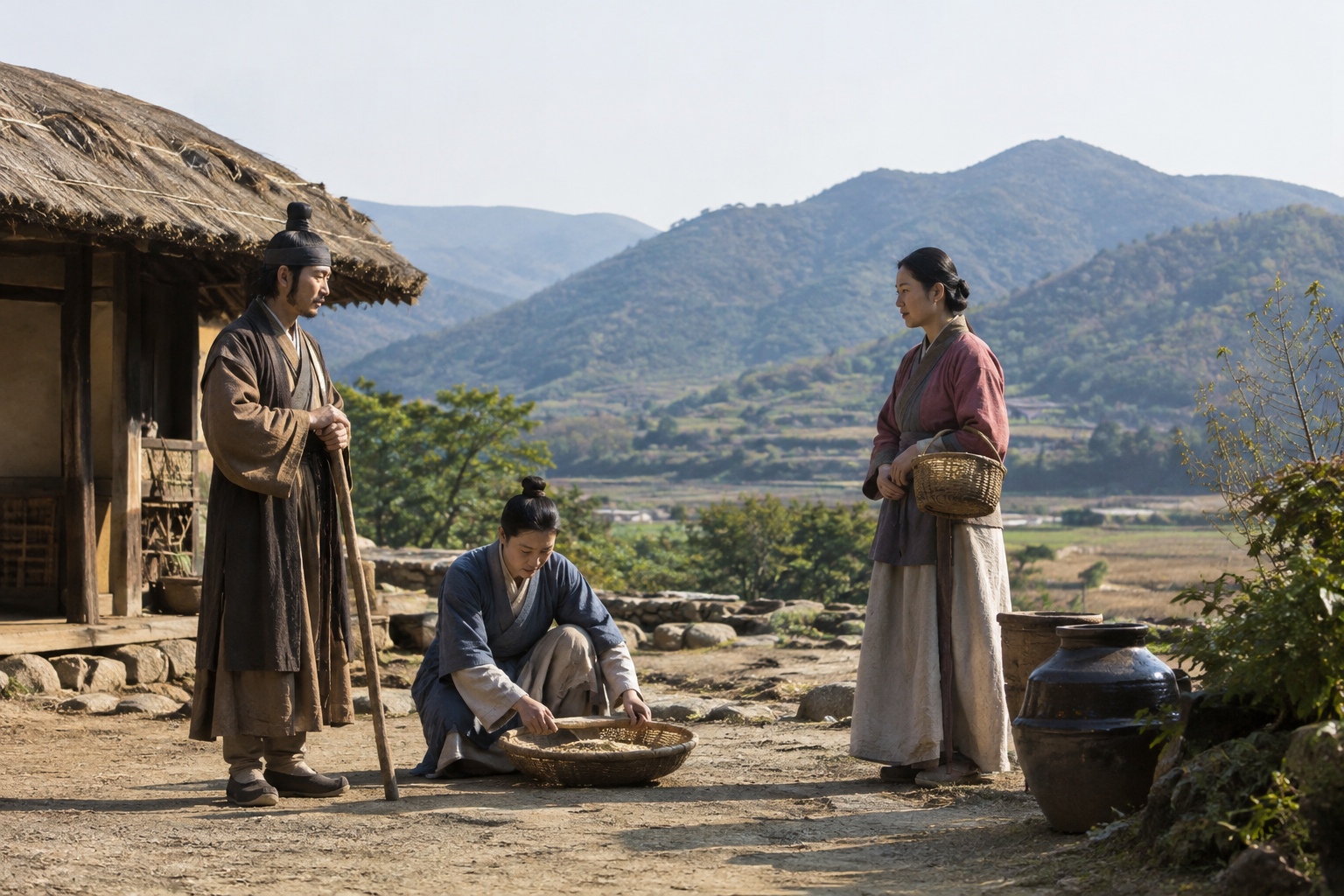
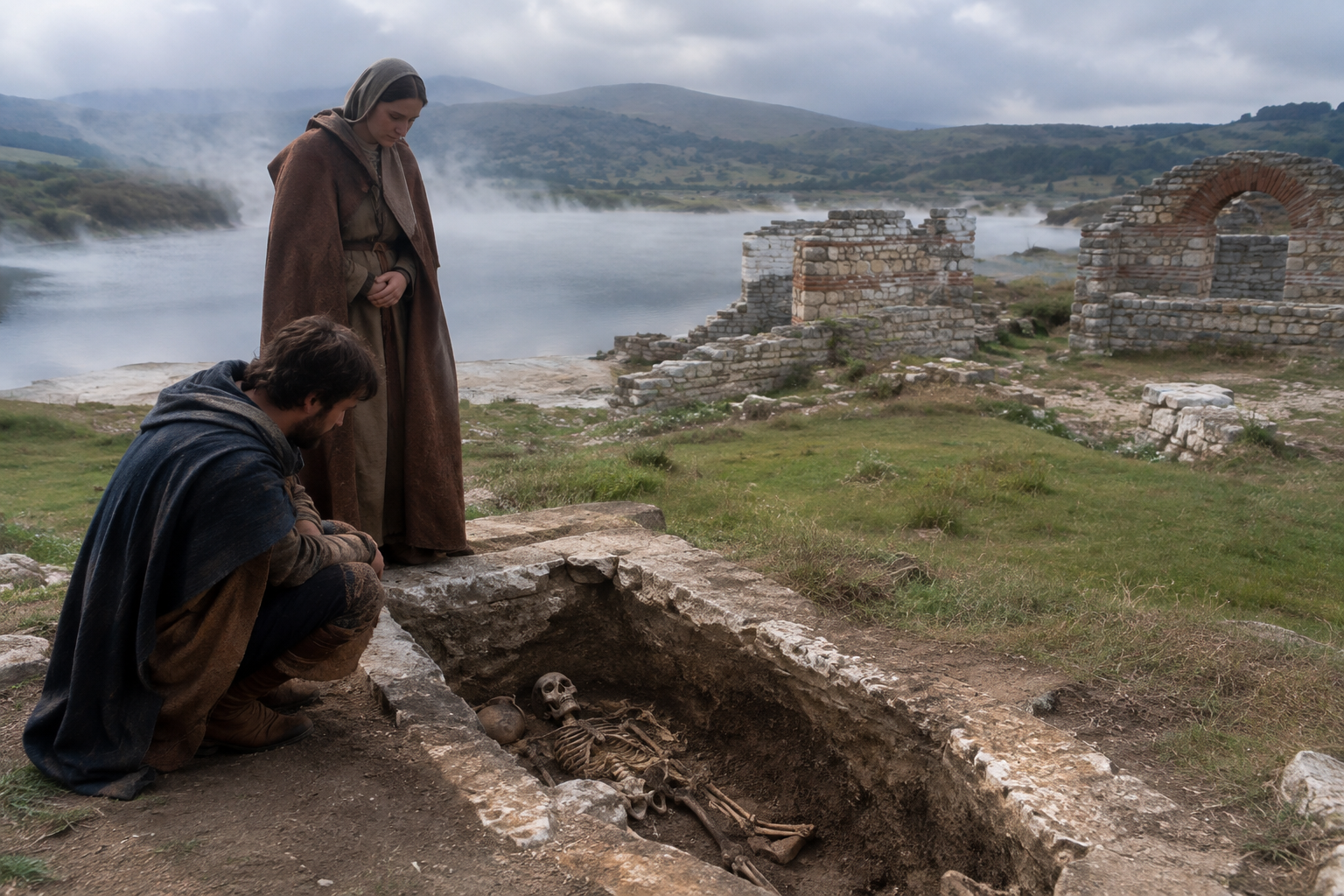
At Imdang-dong in Gyeongsan, one excavated individual from around AD 500, identified as IMD004, offers a small but unusually sharp glimpse into the paternal history of Korea's Three Kingdoms period. The site belongs to the Silla cultural world, a landscape of burials, local elites, and expanding political authority in southeastern Korea. For anyone carrying the Y-DNA haplogroup O2a2b1a2a1a4a1a, that matters because this branch is represented here in a real ancient person from a well-defined historical setting.
That is the attraction of ancient DNA at its best. It does not hand us a grand myth about a whole people. It gives us something both narrower and more solid: one direct paternal line, in one man, at one place, in one period when the Korean peninsula was divided among rival kingdoms. Y-DNA follows only that father-to-son line, not a person's full ancestry, but precisely because it is so narrow it can sometimes pin a lineage to a striking archaeological moment.
Imdang-dong is not just any burial ground. It sits in Gyeongsan, close to the Silla heartland in southeastern Korea, where archaeology has revealed an important concentration of burials connected to the era when Silla was consolidating power. By around AD 500, this was a politically active region, tied into the competition and alliance networks that shaped the peninsula before Silla's later unification of much of Korea.
IMD004 belongs to that world. With this individual, the branch O2a2b1a2a1a4a1a is not merely a modern testing label floating free of history; it is anchored to an excavated person from the Silla sphere. That does not mean every carrier of this lineage descends from Silla elites, nor that the branch was exclusive to one kingdom. It does mean that by the sixth century, this paternal line was present in a community linked to one of the most historically important polities in early Korea.
An ancient DNA study examining these burials has helped bring that community into clearer focus, including patterns of kinship and local genetic structure in the Silla-period population at Imdang-dong. The associated research materials are linked through this ancient DNA study archive, which is the key scientific lead behind the sample's context.
The exact label here is important. O2a2b1a2a1a4a1a is a very specific downstream branch within the broader O haplogroup family that is widespread in East and Southeast Asia. One of the common mistakes in popular ancestry writing is to borrow the entire story of a big parent lineage and paste it onto a narrow subclade. That is not good enough archaeologically, and it is not good enough historically.
What we can say more carefully is this: the presence of IMD004 shows that a paternal line associated with O2a2b1a2a1a4a1a was established in southeastern Korea by the Three Kingdoms period. That is already useful. It places the lineage within a documented ancient population from a time of state formation, social ranking, and regional rivalry.
It also reminds us how much of ancient history was local. Big kingdoms are made up of real burial grounds, real family groups, and real men whose descendants may or may not have remained influential. A haplogroup does not equal a language, a kingdom, or an ethnicity. But it can show that one paternal strand ran through that historical fabric.
What makes the Imdang-dong evidence particularly interesting is not just that it gives a haplogroup assignment. It places that assignment in a cemetery setting where questions of kinship suddenly become much more concrete. The Three Kingdoms period was not simply a chessboard of Goguryeo, Baekje, and Silla. It was also a social world of households, lineages, and inherited status, all played out in mortuary landscapes.
That makes a site like Imdang-dong especially valuable for Y-DNA interpretation. A paternal lineage found in such a burial ground may reflect local continuity, inherited standing, or the clustering of related male lines within an established community. We must be cautious: one sample cannot prove a dynasty, and nearby graves do not automatically indicate close paternal kin. But the setting does suggest that O2a2b1a2a1a4a1a was part of a settled and socially meaningful community in Silla territory, not a stray outlier without context.
This is where archaeology saves genetics from becoming too abstract. Instead of imagining anonymous markers moving across a map, we are looking at a person buried in a cemetery used during one of Korea's formative historical periods. The branch becomes historical because the site is historical.
Ancient DNA in East Asian burials
Some readers understandably want a long chain of ancient examples for a haplogroup article. Sometimes the evidence allows that. Sometimes it does not. In this case, the strength of the article lies in one securely placed ancient individual rather than an inflated list of weak associations.
There is a lesson in that restraint. East Asian paternal history is not a blank space, but its ancient DNA record is still uneven, with some regions and periods much better sampled than others. A branch like O2a2b1a2a1a4a1a may well have a deeper and broader history than we can currently document from named excavated males. For now, IMD004 gives it a confirmed foothold in the archaeology of early Korea.
That foothold becomes more meaningful when set against the wider development of East Asian Y-chromosome research. Ancient studies increasingly show that paternal lineages in East Asia were shaped by multiple regional expansions, local continuities, and later political formations, rather than by one simple wave. For a broader view of how male-line evidence is changing that picture, the MyTrueAncestry community has also explored this in its discussion of ancient Y chromosomes and East Asian migrations.
If you belong to O2a2b1a2a1a4a1a today, IMD004 does not identify your surname, your medieval clan, or your exact genealogical path. What it does offer is something subtler and, in its way, more valuable: a demonstrated ancient presence of your paternal branch in southeastern Korea during the age of Silla's rise. That places your line within the human landscape of one of East Asia's great early state traditions.
In other words, this haplogroup is not floating in genetic abstraction. At least one bearer of it stood within the society that buried its dead at Imdang-dong around AD 500, in the tense and creative centuries when the Korean peninsula's early kingdoms were taking shape. That is a modest conclusion, perhaps, but a real one - and real is what ancient DNA is for.


Comments