Haplogroup O2a2b1a2a1
– 5 min read


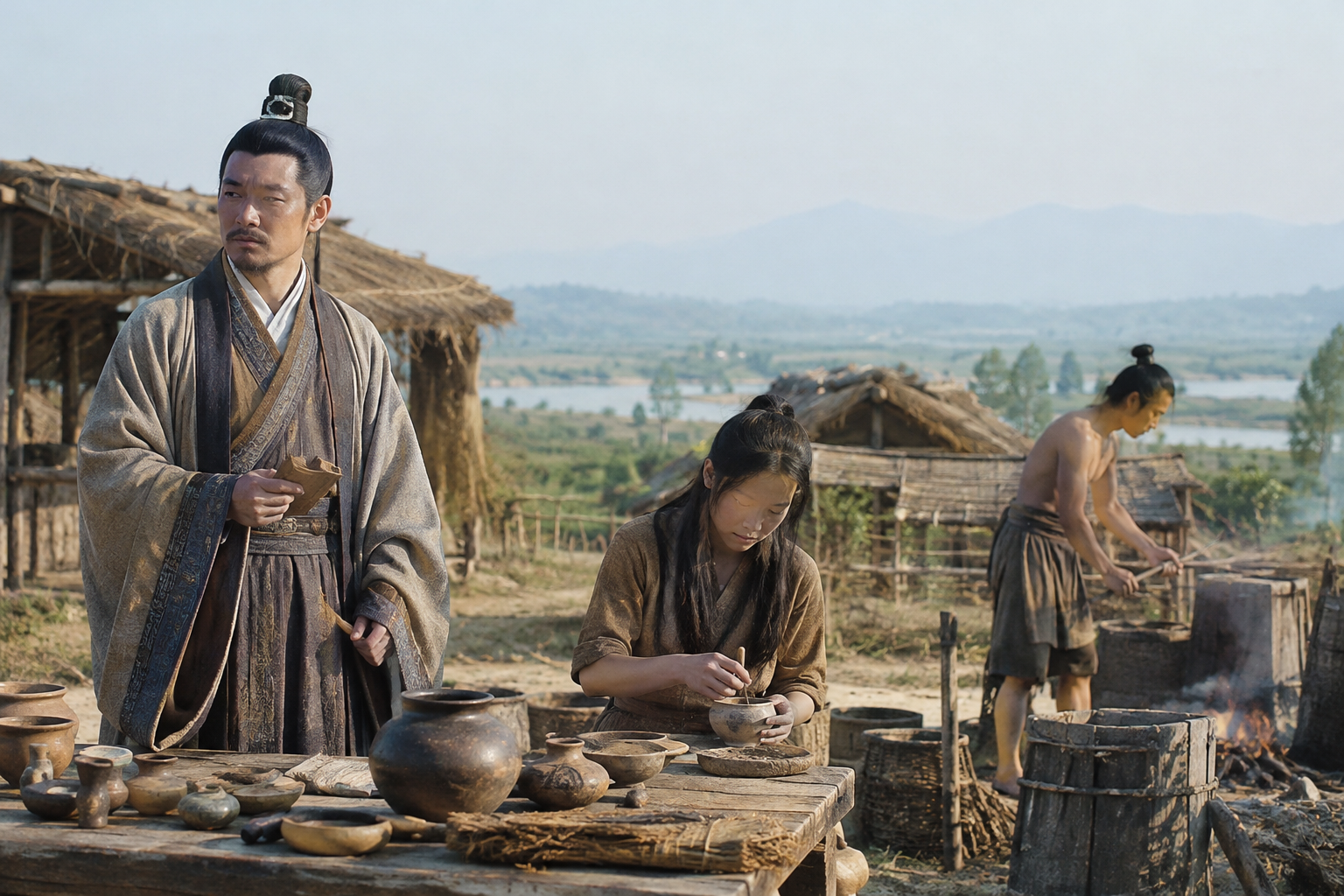
At Linzi in modern Zibo, the old capital region of the Qi state and later an important city under the Han, ancient DNA has begun to put a paternal label on one small part of that long political history. One of the individuals from the Western Han period, sample M36, dated here to around 100 BC, is reported in association with Y-DNA haplogroup O2a2b1a2a1. That matters because it places this paternal line not in vague legend, but in a recognisable historical landscape: early imperial northern China, in a city with deep roots stretching back into the Warring States world.
The second clue comes from much farther south. A Late Neolithic individual from Vietnam, sample Vt778, dated here to around 675 BC, is also associated with the same haplogroup branch. Taken together, these two finds do not tell us that one man descended from the other, nor that the lineage belonged to a single people in any simple ethnic sense. But they do show something more interesting: O2a2b1a2a1 appears in ancient contexts spanning both northern China and mainland Southeast Asia, suggesting a paternal history tied to the broad human networks of East and Southeast Asia rather than to one isolated kingdom or one short-lived migration.
Y-DNA tracks a direct paternal line: father to son to son across many generations. That makes haplogroups useful for following one narrow thread through the past, even though they never describe a person's whole ancestry. In this case, O2a2b1a2a1 is a very specific branch within the wider East Asian Y-chromosome landscape, and the important point is not to inflate it into the history of all haplogroup O, but to ask where this particular branch turns up in securely dated ancient remains.
That is where the two known sample associations become useful. They are separated by geography and by archaeological setting. One belongs to the orbit of the Han empire in northern China; the other sits in a Late Neolithic setting in Vietnam, before the formation of later imperial states in the region. Even with sparse sample detail, that spread alone hints that this paternal branch was part of older demographic processes linking farming populations, local communities, and regional population mixtures across East Asia.
East Asian Y-chromosome migrations
Linzi is not just any place-name in Chinese history. It had been one of the great political centres of the eastern Zhou world, and although the Qi kingdom had long since vanished by the Western Han, the region remained populous, strategic, and deeply woven into the fabric of the early empire. So when sample M36 appears there around 100 BC, the interest lies in context as much as in the letter-and-number code.
A man carrying O2a2b1a2a1 in Western Han Linzi would have lived in a society already shaped by centuries of state formation, military expansion, resettlement, and agricultural intensification. Han rule did not create population movement out of nothing; it organised and amplified movements that were already part of life in North China. A paternal lineage turning up in this setting therefore tells us that O2a2b1a2a1 was present within the demographic pool of an early imperial heartland, not merely on some distant fringe.
One should be careful here. A single Han-era sample cannot stand for all Han men, still less for all people of northern China. But sample M36 is valuable precisely because it anchors the lineage in an archaeological period that is historically legible. It gives researchers with this haplogroup a concrete ancient waypoint: this branch was part of the human population of the Han world by the late 2nd or early 1st century BC.
For readers interested in how genetics is being used to study Chinese historical-period burials more broadly, there is a useful comparison in work on later dynastic remains from the Song period.
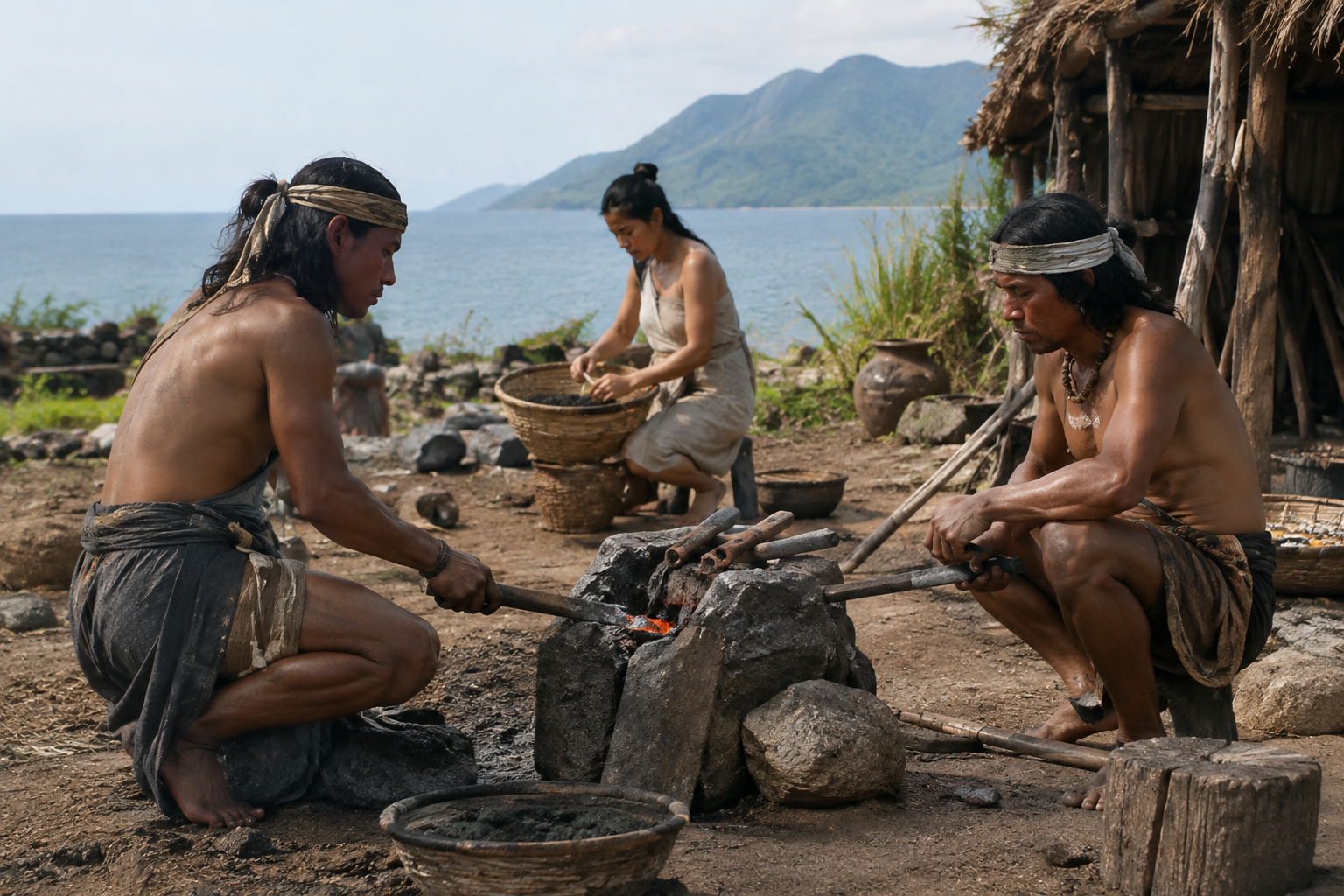
The Vietnamese sample, Vt778, is in some ways even more provocative because it belongs to a much earlier and less text-heavy world. Dated here to around 675 BC and described as Late Neolithic Vietnam, it comes from a period when mainland Southeast Asia was seeing major changes in settlement, subsistence, and regional interaction. Archaeology across the region has long shown that the Neolithic was not a static age of village sameness; it involved movement, contact, and the reshaping of local populations over time.
If Vt778 is indeed correctly associated with O2a2b1a2a1, then the branch was present in mainland Southeast Asia before the great historical states of later centuries. That does not automatically identify its language, ethnicity, or exact route of arrival. But it does place the lineage among the populations involved in the prehistoric making of the region.
This is the broader background to the famous shift revealed by ancient DNA studies in Southeast Asia, including research published in Science on prehistoric individuals from the region. Such work has shown that ancient Southeast Asian populations were shaped by multiple layers of ancestry rather than by one simple founding event. In that setting, a Y-line like O2a2b1a2a1 is best understood as one paternal thread moving through a much larger tapestry of interaction.
Southeast Asia deep-time burials
What makes this haplogroup especially interesting is not that it can be tied to a single dynasty or heroic origin story, but that it appears in two quite different archaeological worlds. In Linzi, we are dealing with an urbanised imperial setting in North China. In Vt778, we are looking at Late Neolithic Vietnam, where the social and political scale was very different. The shared paternal branch suggests continuity of male-line descent across regions that later history often treats separately.
This is exactly the sort of finding that ancient DNA has been forcing historians to reckon with. Political maps are neat; human reproduction is not. Long before later states drew firmer cultural boundaries, men carrying related Y-chromosome lines could be present across wide zones linked by migration, marriage, farming expansions, and local assimilation. A recent ancient Y-chromosome study of East Asia, published in BMC Biology, speaks directly to that larger problem of coastal and inland movements shaping paternal history.
That wider perspective also helps restrain overstatement. O2a2b1a2a1 should not be treated as the exclusive signature of one archaeological culture, one language family, or one modern nationality. The evidence here points instead to a branch with a meaningful ancient presence in populations on both sides of the South China-mainland Southeast Asia zone.
If your paternal line belongs to O2a2b1a2a1, the best-supported insight from the current ancient evidence is that this branch already existed in historically and prehistorically important East Asian populations by the 1st millennium BC, with one association in Western Han Linzi and another in Late Neolithic Vietnam. That is a striking range. It suggests a lineage with roots in the older population history of East and Southeast Asia, rather than a branch confined to one late ruling house or one narrowly local founder.
For family historians, that is both modest and valuable. The haplogroup does not hand you a named ancestor, but it does place your direct paternal line inside a very old human story: one that runs through early states in northern China and prehistoric communities farther south, across regions where archaeology and genetics are now beginning to speak to each other with real clarity.



Comments