Haplogroup O2a2b1

– 5 min read


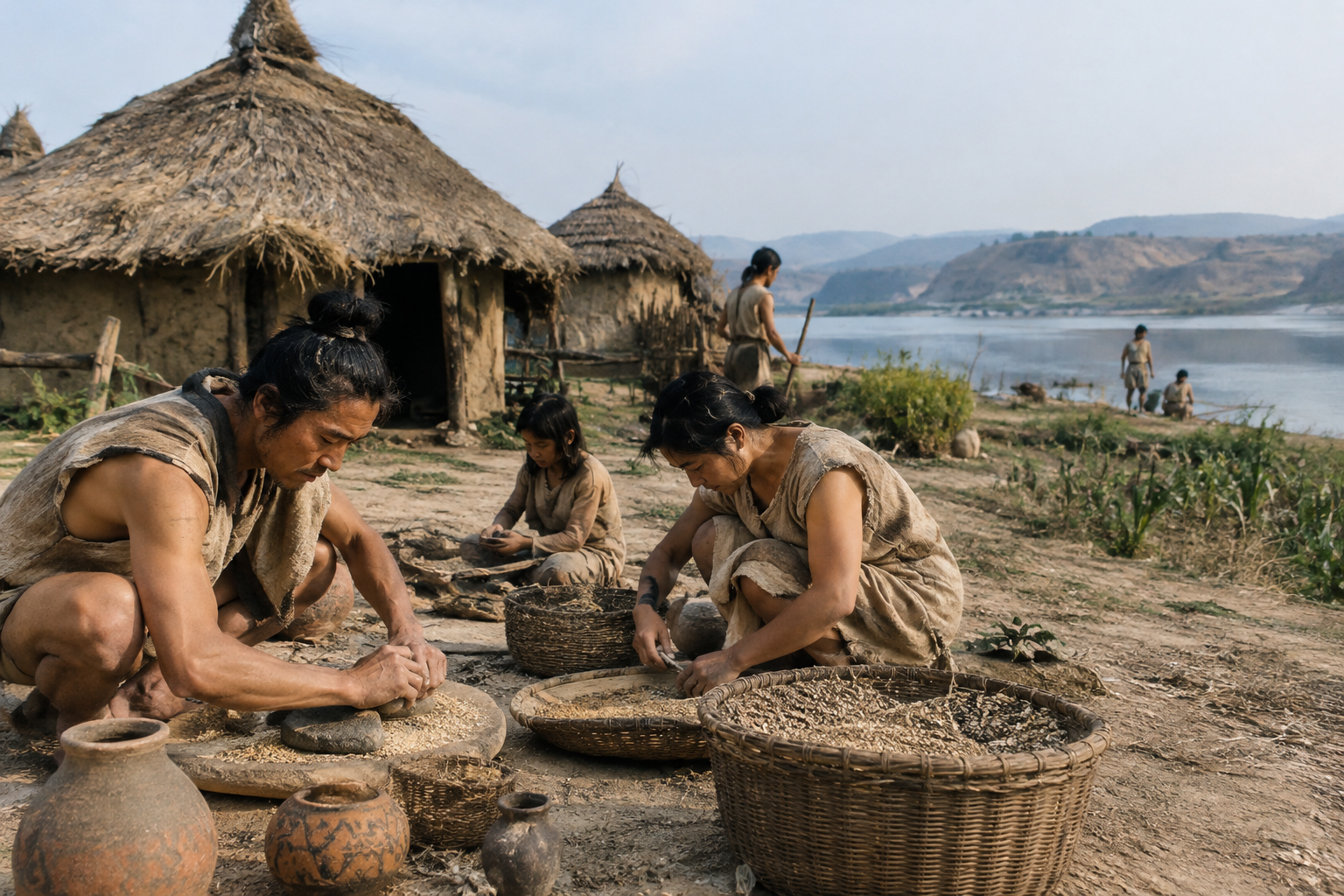
At Baligang, near the Tuan River in Henan, one ancient male labeled BLG-M180 offers a small but telling glimpse into the deep history of Y-DNA haplogroup O2a2b1. He belongs to the Late Neolithic, around 3000 BC, in the Middle Yellow River world that would become one of the great centers of early Chinese civilization. That matters because this is not a lineage appearing in some vague, later historical haze. Here it is, already present in the agricultural heartland of northern China thousands of years before the first imperial dynasties.
For anyone who carries O2a2b1 today, this is the kind of evidence that sharpens the picture. Y-DNA traces one direct paternal line only, not a person's whole ancestry, but a find like BLG-M180 anchors that line in a real landscape: river valleys, farming communities, and Late Neolithic populations living in the Central Plains.
Baligang is important because it sits in a region that archaeologists and geneticists keep returning to when they want to understand long-term population history in northern China. Henan was no fringe zone. It was part of the dense world of Neolithic villages, cultivated fields, and expanding social networks that linked the Middle Yellow River basin to surrounding regions.
Sample BLG-M180, dated to around 3000 BC, places O2a2b1 in precisely that setting. With only one named ancient individual here, one has to be careful: this does not mean Baligang was exclusively O2a2b1, nor that every later bearer of the lineage descends from this community in any simple way. But it does show that the branch, or at least a reported association with it, was already part of the paternal landscape of Late Neolithic north China.
This is especially useful because discussions of East Asian Y-DNA can easily become too broad. Parent lineages spread across vast distances and many millennia, but a narrower branch like O2a2b1 needs to be tied to specific ancient people when possible. BLG-M180 gives us exactly that kind of anchor point.
Middle Yellow River Genomic History
O2a2b1 is a sub-branch within the broader Y-DNA family O, one of the major paternal lineages in East and Southeast Asia. The crucial point is that the broader history of haplogroup O is not identical to the history of O2a2b1. A parent branch can be old and widespread, while one daughter branch may have a more specific story shaped by later demographic growth, local founder effects, and regional expansions.
That is why ancient samples matter so much. They stop us from treating modern distributions as if they were timeless. A man from Late Neolithic Henan carrying a lineage reported as O2a2b1 suggests that this paternal branch was already established among populations in the Yellow River zone during a formative period of northern Chinese prehistory.
The available evidence here does not justify grand claims about language, ethnicity, or a single migration route. It does, however, support a more modest and more interesting conclusion: O2a2b1 belongs in the story of early farming societies in northern China, not merely in the story of later historical states.
It is easy to dismiss a lone sample as too little to say much. But archaeology often works like this. One securely placed individual can show that a lineage was present at a place and time where previously it might only have been guessed. BLG-M180 does not give us an entire clan, yet he gives us a date, a region, and a cultural horizon.
That horizon is important. Around 3000 BC, the Yellow River world was not static. Communities were growing, regional cultures were interacting, and the social foundations of later Bronze Age centers were being laid. When a paternal lineage appears in this setting, it hints at continuity between prehistoric village populations and later demographic developments in northern China.
In other words, O2a2b1 is not just a modern test result. In this case, it can be placed against the backdrop of one of the best-studied cradles of East Asian population history.
A broader ancient DNA perspective on these northern Chinese populations can be found through research associated with the Baligang material at https://ngdc.cncb.ac.cn/gsa-human/browse/HRA007922, which links this sample to the wider genomic study of the region.
The larger historical question is not whether BLG-M180 was somehow a "founder" in a heroic sense. Ancient DNA rarely works like that. The more useful question is how lineages such as O2a2b1 participated in the demographic expansions that accompanied agriculture, settlement concentration, and long-term regional continuity.
In the Middle Yellow River basin, farming was already well established long before 3000 BC, but populations were still changing through time. Some lineages persisted, others expanded, and still others faded from view. A Neolithic O2a2b1-associated male in Henan suggests that this paternal branch was part of those processes early enough to matter in the formation of later northern Chinese gene pools.
That is one reason why studies of ancient East Asian Y chromosomes are so revealing. They show that coastal and inland patterns could differ, and that paternal histories do not always match simple maps of modern populations. The story is one of layered expansions rather than a single march from one homeland to another.
East Asian Y-Chromosome Migrations
Henan often appears in discussions of early Chinese civilization because it sits close to later centers of Bronze Age power, but the Neolithic story comes first. Sites like Baligang belong to the long prehistory that made those later developments possible. They represent communities embedded in local landscapes, yet connected through exchange, marriage networks, and the movement of ideas.
That makes BLG-M180 more than a technical data point. He is evidence that one branch of the paternal ancestry found in living people today was already present among those prehistoric northern communities. If your own Y-DNA falls under O2a2b1, the ancient link is not to an emperor, a noble house, or a legendary founder in this case. It is to the far older world of Neolithic settlement in the Central Plains.
That perspective is often more historically valuable anyway. Dynasties come late. The deeper story lies in the ordinary populations from which later societies were built.
Central Plains DNA in Later China
The most distinctive thing we can responsibly say about O2a2b1 here is that it has a documented foothold in the Late Neolithic Middle Yellow River region, represented by BLG-M180 at Baligang around 3000 BC. That does not reduce every modern bearer to one village or one culture, but it does place this paternal line within an early agricultural world that helped shape northern China over the long term.
For family historians, that is a strong kind of evidence: not a fantasy pedigree, but a real ancient person in a real archaeological landscape. O2a2b1, at least in this glimpse, looks less like a wandering historical curiosity and more like part of the deep paternal fabric of Neolithic north China.

Comments