Haplogroup O1b2a1a2a

– 5 min read


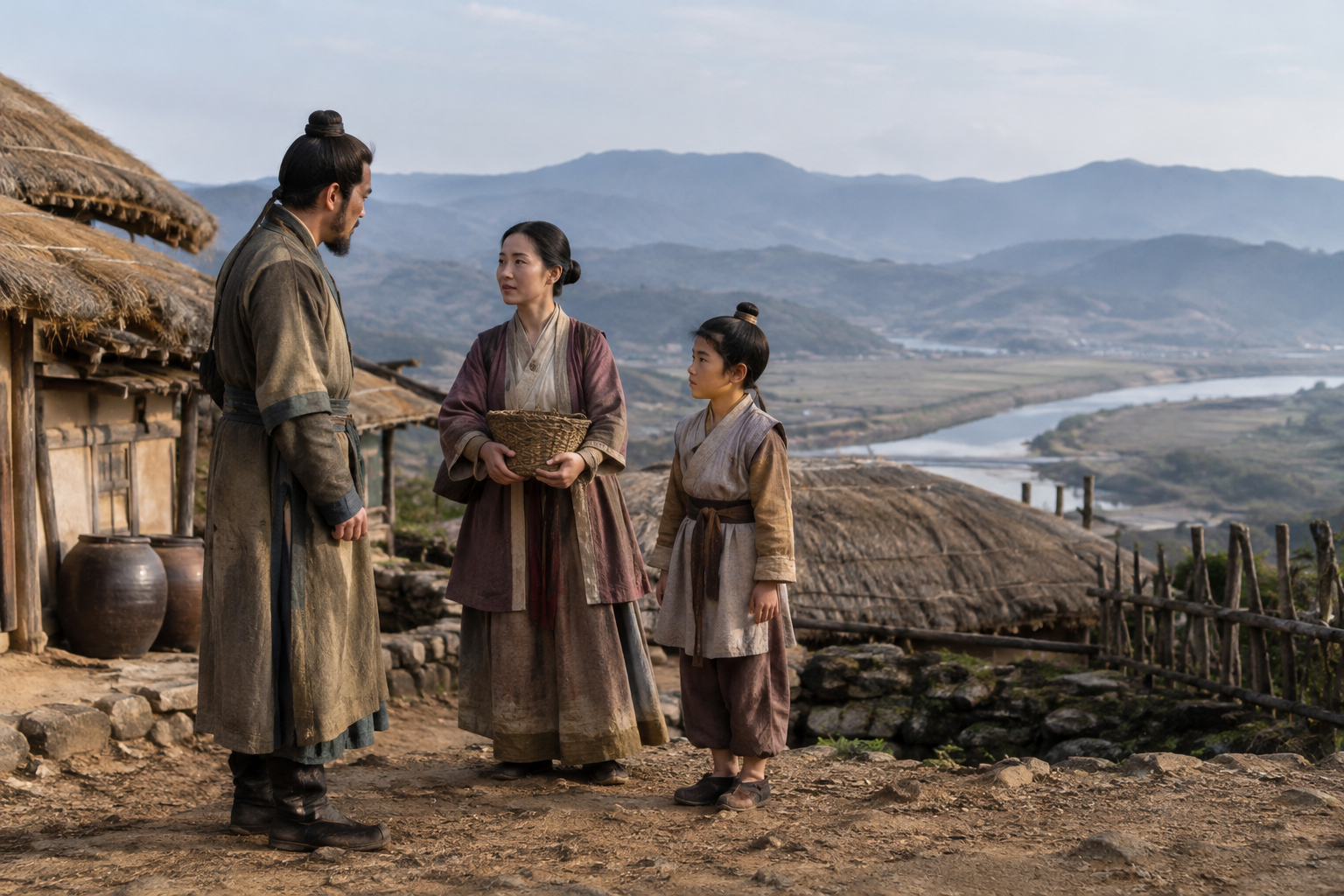
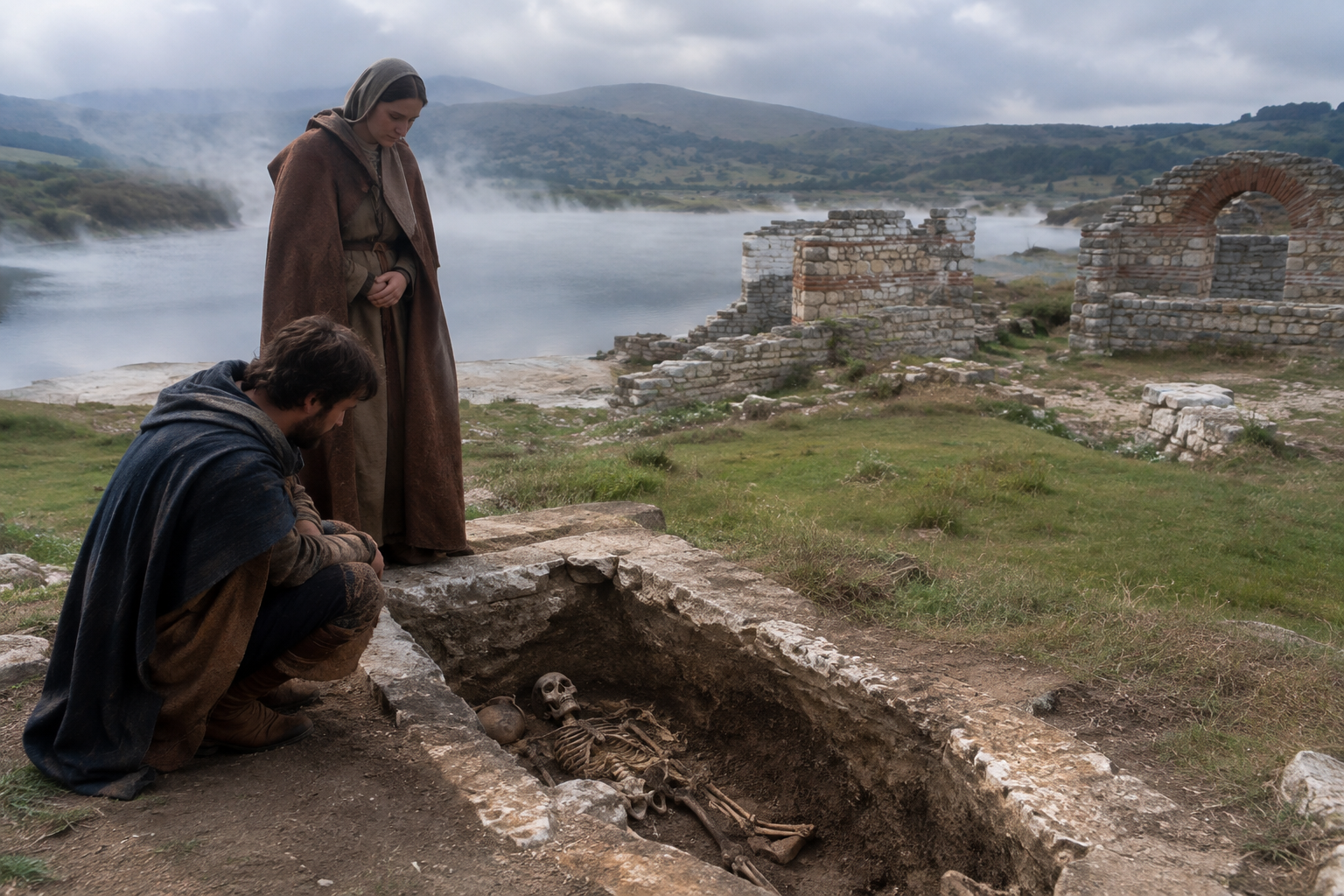
At Joyeong-dong in Gyeongsan, in southeastern Korea, one ancient man has become unexpectedly important for the history of a paternal lineage: sample JOY059, dated to around AD 500. That places him in the era of the Korean Three Kingdoms, when Silla was expanding its power across the peninsula and local communities were being drawn into larger political worlds. His reported connection to the Y-DNA haplogroup O1b2a1a2a gives us a rare fixed point: not a legend, not a surname tradition, but an actual ancient male line present in early historic Korea.
That matters because Y-DNA follows one direct paternal line only, not a person's whole ancestry. Even so, when a branch like O1b2a1a2a appears in securely dated archaeological material, it helps anchor the deeper story of how male lineages were distributed in the societies that later shaped Korean history. In this case, the evidence is modest in quantity but strong in one crucial respect: it is attached to a real excavated individual from a real historical period.
Gyeongsan sits in a region closely tied to the Silla cultural sphere. By around AD 500, this was not some vague prehistoric horizon but a landscape of settlements, cemeteries, political competition, and increasingly formal hierarchies. Sample JOY059 belongs to that world. The great value of the find is not that it lets us spin an epic tale about one man, but that it places the lineage O1b2a1a2a in a documented Korean context during a formative period of state development.
Ancient DNA has begun to show that the Three Kingdoms period cannot be reduced to neat textbook labels. Kingdoms such as Silla, Baekje, and Goguryeo were political formations, not single bloodlines. A burial from the Silla orbit may contain local continuity, mobility, marriage connections, and layered ancestry all at once. JOY059 is therefore most useful not as a mascot for an entire kingdom, but as evidence that this paternal branch was part of the male population living in that historical setting.
A useful caution follows from that. The article haplogroup is O1b2a1a2a, a fairly specific subclade name, but ancient reports do not always offer identical levels of resolution across every study or database. So the responsible reading is simple: JOY059 is reported in association with this branch, and the ancient occurrence itself is what deserves emphasis, not any inflated claim about a single clan or dynasty.
Within East Asia, the wider O lineages are central to the paternal history of many present-day populations. But one must be careful here. It is easy to slide from the broad history of haplogroup O to overconfident claims about one narrow descendant branch. O1b2a1a2a is not interchangeable with every other O lineage, and the presence of its parent branches across East Asia does not automatically tell us where this exact subclade first arose or how every carrier moved.
What we can say more safely is that O1b2a1a2a belongs to a set of paternal lines strongly associated with East Asian population history, and that the Korean peninsula is one of the places where such lineages have deep historical roots. That makes JOY059 especially valuable. Ancient evidence is always better than projecting modern distributions backward and pretending the map has stood still for two thousand years.
This is one reason recent work on East Asian male-line history has been so important. Studies of ancient Y chromosomes are beginning to separate coastal histories, inland histories, and later historical reshaping rather than treating East Asia as a single block. For readers interested in that broader framework, MyTrueAncestry has also looked at ancient Y chromosomes and the coastal and inland migrations that shaped East Asian paternal history.
People sometimes imagine that a single ancient sample is too little to tell us anything. In one sense, that is true: JOY059 cannot stand for all Koreans, all Silla subjects, or all men of the Three Kingdoms age. But archaeology is full of cases where one securely placed individual changes the conversation. A single Roman inscription can date a fort; one shipwreck can reveal a trade route; one burial can pin a lineage to a place and time that had previously been inferred only indirectly.
That is the real force of JOY059. He is not a mythical founder. He is better than that: an excavated person from around AD 500 whose paternal line falls within O1b2a1a2a. For members of the MyTrueAncestry community with this haplogroup, that means the branch is not just modern and statistical. It is archaeologically visible in early historic Korea.
The wider importance of Korean ancient DNA lies in how it joins genetics to social history. When researchers investigate cemeteries from this period, they are not merely listing haplogroups. They are asking how communities were structured, whether burial groups reflect kinship, how much continuity existed from earlier populations, and how political expansion affected local lives. Research data associated with these Korean burials has been made available through this ancient DNA study archive, which has helped connect genetic findings to archaeological context.
DNA and historic East Asian burials
The centuries around AD 500 were a time when male lines did not exist in some sealed genetic cabinet. They were being carried through households, farming communities, military service, marriage alliances, and local elites. In Korea's Three Kingdoms era, rising states depended on exactly these networks. So a Y-DNA lineage found in a cemetery is part of a social world in motion, not just a biological label.
That is worth stressing because later historical identities can tempt us into reading too much backwards. We know the names of kingdoms from texts. We know some elite tombs, some court ranks, some diplomatic ties. But JOY059 need not have been a court noble, a soldier, or a migrant simply because he lived in an age when all those people existed. The archaeology gives us a man in a place and period; the genetics add a paternal branch; the responsible historian stops there unless firmer evidence appears.
Even so, the location is telling. Southeastern Korea was one of the key regions in which Silla power consolidated. A lineage found there in this period belongs to the biological history of communities living through that consolidation. In that sense, O1b2a1a2a is part of the human background to one of Korea's great historical transformations.
If your paternal haplogroup is O1b2a1a2a, the most solid takeaway from the present evidence is not a grand migration saga or a guaranteed tie to a famous house. It is something quieter and more useful: this branch is attested in an ancient Korean individual from the Three Kingdoms period at Joyeong-dong, Gyeongsan. That gives the lineage a firmly historical footing in early Korea.
As more ancient East Asian genomes are published, branches like this will almost certainly gain a richer map of where and when they appear. For now, JOY059 offers an excellent reminder of what ancient DNA does best. It takes a string of letters from a modern test result and, every so often, places it beside an actual person who lived through a known historical age.
Comments