Haplogroup O1a1b1b

– 4 min read


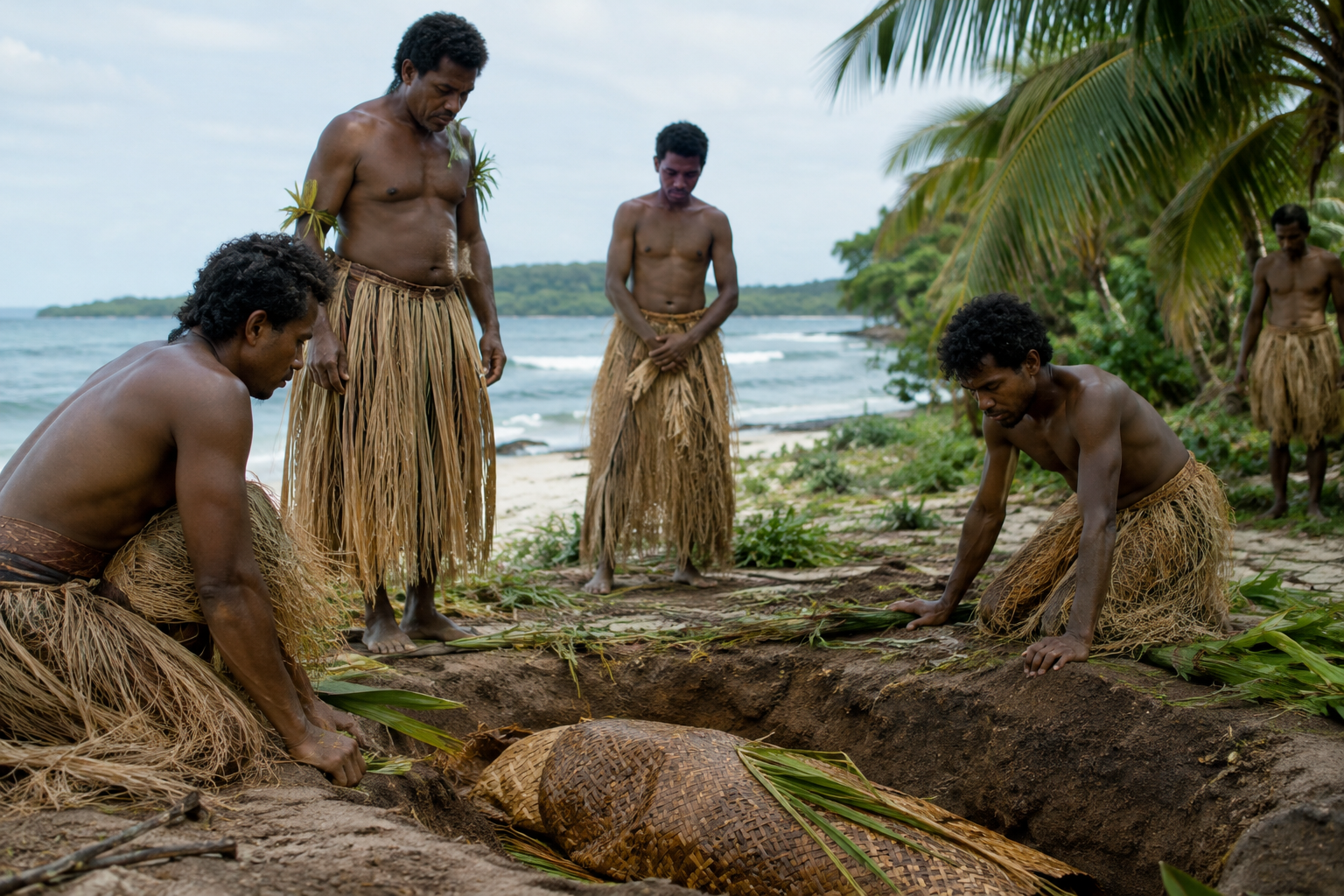
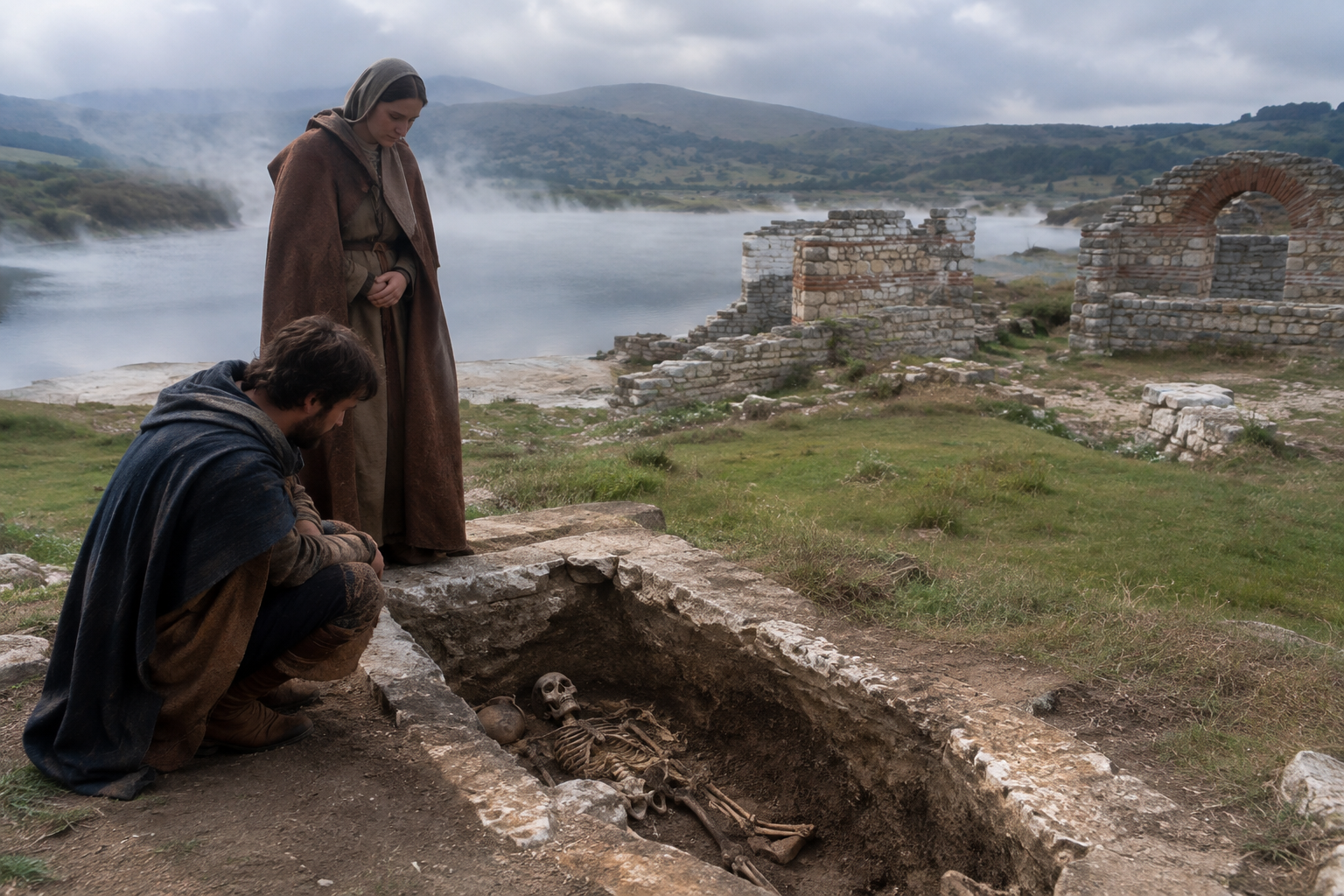
At Yanuca in Fiji, one ancient individual gives us a strikingly specific glimpse of a paternal line that is often discussed in very broad regional terms. The sample YNK001, dated to around AD 1810, belongs to a Pacific island burial context and is associated here with Y-DNA haplogroup O1a1b1b. That may sound very technical, but the importance is simple enough: one man from a documented burial in Fiji carries a paternal branch that helps place Pacific history inside the larger human story of movement across Island Southeast Asia and Oceania.
That matters because Y-DNA follows one direct male line only - father to son across generations - and so it never tells us everything about a person's ancestry. But it can be wonderfully precise about one thread of descent. In the case of O1a1b1b, the thread leads us toward a paternal history that is strongly associated with East and Southeast Asia and, in some populations, the wider Austronesian-speaking world. A Fijian burial like YNK001 is therefore not a random curiosity. It sits in exactly the kind of maritime world where language, seafaring, exchange, and kinship transformed entire archipelagos.
The date attached to YNK001 - around AD 1810 - places this individual in a Pacific world that was already old, connected, and historically dynamic. Fiji was not an isolated dot waiting for history to arrive. It was part of a dense island network with its own political rivalries, ceremonial life, voyaging traditions, and regional contacts stretching westward toward Melanesia and, in cultural terms, back into the deeper Austronesian expansion.
So when a paternal lineage such as O1a1b1b appears in a Fijian burial, the finding is historically apt rather than surprising. It does not mean that one can draw a straight line from one excavated man to the first settlers of every island. What it does mean is that the paternal ancestry preserved in this burial fits a long pattern of movement linking coastal East Asia, Island Southeast Asia, and parts of Remote Oceania.
A recent ancient DNA study of Pacific populations, published in Cell, is relevant here because work of this kind has been steadily refining how we understand ancestry, mixture, and population continuity across Oceania. Even where a single burial does not answer every question, it becomes part of a much larger archaeological map.
It is worth being careful with the label itself. O1a1b1b is a specific branch within the wider haplogroup O, one of the major Y-chromosome lineages of East and Southeast Asia. The broader family has a long and complicated history, and no one should casually pour all of that history into this narrower branch as though nothing changed along the way. A subclade is not the whole tree.
Still, the wider pattern is useful. Branches of O1 are often discussed in connection with populations shaped by southern East Asian and Southeast Asian expansions, including many communities tied to Austronesian dispersals. That does not make O1a1b1b a badge of language or ethnicity; genes, languages, and identities do not line up so neatly. But it does make the Yanuca individual historically interesting, because Fiji stands at the far end of one of the most consequential maritime expansions in human history.
In plain terms, YNK001 gives us a paternal signal consistent with the fact that Pacific societies were formed through mixtures of ancestry, movement, and local continuity rather than through a single simple founding event. The archaeological strength of this sample lies less in aristocratic glamour than in geographical position. Fiji is one of the places where the human settlement of the ocean becomes visible in both archaeology and genetics.
Fiji occupies a particularly important position in Pacific prehistory. It is neither merely Near Oceania nor simply the furthest fringe of Polynesian settlement. Instead, it lies in a zone where different streams of ancestry and culture met, mixed, and developed into distinctive island societies. That makes any well-contextualized ancient or historical-period DNA sample from Fiji valuable, especially when paternal lineages can be compared against broader regional patterns.
For much of the public, Pacific history is still told far too vaguely, as if people simply appeared island by island in an undifferentiated wave. Archaeology has long shown otherwise. Settlement histories differ from archipelago to archipelago, and later centuries brought further interaction, conflict, alliance, and population movement. A lineage like O1a1b1b in Yanuca belongs in that more textured picture.
There is also a useful methodological point here. A burial dated to the late pre-colonial or early contact-era Pacific is not "too recent" to matter. On the contrary, such individuals can help bridge the gap between deep prehistory and the more documented worlds of oral tradition, early European observation, and historically known island communities. They help anchor long-term population history in real people from named places.
Some haplogroup articles can lean on dozens of ancient males from multiple cemeteries. This one cannot, and that is not a weakness if handled honestly. When the evidence is sparse, the task is not to inflate it with fantasy but to ask better questions of the one sample we do have. YNK001 shows O1a1b1b in a Fijian burial around AD 1810. That alone places the lineage in a historically meaningful Pacific context.
One individual cannot stand in for all Fiji, let alone all Oceania. He might represent a lineage common in his community, or one strand among many. He may reflect continuity from earlier island populations, or the outcome of movement within the interconnected Pacific. But the sample is enough to show that this paternal branch was part of the human landscape of Fiji at the end of the traditional era.
That modest but solid conclusion is, in some ways, exactly what good archaeogenetics should provide. Not a grand myth of origins built from a single skeleton, but a precise point on the map: a man, a burial, a date, a place, and one direct paternal line.
If your own Y-DNA falls under O1a1b1b, the Yanuca burial is a reminder that this lineage belongs to a history far older and wider than modern national boundaries. In this case, the evidence places that paternal branch in Fiji by around AD 1810, within a region shaped by long-distance voyaging, local continuity, and repeated mixing between different island and Asian-derived ancestries. It does not prove a single origin story for every living carrier, but it does connect your direct paternal line to one of the great seaborne chapters of human history.


Comments