Haplogroup na

– 4 min read


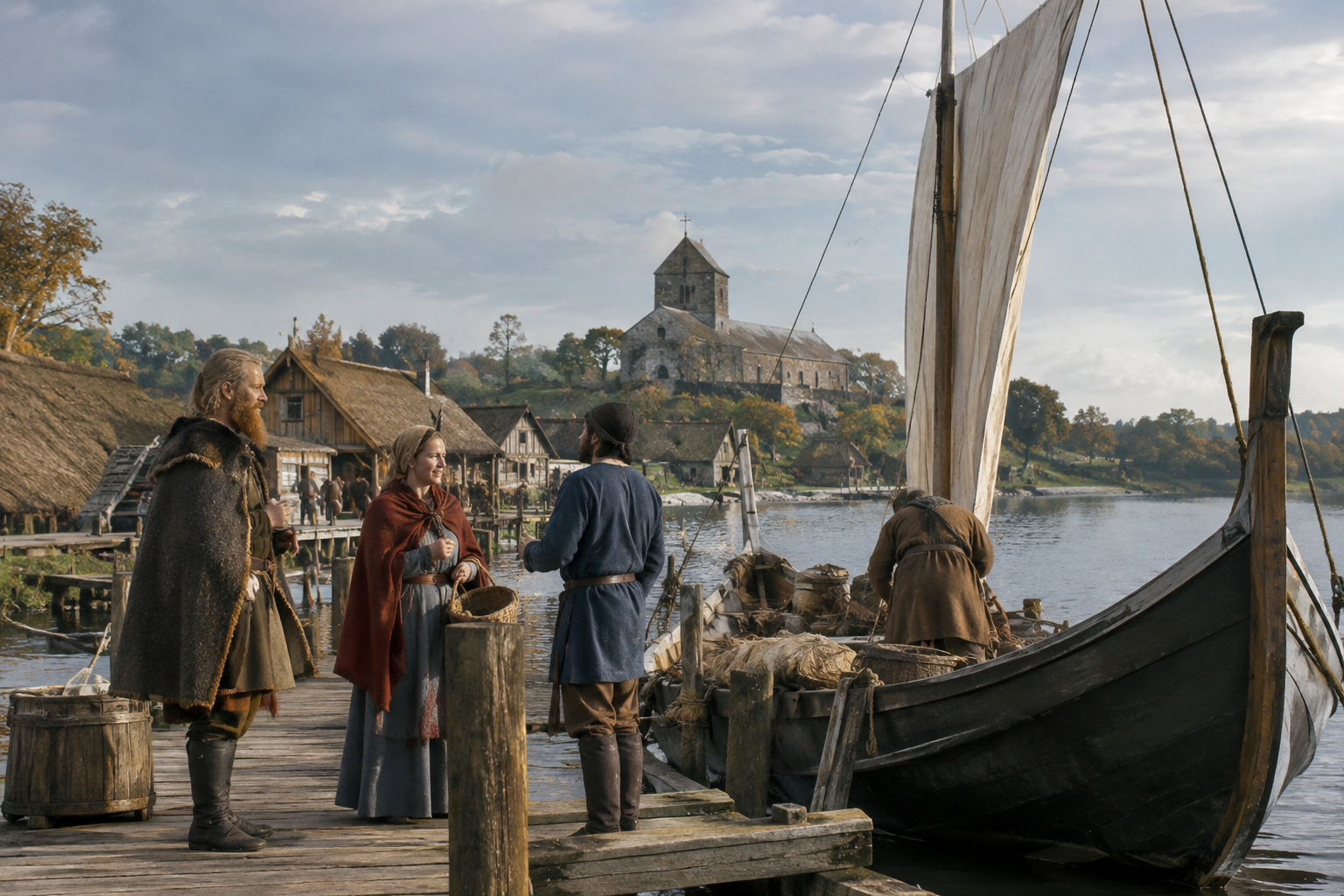
In medieval Sigtuna, one of Sweden's earliest towns, an individual identified as mbs141 was buried around AD 1100. That date places him in a remarkable moment: late Viking-age habits were giving way to a Christian urban world of churches, trade, and written administration. In this case, the Y-DNA haplogroup is reported only as na, which is itself part of the story. Sometimes the archive gives us a crisp lineage label; sometimes it leaves us with a man, a place, a period, and a set of historical questions that are more revealing than any neat genetic shortcut.
Sigtuna matters because it was not a remote village but a royal and ecclesiastical centre connected to the Baltic world. A Y-chromosome traces only one direct paternal line, not a person's whole ancestry, but even when the specific paternal branch is unresolved, an ancient individual from a place like Sigtuna can still illuminate the human setting in which lineages were living, marrying, moving, and being buried.
Founded in the late 10th century, Sigtuna sits at the point where Scandinavian history becomes both more urban and more documentary. By around AD 1100, the town belonged to a changing world: coinage, church institutions, craft production, and regional exchange all mattered here. A man such as mbs141 was living not in the heroic mist of saga memory, but in a busy settlement where political power, commerce, and religion met on a very practical level.
That is why even a sparse genetic label is worth pausing over. The sample anchors one paternal line, however broadly or incompletely classified, in a particular medieval town. Instead of using the haplogroup field to tell an overconfident migration epic, the safer and more interesting approach is to ask what sort of population Sigtuna actually contained at this date.
Early Christian DNA in Scandinavia
The sample record gives us one named ancient individual and a date, but not a fully resolved paternal branch, grave inventory, or a detailed osteobiography. That means the evidence has to be handled with care. We should not invent kinship ties, profession, status, or an ethnic label for mbs141 simply because he was buried in medieval Sweden.
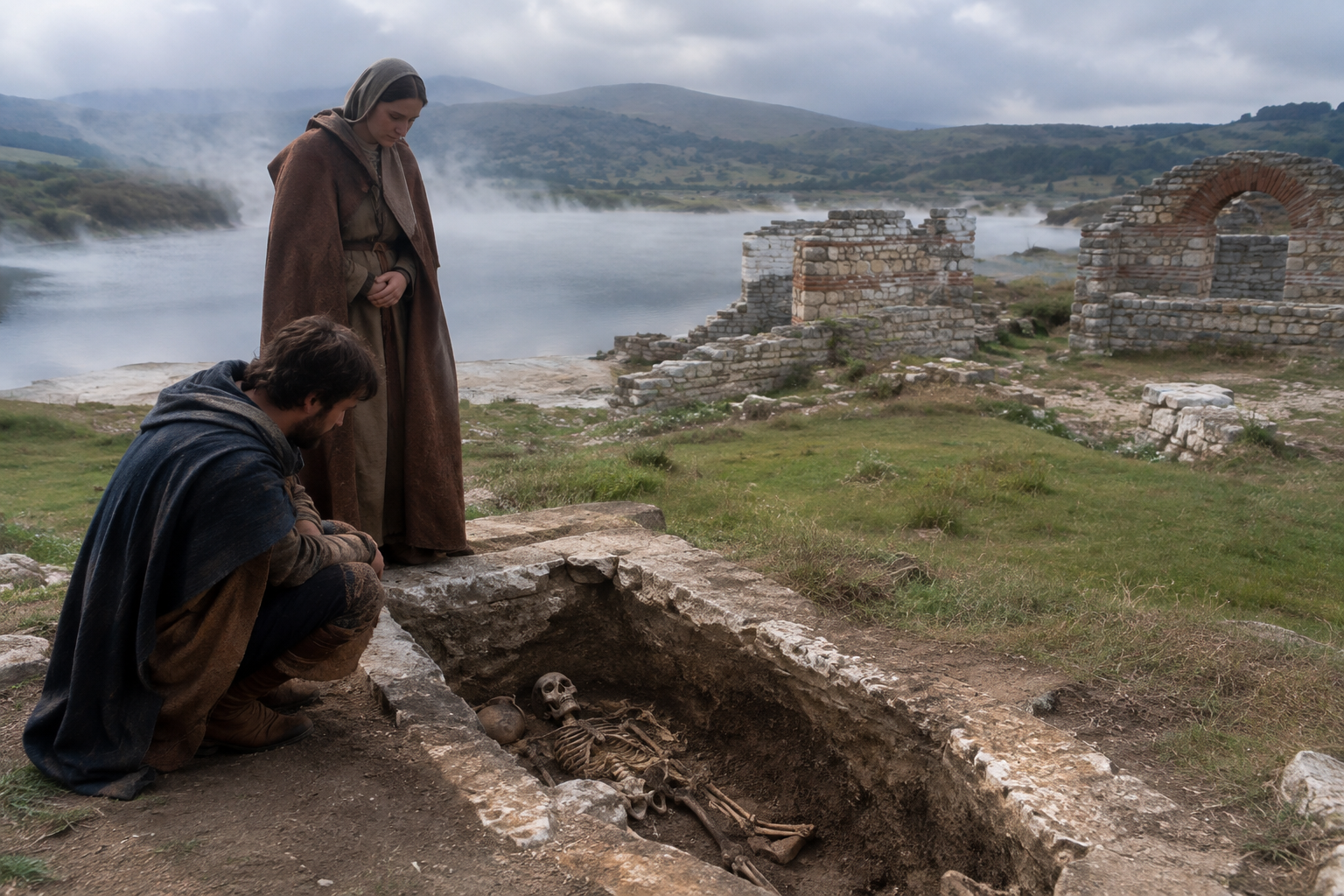
Still, the context is substantial. A person buried in Sigtuna around AD 1100 belonged to a population living through the consolidation of Christianity in central Sweden. Burial grounds from this period are important not only for individual biographies but for showing how townspeople formed communities: who was local, who may have come from elsewhere, how families were structured, and how urban life differed from older rural patterns.
Research activity connected to medieval Swedish multiple burials has explored exactly these wider questions of biological and social kinship. A project description linked to this material can be found here: https://www.rj.se/en/grants/2016/biological-and-social-kinship-reflected-in-genomes-from-medieval-swedish-multiple-burials/. Without overstating what it proves for mbs141 alone, that line of research shows why single medieval genomes are often most valuable when read as part of a larger burial landscape.
There is an old temptation in popular history to imagine medieval Scandinavian towns as neatly bounded communities of one "people." Archaeology and ancient DNA keep spoiling that fantasy. Ports, market towns, and royal centres drew in movement: merchants, craftspeople, clergy, retainers, spouses from other regions, and children of mixed local backgrounds.
Sigtuna was especially well placed for such mobility. Its position in the Mälaren region connected it to inland power bases and to the wider Baltic world. That does not mean every inhabitant was an immigrant, and it certainly does not mean a single unresolved Y-line can map a whole town. But it does mean that mbs141 should be read against a social world in which paternal lines, maternal lines, language, faith, and local identity did not always travel together in tidy packages.
Germanic languages and genomics
For family historians, an unresolved or unavailable haplogroup can feel disappointing. But from an ancient-DNA point of view, "na" is a useful reminder of how evidence works. Medieval remains do not always preserve enough Y-chromosomal data for a secure downstream assignment, and responsible reporting is better than forcing a lineage label from weak data.
That matters because Y-DNA names carry historical baggage. Once a branch is given a familiar label, readers often rush to attach it to Vikings, kings, tribes, or nations. Here, the restraint is actually helpful. With mbs141, the strongest claim is not about a grand paternal origin story but about presence: one documented male individual, in one major Swedish town, at the turn from Viking-age Scandinavia to the fully medieval kingdom.
In other words, the sample is archaeologically richer than the bare lineage field suggests. He belongs to a town where social identities were being remade. Christian institutions were becoming normal. Older patterns of regional power were being translated into medieval kingship. Men like mbs141 lived that transition in the most literal sense: in their bodies, their households, and eventually their graves.
One reason medieval burials in Sweden have attracted genomic interest is that they let researchers compare biological kinship with social practice. Were people buried beside close relatives? Did urban cemeteries gather households, neighbourhoods, or parish communities? Were multiple burials always family groups, or sometimes the result of crisis, convenience, or custom? These are the kinds of questions that make ancient DNA useful without turning it into a magic key.
Although no close relatives are provided here for mbs141, his presence belongs to that broader investigation. Medieval towns created new patterns of association. A direct paternal line might continue in one branch of a family while daughters, in-laws, fostered children, servants, and unrelated neighbours shared the same social world. The Y chromosome captures one narrow thread through that world, but the burial ground preserves the larger tapestry of urban life.
Medieval Swedish kinship and graves
The most responsible way to read haplogroup na here is not as a missing answer, but as a firmly dated historical anchor. mbs141 shows that your interest in paternal ancestry need not depend only on a dramatic subclade label. Sometimes the deeper value lies in the setting: a man buried in medieval Sigtuna, around AD 1100, in a town where Sweden's urban, royal, and Christian histories were taking durable shape.
For anyone researching a Scandinavian paternal line, that is the real significance. Ancient DNA does not always hand over a perfect lineage map, but it can place human lives back into real places and times. In this case, the clearest insight is that one paternal line, however unresolved in detail, stood inside the making of medieval Sweden.



Comments