Haplogroup N1a1a1a1a4

– 5 min read


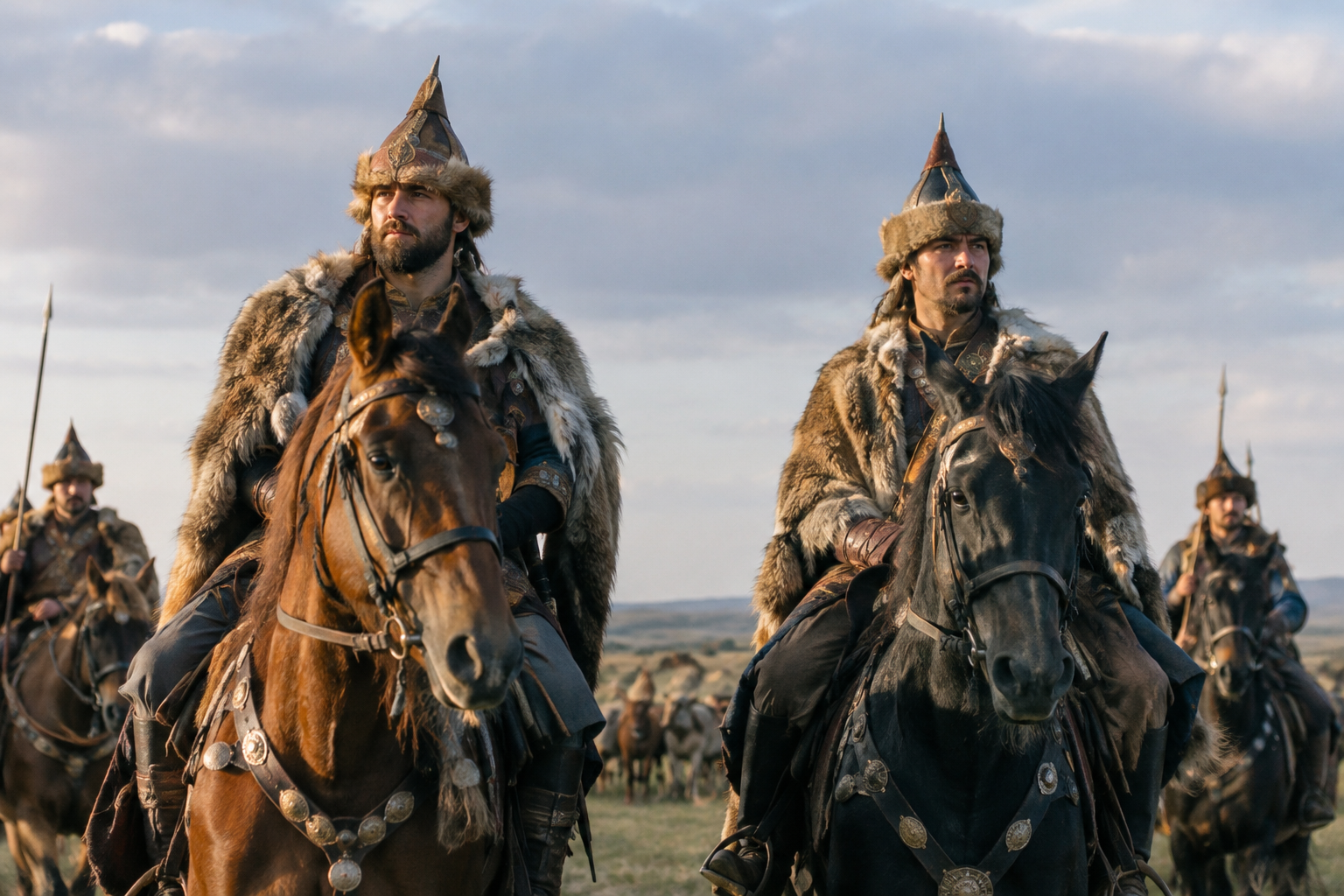
At the Hungarian conquest-period cemetery of Karos, in northeastern Hungary, two men dated to around AD 900 stand out for a very specific reason. The samples K1per1_GE from Karos I and K2per51_GE from Karos II have both been reported in connection with Y-DNA haplogroup N1a1a1a1a4, placing this paternal line squarely inside one of the best-known archaeological windows onto the early Magyar elite.
That matters because Karos is not just any cemetery. It belongs to the small cluster of richly studied burial grounds associated with the conquering Hungarians of the late 9th and early 10th centuries, the generation that established itself in the Carpathian Basin. A Y-chromosome line traces one direct paternal line only, not a person's whole ancestry, but when the same branch appears more than once in this setting it becomes a useful clue to the male-line makeup of that conquest-period world.
The Karos cemeteries have long occupied a central place in debates about who the conquering Hungarians were and how diverse they may have been. Archaeologists have treated the site cluster as part of the burial record of a high-status stratum from the conquest period, and genetic work has made it possible to ask whether those graves also preserved paternal lineages with links beyond the Carpathian Basin.
In this case, the important point is not that N1a1a1a1a4 was the only lineage present at Karos; it plainly was not. Rather, its appearance in two individuals from two Karos cemetery sectors shows that this branch was genuinely part of the paternal landscape among conquest-period males. That is a stronger observation than a single isolated find, because repetition within a major site cluster suggests that the lineage was established within the community represented there.
A useful research starting point is a genetic study of Hun, Avar, and conquering Hungarian period nomadic people of the Carpathian Basin, which helped draw attention to the variety of Y-chromosome lineages in these burials. Even without overloading the evidence, the Karos material makes one thing clear: conquest-period Hungary was not genetically simple, and paternal lines associated with eastern and northeastern Eurasian histories were part of that mix.
Haplogroup N is a broad Y-DNA family with a long history across northern Eurasia. Its branches today are often discussed in connection with Uralic-speaking populations, Siberian histories, and the forest-steppe belt, but one must be careful here: those are patterns for a much wider haplogroup, not a shortcut biography for every narrow sub-branch.
N1a1a1a1a4 is a much more specific label than haplogroup N in general. With the evidence here, the safest statement is that this branch appears among Hungarian conqueror-period males at Karos around AD 900. That does not, by itself, tell us the exact route by which the lineage reached the Carpathian Basin, nor does it prove language, ethnicity, or political identity. What it does suggest is that at least some paternal lines among the early Hungarian elite were part of a wider northeastern Eurasian story.
This fits a larger archaeological and historical picture in which the incoming Magyar confederation was unlikely to have been biologically uniform. Steppe polities were often coalitions, and coalition societies tend to carry multiple paternal backgrounds. A branch like N1a1a1a1a4 therefore makes best sense not as a badge of one simple identity, but as evidence of the layered origins of the groups who entered and settled the basin.
The two named individuals are worth separating even though the surviving summary data are brief. K1per1_GE comes from Karos I and K2per51_GE from Karos II, both dated around AD 900 and both identified as Hungarian conquerors. The distinction between cemetery sectors matters because it shows we are not dealing with a duplicated label for one burial, but with repeated evidence across the Karos complex.
That repetition does not automatically mean the two men were close relatives. Ancient cemeteries can preserve the same paternal lineage across a broader kindred, a military retinue, or simply a local community with recurring male lines. Still, from a historical point of view, two occurrences are enough to say that N1a1a1a1a4 was not a stray anomaly at Karos.
There is also an interpretive gain in the cemetery context itself. Karos is one of the key places where archaeology and genetics meet the written history of the Magyar arrival. When a lineage such as N1a1a1a1a4 appears there, it becomes part of a very concrete historical moment: the formation of a new power structure in the Carpathian Basin at the end of the 9th century.
The most interesting feature of these Karos results is how neatly they fit the Carpathian Basin's role as a meeting ground between steppe, forest-steppe, and European worlds. By the time the conquering Hungarians arrived, this region already had a long history of movement and political reinvention under Huns, Avars, Slavs, Franks, and others. The newcomers entered a landscape that was anything but empty, and their own confederation likely carried several different ancestral threads.
In that setting, a paternal lineage like N1a1a1a1a4 is historically revealing because it points beyond a purely local European background without reducing the early Hungarians to a single eastern source. The best-supported reading is plural rather than singular: conquest-period communities could include lineages that had deeper associations in northern or northeastern Eurasia alongside others with different histories.
This is exactly why ancient DNA has been so valuable for Hungarian early medieval studies. It does not replace archaeology, but it sharpens it. A cemetery once interpreted mainly through artifacts and burial custom can now also be read through patterns of kinship, mobility, and paternal diversity.
There is a wider reason readers often notice N-lineages in Hungarian ancient DNA. For years, historians, linguists, and geneticists have all been interested in how the origins of the Hungarian language relate to the movements of the people who brought it into the basin. No single Y-DNA branch can solve that question. But when branches within haplogroup N turn up in conquest-period burials, they become part of a broader body of evidence often discussed alongside eastern connections and Uralic-speaking populations.
One should resist the temptation to turn that into a simple slogan. The language history of Hungarian, the biological ancestry of conquest-period groups, and the political identity of the Magyar federation are overlapping but not identical subjects. What these Karos samples do provide is a firm archaeological anchor: by around AD 900, men linked to N1a1a1a1a4 were present among the conqueror-period population buried at one of its most important cemetery complexes.
For anyone interested in the bigger northern Eurasian backdrop, MyTrueAncestry has also explored related questions in Ancient DNA Unveils Eastern Roots of Uralic Languages, Bridging Siberia and Europe.
The strength of haplogroup N1a1a1a1a4, in this article, is not a vast spread of scattered claims. It is the precision of its foothold. Two conquest-period men, K1per1_GE and K2per51_GE, place this paternal line within the Karos burials at the moment when Hungarian power was taking shape in the Carpathian Basin. That is a modest claim, but a solid one, and solid claims are what make ancient DNA historically useful.
If this is your own Y-DNA branch, the most responsible takeaway is not a promise of descent from a famous dynasty, but a connection to a paternal line that is documented in one of the defining archaeological settings of early Hungarian history. That is already quite a striking inheritance.
Comments