Haplogroup N1a1a1a1a1a1a1a4f

– 5 min read



At Płonsk in Masovia, north of Warsaw, one medieval burial has become unusually important for the history of paternal lineages in eastern-central Europe. The individual known as PCA0324, dated to around AD 1100 and identified with the medieval Piast dynasty, is reported in connection with the Y-DNA branch N1a1a1a1a1a1a1a4f. That is a forbiddingly technical label, but the historical point is quite concrete: this is a paternal line tied to one of the first ruling houses of Poland.
The attraction of this sample is not just dynastic glamour. It sits at the point where archaeology, medieval state formation, and genetics meet. A direct Y-chromosome lineage tracks one narrow paternal line only, not a person's whole ancestry, but in a burial associated with the Piasts that narrow line becomes historically very revealing. It offers one more way of asking an old question: where did the founders of the Polish ruling house come from, and how were they connected to the wider populations of the Baltic and northern forest zone?
Płonsk lies in Masovia, a region that mattered greatly in the fragmentation and consolidation of medieval Poland. By the 11th and 12th centuries, Piast power had already shaped the political map of the region, and burials linked to that world are valuable because they belong to named historical centuries rather than the vaguer horizons of prehistory. Sample PCA0324 is therefore important not simply as "an old skeleton", but as part of the biological record of an emerging kingdom.
What makes the Piast material especially interesting is that it bears on long-running debates about the dynasty's paternal origins. Historical sources tell us plenty about Piast rulers, their conflicts, baptisms, and territorial ambitions, but they do not hand us a Y chromosome. Ancient DNA changes the discussion by putting one documented male line from the medieval dynasty into a broader Eurasian context. Research on Piast-associated remains has helped turn a legendary founding story into a testable historical problem, as discussed in MyTrueAncestry's own piece on the medieval Polish Piast rulers.
The haplogroup in question, N1a1a1a1a1a1a1a4f, belongs to the wider Y-DNA macro-lineage N, a paternal branch with a deep history across northern Eurasia. That broader family has often been associated, at different times and places, with populations stretching from Siberia into the eastern Baltic and parts of northeastern Europe. But one must be careful here: the deep history of haplogroup N is not automatically the history of this exact terminal branch.
What the Piast-associated evidence suggests, more narrowly, is that one paternal line present in the ruling house of medieval Poland fell within this northern-eastern Y-chromosome world rather than within some of the more familiar western European royal-line stereotypes. That does not by itself identify a language, an ethnicity, or a single migration event. It does, however, make the early Polish elite look more entangled with the population history of the Baltic and northeastern European zone than older nationalist or purely textual arguments sometimes allowed.
This matters because medieval dynasties were not timeless biological blocks. They were political houses built through marriage, alliance, adoption of culture, conversion, and military success. A Y lineage can illuminate one paternal thread inside that process, but it does not flatten the whole dynasty into one origin story.
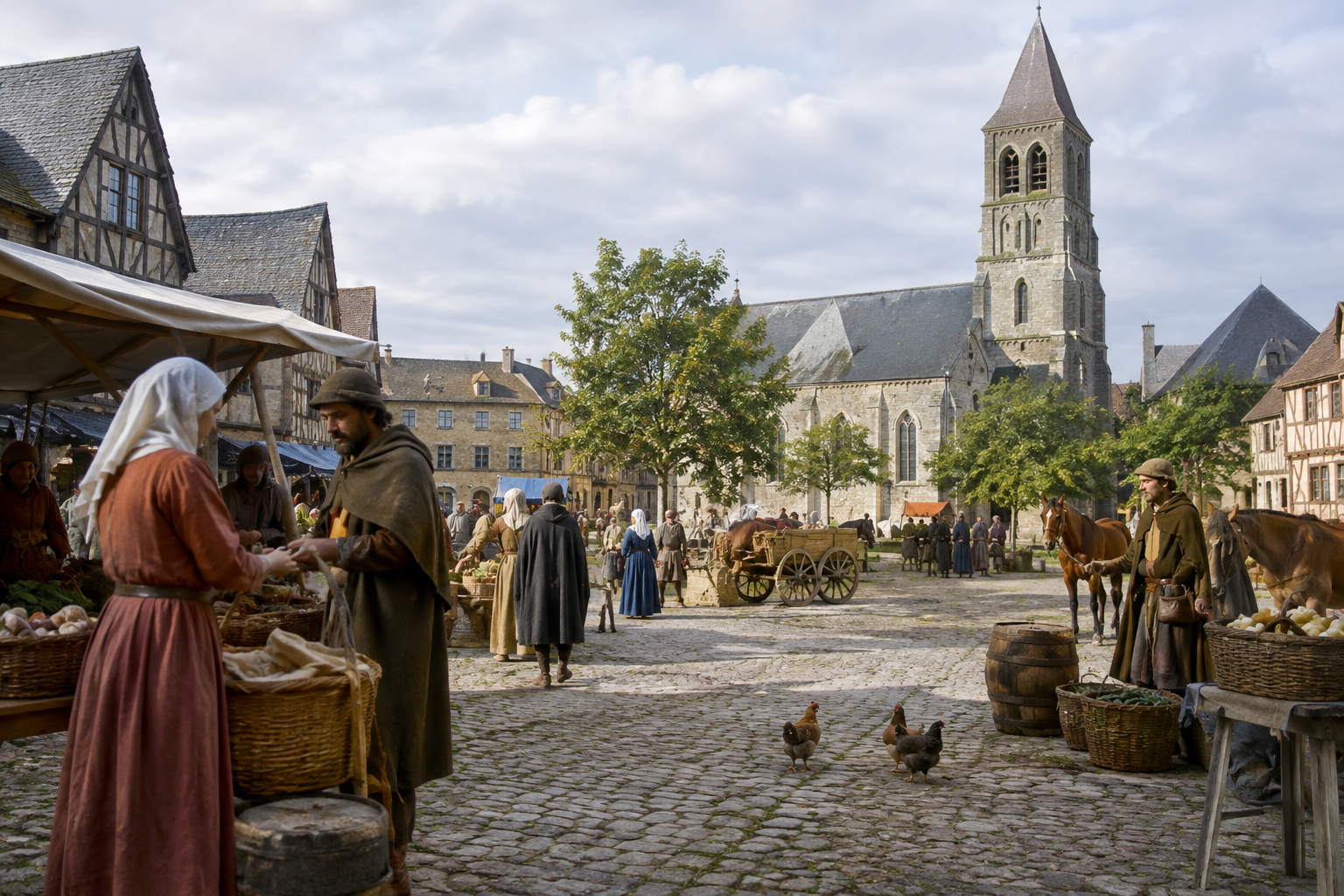
The Piasts emerged in a part of Europe that was anything but isolated. By the 10th and 11th centuries, the lands of the early Polish state were connected to the Baltic, to Kievan Rus', to the Holy Roman Empire, and to the Scandinavian world. Trade, warfare, tribute, church networks, and the movement of specialists all crossed this landscape. Against that background, a paternal lineage with northeastern affinities is historically plausible without needing any melodramatic tale of a single founder riding in from afar.
A genetic study published in Genome Biology brought wider attention to Piast-related remains and their dynastic implications. Even without overclaiming any one sample, the significance is clear enough: ancient DNA can now speak to the origins of a medieval ruling house that once stood at the heart of Poland's conversion, territorial expansion, and political identity.
For readers interested in how ancient genomics is reshaping our understanding of medieval and post-Roman populations more generally, there is a useful comparison in the MyTrueAncestry article on genetic diversity in post-Roman Central Europe. The larger lesson is that elite history and population history are rarely neat mirror images of one another.
Masovia was not some sleepy backwater on the edge of history. In the Middle Ages it was a frontier-rich region of forests, river routes, fortifications, and shifting political loyalties. Its place between the Polish core lands, the Baltic sphere, and the east makes it exactly the sort of region where an unusual paternal lineage in a ruling family becomes historically suggestive.
One should resist the temptation to convert that suggestiveness into certainty. Sample PCA0324 does not prove that all Piasts, still less all medieval Poles, belonged to N1a1a1a1a1a1a1a4f. Nor does it prove a simple one-step migration from any particular northern homeland. What it does offer is evidence that a lineage associated with the dynasty fits into a broader map of northern and northeastern European male-line variation.
That broader map has become clearer in recent years thanks to work on early medieval populations around the Baltic and Finnic world. Those studies show that paternal lineages linked to haplogroup N had real historical depth in Europe's northeast, and that the medieval Baltic was a zone of contact rather than a sharp ethnic frontier. MyTrueAncestry's article on Early Medieval Finland is particularly helpful here because it shows just how dynamic those northern connections were.
There is a tendency, when faced with a single high-status sample, either to make it explain everything or to dismiss it as too limited to matter. Both reactions miss the point. A dynastic burial such as PCA0324 matters precisely because it is narrow. It gives us one well-placed marker inside a famous historical house, and from that marker we can begin to compare chronicles, archaeology, and population genetics.
It also reminds us that medieval Europe was less tidy than later origin myths preferred. The founders of kingdoms did not have to fit modern expectations about what a "Polish", "Slavic", or "European" paternal line ought to look like. Ruling houses often emerged from mixed frontier environments, and their power rested on politics, not on genetic purity.
There is a useful wider comparison here with work on other medieval dynasties, such as MyTrueAncestry's discussion of Hungary's Árpád dynasty burials. Put side by side, such cases show that early medieval elites across central and eastern Europe were shaped by mobility, intermarriage, and regional complexity rather than by a single simple ancestral formula.
If your own Y-DNA falls under N1a1a1a1a1a1a1a4f, the most defensible historical takeaway is not a royal fantasy but a real and interesting one: this branch is now linked in the ancient DNA record to a Piast-associated medieval male from Płonsk in Masovia, around AD 1100. That places your paternal line, at least in one documented case, within the historical world of the early Polish state and the wider northern-eastern networks that helped shape medieval Europe.





Comments