Haplogroup N1a1a1a

– 5 min read


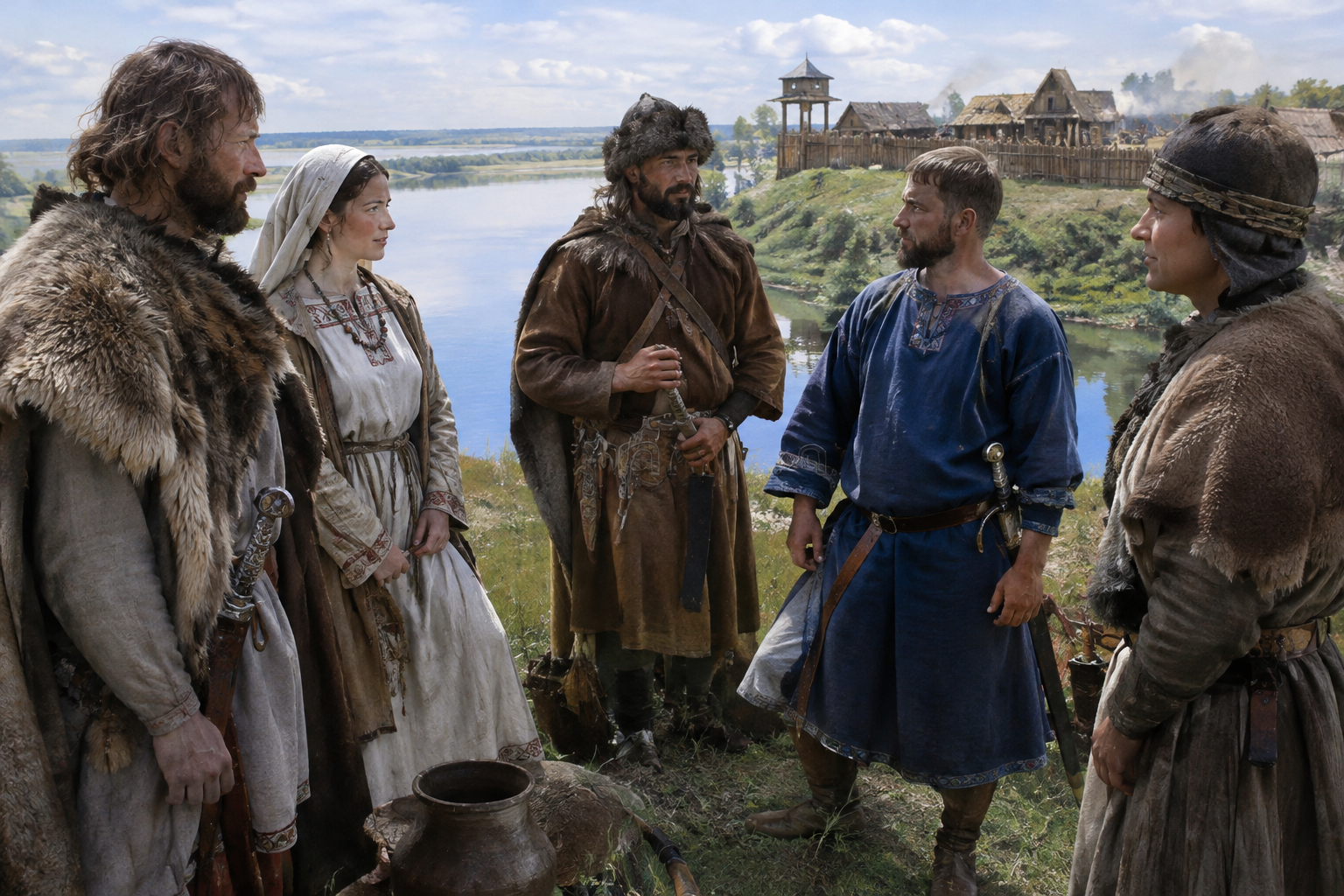
At Ostrow Lednicki, one of the key early medieval centers of the Polish realm, the cemetery at nearby Ostrow Dziekanowice has produced a man dated to about AD 1155 and identified as PCA0379. He matters here because he carries Y-DNA haplogroup N1a1a1a, a paternal line that most readers will associate less with medieval Poland than with the forest and steppe worlds farther to the northeast and east. Yet there he is: a Christian-era burial in Piast-period Poland, reminding us that male lineages do not stay politely inside the borders historians later draw on maps.
That is the first useful thing to say about N1a1a1a. It is a Y-chromosome branch, so it tracks one direct paternal line only, not a person's whole ancestry, language, or identity. But when this lineage turns up in a set of ancient burials scattered from the Trans-Urals to the Pontic steppe, the Balkans, and central Europe, it does begin to sketch something historically interesting: not a single migration story, but a chain of contacts linking frontier zones, mobile groups, and settled medieval communities.
PCA0379 comes from a landscape that was anything but peripheral in the 11th and 12th centuries. The Lednica region sat close to the heartland of the early Piast state, a zone of strongholds, churches, cemeteries, and political experimentation. A paternal lineage like N1a1a1a appearing here does not mean medieval Poland was somehow "Finnic" or "steppe" in any simple sense. It means that the male histories embedded in Christian cemeteries could be more varied than older national narratives liked to assume.
That fits a broader pattern emerging from archaeogenetics in medieval central Europe: state formation did not erase mobility. Men and women entered these communities through marriage, service, trade, war, and long-distance family connections. If you want the wider dynastic and genetic backdrop for medieval Poland, this related piece is worth reading.
A genetic study of the region published in Genome Biology has helped show just how informative these medieval Polish burials can be for reconstructing population history. For N1a1a1a, PCA0379 is especially valuable because he places this paternal branch in a firmly dated, historically legible setting rather than in a vague prehistoric horizon.
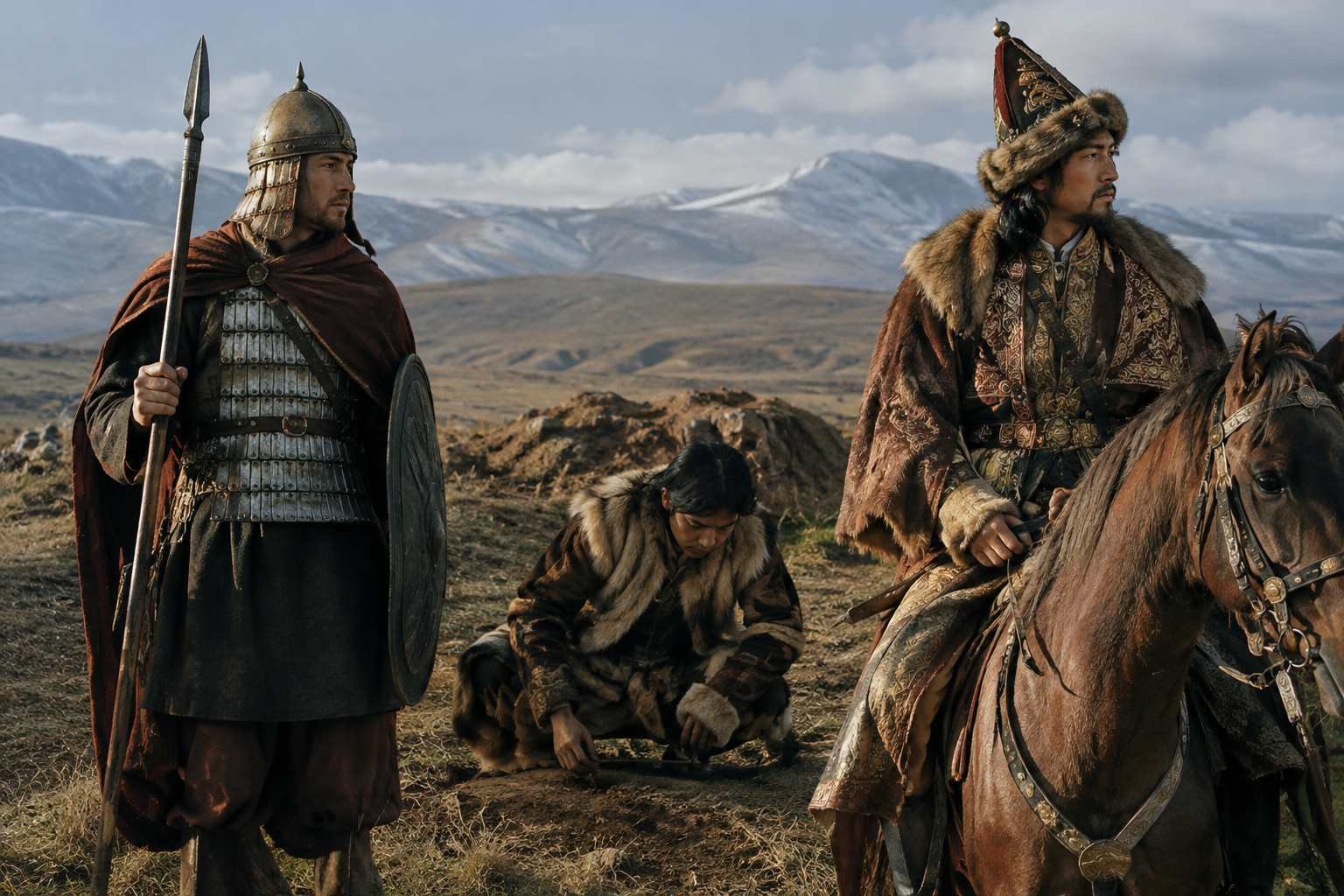
If Ostrow Dziekanowice gives us a western medieval appearance of N1a1a1a, Uyelgi18 from Uyelgi in the Trans-Ural region of Russia, dated around AD 900, gives us an eastern one. This is exactly the sort of context where the haplogroup becomes more intelligible. The Trans-Urals were not an isolated fringe but part of a corridor through which people, animals, technologies, and languages moved between the forest zone and the steppe.
Uyelgi has become important in discussions of early medieval populations connected with the wider Ural region and with the background of the Hungarian conquest period. That does not make every man from the site a Magyar, nor does it let us turn one haplogroup into an ethnic label. What it does show is that N1a1a1a belonged to the paternal repertoire of communities living in a zone long associated with east-west interaction.
Research on ancient populations tied to the Ural and steppe world, including work published in Nature, has sharpened this picture of movement and mixture across northern Eurasia. For this haplogroup, Uyelgi18 is the useful eastern counterweight to the later central European finds.
Southern Urals and Early Hungarians
An even earlier appearance comes from BGD004, dated to about 50 BC at Bogdanovka and described as a steppes nomad. Here one has to be careful, because "steppe nomad" is an archaeological and historical shorthand, not a precise ethnic name. Still, the setting matters enormously. By the late Iron Age, the Pontic-Caspian steppe was home to highly mobile societies whose political worlds stretched across very large distances.
In that environment, a paternal lineage such as N1a1a1a could travel far without leaving behind a neat written biography. Steppe confederations were not genetically uniform, and ancient DNA keeps making that point rather forcefully. One lineage in one burial does not define a people, but it can reveal the presence of eastern or northeastern paternal strands inside a mobile frontier society.
BGD004 is therefore important not because he lets us pin N1a1a1a to one named tribe, but because he places the branch in a sphere where long-range movement was normal. That helps explain why later medieval finds in Romania and Poland are not especially surprising. The steppe was not an edge of Europe; it was one of the great engines of connection.
The sample I17642 from medieval Brailita in Romania, dated around AD 965, brings N1a1a1a into another strategic landscape: the lower Danube. This was a region of crossings and collisions, where Byzantine influence, steppe mobility, Balkan settlement, and riverine trade all met. Any paternal lineage found here immediately enters a crowded historical stage.
What makes Brailita useful is not some grand claim that it proves direct descent from an earlier steppe nomad, but the way it joins the dots. We have N1a1a1a in the late Iron Age steppe, in the early medieval Trans-Urals, in the lower Danube, and in Piast Poland. That spread suggests a lineage capable of moving through very different social settings: mounted frontier worlds, river corridors, and settled Christian communities.
The lower Danube has repeatedly emerged in ancient DNA studies as a contact zone rather than a closed population block. Brailita fits that pattern nicely. It is one more reminder that medieval southeastern Europe was full of biological histories that did not correspond tidily to later ethnic and national templates.
The most unexpected sample in this set may be I16184 from Salonnes-Burthecourt in France, dated to about 1000 BC. On the face of it, a Bronze Age individual in northeastern France sits awkwardly beside the Trans-Ural, steppe, and medieval eastern European material. That awkwardness is precisely why the sample is interesting.
There are two sensible possibilities. One is that the assignment connects the individual to a broader upstream branch related to N1a1a1a rather than demonstrating the exact same fine-scale pattern seen in later eastern finds. The other is that paternal lines associated mostly with northern or eastern Eurasia could occasionally appear much farther west than modern frequency maps might lead us to expect. Either way, the French sample warns against turning present-day distributions into ancient rules.
It also fits a recurring lesson from Bronze Age archaeology: exchange networks were extensive, and populations were not static. Northeastern France was linked into the continental traffic of metals, ideas, and people. A rare paternal lineage there need not signal mass migration; one family line is quite enough to complicate the story.
Put these cases together and N1a1a1a looks less like the signature of one kingdom or one archaeological culture than the trace of mobility across northern Eurasia and its European borderlands. Uyelgi18 anchors it in the Trans-Ural world around AD 900. BGD004 places it in the orbit of late Iron Age steppe populations. I17642 at Brailita shows it in the lower Danube during the early medieval period, while PCA0379 shows the same paternal branch present in medieval Poland.
For someone researching this haplogroup today, that is the most solid takeaway. N1a1a1a does not tell you that your paternal ancestors belonged to one famous tribe or dynasty. It does suggest that your direct male line may be connected to the broad historical zone where forest, river, and steppe populations met and mixed over many centuries.
That is a modest conclusion, but a powerful one. Ancient DNA rarely gives us a single heroic origin story. More often it restores something messier and more truthful: a world in motion, where one paternal line could pass from the Trans-Urals to the Danube and on into medieval central Europe without ever needing to become only one thing.

Comments