Haplogroup N1a1a

– 5 min read


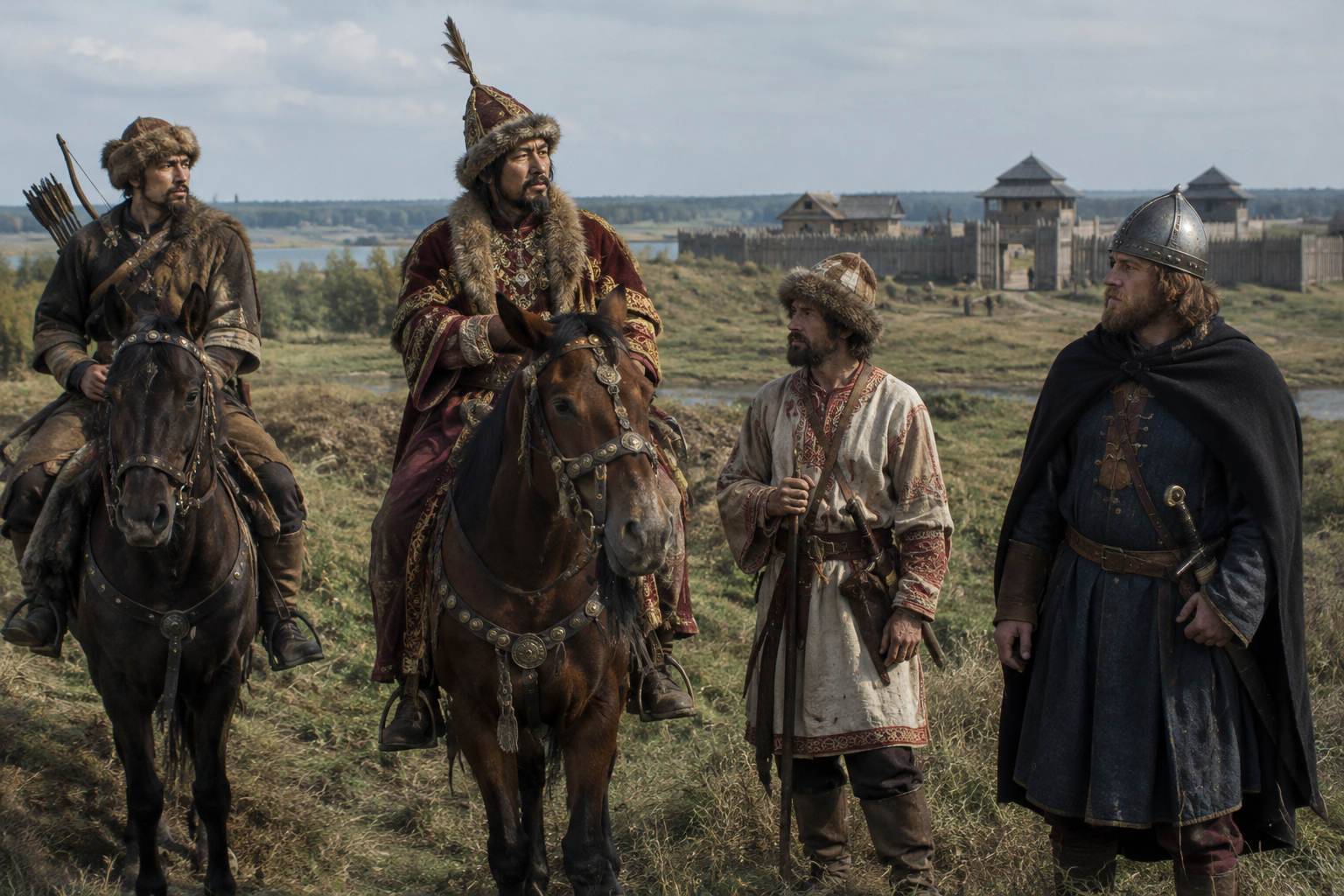
At Kunszallas in Hungary, one Avar-period burial dated to around AD 650 produced a Y-chromosome result reported within N1a1a: sample KFJ001. On its own, that might sound like a dry technical note. In context, it is rather more interesting, because this same paternal branch also appears among other high-status or martial burials in the Avar world and then turns up again much later in medieval northwestern Russia.
That is the kind of pattern that makes archaeogenetics useful. Y-DNA traces one direct paternal line only, not a person's whole ancestry or identity, but it can show how a male lineage moved through very different historical settings. With N1a1a, the evidence here points not to one tidy ethnic story, but to a northern Eurasian paternal line appearing in the elite and military landscape of the early medieval Carpathian Basin, and later in the forest zone around medieval Russia.
The most concrete starting point is KFJ001 from Kunszallas Fulop Jakab, dated around AD 650 in Avar-period Hungary. The Avar Khaganate dominated much of the Carpathian Basin from the late 6th to the early 9th century, ruling a frontier world tied at once to the Eurasian steppe, the Balkans, and the remains of Roman power. A burial from this setting carrying N1a1a matters because it places the haplogroup inside a historically visible political system, not just on an abstract migration map.
Research on Hun-, Avar-, and conquering-Hungarian period paternal lineages has drawn attention to the diversity of Y-chromosome branches in these nomadic and semi-nomadic groups, including lineages with stronger eastern and northern Eurasian associations. One of the key studies often cited for this broader pattern is this genetic study of Y-chromosome haplogroups in the Carpathian Basin. Even so, caution is essential: one Avar man with N1a1a does not make the entire Avar population genetically uniform, nor does a haplogroup alone define language or ethnicity.
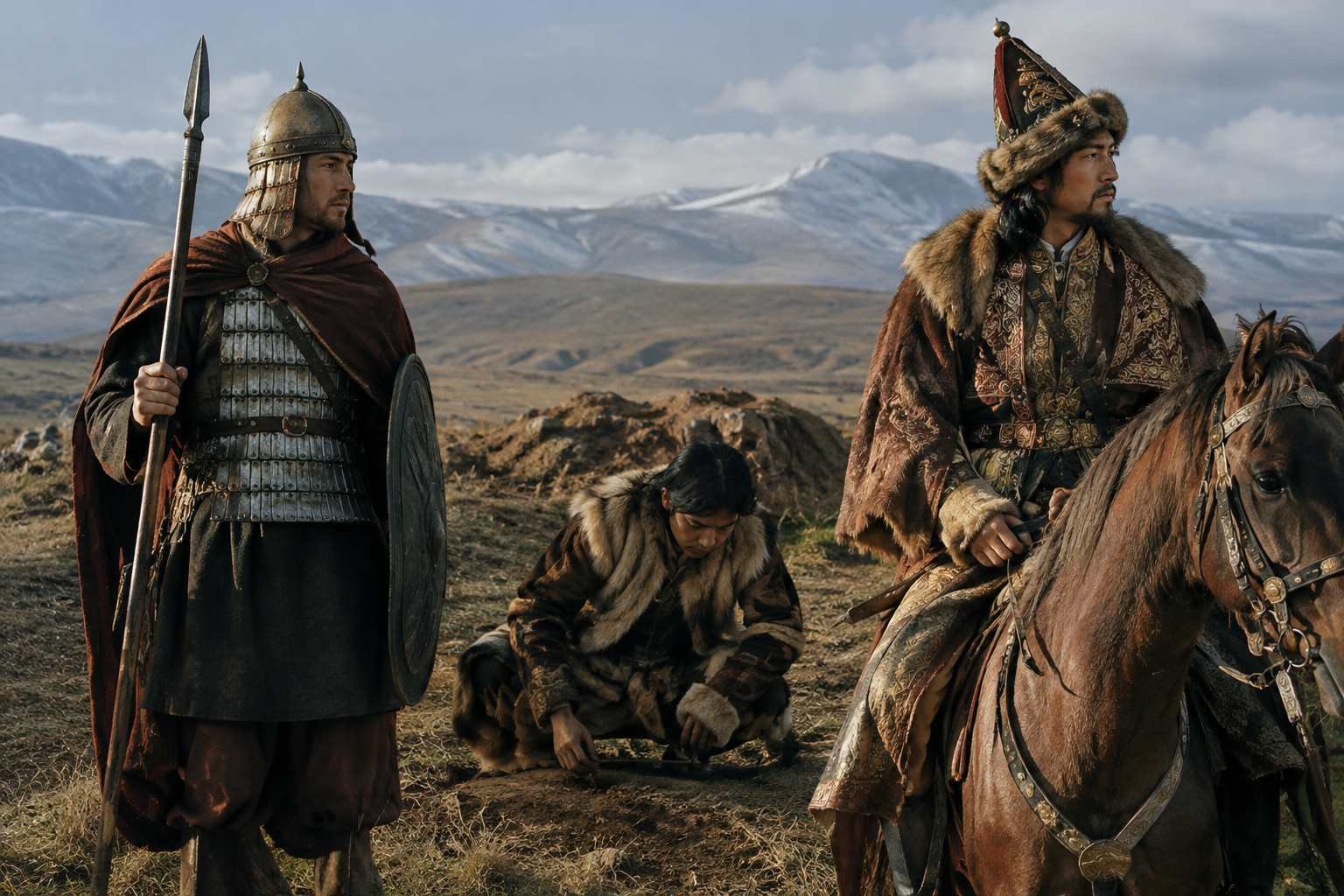
A second sample sharpens the picture. MMper58_GE, described as an Avar mounted archer from Mako-Mikocsa and dated to around AD 600, is likewise associated here with N1a1a. That description is historically useful because it places the haplogroup in a military context at the very beginning of Avar dominance in the basin.
It is tempting to romanticize such a burial, but the important point is simpler and stronger. The presence of the same Y-DNA branch in more than one Avar-period individual suggests that N1a1a was not an isolated curiosity. It belonged to at least some men embedded in the power structures and mobile fighting culture of the early khaganate.
The Avar realm was never a sealed biological unit. It was a confederation, absorbing and governing different peoples across a large territory. That is exactly why a lineage like N1a1a is so revealing: it fits a world of mobility, alliance, and incorporation rather than a neat one-origin myth.
Most striking of all is KBper300_GE, identified here as a Hungary Elite Khagan Ruler and dated around AD 640. If that classification is accepted at face value, N1a1a was present not merely among Avar-era males in general, but in the ruling stratum itself. That does not prove a royal dynasty for the haplogroup as a whole, and it certainly does not mean every elite Avar male belonged to the same paternal branch. But it does raise the historical stakes.
Why? Because steppe empires often depended on personal rule, military retinues, and prestige networks. A paternal lineage found in an elite burial can hint at how certain male lines were positioned within those structures. It may represent a family, a clan-linked retinue, or a broader pool from which high-ranking men were drawn. Without a fuller kinship set from the same cemetery, one should not force the evidence beyond that.
Still, the combination of KFJ001, MMper58_GE, and KBper300_GE makes the Avar-period evidence the real center of gravity for this article. N1a1a is not appearing here as a faint background trace. It is showing up in graves linked to a major early medieval power that sat between Europe and the steppe.
N1a1a is a branch within the wider haplogroup N, a paternal lineage with a long history across northern Eurasia. That broader family is especially important in discussions of Uralic-speaking regions, Siberia, and the forest-steppe interface, though different sub-branches have very different histories and distributions. It would be sloppy to dump all of haplogroup N's deep past onto N1a1a specifically.
What can be said more safely is that N1a1a belongs to a paternal landscape often associated with northern and northeastern Eurasian population histories. In the Avar context, that matters because the Carpathian Basin in the 6th and 7th centuries was receiving people, lineages, and cultural practices from far beyond central Europe. The Y-chromosome evidence sits neatly beside that larger archaeological picture, without replacing it.
More recent large-scale ancient DNA work on the eastern and central Eurasian steppe has also emphasized how mixed these societies could be, genetically as well as culturally. A broader ancient DNA study of the region is available here, and it helps frame why a lineage such as N1a1a can appear in historically mobile power networks without implying a single, simple origin story.
The latest sample in this set is VOS002 from Volosovo, Leningrad Oblast, dated around AD 1200. By then we are no longer in the Avar age at all. We are in the medieval north, a zone shaped by Slavic expansion, Finnic populations, trade routes, princely networks, and the long afterlife of the Viking Age in the lands around Novgorod and the eastern Baltic.
That shift in setting is crucial. The appearance of N1a1a in medieval northwestern Russia suggests continuity, survival, or renewed presence of this paternal branch in the forested northeast of Europe long after the fall of the Avar Khaganate. It does not mean the man from Volosovo descended directly from the Avar elite burials in Hungary; that would be far too strong a claim. But it does show that the haplogroup belongs to a much wider northern Eurasian story than the Carpathian Basin alone.
This northern context also fits well with what we know more generally about haplogroup N lineages in the lands stretching across the Baltic, Russia, and the Uralic-speaking world. Medieval Russia was not a genetic blank slate waiting for "Slavs" or "Vikings" to define it. It was already a populated contact zone, and paternal lineages like N1a1a are part of that older complexity.
There are not dozens of individuals here, and that is precisely why each one has to be handled carefully. Yet even a small cluster can be illuminating when the contexts are strong. In this case, N1a1a appears in three Avar-period Hungarian individuals linked to military or elite settings, and then in a medieval Russian individual from the forest zone to the northeast.
That pattern suggests a paternal branch at home in the broad northern Eurasian world and fully present in the human mixtures that shaped early medieval eastern Europe. For someone researching N1a1a today, the most responsible takeaway is not a fantasy of direct descent from a khagan, but something more interesting: this is a lineage that turns up where steppe power, frontier society, and northern forest populations met.


Comments