Haplogroup L2

– 5 min read


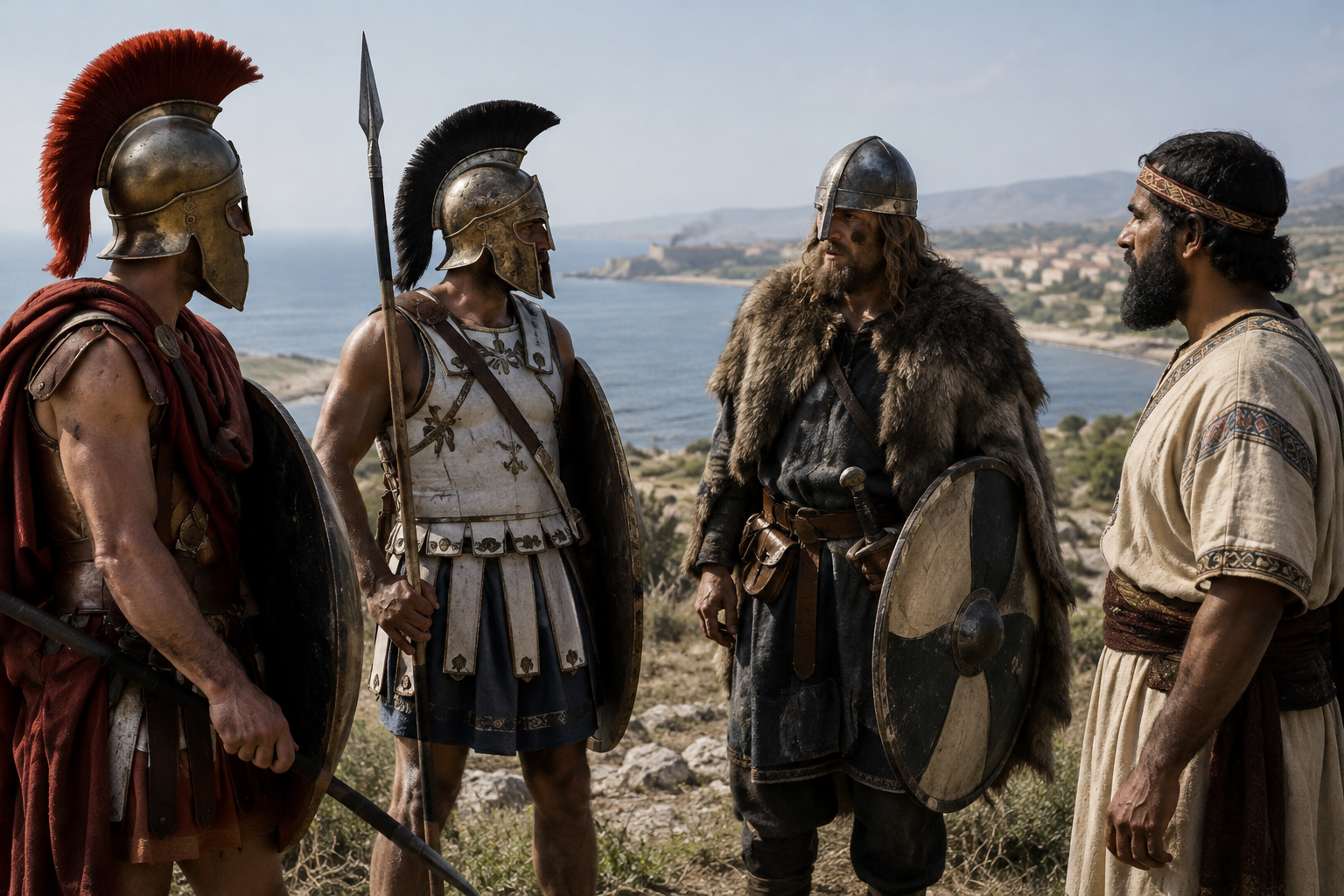
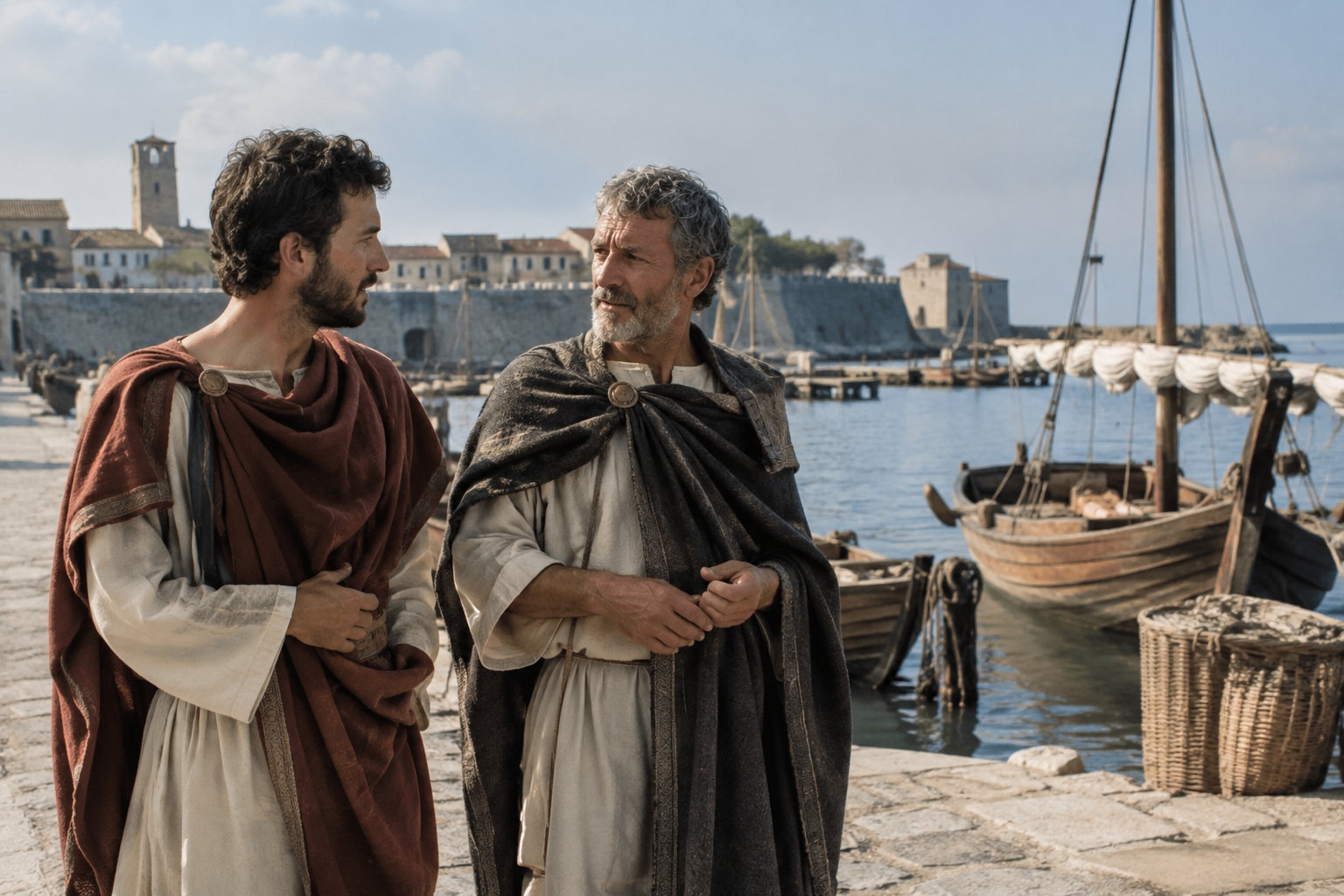
At Himera on the north coast of Sicily, two ancient men separated by seventy years carry an unusually sharp historical charge. One, sample I7217, is associated with the First Sicilian War around 480 BC; the other, I17884, with the destruction of the city in 409 BC during the Second Sicilian War. Both are tied to the Y-DNA haplogroup L2, a paternal lineage that is far less common in ancient Mediterranean discussions than the better-known European branches, and that is precisely what makes these burials so interesting.
Himera matters because it was not a quiet village at the edge of events. It was a Greek colony in a contested island world, caught between Greek, Punic, and wider Mediterranean networks. When a paternal line like L2 appears there more than once, in two separate wartime horizons, it suggests not a romantic tale of one wandering warrior, but a more grounded historical possibility: men carrying this lineage were present within the mobile, mixed, and thoroughly connected societies of the ancient Mediterranean.
Y-DNA tracks one line only: father to son, back through time. That makes haplogroups useful for following paternal continuity and movement, but not for reducing an entire person, population, or culture to a single label. In this case, the article haplogroup is given as L2, and the safest reading is exactly that broad assignment. Without firmer published subclade detail for each individual, it is better not to push these men into narrower branches than the evidence supports.
Even at that broader level, L2 is historically suggestive. It is a lineage with strong associations further east and south than the classic story of Iron Age Sicily usually allows for. So when it appears in ancient graves from a Greek colonial city, the finding sits neatly with what archaeology has been teaching for years: the Mediterranean was never a sealed set of ethnic boxes. It was a zone of shipping, soldiering, settlement, slavery, trade, and family formation.
The two Himera samples are valuable precisely because they belong to moments we can place in a larger historical frame. Around 480 BC, Himera was tied to the famous struggle involving Sicilian Greeks and Carthaginian forces. In 409 BC, the city was destroyed in another major conflict. These are not just dates on a chart; they are moments when armies moved, alliances shifted, and populations were exposed to intense mobility.
A genetic study of ancient Sicily published in PNAS has helped underline just how varied the island's population history could be across time. Sicily was a frontier of contact in the fullest sense: Greek settlers, indigenous communities, Punic influence, and later Roman power all left traces. Within that setting, L2 in I7217 and I17884 should not be read as an exotic anomaly so much as evidence that paternal diversity was part of the human reality of these supposedly familiar classical landscapes.
There is another point worth making about the two Himera men. Repetition across separate conflict horizons hints that this was not necessarily a one-off arrival attached to one campaign. It may reflect a lineage already embedded in the wider population of Sicilian communities, whether through earlier migration, mercenary service, trade links, or family lines established generations before. The evidence does not let us choose neatly between those possibilities, but it does push us away from simplistic ideas of a genetically uniform Greek colonial world.
If Himera shows L2 in a classical colonial setting, sample ALA084 from Alalakh, dated to about 1685 BC, places the lineage in a much earlier and very different historical world. Alalakh, in the Amuq Valley of present-day southern Turkey, was a major Bronze Age city tied to the politics of Syria, Anatolia, and Mesopotamia. The sample is identified here as Amorite Alalakh, which is a cultural-historical label from the Near Eastern world rather than a genetic shorthand.
This matters because Alalakh was one of those cities where diplomacy, trade, labor, and dynastic ambition met. A paternal lineage found there belongs in an urban landscape that was already cosmopolitan nearly twelve hundred years before the wars of classical Sicily. Research on Bronze and Middle Bronze Age mobility in the region, including work shared at bioRxiv, has emphasized that these Near Eastern centers were linked by movement of people as well as goods.
So the Alalakh sample gives L2 a deeper archaeological footing. Instead of appearing first in far-flung later contexts, the lineage is visible in an important Bronze Age Near Eastern city, exactly the kind of place from which paternal lines could circulate into later eastern Mediterranean populations. That does not make ALA084 the ancestor of the Sicilian men, of course. But it does make the broader distribution of L2 in later Mediterranean settings much easier to understand historically.
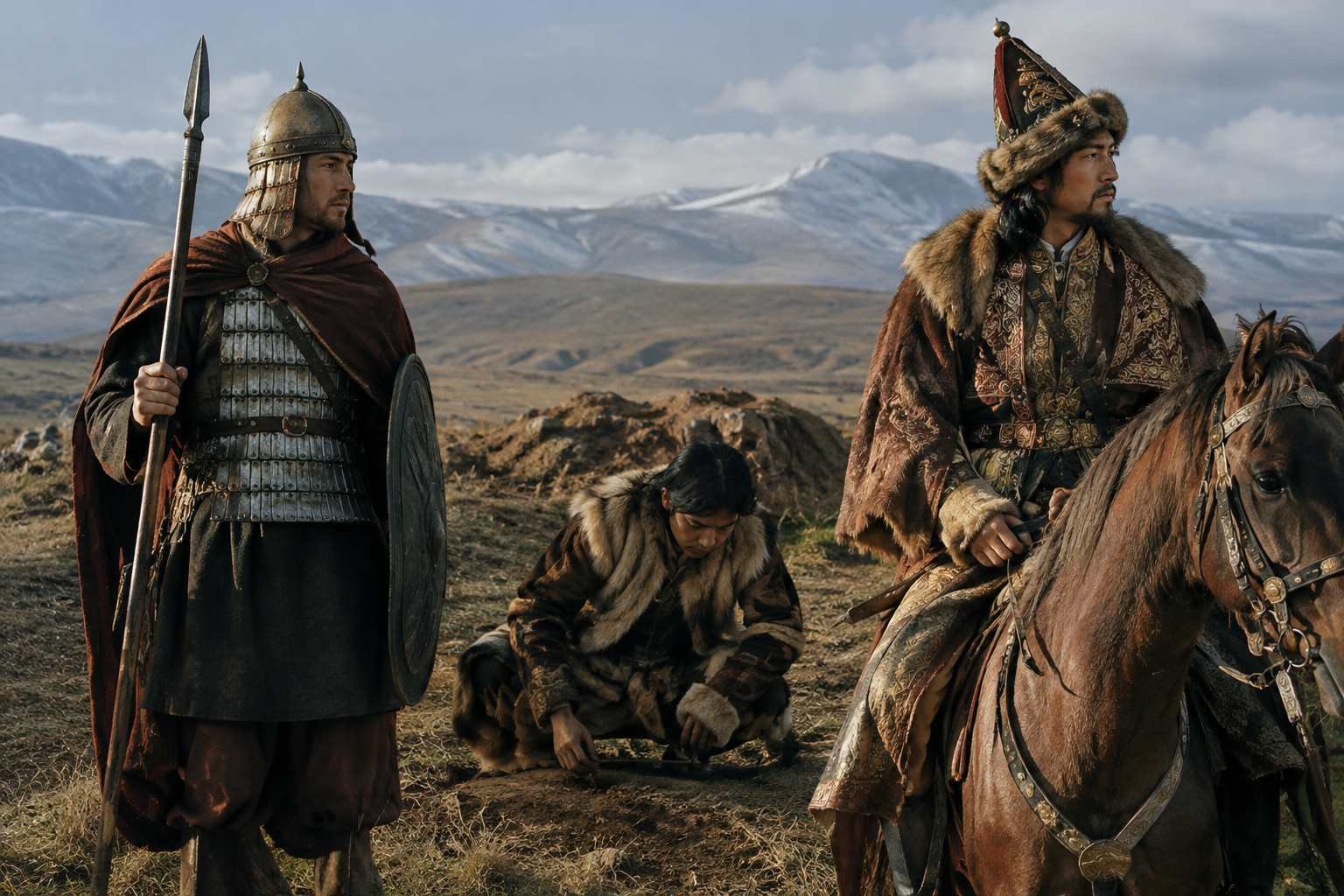
The most surprising sample in this set may be VK355, dated to about 847 AD on Oland in Sweden. A Viking Age individual carrying L2 is a useful reminder that Scandinavian worlds were not isolated northern bubbles. By the ninth century, people in Viking Age networks could be connected, directly or indirectly, to the British Isles, the Frankish world, the Baltic, the North Atlantic, the steppe routes, and the river systems reaching toward Byzantium and the Caliphate.
One should be careful here. A single paternal lineage in Viking Age Sweden does not prove that this individual was a foreign merchant, a captive, a migrant from the Near East, or anything else so tidy. But it does fit the broader picture of Viking Age mobility, in which human movement could bring unexpected lineages into Scandinavian settings. L2 in VK355 is best understood as part of that larger pattern of contact and incorporation.
Seen alongside Himera and Alalakh, Oland broadens the map dramatically. We are no longer dealing with one region alone, but with a lineage appearing in a Bronze Age Near Eastern city, in classical Sicily during wartime, and in Viking Age Scandinavia. The common thread is not a single people or kingdom. It is connectivity.
There is a temptation, when faced with a haplogroup found in widely separated places, to turn it into a grand migration saga. Better to resist that. The real strength of this evidence is subtler. L2 appears in settings that are all, in their own way, nodal points: a Bronze Age palace city, a contested Greek colony in Sicily, and a Viking Age Baltic island. These are all places where people met across language, political, and cultural boundaries.
That pattern makes historical sense. Paternal lines can persist quietly for centuries and then surface in burials that happen to be sampled. What ancient DNA is showing us here is not a straight-line march from one point on the map to another, but the durability of male-line ancestry inside long-lived systems of contact. Sicily in particular, as other work on the island's later populations also shows, repeatedly absorbed newcomers and preserved older diversity at the same time.
If your Y-DNA haplogroup is L2, the clearest lesson from these ancient samples is not a claim to one famous people, but a place within a very old corridor of movement linking the Near East, the Mediterranean, and at times even northern Europe. The strongest supported picture is of a paternal line that appears in historically connected societies rather than in a single closed population. From Alalakh to Himera to Oland, L2 looks less like an isolated curiosity than like one of the many male lines carried along the trade routes, war zones, and settlement webs of the ancient world.
Comments