Haplogroup K2b2a

– 6 min read


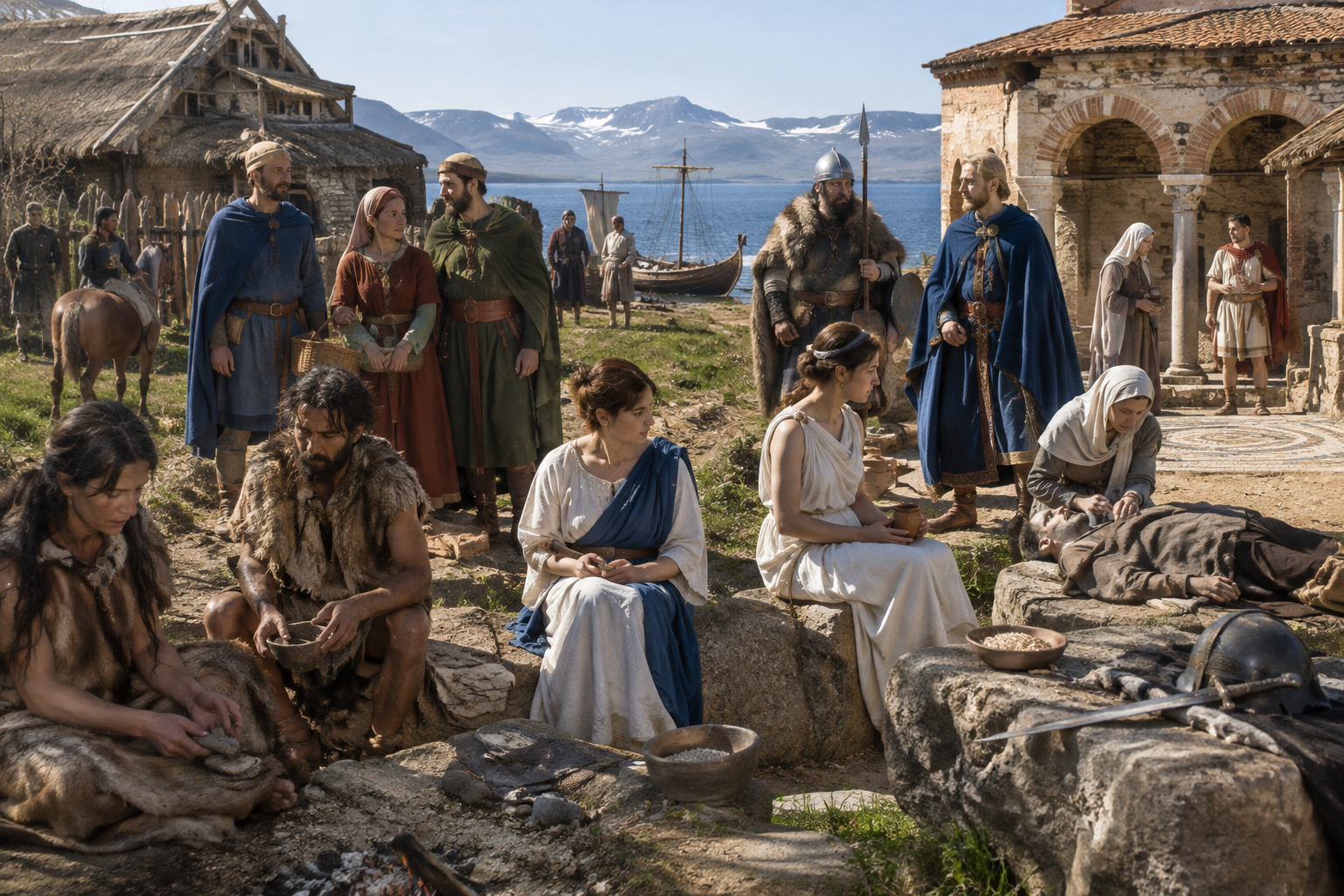
Haplogroup K2b2a is one of those Y-chromosome lineages that reminds us, rather forcefully, that paternal ancestry does not obey the neat borders of later kingdoms, languages, or nations. Instead, it appears in places that at first glance seem to have little to do with one another: Bronze Age Central Asia, the Sarmatian world of the steppe, Greek and Roman sites in Iberia, Viking-age Greenland, medieval northern Spain, and even an early modern plague burial in Germany. That is precisely what makes it historically interesting.
As a Y-DNA haplogroup, K2b2a traces only one line of descent: the direct paternal line from father to son. It does not represent a person's whole ancestry, and sharing a broad haplogroup with an ancient individual does not mean close kinship. But used carefully, Y-DNA can illuminate how male lineages moved, persisted, and sometimes resurfaced in unexpected settings. In the case of K2b2a, the evidence supplied here points less to one simple homeland story than to a long history of mobility across Eurasia and into medieval Europe.
K2b2a sits within the larger K branch of the human Y-chromosome tree, a deep and important part of global paternal ancestry. For a lineage at this level, it is especially important not to collapse the full history of the broader parent clade into one narrow branch or one later people. What we can say from the supplied ancient evidence is that K2b2a, or lineages closely associated with it, turns up across a striking geographical arc.
The earliest sample in this set, I4315 from Bronze Age Dzharkutan in Tajikistan, dated to 1500 BC, places the lineage in the world of Bronze Age Central Asia. That matters because this was a region of settlements, exchange networks, and cultural mixing rather than an isolated edge of history. From there, another appearance in the Sarmatian period at Aigyrly Sanctuary, sample AIG001 dated to 450 BC, shows the lineage again in the broader steppe-connected zone. This does not prove a single uninterrupted paternal chain from one site to the other, but it does suggest that K2b2a was part of the male-line diversity moving through the great interaction corridor between Central Asia and the western steppe.
By the first millennium BC and later, the same lineage appears in very different settings around the Mediterranean and Europe. That pattern fits a wider historical truth: ancient male lines could travel through trade, migration, military service, colonization, marriage, and local continuity.
The supplied archaeological samples give us a series of snapshots rather than a tidy family tree. But the snapshots are vivid.
Start with I4315 from Dzharkutan, Tajikistan, at 1500 BC. Dzharkutan belongs to a Bronze Age world of fortified settlements and long-distance contacts. A K2b2a lineage here places the haplogroup in a region that linked Iranian, steppe, and urbanizing societies. Then comes AIG001 from the Iron Age Aigyrly Sanctuary, dated to 450 BC in the Sarmatian period. The Sarmatian world is important because it was mobile, expansive, and tied to the wider steppe zone stretching toward Europe. Again, this is not proof that K2b2a was a "Sarmatian haplogroup" in any exclusive sense, but it is good evidence that this paternal line was present in that milieu.
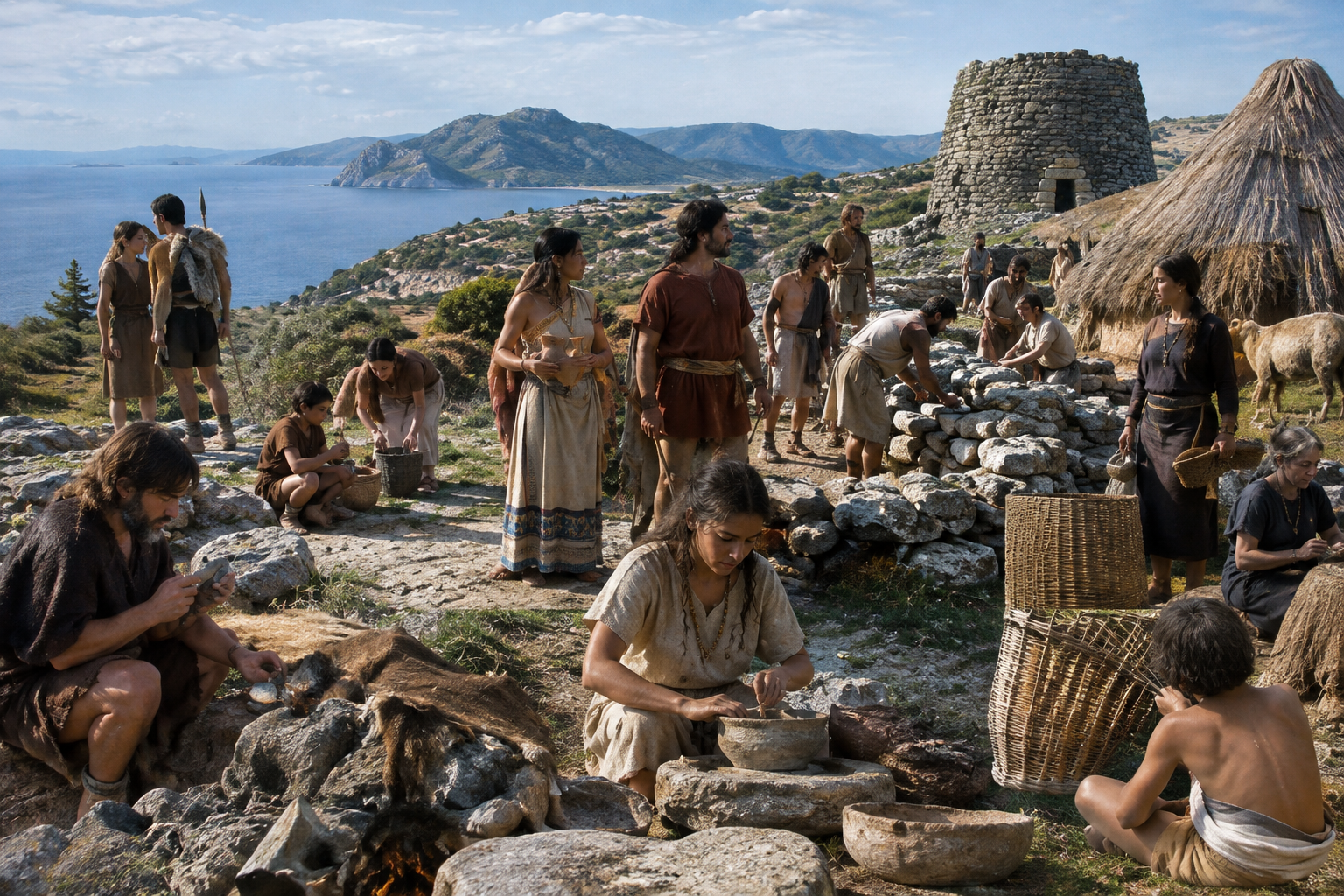
Then the story swings west. Sample I8211 from Greco-Era Emporion, dated to 475 BC, and I6491 from a Roman villa in Tarragona, dated to 350 AD, show the lineage in Iberian settings shaped first by Greek colonial contact and later by Roman imperial life. Add I3243 from Cueva de la Paloma in Spain, dated to 2350 BC, and the Iberian picture becomes even more interesting: the lineage appears in prehistoric, classical, and late Roman contexts. That does not guarantee local continuity from one sample to the next, but it certainly raises the possibility that some paternal branches persisted in Iberia across very long periods, while others may have arrived anew through Mediterranean networks.
The medieval northern Spain material strengthens that impression. Three individuals from Las Gobas - ldo041, ldo042, and ldo043 - all dated to 1000 AD, place the haplogroup in a Christian-era community in northern Spain. That is exactly the kind of evidence that makes ancient DNA so powerful: it allows us to see paternal lineages not just in grand imperial centers, but in real local communities living through the medieval transformation of Iberia.
Read Roman Hispania's DNA Legacy
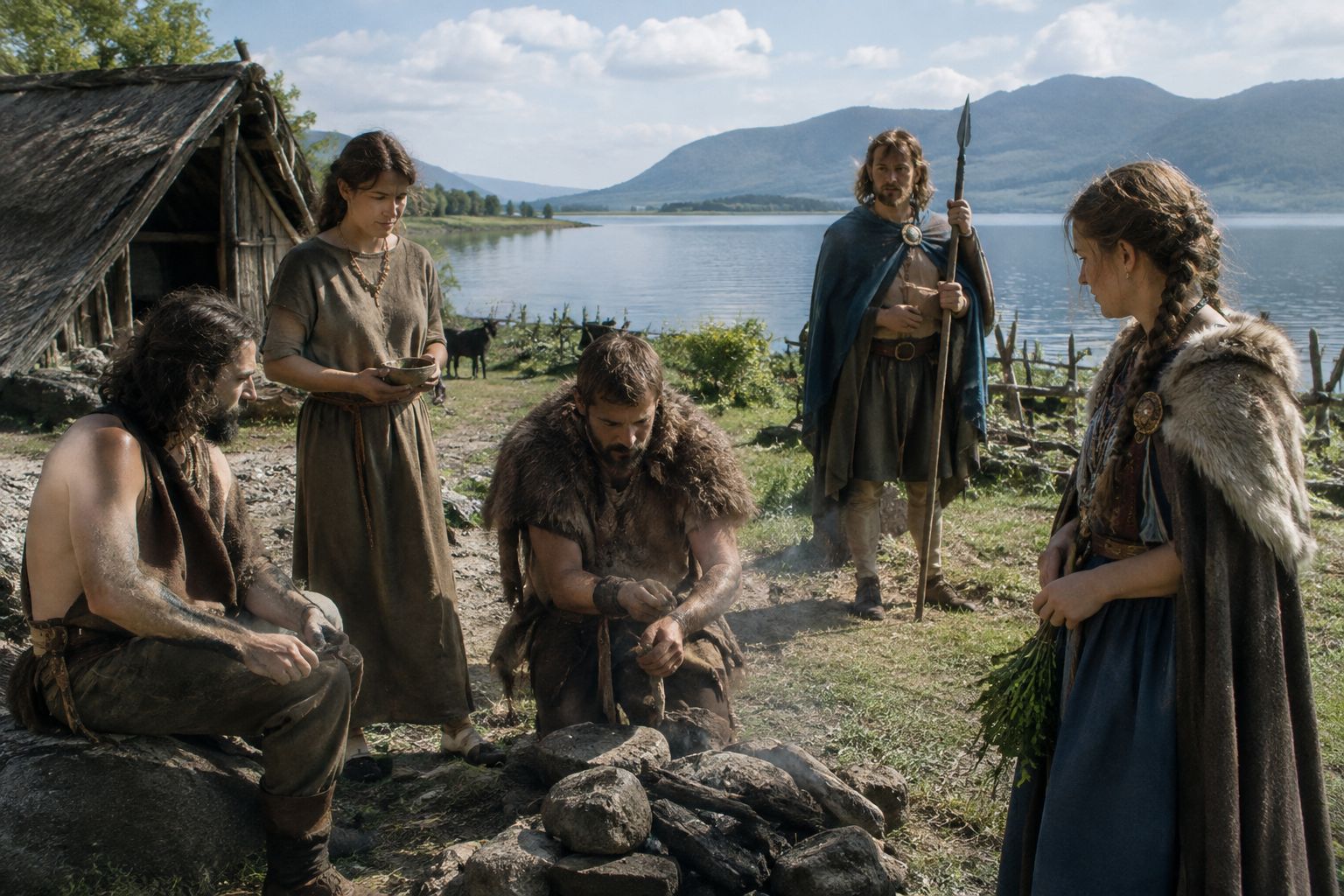
K2b2a also appears in some rather dramatic later contexts. VK180, from the Viking settler site at Brattahlid Farm in Greenland and dated to 990 AD, places the lineage in the Norse North Atlantic world. That is a splendid reminder that Viking expansion was not just about Scandinavia itself, but about the movement of people into Iceland, Greenland, and beyond. A shared haplogroup between a Viking-age Greenlander and much older or more southern individuals does not imply recent kinship; it does show that the paternal ancestry carried by Viking settlers could be surprisingly diverse in deeper time.
VK200, the Magnus Haroldsson Elite Grave Czerska sample dated to 1109 AD, adds another dimension: status. Elite burial does not make a haplogroup noble by nature, of course, but it shows that this paternal lineage could be found in high-status medieval contexts as well as ordinary rural or urban ones.
Finally, ELW031 from Ellwangen, Germany, dated to 1550 AD and identified as a post medieval plague victim, is a sobering late appearance. Here the haplogroup emerges not in a fortress or royal court but in a disease burial. Ancient DNA has transformed our understanding of exactly this sort of evidence: lineages do not belong only to conquerors and dynasties, but also to victims, villagers, settlers, laborers, and the dead of epidemic crises.
What, then, does K2b2a reveal? Above all, that paternal lineages can outlast the categories historians often like to use. A line present in Bronze Age Central Asia can also appear in Sarmatian-period ritual space, Greek-era Iberia, Roman Tarragona, medieval Spain, Viking Greenland, and early modern Germany. That does not mean one continuous family saga. It means that some Y-chromosome branches have histories broad enough to pass through many different societies.
The Iberian evidence is especially notable. With I3243 at Cueva de la Paloma, I8211 at Emporion, I6491 in Roman Tarragona, and the three Las Gobas men ldo041, ldo042, and ldo043, we can see K2b2a appearing in Spain across multiple eras. That makes Iberia a particularly useful landscape for thinking about local continuity mixed with repeated outside contacts - prehistoric settlement, Greek maritime exchange, Roman imperial integration, and medieval reshaping.
At the same time, the Central Asian and steppe-associated samples warn us against treating the lineage as narrowly "western European." The evidence instead points to a paternal history stretched across the wider Eurasian world.
No associated noble family or castle details were supplied alongside this haplogroup entry, and that absence is worth stating plainly rather than filling the gap with invention. In a project like MyTrueAncestry, noble houses and ancestral strongholds can be a fascinating part of the story when there is genuine supporting information. But good historical writing also means knowing when not to overreach.
That caution matters especially with Y-DNA. Even where a noble family is historically associated with a region in which a haplogroup appears, that is not proof that the family carried that lineage, still less that every branch of the family did. Medieval castles preserve memory, power, and geography; they do not by themselves preserve a verifiable Y-chromosome.
In the case of K2b2a, the supplied evidence is stronger on archaeology than aristocratic genealogy. And that is no bad thing. It lets us focus on what ancient DNA does best: showing how paternal lines appear across ordinary settlements, ritual sites, colonial towns, elite burials, frontier farms, and plague cemeteries.
K2b2a is historically compelling because it refuses to sit still. The samples linked to it suggest a paternal lineage with a very wide Eurasian footprint and a long record of appearances in sharply different historical settings. Rather than belonging to one people, it seems to have passed through many.
That is also why Y-DNA needs to be handled with care. A shared haplogroup can point to deep paternal connections, but usually at a timescale far older than surnames, documented pedigrees, or national identities. Ancient DNA complements written history by widening the frame. It can show that a medieval man in northern Spain, a Viking settler in Greenland, and an individual from Bronze Age Tajikistan may belong to the same broad paternal branch - while telling us nothing simple about language, ethnicity, or direct descent between them.
For MyTrueAncestry users, that is the excitement. Your paternal line may connect, not to a single dramatic origin story, but to a much bigger and stranger human past than family legend ever imagined.
If you want to explore the Iberian side of this story further, especially the long population history of the peninsula, it is worth looking at how broader regional studies compare with individual ancient matches.
Explore Iberian Genetic History
Ancient DNA can place your paternal ancestry into a much deeper historical setting, whether that points toward prehistoric Iberia, steppe-connected worlds, Viking-era mobility, or medieval communities like Las Gobas. These matches do not automatically prove direct descent from a specific ancient individual or noble line, but they can offer remarkable clues about where your deeper ancestry fits into human history.
Upload your DNA to MyTrueAncestry and discover whether your results show connections to ancient individuals, archaeological cultures, and historical populations linked to lineages like K2b2a.
Comments