Haplogroup J2b1

– 5 min read


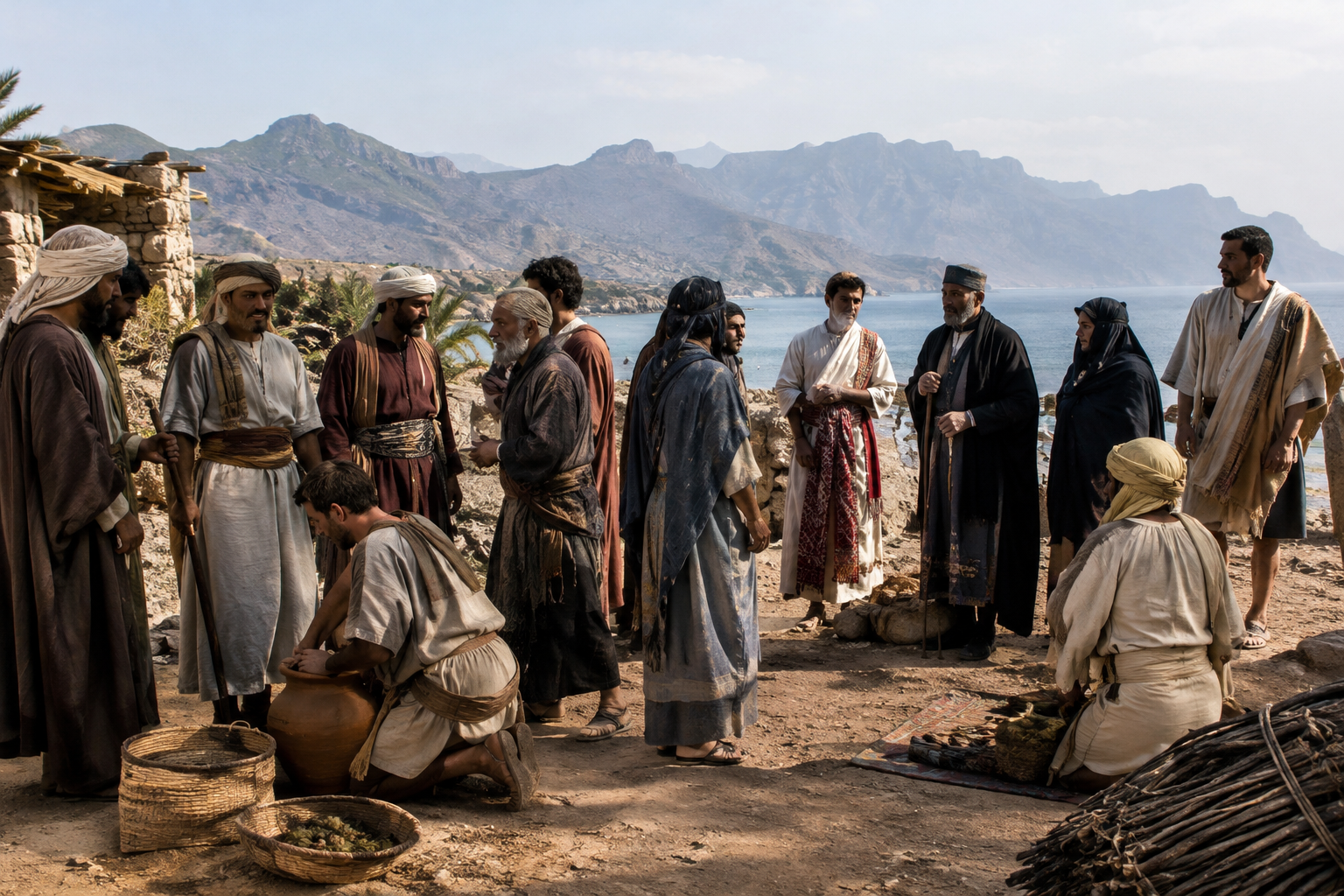
Haplogroup J2b1 is one of those Y-chromosome lineages that refuses to stay politely in one corner of the map. It turns up in places that make historians sit up a little straighter: the southern Levant in the Bronze Age, Roman Italy, medieval Yemen, the Balkans, western Europe, and even an early Anglo-Saxon cemetery in Yorkshire. That does not mean all of these men belonged to one neat people, one language, or one dynasty. Quite the reverse. It means this paternal branch is useful precisely because it reminds us how mobile, mixed, and complicated the past really was.
As a Y-DNA haplogroup, J2b1 traces a direct paternal line, father to son across generations. It does not represent a person's whole ancestry, and sharing a haplogroup is not the same as sharing a recent family tree. Still, when ancient DNA places the same broad paternal branch in different archaeological settings, it gives us a remarkable way of tracking long-term male-line continuity and movement. With J2b1, the story seems to run through the eastern Mediterranean and Near East, with later appearances across the Roman and medieval worlds.
J2 and its branches are generally associated with populations of the Near East and eastern Mediterranean, and J2b1 sits within that larger paternal framework. For a branch like this, caution matters. We should not simply pour the entire history of broad haplogroup J2 into the narrower subclade J2b1. But the ancient cases here strongly suggest that J2b1 was already present in the southern Levant by the Bronze Age and later moved, or persisted, across regions linked by trade, empire, and settlement.
Two of the most revealing early samples come from the southern Levant. The Bronze Age Yehud Southern Levant individual I7003, dated to 2250 BC, places this paternal line in a landscape shaped by urban growth, trade, and shifting powers. Then there is the Late Bronze Age Canaanite Megiddo sample I4521, dated to 1439 BC. Megiddo was no backwater; it was one of the great crossroads of the ancient Near East. If J2b1 appears there, that matters. It puts this lineage in a world of fortified cities, merchants, soldiers, and diplomatic traffic long before Rome or the medieval kingdoms ever entered the picture.
That eastern Mediterranean setting is important because it offers a plausible historical stage for the later spread of related paternal lines. Not proof of a single migration, not a tidy arrow on a map, but a setting in which movement was constant.
Explore Neolithic Expansion in the Aegean
If the Bronze Age samples give us an early anchor, later burials show just how far this paternal branch could travel through connected worlds. In Imperial Rome Centocelle, sample R50 dated to 190 AD places J2b1 in the Roman imperial environment. That is exactly the sort of context where one would expect wide geographic mixing: soldiers, administrators, traders, freedmen, migrants, and their descendants drawn into the capital and its orbit.
Another Italian example, R1283 from the Medieval Cancelleria Basilica, dated to 860 AD, shows that this paternal line did not vanish with the empire. It remained part of the human landscape of Italy into the early medieval period. Genetics cannot tell us whether this man thought of himself as Roman, Lombard, local, foreign, or something else entirely. But it does show that male-line branches rooted in older Mediterranean populations continued into the Christian medieval world.
Then the map widens. In the Balkans, I5404 from Medieval Serbia Lepenski Vir, dated to 1432 AD, places J2b1 in a region where ancient river corridors, Byzantine influence, Slavic settlement, and Ottoman expansion all intersected. In western Europe, ST2436 from Medieval Belgium Outsider Sint-Truiden Onze-Lieve-Vrouwekerk, dated to 900 AD, is especially intriguing because of that word "outsider." It hints at mobility and difference within a medieval urban or ecclesiastical setting, though not necessarily at any dramatic personal story we can prove.
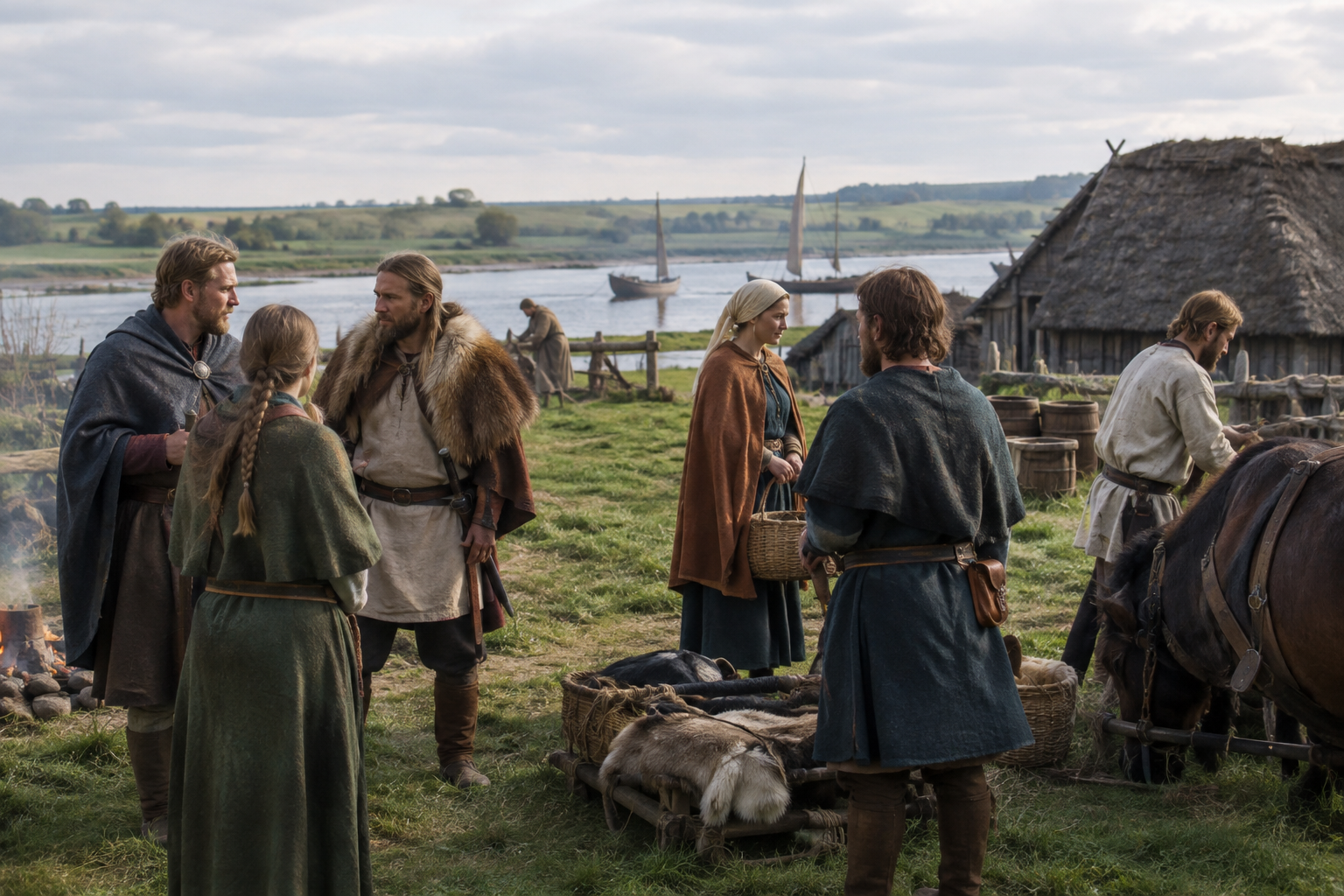
Perhaps the most startling western case is I20654 from the Early Anglo Saxon Cemetery West Heslerton Yorkshire, dated to 550 AD. J2b1 in early Anglo-Saxon England is a useful corrective to over-simple ideas about migration-age populations. Early medieval England was not genetically monochrome. A Y-line with deeper eastern Mediterranean or Near Eastern associations could reach Britain through Roman-era mobility, post-Roman movement, or later mixing before burial in an Anglo-Saxon cemetery.
And then there is ELW013, a Post Medieval Plague Victim Ellwangen Germany dated to 1550 AD. By this point, J2b1 is simply part of the lived population of central Europe. Not exotic. Not necessarily recent. Just one paternal line among many in a plague-struck town.
Discover Roman and Early Medieval Britain DNA
The most concentrated cluster in the dataset comes not from Europe at all, but from Medieval Yemen Soqotra Momi Zaflah. Here we have a striking run of individuals: I20691 (900 AD), I20692 (725 AD), I20694 (960 AD), I20695 (900 AD), I20697 (900 AD), I20701 (900 AD), I20702 (900 AD), I20705 (900 AD), I20708 (900 AD), I20710 (900 AD), I21114 (900 AD), and I21116 (900 AD).
That concentration is historically fascinating. Soqotra sits at the edge of Arabia in the Indian Ocean, famous for maritime connections linking Arabia, East Africa, and South Asia. A repeated appearance of J2b1 there suggests not an isolated accident but a real paternal presence in the medieval island population. It speaks to continuity, local family networks, or both, within a region long shaped by seafaring and exchange.
This is where genetics is particularly good at pricking the balloon of modern assumptions. Medieval island communities were not sealed boxes. They were often plugged into wider commercial and cultural systems. J2b1 on Soqotra fits that sort of world rather well.
Explore Medieval Mediterranean and North African Connections
Put these finds together and a pattern emerges, though not a simplistic one. J2b1 appears early in the Levant, later in Rome, then across medieval Europe and Arabia. That does not prove one unbroken migration trail from Megiddo to Yorkshire or from Yehud to Serbia. What it does show is that this paternal branch belonged to populations moving through some of the busiest historical corridors on earth: the Levantine cities, the Roman Mediterranean, the Balkans, the North Sea world, and the Indian Ocean sphere.
In other words, J2b1 is the sort of lineage that flourishes in connected histories. It is not a badge of one ethnicity. It is evidence that male lines associated with the eastern Mediterranean and Near East could become embedded in many later societies, sometimes locally, sometimes through long-distance movement, and often in ways that written sources never recorded.
The supplied noble-family field offers no usable family or castle data in this case, and that absence is worth stating plainly. We cannot responsibly attach J2b1 to a named medieval house, clan, dynasty, or ancestral stronghold here. That may feel less romantic than a story about a particular castle family, but it is better history. Genetics is powerful, but only when it is kept on a short evidential leash.
Read About Deep Balkan Roots and Medieval Admixture
What makes J2b1 so interesting is not that it hands us a neat identity label. It does the opposite. It shows how un-neat paternal ancestry can be. A branch present in Bronze Age southern Levantine settings later appears in imperial, medieval, and post-medieval contexts from Italy to Yemen to England to Germany. Ancient DNA turns these scattered appearances into a larger historical argument: paternal lines can persist for millennia while the languages, religions, political loyalties, and cultural identities around them change completely.
That is also why Y-DNA should be handled with care. If you carry J2b1 today, it does not mean you are "from" one ancient city, one Canaanite community, one Roman district, or one medieval island. It means your direct paternal line belongs to a branch with a long and wide documented past. The excitement lies in the context, not in easy claims of descent.
MyTrueAncestry lets you explore exactly that kind of context by comparing your DNA to ancient populations and archaeological samples. You may discover links to lineages found in places like Megiddo, Yehud, Rome, Soqotra, or medieval Europe. Those comparisons can offer remarkable clues about deep ancestry, even when they do not prove descent from any specific ancient individual or noble house.
Comments