Haplogroup J2a1a1a2b2a1b

– 5 min read


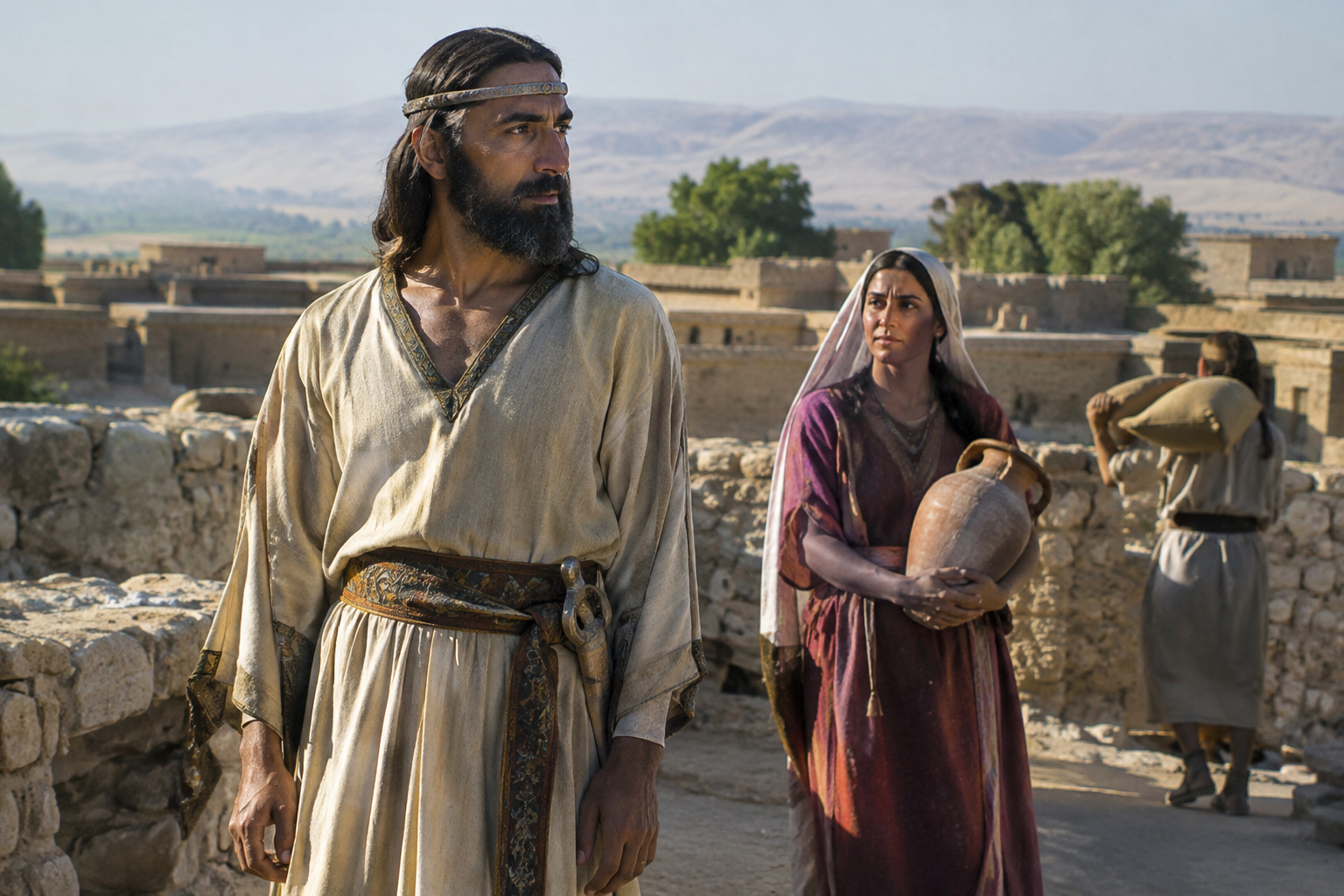
At Alalakh in the Amuq plain, near the modern Turkish-Syrian border, one man buried around 1820 BC has become a particularly useful signpost for the deep history of Y-DNA haplogroup J2a1a1a2b2a1b. He is known in the ancient DNA record as ALA004, an individual from the Middle Bronze Age city that written sources remember as a major kingdom in the world of Amorite dynasties, diplomacy, and trade. Even with just one securely named ancient carrier in view here, the setting is unusually rich: this is not an anonymous prehistoric scatter, but an urban center tied into the political life of northern Syria and the wider eastern Mediterranean.
That matters because a Y-chromosome line is not a whole people, language, or kingdom. It traces one direct paternal line only. But when that line appears in a documented Bronze Age city such as Alalakh, it gives us something much more historically grounded than a modern distribution map: a real man, in a real settlement, living in a world of palaces, merchants, farmers, scribes, and mobile families.
Alalakh was one of the important urban centers of the Middle and Late Bronze Age northern Levant. Its position in the Amuq made it a crossroads between inland Syria, southeastern Anatolia, and routes leading toward the Mediterranean coast. That is the historical landscape in which ALA004 belongs, and it is exactly the sort of place where paternal lineages could be maintained locally for generations while the population around them remained anything but static.
The label "Amorite Alalakh" attached to ALA004 should be handled carefully. In historical writing, "Amorite" can refer to dynastic, linguistic, political, or cultural associations in the Bronze Age Near East; it is not the same thing as a genetic category. Still, the sample is valuable because it places the article's haplogroup in a documented Levantine urban context by the early second millennium BC.
An ancient DNA study of the region, published in research on ancient individuals from Alalakh and nearby settings, helped show just how connected this world was. The city was not sealed off. It sat within networks of movement that linked northern Mesopotamia, Syria, Anatolia, and beyond. In that setting, a paternal branch such as J2a1a1a2b2a1b is best understood not as a tribal badge, but as one thread within an urban population shaped by both continuity and mobility.
The broader haplogroup J2 is frequently associated, in very general terms, with populations of the Near East and Mediterranean world. But the article's branch is much narrower than J2 as a whole, and it would be careless to assign the entire grand history of J2 directly to J2a1a1a2b2a1b. What we can say with confidence from ALA004 is more modest and more interesting: this paternal line was present in a major Bronze Age city of the northern Levant during the age of Amorite kingdoms.
That is already enough to sharpen the picture considerably. Alalakh was not a remote hamlet. It was part of a literate, stratified, internationally entangled world. A paternal lineage present there may have been carried by men whose families had deep local roots, or by men whose recent ancestors had arrived through marriage, service, trade, or elite movement between neighboring regions. Bronze Age cities absorbed all of these processes.
For people researching this haplogroup today, that urban setting is the essential clue. The line is not appearing, in this evidence, at the edge of the map. It is appearing in one of the old hubs where Near Eastern states, households, and exchange systems overlapped.
One of the most striking things about Alalakh is that archaeology and bioarchaeology both point toward a connected society. This was a palace-centered city with strong external ties, and its people lived within a region where travel was routine enough to leave detectable traces in both texts and human remains. So when we place ALA004 within haplogroup J2a1a1a2b2a1b, we should imagine neither an eternal, unmoving bloodline nor a single dramatic migration, but a long history of families operating inside a busy Bronze Age corridor.
That is a useful corrective to the old temptation to turn every Y-line into a marching arrow on a map. The northern Levant was full of overlapping identities: local communities, city loyalties, dynastic affiliations, language shifts, and periodic migration. A paternal lineage could persist through all of that while the cultural world around it changed repeatedly.
This is also why Alalakh is so helpful as a historical anchor. It lets us place the lineage in a society that was already old-fashioned in the best archaeological sense: layered, political, and full of contacts. If your own paternal line falls under J2a1a1a2b2a1b, ALA004 suggests that at least one ancient branch of it was moving through the same Bronze Age world that connected Syrian kingdoms, Anatolian routes, and Mesopotamian courts.
"Amorite" is one of those words that can create more confusion than clarity if used lazily. In the early second millennium BC it often points to a historical milieu of rulers, names, and political traditions in Syria and Mesopotamia. It does not mean that everyone in an Amorite-ruled city shared one ancestry profile, and it certainly does not mean they shared one Y-haplogroup.
So ALA004 should not be treated as "the Amorite haplogroup" or as proof that J2a1a1a2b2a1b belonged to a single ethnic bloc. What he does provide is evidence that this paternal branch existed within that world. In other words, the haplogroup can now be discussed not only in terms of modern testers, but with reference to a historically recognizable Bronze Age society.
That distinction is especially important in the Near East, where cities were multilingual and politically fluid. Royal authority could change hands, trade links could widen or collapse, and household histories could stretch across regions. A Y-chromosome line is one inheritance path through that complexity, not a simple ethnic stamp.
The real value of ALA004 lies in how many larger questions he touches. Alalakh sits near the hinge between Anatolia and the Levant, and that makes it relevant to wider discussions about how paternal lines associated with western Asia circulated into neighboring worlds over time. Later ancient DNA work from the Mediterranean and adjoining regions has repeatedly shown that eastern connections were a long-term feature of many populations, not an exceptional event.
That broader pattern is worth keeping in mind when reading J2-derived branches in historical periods. A lineage seen in Bronze Age Alalakh does not automatically explain every later appearance of related branches elsewhere, but it does show that the northern Levant formed part of the early historical ground from which some later Mediterranean paternal histories emerged.
Readers interested in how such eastern Mediterranean ancestry later appears in imperial settings may also find useful parallels in work on Roman populations and connected regions. The important point is continuity of contact, not a neat one-time expansion. Bronze Age Alalakh belongs to the early chapters of that much longer story.
For now, the strongest ancient illustration of J2a1a1a2b2a1b in this record is ALA004 from Alalakh, around 1820 BC. That places the lineage in a substantial northern Levantine city during the age of Amorite rule and international Bronze Age exchange. It is a small piece of evidence, but a very telling one: this paternal branch was present in an old urban world where local continuity and long-distance connections lived side by side.
For someone researching this haplogroup today, that does not promise descent from a king, a single tribe, or one famous migration. What it does offer is something better grounded: a plausible ancient foothold in the connected societies of the Bronze Age Near East, where cities like Alalakh stood at the crossroads of family history and world history.

Comments