Haplogroup J2a1a

– 6 min read


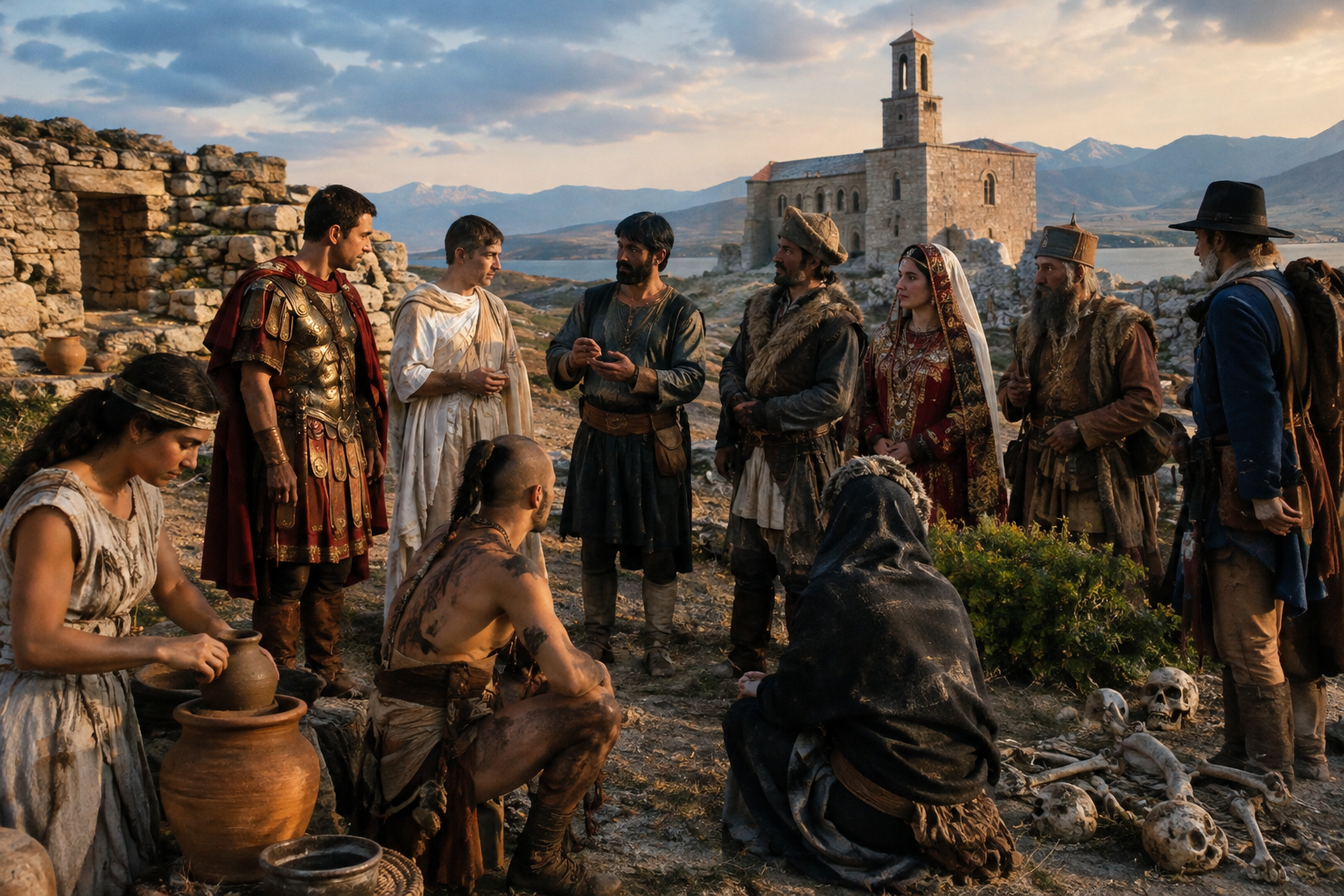
Some Y-DNA haplogroups are easiest to picture as local stories. J2a1a is not one of them. It appears instead as a line of fathers moving through some of the busiest corridors in the ancient world: the South Caucasus, Anatolia, the eastern Mediterranean, the Roman world, and in later centuries even farther afield. If you want a paternal lineage that helps explain how people, not just goods and ideas, moved between early farming villages, Bronze Age kingdoms, Roman provinces, and medieval frontiers, J2a1a is a good place to start.
As always, a caution first. A Y-DNA haplogroup traces one direct paternal line only: father to father to father. It does not describe all of a person's ancestry, culture, language, or identity. Nor does sharing a broad haplogroup prove close relationship. But when ancient DNA repeatedly places a lineage in key regions and periods, it gives us something wonderfully concrete: not myth, not patriotic legend, but a series of real men from real burials whose paternal lines help map long-term human history.
J2 belongs to a wider branch of Y-chromosome diversity strongly associated, in broad terms, with populations of western Asia and the eastern Mediterranean. Within that larger family, J2a and its descendant lines, including J2a1a, are often discussed in connection with early agricultural societies, later urban centers, and the long connected zone running from the Caucasus through Anatolia into the Mediterranean basin. That does not mean every early farmer carried J2a1a, nor that every bearer of J2a1a was a farmer. It does mean the haplogroup sits in precisely the part of the paternal tree that keeps turning up where some of the ancient world's most important population expansions were taking shape.
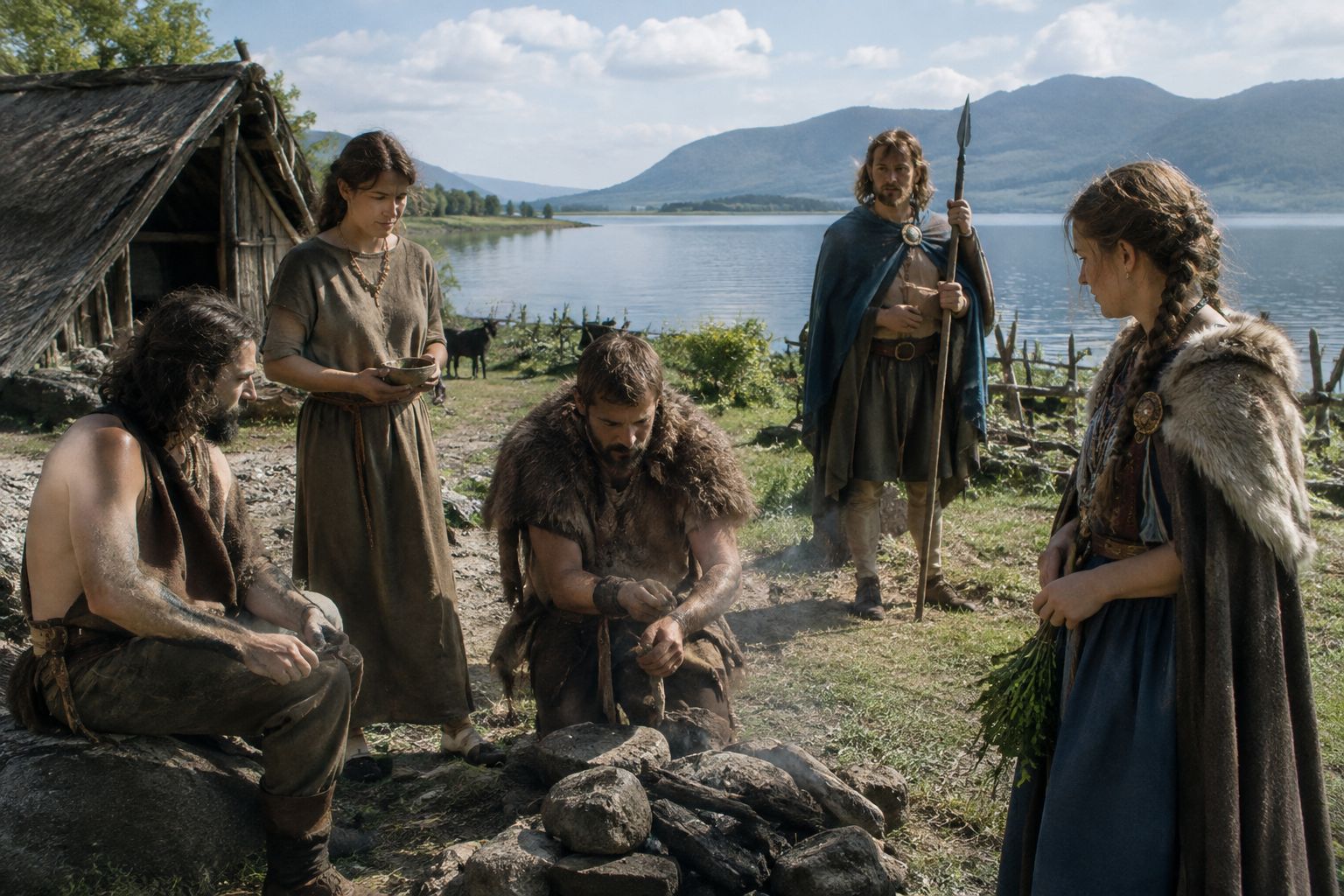
One of the most striking clues comes from the South Caucasus. The sample ARO011, from Neolithic Georgia Arukhlo Shomutepe-Shulaveri, dated to 5500 BC, places this paternal story very early in a region central to debates about the spread of farming and village life. This is not a minor footnote. It suggests that lineages related to J2a1a were already present among settled communities in a landscape that linked the Caucasus, eastern Anatolia, and the Near East. From there, later movement west and south is historically plausible, though each route and timing must be argued from evidence, not assumed.
Explore South Caucasus DNA History
If the Neolithic Caucasus gives us an early foothold, Anatolia shows how enduring and mobile such paternal lines could become. The sample I4029, from Bronze Age Gordion Central Anatolia, dated 660 BC, places the lineage in one of the great crossroads of the ancient Near East. Gordion was not an isolated village on the margins of history; it was tied to the political and commercial worlds of Phrygia, Anatolia, and beyond. A paternal lineage found there belongs in a setting of roads, exchange, and layered populations.
Another Anatolian clue comes from I4532, a Byzantine Period Mardin Southeast Anatolia sample dated 750 AD. Mardin sits in a region where empires overlapped and communities of different languages and religions lived in close proximity. That matters because J2a1a often appears less like the signature of a single tribe than of connected regions where population continuity and repeated mobility went hand in hand.
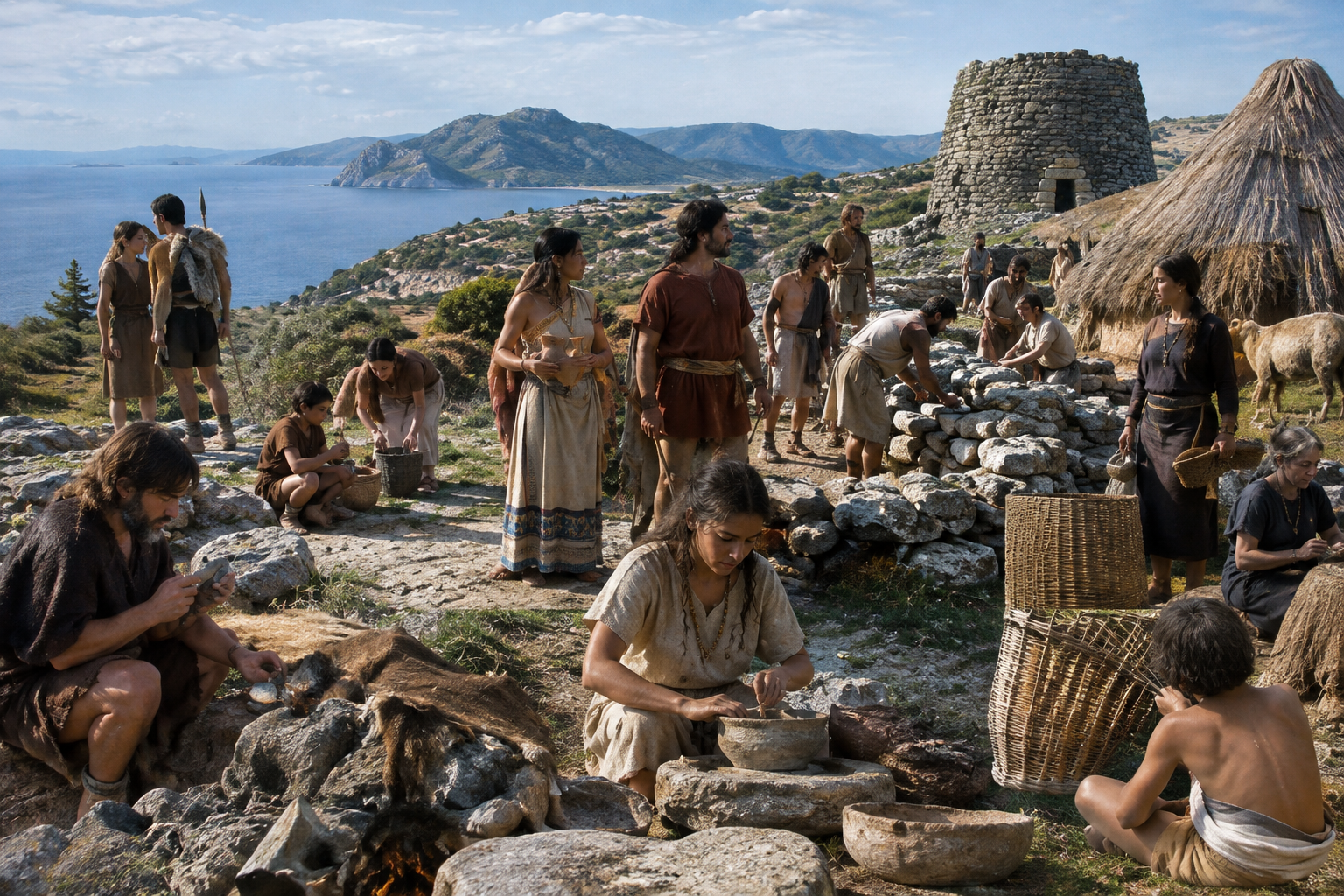
The same broad pattern appears farther west. In Iberia, I36195 from Late Roman Spain Cordoba Lucena Cortijo Basilica del Coracho, dated 480 AD, reminds us that the late Roman world was still intensely mixed. Southern Spain under Rome and after Rome was not cut off from the Mediterranean. Soldiers, merchants, settlers, clergy, and enslaved people crossed it constantly. A J2a1a paternal line in that context is entirely at home in the archaeology of movement.
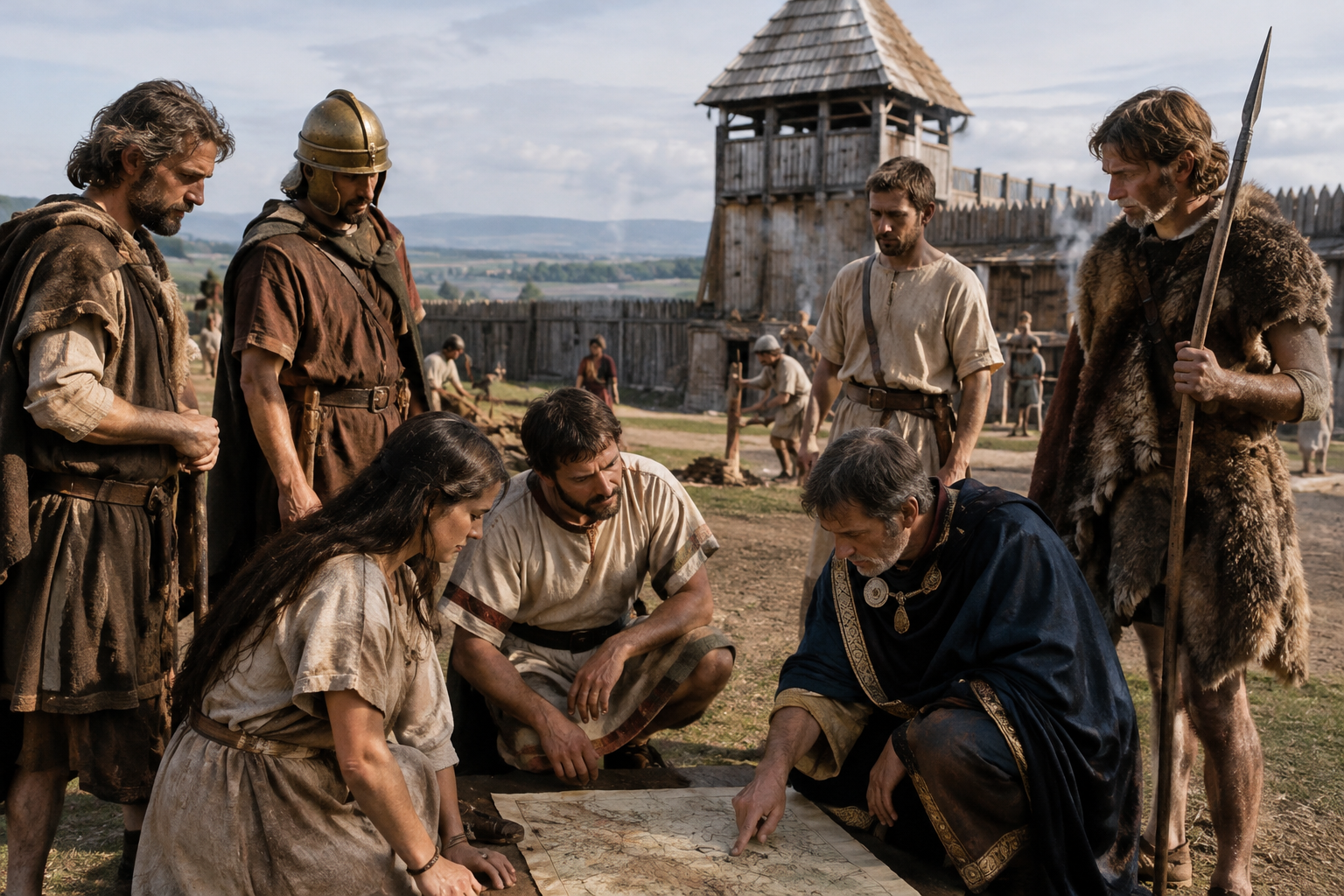
And then there is Italy. To_Lav_T37US60, from Dark Ages Italy Torino Lavazza, dated 550 AD, lands us in a post-imperial landscape often imagined as a clean break between Roman and barbarian. Ancient DNA keeps spoiling that tidy story. Paternal lineages with eastern Mediterranean and Anatolian associations did not simply vanish with the Roman administration. They continued in the populations of late antique and early medieval Europe, sometimes alongside newcomers, sometimes within communities that were already mixed.
Follow the DNA Road from Anatolia to Rome
What makes J2a1a especially interesting is that it does not stay politely within the eastern Mediterranean. The sample PCA0499, an Outlier Iron Age Pommerania Gdansk individual dated 200 AD, is a good example of how ancient DNA can disrupt our expectations. On the Baltic shore, this paternal line appears as an outlier, suggesting either individual mobility, family movement, or the arrival of ancestry from regions farther south or southeast. It is a useful warning against imagining ancient Europe as a mosaic of sealed ethnic boxes.
There is also SHper81_GE, a Hungarian Late Conqueror Sarretudvari-Hizofold sample dated 950 AD. In the Carpathian Basin, where steppe, Balkan, central European, and Mediterranean influences all met, J2a1a fits a world of mixed elite networks and layered settlement histories. It would be wrong to treat this as proof that the lineage was typical of all conqueror groups. It is, however, an excellent reminder that medieval Hungary was a contact zone, not a genetic monolith.
The eastern range is equally revealing. I12463 from Iron Age Katelai, dated 900 BC, and I3406, the Skeleton Lake Pathan Worshipper dated 830 AD, point to the wider Asian presence of related paternal lines. Even the later I6947, Skeleton Lake Traveller - Mediterranean, dated 1810 AD, hints at the astonishing longevity of Mediterranean-linked mobility into South Asia. None of these samples proves a single continuous migration route. Together, though, they show that the paternal history of J2a1a belongs to a belt of contact stretching from the Caucasus and Anatolia into the Mediterranean and parts of South Asia.
Discover Roman Hispania's DNA Legacy
This is where genetics becomes especially useful for historians. Medieval pedigrees and noble traditions tend to begin with documents, charters, castles, and family memory. Ancient DNA begins somewhere else entirely: in petrous bones, damaged chromosomes, and burials excavated from churchyards, towns, and forgotten settlements. The two kinds of evidence answer different questions.
For J2a1a, the ancient evidence suggests long-term paternal continuity in regions shaped by early agriculture, classical states, and medieval polities. It also suggests repeated episodes of movement. A lineage present in Neolithic Georgia, Bronze Age and Byzantine Anatolia, late Roman Spain, early medieval Italy, and conquest-period Hungary is not telling us a simple tale of one people marching in one direction. It is telling us that male lines could persist for millennia while their bearers changed language, religion, political allegiance, and social status.
That matters when readers try to connect DNA with noble history. A castle, a surname, or a dynasty belongs to a much later chapter of the story. A shared haplogroup between a modern tester and an ancient sample may indicate deep paternal affinity, but not a documented family tree. The excitement lies precisely there: genetics opens a deeper timescale than genealogy usually can.
Read About Ancient DNA in Medieval Hungary
In this case, the supplied noble family and castle field is empty, and that is worth saying plainly rather than pretending otherwise. We do not have specific family names, dynasties, or ancestral strongholds tied to this article's input. So the responsible approach is not to manufacture a romantic bridge from J2a1a to some conveniently dramatic castle tower.
Still, the absence of named families tells its own story. Haplogroups such as J2a1a are older than medieval heraldry by thousands of years. Before there were coats of arms, there were village founders in the Caucasus, men in Bronze Age Anatolia, provincials in Roman Spain, and burials in the churchyards of Italy and Hungary. Castles preserve the memory of later elites; ancient DNA preserves the memory of the much older populations from which later societies emerged.
So if a future family study or a well-documented noble DNA project were to place a medieval lineage within this branch, the proper interpretation would be modest but meaningful: not "this castle proves the haplogroup," but "this paternal line belongs to a much deeper human history than the written pedigree alone can show."
J2a1a is historically interesting because it sits at the intersection of some of the biggest developments in Eurasian history: the spread of farming, the rise of Anatolian and Mediterranean civilizations, Roman mobility, and the complicated demographic reshuffling of the early Middle Ages. The samples ARO011, I4029, I4532, I36195, To_Lav_T37US60, PCA0499, SHper81_GE, I12463, I3406, and I6947 do not form a neat family tree. But they do form a pattern. That pattern is one of persistence, movement, and reappearance across regions that were deeply connected long before modern nations existed.
For anyone carrying J2a1a today, that does not confer a single identity. It does, however, place one paternal line within an old and remarkably mobile world. Your direct father-line may connect, at a deep timescale, to early settled communities in the Caucasus, to Anatolian populations, to Roman-era Mediterraneans, or to later medieval frontier societies. The exact path for any individual tester needs careful downstream analysis and comparison, not guesswork.
If you want to see how your own DNA compares with ancient individuals from places like Arukhlo, Gordion, Cordoba, Torino, Mardin, or Sarretudvari-Hizofold, MyTrueAncestry offers a way to explore those connections for yourself. Ancient DNA matches can provide fascinating clues about where parts of your ancestry fit into the human past, while still stopping short of claiming direct descent from any single ancient person or noble house.
Comments