Haplogroup J2

– 6 min read


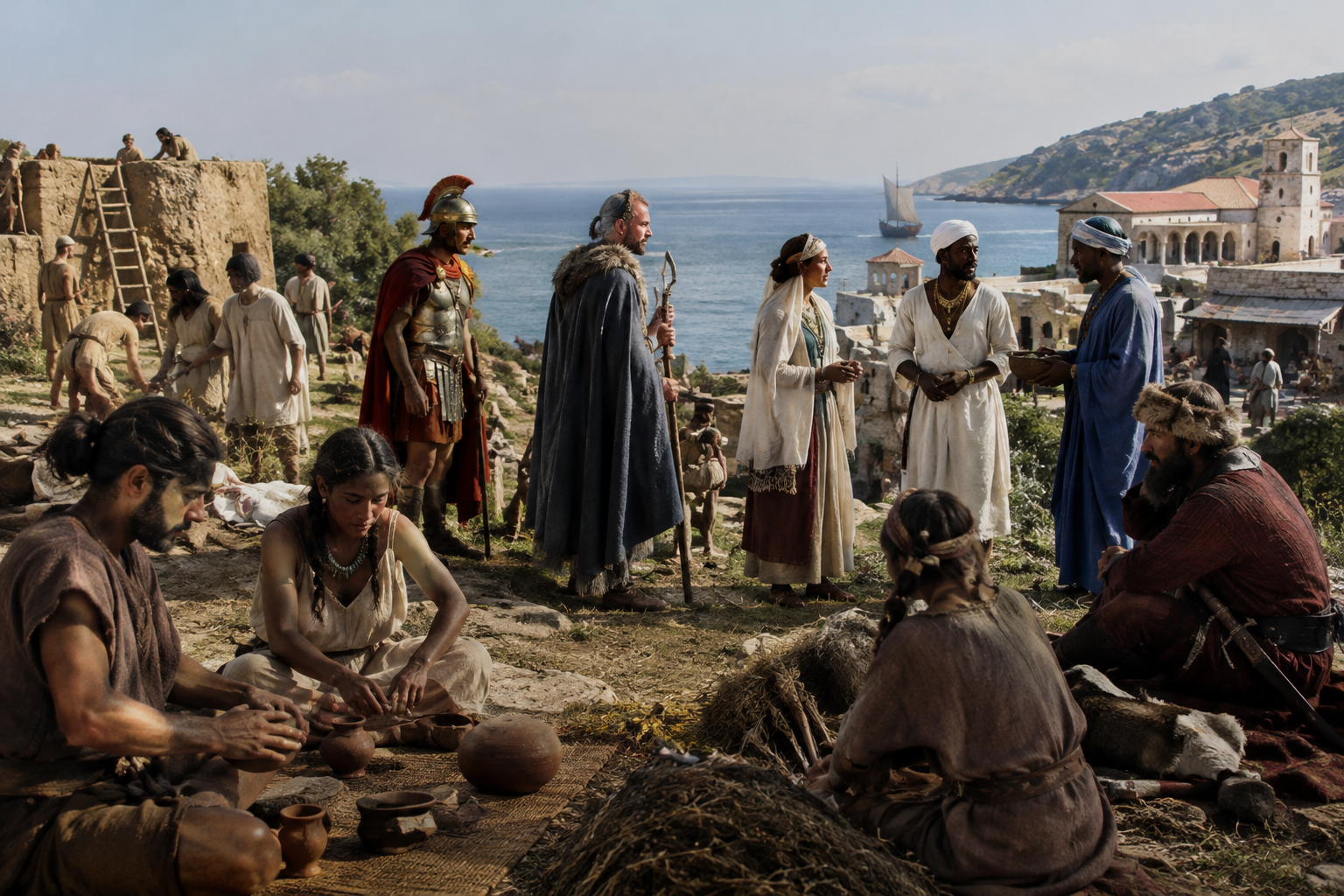
Haplogroup J2 has the sort of history that makes ancient DNA feel less like a lab exercise and more like a long archaeological detective story. It appears again and again in places tied to some of the great connective zones of the ancient world: Anatolia, the Aegean, the Balkans, the Black Sea, the Roman east, and later the trading worlds of the Mediterranean and Indian Ocean. Not because one Y-chromosome "built civilization" - that would be absurd - but because J2 is one of the paternal lineages that repeatedly turns up in regions where farming, trade, metallurgy, urban life, and empire were reshaping human history.
That is also what makes J2 so interesting for MyTrueAncestry readers. Y-DNA haplogroups trace one direct paternal line only: father to father to father. They do not represent your whole ancestry. But they can still act like a narrow historical thread, one that sometimes leads us from early farming villages to Bronze Age mobility, from Roman towns to medieval ports, and occasionally into the documentary world of noble lineages and castles. J2 sits within haplogroup J, a wider branch with deep roots in West Asia, and its many downstream lines today are found across the Mediterranean, the Near East, the Caucasus, parts of Europe, and beyond.
One of the strongest broad associations of J2 in archaeogenetics is with the old corridor linking Anatolia, the Aegean, and southeastern Europe. That does not mean every early farmer carried J2, nor that all J2 lineages spread in a single wave. But again and again, this haplogroup appears in regions central to the Neolithic expansion and later Bronze Age exchange networks.
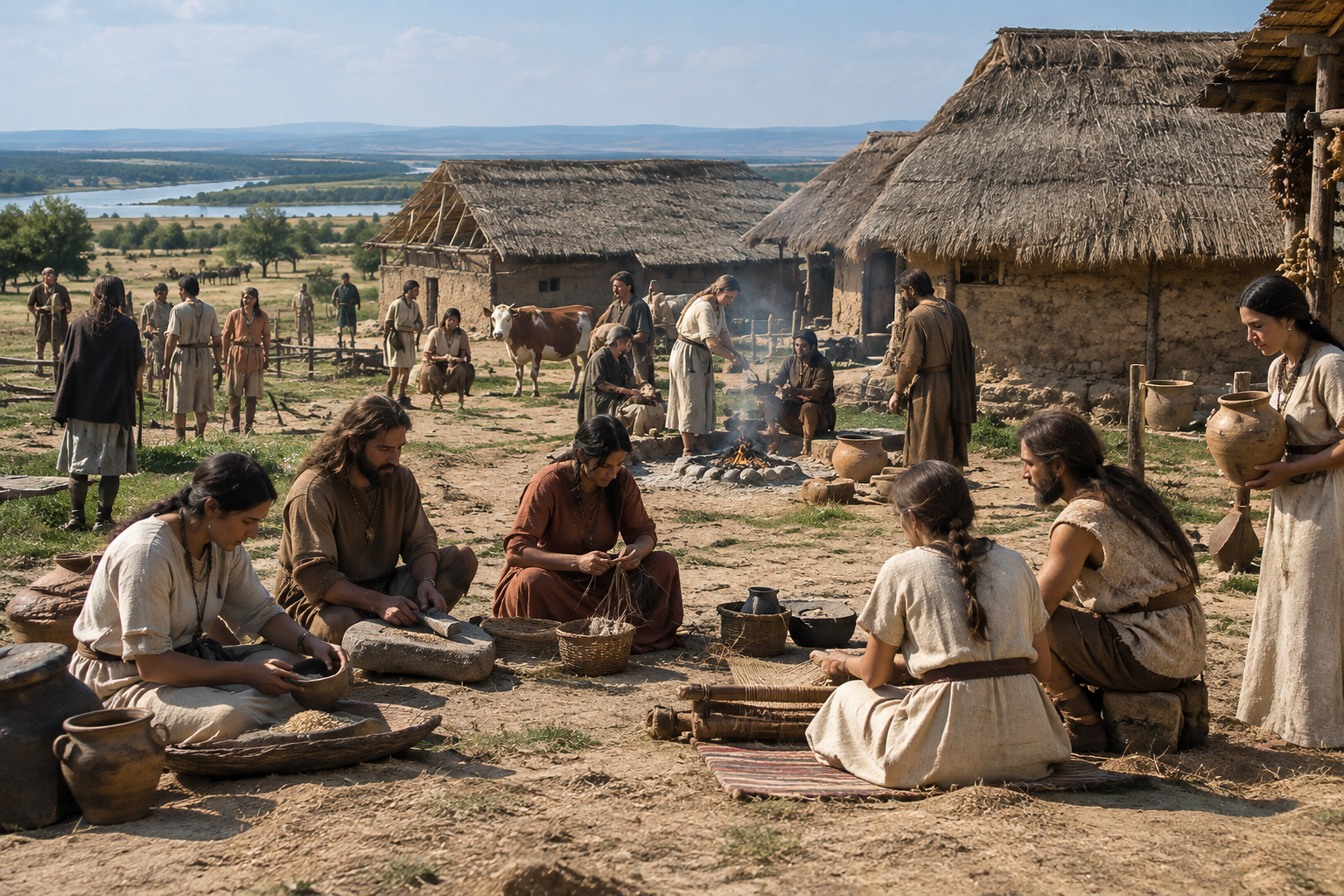
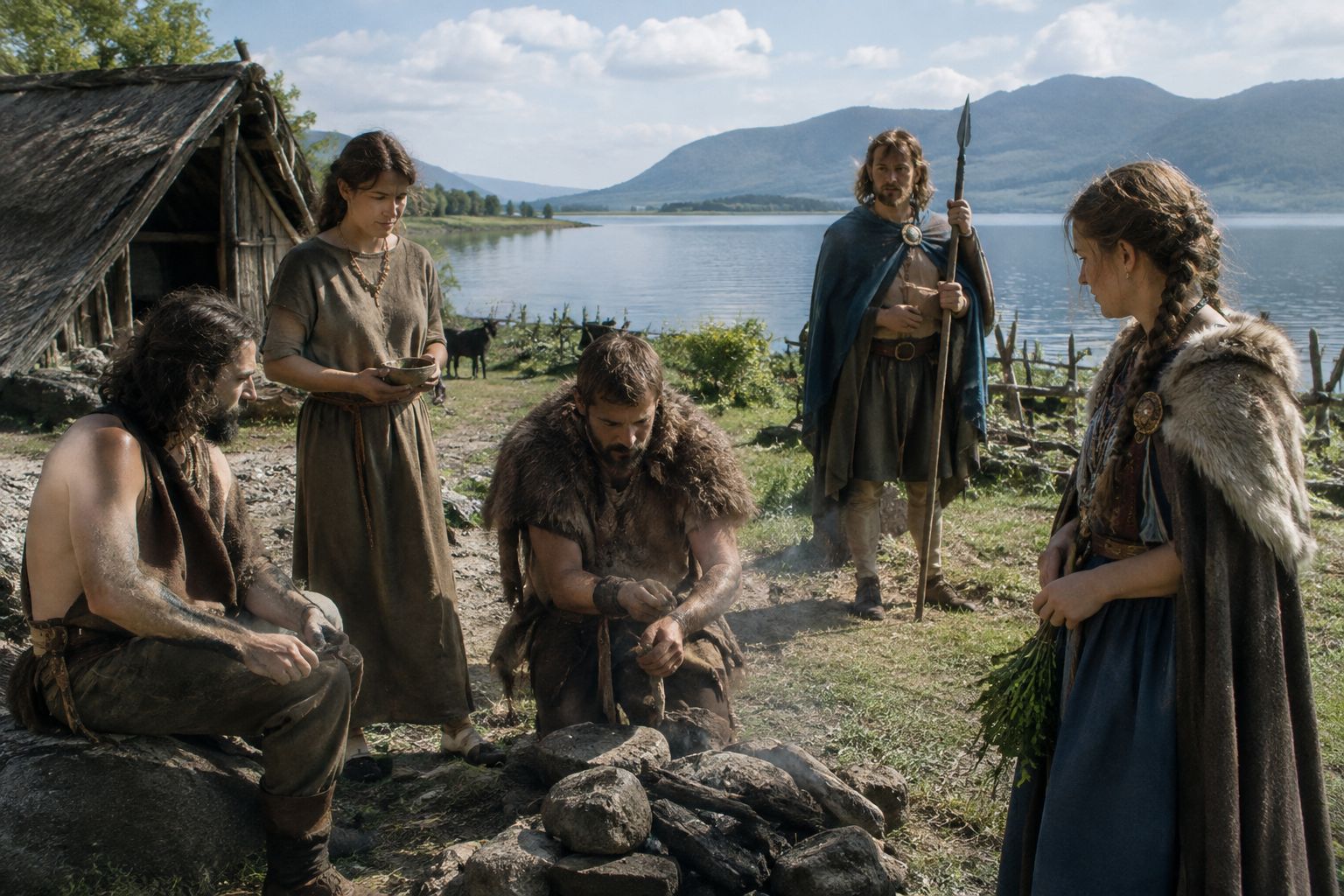
A striking anchor is cch076 from Neolithic Anatolia Catalhoyuk, dated 7000 BC. Catalhoyuk is one of the most famous early farming settlements in the world: dense houses, plastered interiors, burials beneath floors, and a social world already far removed from small mobile forager bands. A J2-associated individual here fits neatly with the wider picture that some paternal lines now common around the eastern Mediterranean were already present in early settled communities of Anatolia.
From there, the story does not run in a straight line, because prehistory never does. But Anatolia remained a launching point and crossroads. Early farmers moved westward; later, copper, bronze, livestock, seafaring, and long-distance trade made the eastern Mediterranean and Balkans a zone of continual human movement. J2 is one of the paternal lineages that seems to have travelled well in that world.
Explore Neolithic Aegean Expansion
The supplied ancient samples show just how geographically wide this history became. Another Anatolian case, I7073 from Early Bronze Age Black Sea Anatolia Suluova, dated 2804 BC, places J2 in a landscape that linked inland Anatolia with Black Sea routes. By the Early Bronze Age, these were not isolated villages. They were communities living amid growing regional hierarchies, exchange networks, and shifting political worlds.
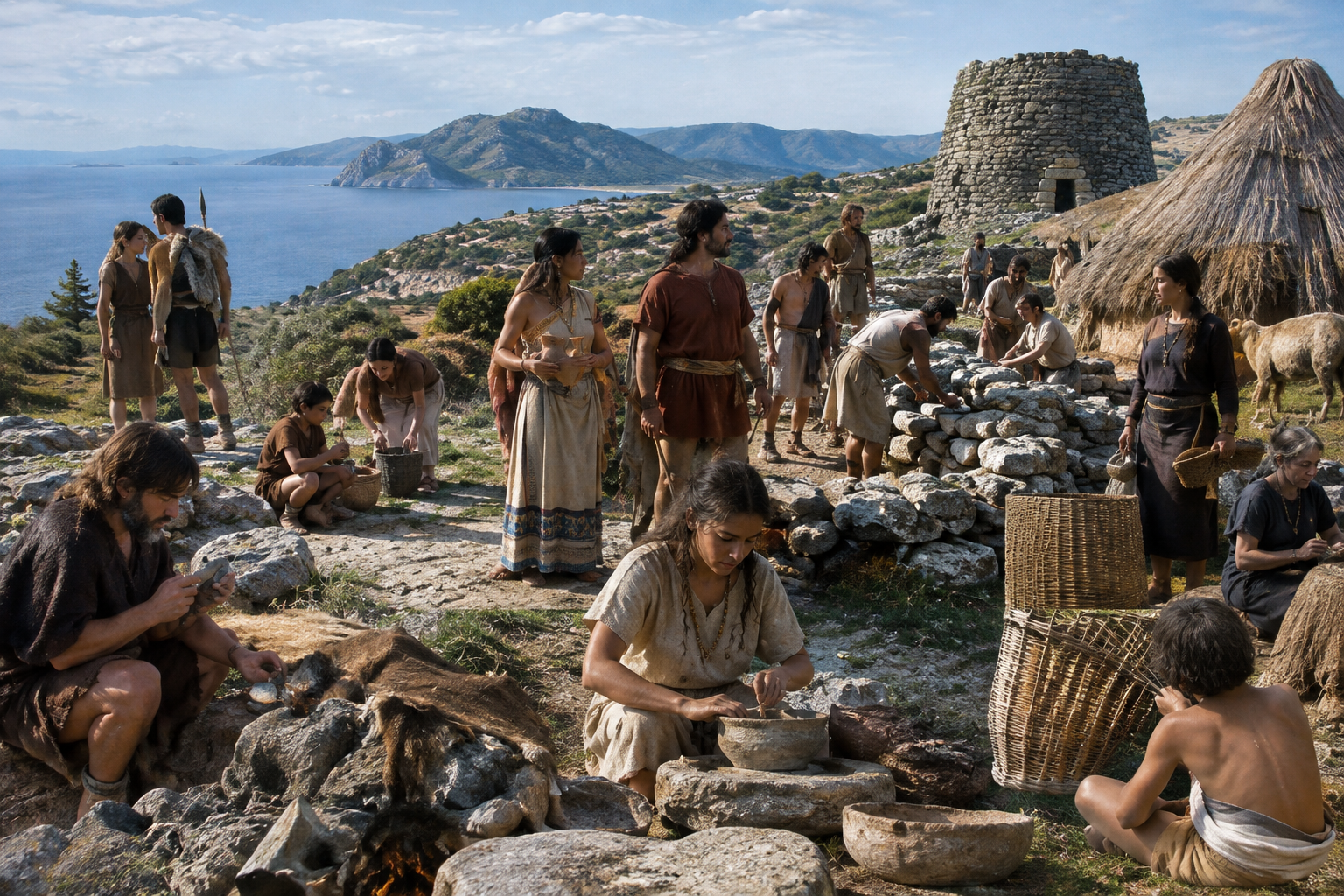
Move west into the Balkans and the picture becomes even more interesting. I19026 and I19031, both from the Bronze Age Croatia Cetina Valley, dated 1800 BC and 1700 BC, show J2-associated paternal ancestry in a region famous for maritime contact and inland movement alike. The Cetina world sat at a hinge point between the Adriatic and the Balkan interior. These men are valuable not because they prove a single migration event, but because they show J2 well established in a Bronze Age setting far beyond Anatolia.
Then there is I14499, the Outlier Velika Gruda Montenegro sample dated 1350 BC. The word "outlier" in archaeogenetics often signals someone who does not quite match the local norm. That sort of individual is gold dust for historians. He may reflect mobility, marriage networks, trading ties, or the arrival of a lineage that had travelled from somewhere else. We should not overstate what one burial means, but this is exactly the kind of evidence that reminds us how mixed and connected the Late Bronze Age Balkans could be.
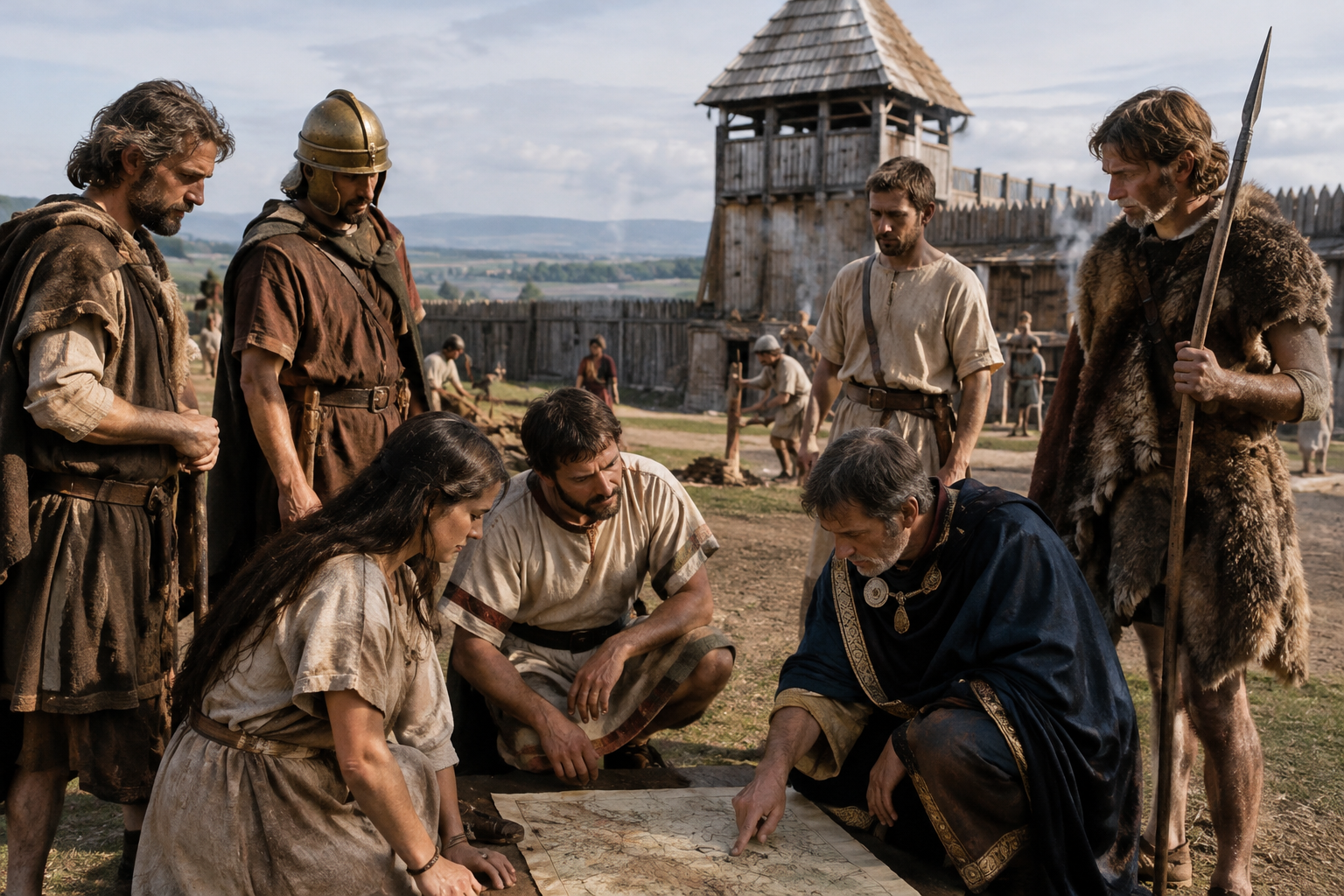
Later still, I16583 from Roman Era Apollonia Anatolia, dated 150 AD, shows the lineage in the Roman imperial period, when movement around the eastern Mediterranean was routine. Soldiers, merchants, administrators, craftspeople, enslaved people, and pilgrims all contributed to the human traffic of the empire. A Y-line like J2 could persist locally for millennia, but it could also spread and reappear in new social settings because Rome made mobility ordinary on a huge scale.
Follow the DNA Road from Anatolia to Rome
By the medieval period, the samples become a reminder that paternal lineages do not respect the tidy regional boxes historians sometimes prefer. ATP_PSN_306 from Medieval England Cambridge St Johns Hospital, dated 1250 AD, places J2 in medieval England. That should not surprise us. Medieval towns, hospitals, ports, monasteries, and market centers drew people from varied backgrounds, and England had long been connected to continental Europe and the Mediterranean world through trade, crusade, church, and migration.
The same point becomes even clearer in East Africa. I7939 from Medieval Kenya Manda Swahili Lamu Manda, dated 1550 AD, and I19407 from Medieval Coastal Kenya Mtwapa, dated 1585 AD, place J2 in the Swahili coastal world. That does not make J2 a "Swahili haplogroup"; rather, it reflects the cosmopolitan character of the Indian Ocean rim, where African, Arabian, Persian, and other connections shaped coastal communities over centuries. These samples are a splendid corrective to any narrow view of ancestry. Lineages move with trade as well as conquest.
Even Rise504 from Iron Age Russia, dated 800 AD, hints at the broad northern reach of this paternal line in zones linked to the Black Sea, steppe, and forest-steppe frontiers. Again, caution is needed: one sample is not a people. But taken together, these finds suggest that J2 belonged not to one civilization, but to a set of overlapping worlds tied together by movement.
The supplied noble-family field is blank, and that matters. It means we should resist the temptation to bolt famous dynasties onto haplogroup J2 just for drama. In genetic history, absence of evidence is better than made-up certainty. So in this case the honest story is not about claiming a specific castle lord or dynasty for J2, but about understanding the kind of regions in which such lineages later persisted.
That, in its own way, is revealing. Many noble houses of medieval and early modern Europe emerged in landscapes already layered with far older population histories: Roman provinces built over Iron Age communities, lordships planted in former frontier zones, coastal strongholds overlooking trade routes older than the castles themselves. A haplogroup like J2 reminds us that the paternal ancestry present in a medieval kingdom might include lines rooted locally for centuries, others arriving in Roman times, and still others carried by merchants, clerics, soldiers, or migrants from further south and east.
So although we cannot responsibly attach J2 here to a named noble house from the input, we can say something important: genetics and genealogy work on different scales. Written pedigrees might take a family back 20 or 30 generations. Ancient DNA can show that the landscape in which that family rose to power had already been shaped by thousands of years of migration and continuity.
Learn How Archaeogenetics Decodes History
J2 is historically interesting precisely because it refuses to stay in one box. In the supplied evidence it appears in early farming Anatolia, Bronze Age Black Sea territory, Bronze Age Croatia and Montenegro, Roman Anatolia, medieval England, coastal Kenya, and Iron Age Russia. That is not a neat ethnic label. It is a map of connection.
For anyone who carries J2 today, that does not prove descent from Catalhoyuk farmers, Cetina Valley burials, Roman Anatolians, or Swahili coast traders in any direct genealogical sense. Shared haplogroups can link people very distantly across large spans of time. But it does mean your direct paternal line belongs to one of the great historical lineages of the wider Mediterranean and West Asian world, a lineage repeatedly found where people were farming, sailing, trading, settling, and crossing frontiers.
That is the real value of ancient DNA. It does not hand us fairy-tale ancestry. It gives us context. It shows that paternal lines can persist for millennia, shift between regions, and turn up in places where the written record is silent. In that sense, J2 is less a badge than a breadcrumb trail.
If your DNA includes haplogroup J2, or if you are simply curious whether your results connect you to ancient Anatolians, Bronze Age Balkan communities, Roman-era eastern Mediterranean populations, or later medieval peoples, MyTrueAncestry can help you explore those links. Ancient DNA matches can offer remarkable historical perspective, even when they do not prove direct descent from any one ancient individual or noble family.
Comments