Haplogroup J1a3b

– 5 min read


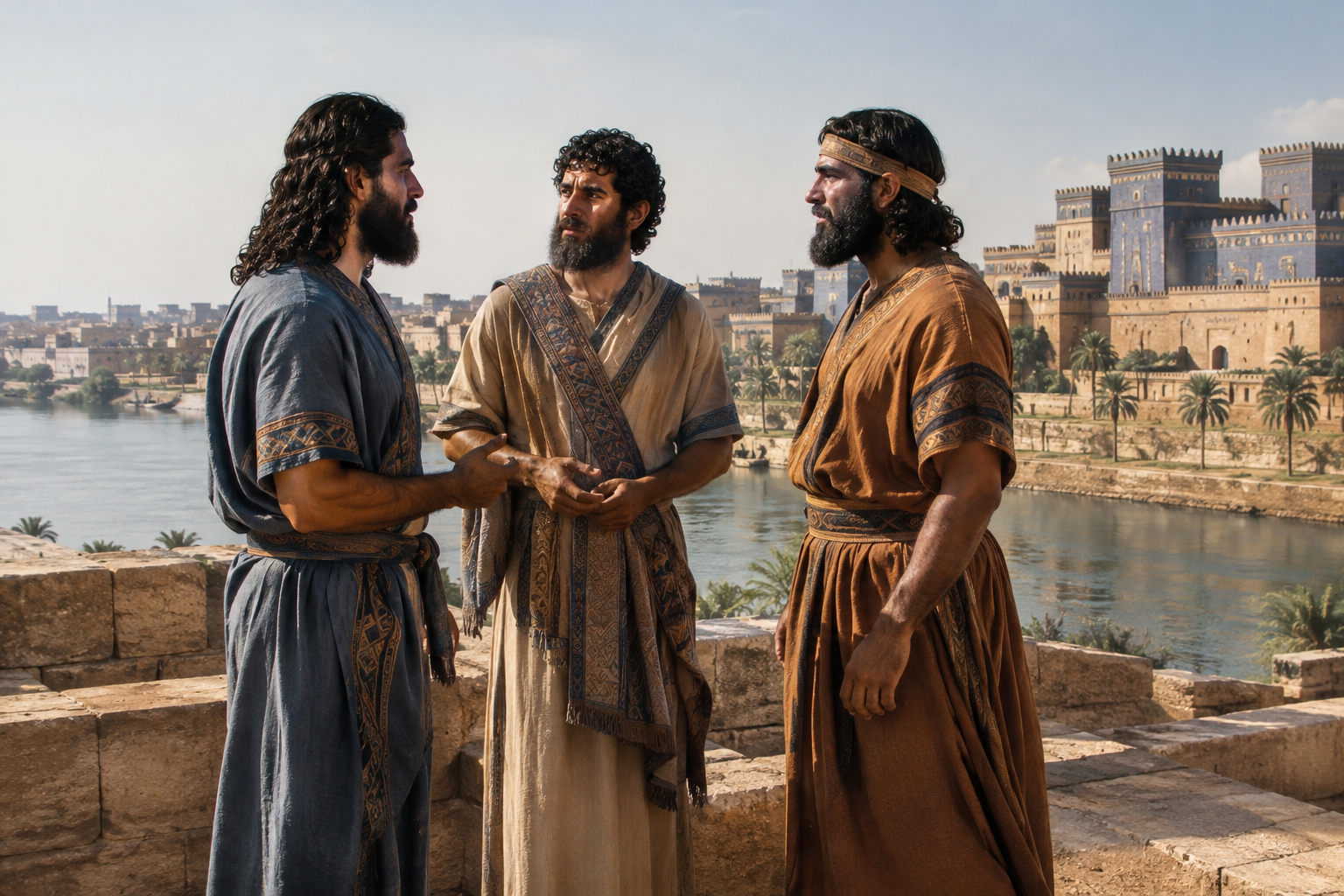
At Bakr Awa in northeastern Iraq, three male individuals dated to around 1897 BC - A22022, A22035, and A22036 - place the Y-DNA haplogroup J1a3b in a setting that matters enormously for ancient history: Bronze Age Mesopotamia. That is the attraction here. We are not dealing with a vague tradition or a much later genealogy, but with men excavated from a real archaeological site in a region shaped by cities, long-distance trade, and imperial competition.
Bakr Awa sits in the eastern Mesopotamian world, a landscape that linked the lowland kingdoms of Babylonia with the Zagros piedmont and the routes running into western Iran. When a paternal lineage such as J1a3b appears here, in multiple individuals from the same broad period, it gives us a glimpse of male-line continuity within a lived Bronze Age community. Y-DNA traces one direct paternal line only, not a person's whole ancestry, but that one line can still be historically revealing.
The ancient site of Bakr Awa has become especially interesting because it offers something archaeology often struggles to preserve together: settlement history and recoverable ancient genomes. The three men associated here with J1a3b belong to a moment when Mesopotamia was not a closed civilizational core, but a busy frontier of contacts between riverine states, upland communities, and regional powers.
That matters because paternal lineages do not move in isolation. They travel through families, households, labor systems, marriage networks, and political upheavals. In a place like Bakr Awa, the presence of several males linked to the same haplogroup suggests that this branch was not an accidental one-off arrival. It had some footing in the population represented at the site.
A recent MyTrueAncestry discussion of the site is useful background here: Bakr Awa is emerging as one of those places where ancient DNA can illuminate longer-term demographic change without reducing history to a single migration event.
The clearest evidence in this case is the cluster itself. A22022, A22035, and A22036 are all reported from Bakr Awa in Iraq and dated to about 1897 BC. Even without inventing kinship or burial detail that has not been supplied, that repetition is significant. Three men from the same site and period pointing to J1a3b make the haplogroup archaeologically visible in Bronze Age northern Mesopotamia.
It is worth being precise about what that does and does not mean. It does not prove these three men were close relatives, nor does it mean every man at Bakr Awa belonged to the same paternal line. What it does suggest is that the wider J1 paternal world, and specifically the branch reported here as J1a3b, was part of the human landscape of Mesopotamia well before the classical and medieval periods from which many modern surname or tribal traditions are better documented.
This is exactly why ancient DNA can be so useful to family historians. Modern distributions of J1 are often discussed in relation to later Arabian, Levantine, or Near Eastern populations, but ancient finds like these remind us that Bronze Age Mesopotamia was already full of intertwined paternal histories. The old temptation is to draw one straight arrow from an ancient grave to a modern identity. The better approach is to see these men as evidence for depth, presence, and continuity in a region where identities were always more layered than later labels suggest.
J1a3b is a sub-branch within the larger Y-haplogroup J1, a lineage with deep roots in the Near East. But a parent haplogroup and a narrow subclade are not the same historical thing. One of the common mistakes in popular genetics is to take everything known or claimed about J1 in general and paste it straight onto a more specific branch. The Bakr Awa evidence does not justify that shortcut.
What we can say more safely is narrower and more interesting. This branch is represented in early second-millennium-BC Mesopotamia by multiple males from one archaeological site. That places J1a3b in a historical world of cities, agricultural production, mountain-plain exchange, and shifting political authority. It makes the lineage part of the Bronze Age documentary horizon even when the named individuals themselves remain anonymous to written history.
An ancient DNA project associated with these Mesopotamian remains is catalogued at https://www.ebi.ac.uk/ena/browser/view/PRJEB111543, and its importance lies less in grand claims than in anchoring lineages to actual excavated populations.
If there is a broader historical lesson in these Bakr Awa men, it is that Bronze Age Mesopotamia should not be imagined as populated by neatly separated peoples, each with its own exclusive biological signature. Archaeology has been telling us for years that this was a contact zone: languages, goods, technologies, and rulers moved across it constantly. Ancient DNA now gives that complexity a human scale.
A paternal lineage found at Bakr Awa may reflect local continuity, regional movement, or both across generations. Northeastern Iraq was well placed for that mixture. It sat between the Mesopotamian alluvium and the Zagros world, and communities here would have been exposed to influences from both. That does not make every lineage "foreign" or every continuity "native" in some simple sense. It means the old binaries break down.
For readers interested in adjacent evidence from the Iranian plateau and neighboring populations, another MyTrueAncestry article provides useful context for how ancient genetic work is reshaping the history of this wider region.
There is something refreshingly solid about this evidence. No famous king has to be invoked. No medieval pedigree needs to be forced backward into prehistory. Instead, we have a small cluster of excavated men whose shared paternal signal helps mark out a real Bronze Age population.
That may sound modest, but in archaeogenetics modesty is often where the best history begins. A lineage like J1a3b becomes historically meaningful not because it can be attached to a legend, but because it can be located in time and place. Bakr Awa gives us exactly that: northeastern Iraq, about 1897 BC, and multiple men carrying the branch.
This also fits a wider pattern in ancient DNA research, where repeated finds from one site often tell us more than a single glamorous outlier. The point is not celebrity; it is context. A22022, A22035, and A22036 are valuable because together they show that this paternal line was present within a Mesopotamian community during the Bronze Age.
For a wider look at how archaeology and genetics together are transforming the study of the ancient past, this overview is well chosen.
If your paternal line falls under J1a3b, the Bakr Awa material offers one careful but exciting insight: this branch is documented in Bronze Age Mesopotamia, in the world of early second-millennium-BC Iraq. That does not identify your recent family, language, ethnicity, or religion, and it does not turn every modern bearer into the descendant of one excavated individual. But it does place your direct paternal line within a region of very old historical depth.
That is often the real value of ancient DNA. It does not hand you a mythic founder. It gives you evidence that your line - one narrow thread of your ancestry - was already part of the human story in one of the great centers of the ancient Near East.
Comments