Haplogroup J1a2a1a2d2b2b2c4b2a

– 5 min read


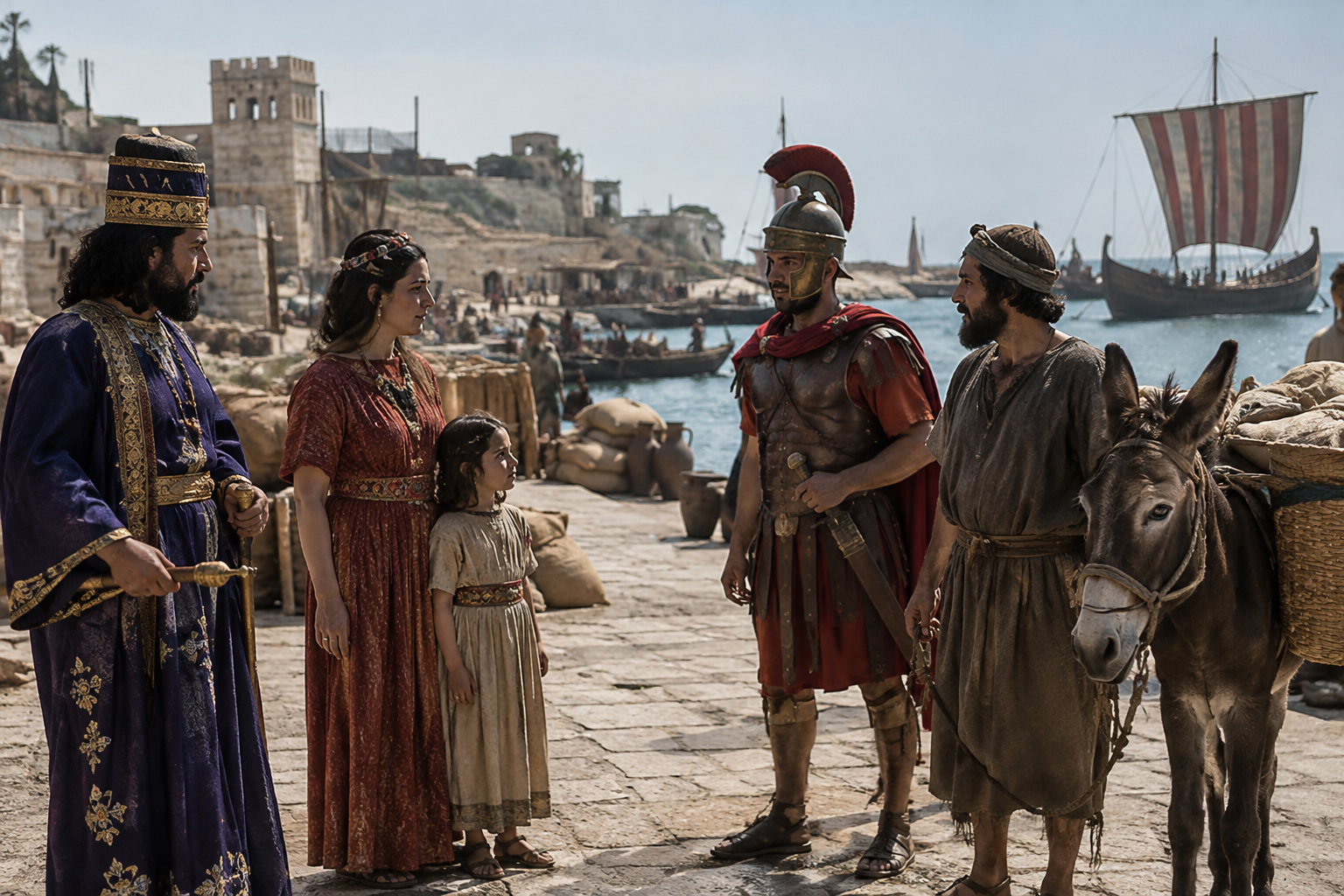
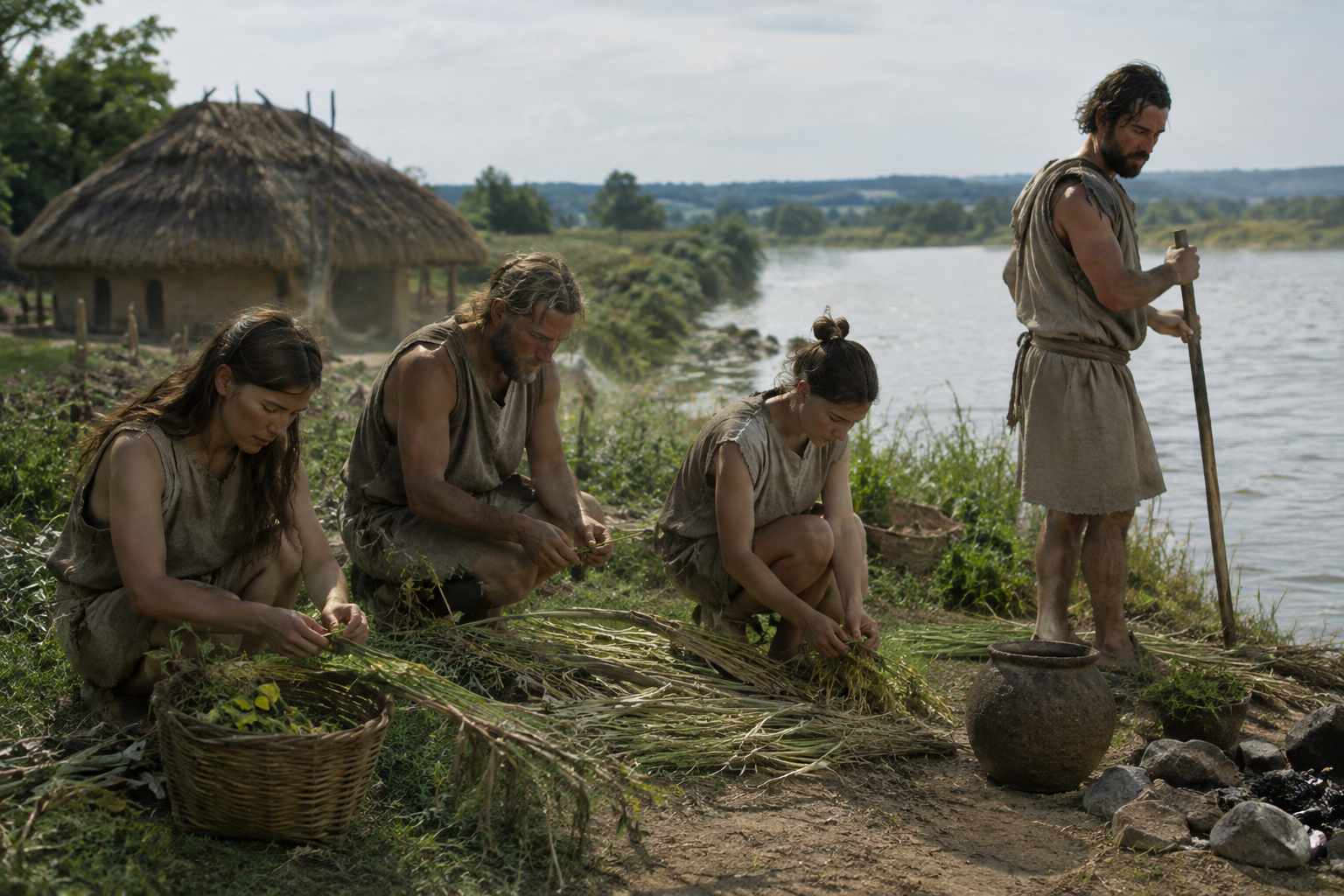
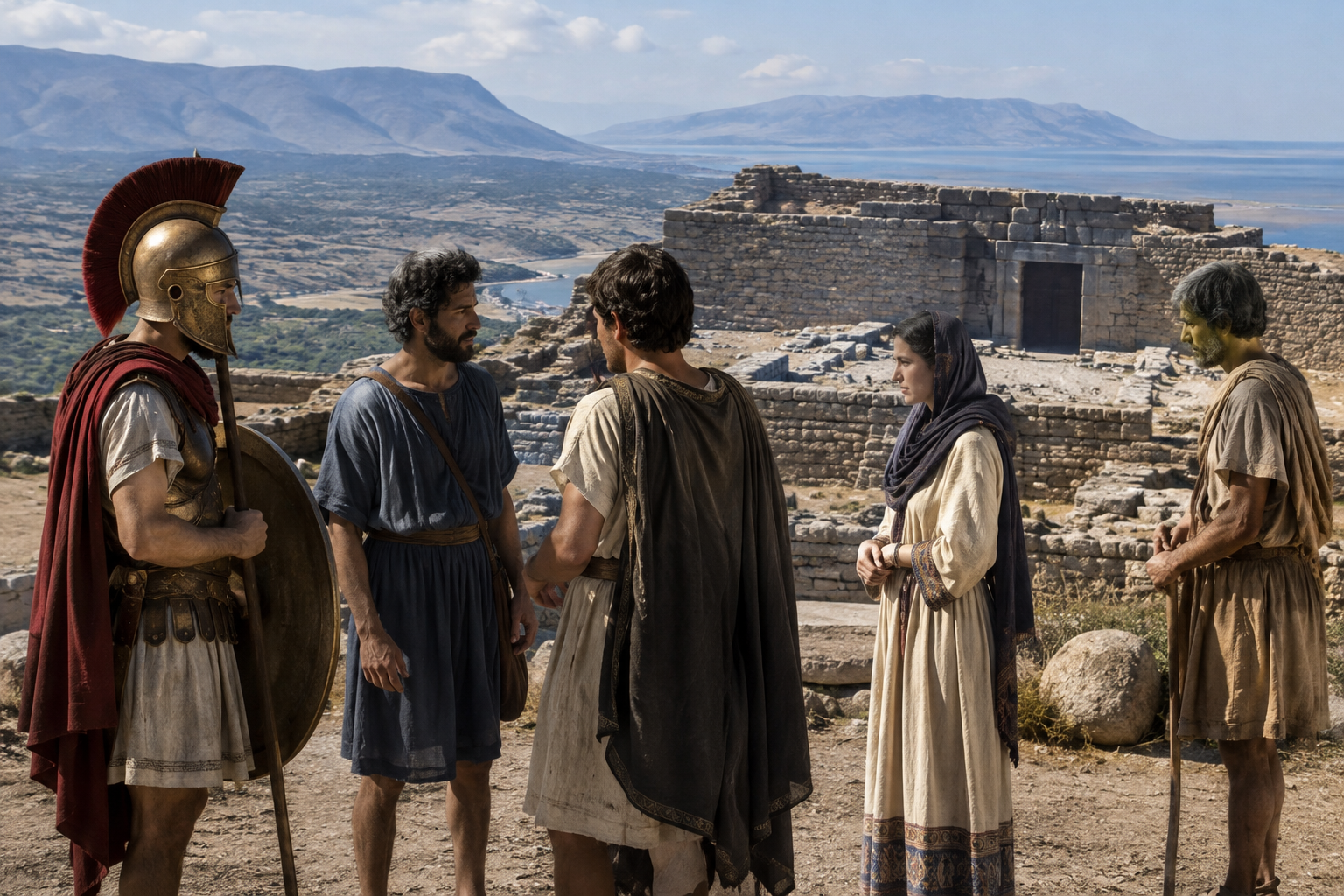
At Dinkha Tepe, in the Hasanlu region of Iron Age Iran, two closely named ancient males stand out in the record: I3911 and I3911x, both dated to around 1500 BC. They matter because they place the Y-DNA branch J1a2a1a2d2b2b2c4b2a - or at least a lineage associated with that very narrow paternal line - in a northern Iranian setting deep in the Bronze-to-Iron Age transition, long before the imperial worlds of Rome or the later dynasties of the Middle East. That is already a useful corrective to simplistic ideas about Y-chromosome history. A paternal branch can be old, mobile, and regionally persistent without belonging to just one people, language, or state.
These Dinkha Tepe men are also a reminder of what Y-DNA does and does not tell us. It follows one direct male line only: father to son to son. It does not sum up a whole person's ancestry. Yet when the same branch appears in several ancient contexts - Iran, the Levantine coast, and an imperial port near Rome - it gives us something genuinely historical to think with: not a mythical founding ancestor, but a line moving through the connected worlds of the ancient Near East and Mediterranean.
Dinkha Tepe lies in a part of northwestern Iran that sat within a busy ancient corridor linking the Iranian plateau, Mesopotamia, Anatolia, and the Caucasus. That makes the appearance of I3911 and I3911x especially interesting. Even without inventing details about their graves, the site's significance is clear enough: this was not a remote cul-de-sac, but a zone where populations, goods, and political influence overlapped for centuries.
For a lineage as specific as J1a2a1a2d2b2b2c4b2a, caution is essential. The broader haplogroup J1 has a much larger history than this one sub-branch, and it would be sloppy to pour all of that older, wider story into this exact label. What the Dinkha Tepe evidence really gives us is a securely ancient foothold for this paternal line in the Iranian world. That fits well with broader archaeogenetic work on long-term regional continuity and change across Iran, including research on ancient populations of the northern plateau and adjacent regions.
There is another point worth stressing. Two similarly labeled individuals from the same site do not automatically prove a dynasty, a household, or even a close family. Ancient DNA often reveals kinship, but kinship has to be demonstrated, not assumed from matching or related male-line markers alone. What we can say is more modest and more useful: this branch was present in Iron Age Iran in a real archaeological population, not merely reconstructed from modern testing.
The next strong cluster comes from Saifi in Lebanon, dated to around 500 BC and tied to the Achaemenid period. Two individuals are listed here: SFI-34, identified with the Achaemenid Empire context, and SFI-44, described as an Egyptian/Canaanite child from the same place and date. This is a wonderfully eastern Mediterranean combination, because it captures the sort of layered human reality that empires produced on the ground. Local communities did not vanish when imperial rule arrived; rather, ports and towns drew together people with different backgrounds, loyalties, and family histories.
If a paternal lineage linked to J1a2a1a2d2b2b2c4b2a appears in this setting, the historical interest is obvious. Saifi sat in a coastal world tied to Phoenician traditions, Persian administration, maritime exchange, and older Levantine population histories. A Y-chromosome branch in such a place cannot be reduced to a single ethnic label. It may reflect local continuity, regional marriage networks, or movement within imperial structures, but the evidence does not let us choose one dramatic explanation over the others.
An ancient DNA study of Mediterranean and Near Eastern-connected populations published in The American Journal of Human Genetics helped establish how much mobility and mixture shaped these historical coastlines. That larger picture matters here. Saifi is not interesting because it gives us a neat answer; it is interesting because it shows this paternal branch in a place where neat answers are the first thing to distrust.
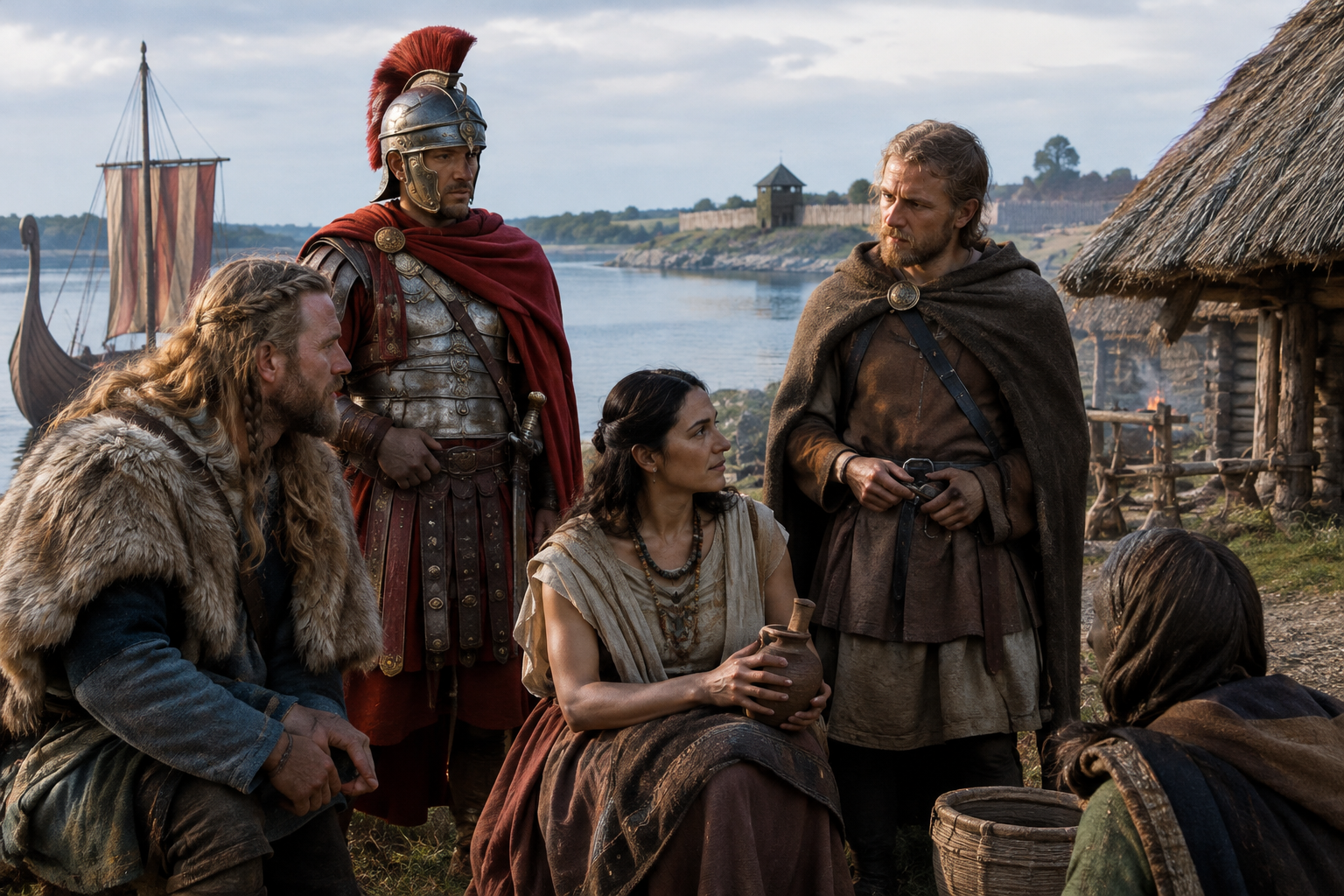
Then the trail reaches Imperial Rome - not the abstract empire of textbooks, but its working maritime edge. Sample R11111 comes from Isola Sacra at Ostia Antica, dated to about AD 200. Ostia was Rome's great port, the place where grain, merchants, sailors, laborers, freedpeople, and officials converged. If you wanted a single site to test how far eastern Mediterranean paternal lines could travel within the Roman world, this would be a good one.
That does not mean R11111 was a recent migrant from Iran or Lebanon, nor that his paternal ancestry can be read as a passport. Roman port populations were famously mixed, and male lines could arrive by many routes: commerce, military service, enslavement, marriage, family relocation, or movements already generations old. Still, the appearance of this branch in Ostia is historically telling. It places the lineage within the cosmopolitan human traffic of the high empire.
Research on Roman-era mobility has repeatedly shown that Italian sites, especially those connected to ports and imperial networks, could contain ancestry with deep roots in the eastern Mediterranean and Near East. A major study in Science explored exactly this kind of complexity in the ancient Mediterranean world. For a branch like J1a2a1a2d2b2b2c4b2a, Ostia is therefore less a final destination than a snapshot of how Roman integration worked at human scale.
Put the evidence together and a pattern emerges, though not a simplistic one. The oldest anchors here are the Dinkha Tepe individuals in Iran, around 1500 BC. By the Achaemenid period, related evidence appears on the Levantine coast at Saifi. By AD 200, the same narrow paternal line is represented in Rome's port environment at Isola Sacra. That is not a straight-line migration tale. It is something more historically plausible: a branch at home in the interconnected belt stretching from the Iranian plateau through the Levant and into the Mediterranean imperial system.
It is also worth noting that the listed samples span very different social and political settings. One belongs to an Iron Age Iranian context, another to an Achaemenid-period Levantine site, another to imperial Rome, and one of the Saifi individuals is explicitly described as Egyptian/Canaanite. That diversity is precisely why the evidence is useful. It warns against turning a paternal branch into a single tribe or nation, while still showing that this male line participated in some of antiquity's most connected regions.
For someone researching J1a2a1a2d2b2b2c4b2a today, the most responsible takeaway is not royal glamour or a single-origin legend. It is that this branch is already visible in ancient individuals from Iran, the Levant, and Roman Italy, across roughly seventeen centuries of history. In other words, it belongs to the real human geography of the ancient Near East and Mediterranean: regions tied together by trade, empire, settlement, and family continuity over very long periods.
That is a solid and rather exciting kind of ancestry. Not because it tells one simple story, but because it places a paternal line inside the busy, multilingual, stubbornly mixed worlds where so much ancient history was actually made.
Comments