Haplogroup J1a2a1a2d2b2b2c3

– 5 min read


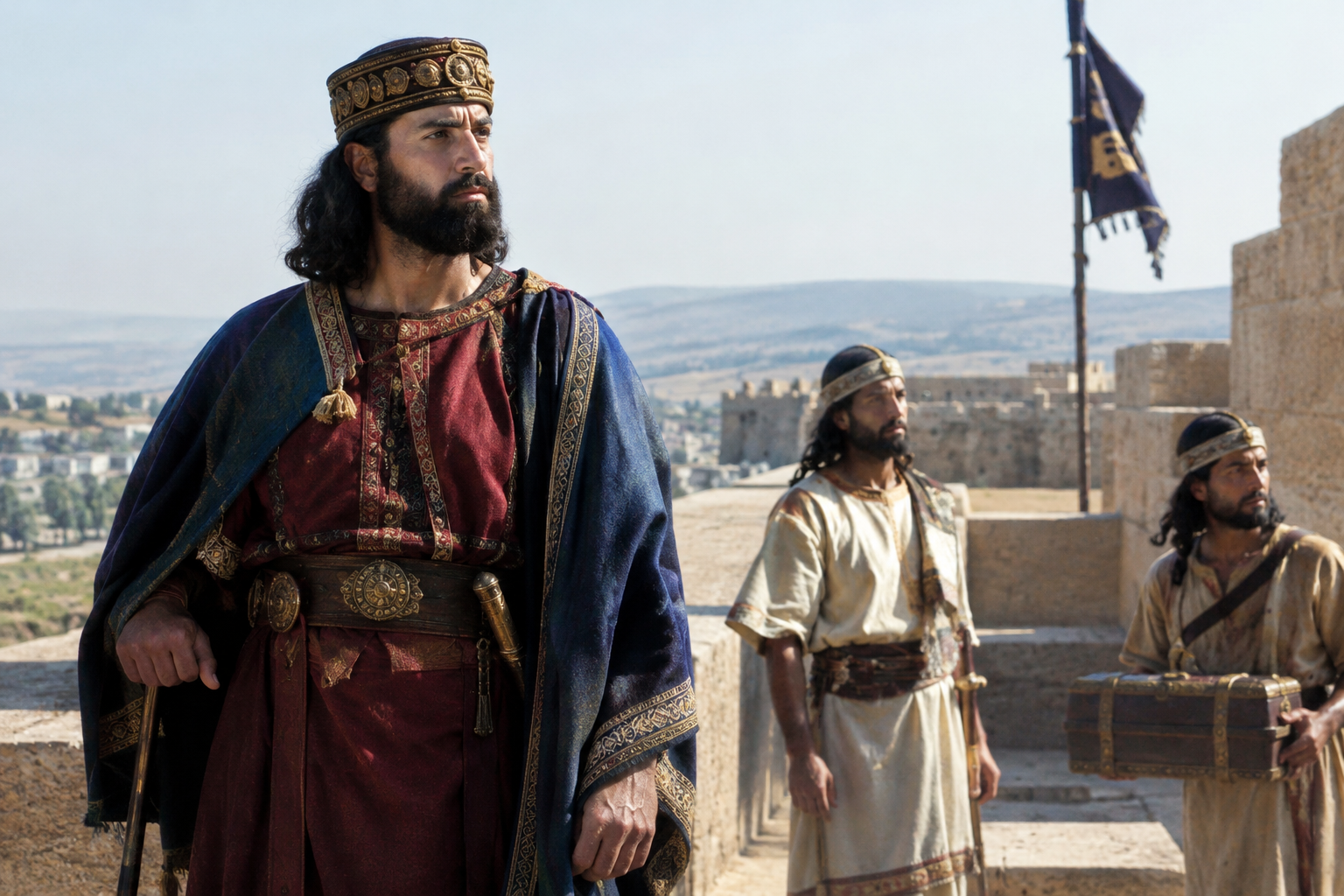
At Alalakh in the Amuq Valley, on the plain between Anatolia and northern Syria, one ancient man brings a very specific Y-chromosome branch into sharp historical focus. The sample ALA001, dated to around 1415 BC and described as an Amorite nobleman, is associated here with the Y-DNA haplogroup J1a2a1a2d2b2b2c3. That is a very narrow paternal label indeed, but the setting is broad and important: a Bronze Age city plugged into the political and commercial world of the eastern Mediterranean.
Alalakh matters because it was not a remote village. It was a courtly, administrative, and diplomatic center, part of a landscape where kings wrote letters, merchants moved goods, and families negotiated power across frontiers. A Y-DNA lineage traces only one direct male line, not a person's whole ancestry or identity, but in a place like Alalakh even one securely placed paternal line can be historically revealing.
The ancient city of Alalakh, usually identified with Tell Atchana, stood in one of the great contact zones of the Middle and Late Bronze Age Near East. Empires, vassal kingdoms, and mobile elites all met here. When a sample such as ALA001 is identified as an Amorite nobleman, the interest lies not in romanticizing a single aristocrat, but in situating a paternal line inside a society that was already politically layered and culturally mixed.
That context is the key to reading haplogroup J1a2a1a2d2b2b2c3 sensibly. We should not project the entire history of broader J1 onto this exact subclade as though they were interchangeable. What we can say is more careful and more interesting: one branch within the wider J1 family was present in an elite Bronze Age Levantine setting, at a city that linked inland Syria, Anatolia, Cyprus, and Mesopotamia.
A major ancient DNA study of the region brought renewed attention to Alalakh's population history and mobility, showing just how useful this site is for understanding movement and continuity in the Bronze Age Near East. The broader research context can be explored in this ancient DNA study of Alalakh and its regional setting.
Bronze and Iron Age Mesopotamia
Elite individuals are never the whole population, but they are often especially informative because they stand at the crossing point of family strategy and long-distance politics. In Late Bronze Age courts, marriages, hostages, envoys, military retainers, and merchants all helped knit regions together. So when a paternal lineage appears in a noble context, it may reflect local continuity, incoming ancestry, or generations of integration into a courtly house.
That is why ALA001 deserves attention even though we should avoid overclaiming from a single sample. He does not prove that all Amorite elites shared one paternal origin, nor does he stand for every inhabitant of Alalakh. What he does show is that the branch represented here by J1a2a1a2d2b2b2c3 had reached, or persisted within, a socially elevated stratum in one of the major cities of second-millennium BC Syria.
The word "Amorite" itself also needs care. In ancient history it can refer to political traditions, naming habits, language affiliations, and ruling families, not simply to a biologically uniform people. That is exactly where ancient DNA is most helpful: it reminds us that historical labels and paternal lineages are related questions, but not the same question.
One of the striking things about Alalakh is its geography. The Amuq Valley sits in a natural corridor joining the northern Levant to southeastern Anatolia and the wider eastern Mediterranean. This was a zone of passage, settlement, and repeated political reorganization over millennia. A paternal line found here could have deep local roots, connections to neighboring inland Syrian populations, or ties shaped by the circulation of elites across kingdoms.
That is particularly important for a lineage as specific as J1a2a1a2d2b2b2c3. Very fine-grained haplogroup labels can tempt us into telling overly neat migration stories, as though one branch must equal one march across a map. Real history is messier. At places like Alalakh, paternal lines were embedded in urban households, courts, and regional networks that had already been interacting for centuries.
Archaeology makes this vivid even without embellishment. Alalakh is known as a major Bronze Age center with palatial and administrative importance, and the city appears in a documentary world of treaties, dynastic politics, and international exchange. The presence of this paternal branch in such a setting places it firmly within the history of complex Levantine societies rather than at the edge of them.
Haplogroup J1 has a long and complicated history across western Asia and adjacent regions, but the article's branch is not "J1 in general." It is J1a2a1a2d2b2b2c3, a much narrower twig on that larger tree. Without a broader set of directly comparable ancient samples assigned to the same terminal branch, it would be rash to claim a single homeland, a fixed ethnic affiliation, or a simple migration route for this exact lineage.
Still, ALA001 gives the branch something immensely valuable: a securely historical anchor. Instead of floating in the abstract world of modern surname projects and phylogenetic charts, this lineage can be placed in a documented Bronze Age urban society. That is often how ancient DNA helps most. It does not solve everything at once, but it turns an anonymous branch into part of a real historical landscape.
For researchers interested in neighboring regions and longer-term population change east of Syria, Mesopotamian ancient DNA has begun to add similar kinds of context, though not necessarily for this exact subclade. That broader backdrop is worth comparing with this discussion of population change in Bronze and Iron Age Mesopotamia.
Readers are often tempted to ask whether a lineage like this is "really" Syrian, Amorite, Mesopotamian, Arabian, or Anatolian. The trouble is that Bronze Age northern Syria does not behave according to our modern national boxes. Alalakh belonged to a world of overlapping identities and political loyalties, where people, goods, and ideas circulated between language zones and royal courts.
So the historical strength of ALA001 is not that he lets us pin J1a2a1a2d2b2b2c3 to one tidy label forever. It is that he shows the branch in a multilingual, internationally connected city at a moment when the Levant was deeply entangled with its neighbors. That makes this lineage part of the lived history of Bronze Age statecraft and urbanism, not merely a distant prehistoric abstraction.
For anyone exploring haplogroup J1a2a1a2d2b2b2c3 today, the most distinctive point is not a legendary ancestor or a sweeping claim of descent from a named people. It is the much firmer fact that this branch is linked here to ALA001, an Amorite nobleman from Alalakh around 1415 BC. That gives the lineage a credible place in the archive of ancient Near Eastern history: a courtly city, a connected frontier, and a paternal line already present in the Bronze Age world of northern Syria.

Comments