Haplogroup J1a2a1a2d2b2b2c

– 6 min read


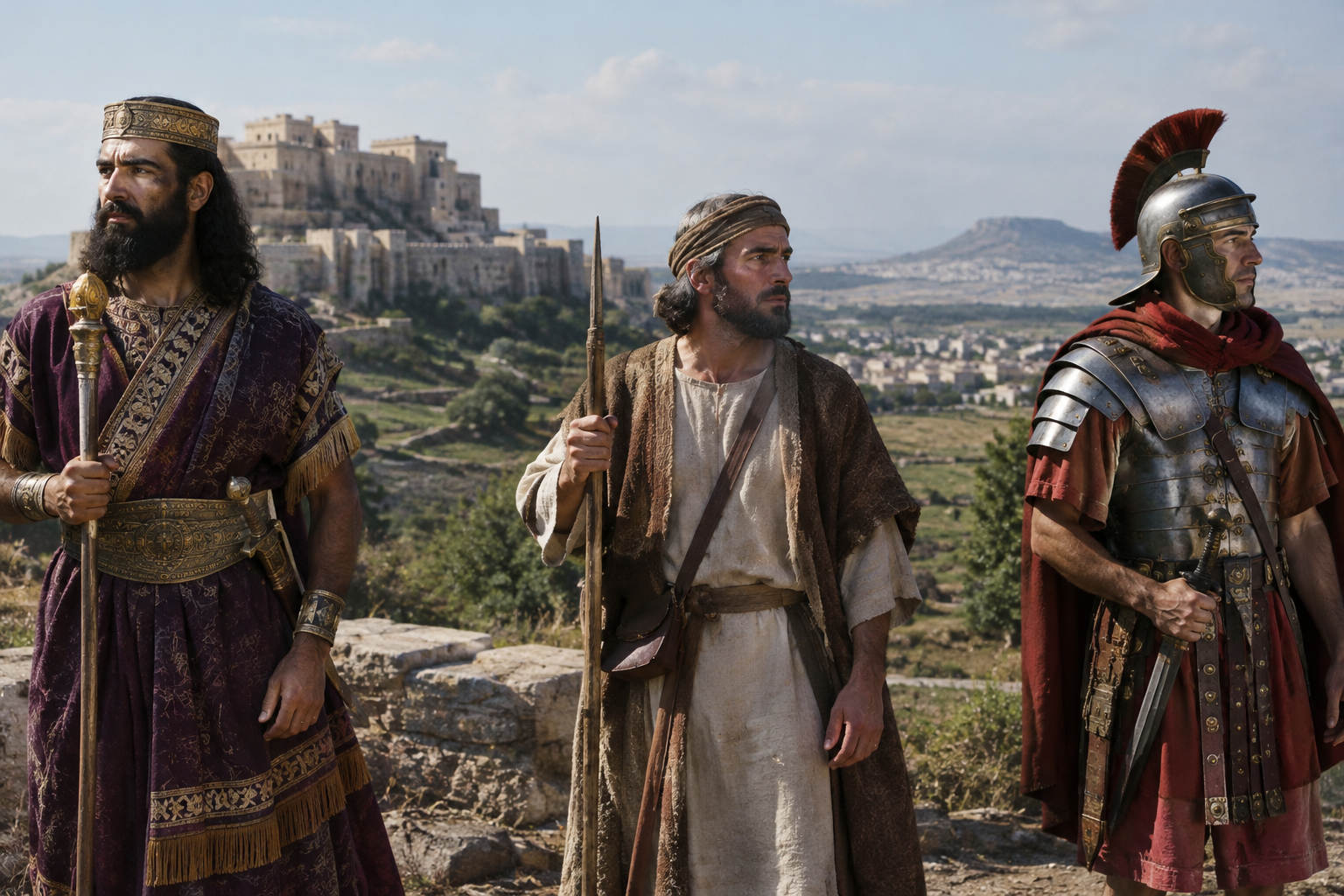
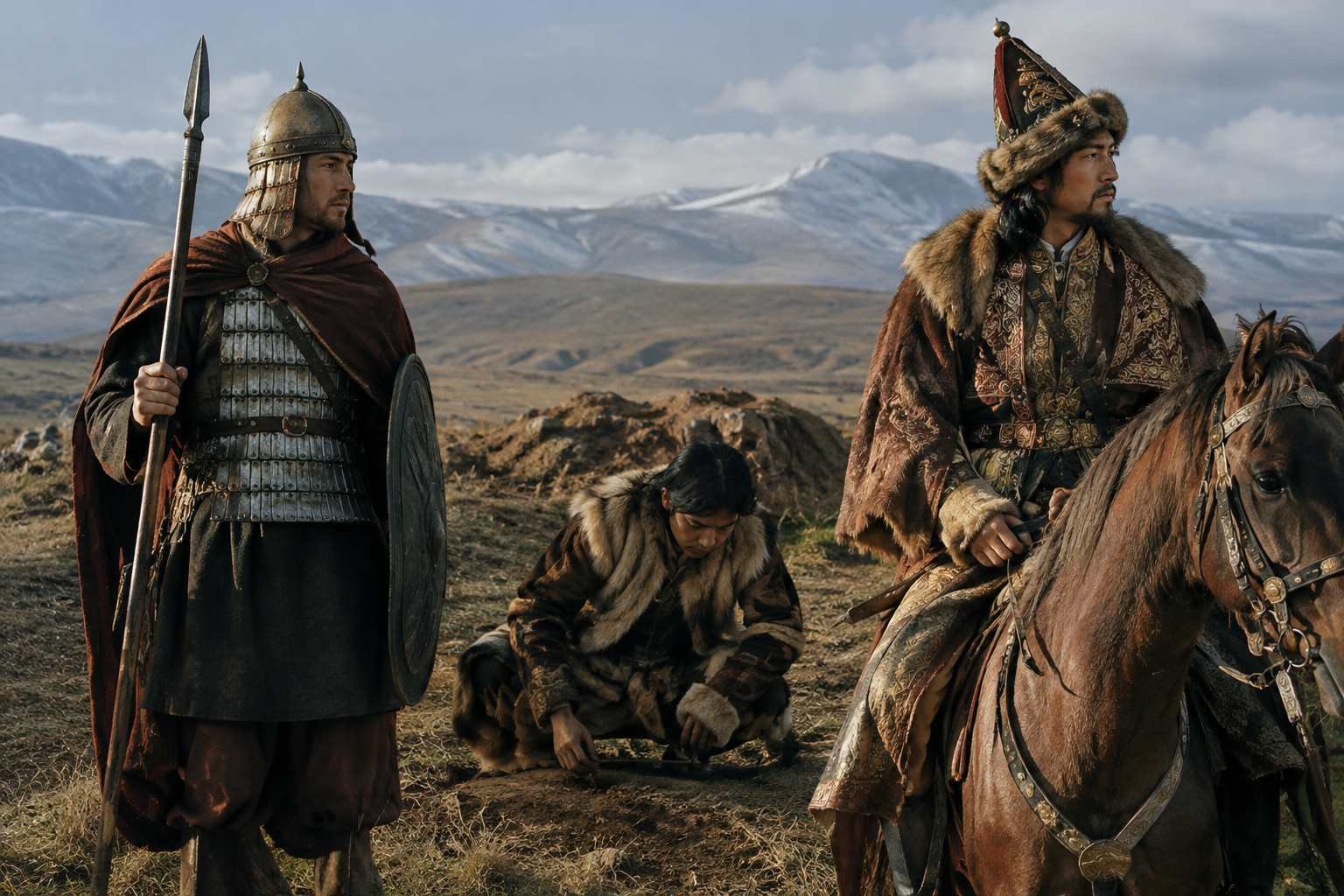
At Alalakh in the Amuq Valley of southern Turkey, one of the most revealing burials from the Late Bronze Age belonged to an elite man now identified as ALA002, dated to around 1443 BC. Alalakh was no backwater. It sat in a world of palaces, diplomacy, scribes, merchants, and constant traffic between Anatolia, northern Syria, and Mesopotamia. When a paternal line connected with haplogroup J1a2a1a2d2b2b2c appears in such a setting, the interest lies not in any fantasy of a single tribe on the move, but in the very real evidence for male-line continuity inside the crowded political landscapes of the ancient Near East.
That is the useful scale for this haplogroup. J1 is a broad and old Y-DNA family with a long history in western Asia, but J1a2a1a2d2b2b2c is a much narrower paternal branch. Y-DNA traces one direct male line only, not a person's whole ancestry, language, or identity. Even so, the ancient samples tied to this branch are striking because they place that line in three very different historical worlds: Late Bronze Age Alalakh, Iron Age Megiddo, and imperial Roman Italy.
ALA002 is the best place to begin because Alalakh is one of those sites where archaeology and history meet in unusually vivid fashion. The city is famous for its palace, administrative archives, and role in the political order of the second millennium BC. An elite burial there is therefore not just an isolated skeleton from a forgotten field. It belongs to a documented regional system in which local rulers, noble households, and international exchange all mattered.
A genetic study of Bronze Age communities from this region, published in Cell, helped show how connected the ancient Near East could be while still preserving local family lines over time. That wider setting matters for J1a2a1a2d2b2b2c. A paternal lineage turning up in a man described as an Amorite nobleman at Alalakh fits a landscape where status, kinship, and political office could all be grounded in enduring local or regional male descent groups, even while marriages and broader ancestry were often more mixed.
It is important not to load too much onto the label "Amorite." In ancient history that word can mean different things in different texts and periods, and it is not identical to a Y-chromosome branch. What the sample does show, more soberly and more usefully, is that a direct paternal line associated here with J1a2a1a2d2b2b2c was present among high-status men in a major Late Bronze Age center of the northern Levant.
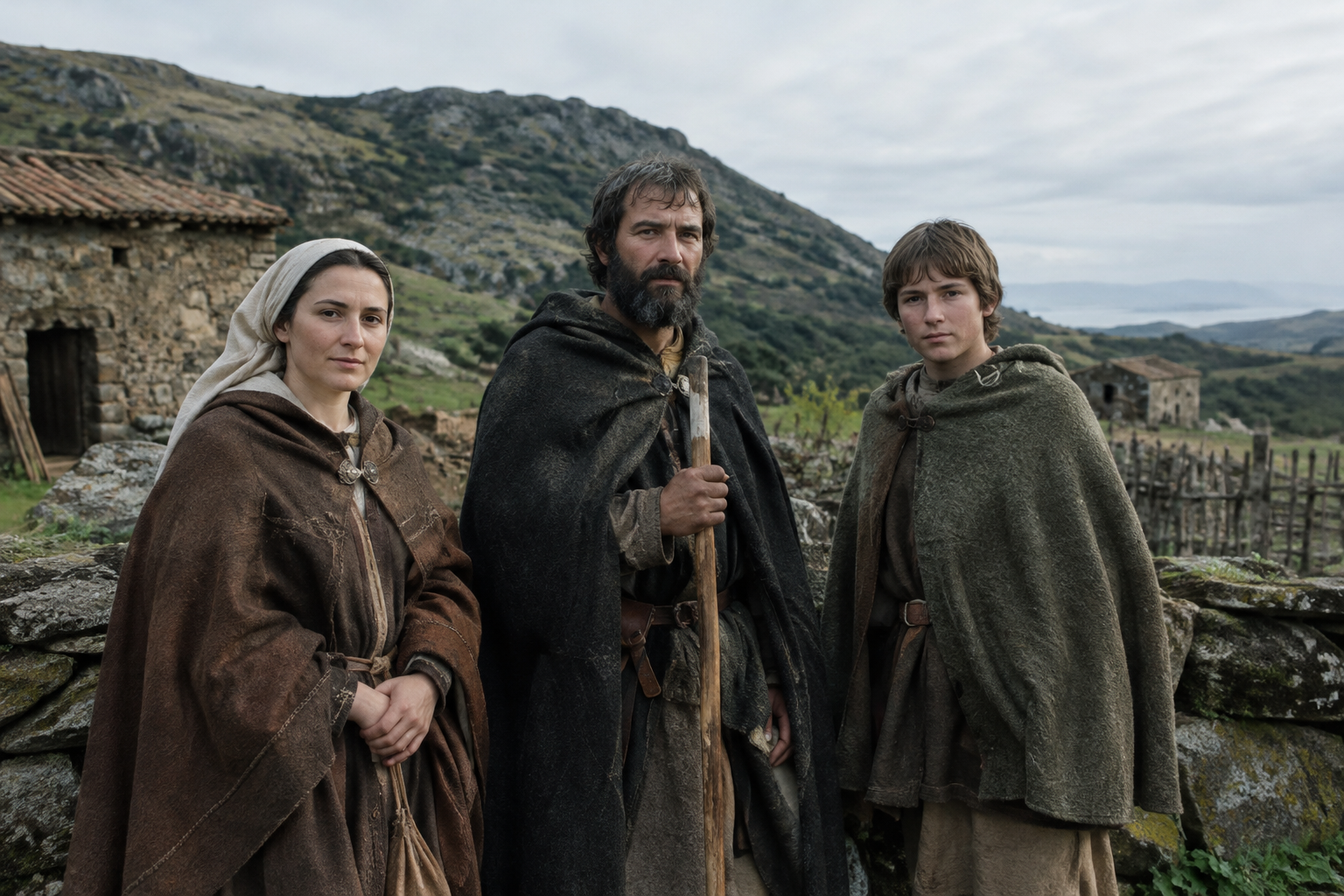
The second key appearance is I4517, an Early Israelite individual from Megiddo, dated to around 1020 BC. Megiddo hardly needs exaggeration. It was one of the great tells of the southern Levant, occupied and rebuilt repeatedly, standing at a strategic junction in a region where Egyptian imperial interests, Canaanite city traditions, and emerging Iron Age polities overlapped.
Here the value of the evidence lies in historical placement. A paternal line associated with J1a2a1a2d2b2b2c appears not only in the northern Levantine palace world of Alalakh centuries earlier, but also in an Iron Age population linked to Megiddo. That does not prove that ALA002 and I4517 belonged to the same close family, nor that one political identity simply became another. It does suggest that this male line belonged to the durable human background of the Levant across the Bronze-to-Iron Age transition.
That transition was anything but simple. Settlement systems changed, states collapsed and re-formed, and later texts would assign peoples and kingdoms to landscapes that had already seen centuries of movement and mixture. The presence of this paternal branch in Early Iron Age Megiddo is therefore less a neat ethnic badge than a reminder that historical change often sits atop deeper biological continuities.
Research on ancient populations of the southern Levant, including work published in Science, has underscored just how entangled the region's ancestry was across the Bronze Age and after. Within that kind of population history, a Y-line such as J1a2a1a2d2b2b2c can persist through major cultural shifts without needing any simplistic one-people, one-lineage story.
Burial History in Ancient Israel
With a branch as specific as J1a2a1a2d2b2b2c, caution is essential. The wider haplogroup J1 has a broad distribution today and in the past, but the article's terminal branch is much narrower than that parent umbrella. Ancient DNA reports often vary in how finely they can resolve a Y chromosome, depending on preservation and sequencing quality, so it is wise to treat very exact subclade assignments carefully unless the evidence is explicit.
Still, the pattern here is historically meaningful. The branch is associated with ancient men from the Levantine and north Syrian world in periods when cities, kingdoms, and imperial systems were deeply interconnected. In plain terms, this does not look like a lineage appearing out of nowhere in one isolated village. It looks like a paternal line at home in the eastern Mediterranean's older urban and post-urban societies.
That is often how Y-DNA becomes most interesting archaeologically. Not as a magic ethnic stamp, but as a thread that can be followed through very different social settings: courtly, regional, and later imperial.
The third ancient individual is R835, from Imperial Rome-era Cluana Ancona, dated to around AD 165. This is a very different world from Alalakh or Megiddo. By the second century AD, the Roman Empire tied together Italy, the Balkans, North Africa, Anatolia, the Levant, and beyond through administration, military service, commerce, slavery, and migration on a scale earlier states could hardly match.
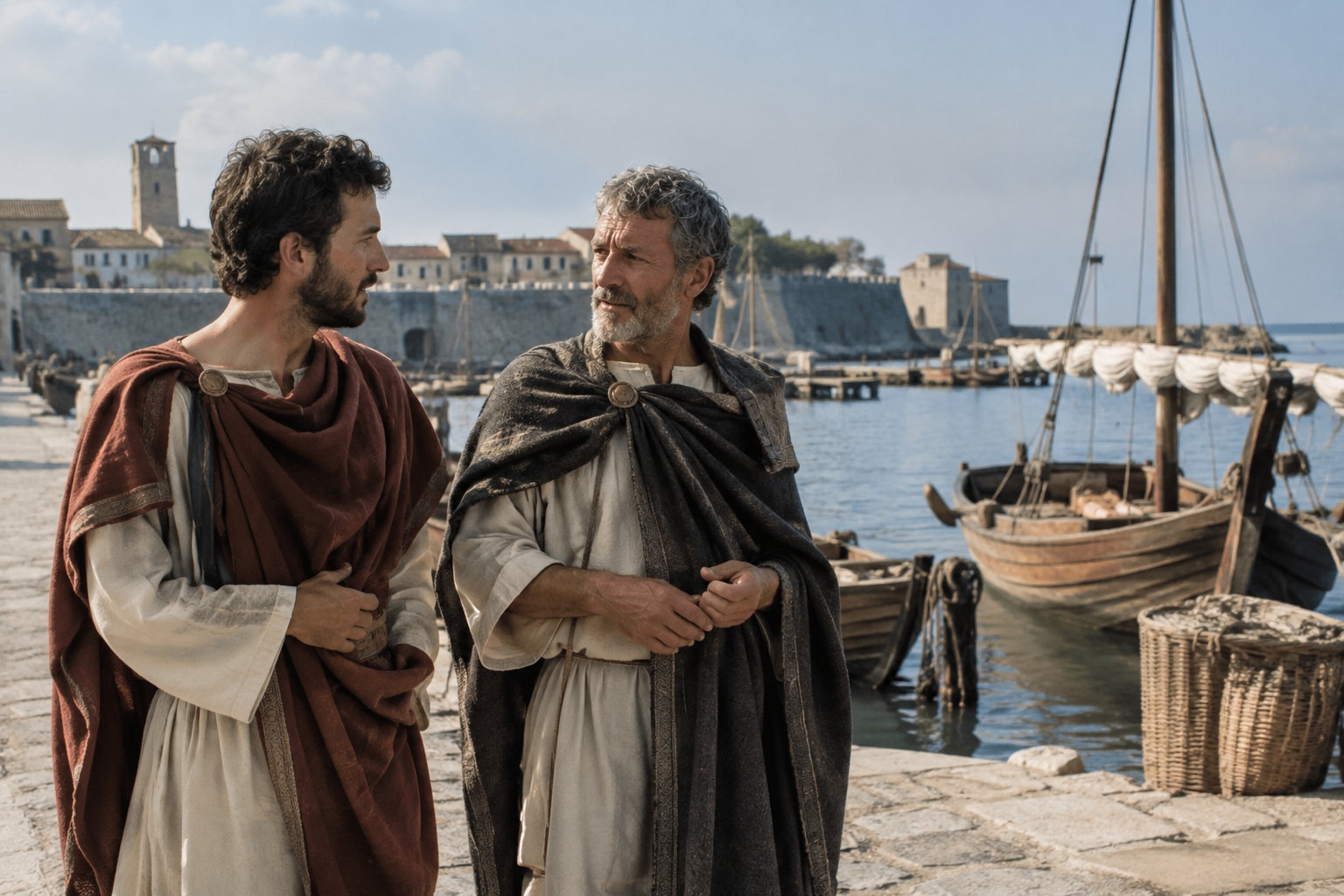
Ancona, on Italy's Adriatic coast, was a port city with long eastern Mediterranean connections. So the appearance of a paternal line associated with J1a2a1a2d2b2b2c in an imperial Roman context is not bizarre at all. On the contrary, it fits a Mediterranean in which people from the east could move westward, settle, marry locally, serve the state, trade across seas, or simply become part of the ordinary population of Roman towns.
What matters here is not the idea of a single uninterrupted family tale from Bronze Age Syria to Roman Italy; the evidence does not allow that. What matters is that the same narrow paternal branch appears in both Levantine contexts and later within the Roman world that absorbed so much eastern Mediterranean mobility into itself. Roman Italy was never biologically sealed. Ancient DNA has repeatedly shown that it was porous, cosmopolitan, and regionally varied.
Many haplogroup articles can easily drift into map-painting: a branch appears here, then there, and the temptation is to turn dots into destiny. The better question is what sort of historical environments these samples actually represent. In this case, all three are linked to places shaped by administration, exchange, and long-distance contact. Alalakh was a palace city in a diplomatic age. Megiddo was a strategic tell in a changing Iron Age Levant. Ancona belonged to a Roman imperial network that made movement routine.
So the standout feature of J1a2a1a2d2b2b2c is not sheer distance. It is social and geographic coherence across important eastern Mediterranean systems. The lineage appears in settings where paternal descent could persist locally, while whole populations were continually reshaped by marriage, trade, conquest, and migration.
For someone exploring this haplogroup today, that is a grounded historical clue. Your direct male line may connect, at deep time depth, to the urban and post-urban societies of the Levant and northern Near East, and to the wider Mediterranean worlds they fed into. That is not a claim of descent from any named ancient nobleman or biblical people. It is something more solid: a plausible placement for one paternal branch within the real human history of the Bronze Age Levant, the Iron Age southern Levant, and the Roman Mediterranean.
If J1a2a1a2d2b2b2c has a distinctive ancient profile, it is this: the branch turns up not in one romanticized origin story, but in a chain of historically consequential places where Near Eastern and Mediterranean lives intersected. ALA002 at Alalakh gives it an elite Late Bronze Age Levantine setting. I4517 at Megiddo carries it into the early Iron Age. R835 at Cluana Ancona shows how such a paternal line could also belong within the mixed populations of the Roman Empire.
That combination makes this haplogroup especially evocative for paternal ancestry research. It suggests a line with deep roots in the Near Eastern world and a later presence in the Mediterranean circuits that connected east and west for centuries.
Comments