Haplogroup I2a1b2a2b

– 5 min read


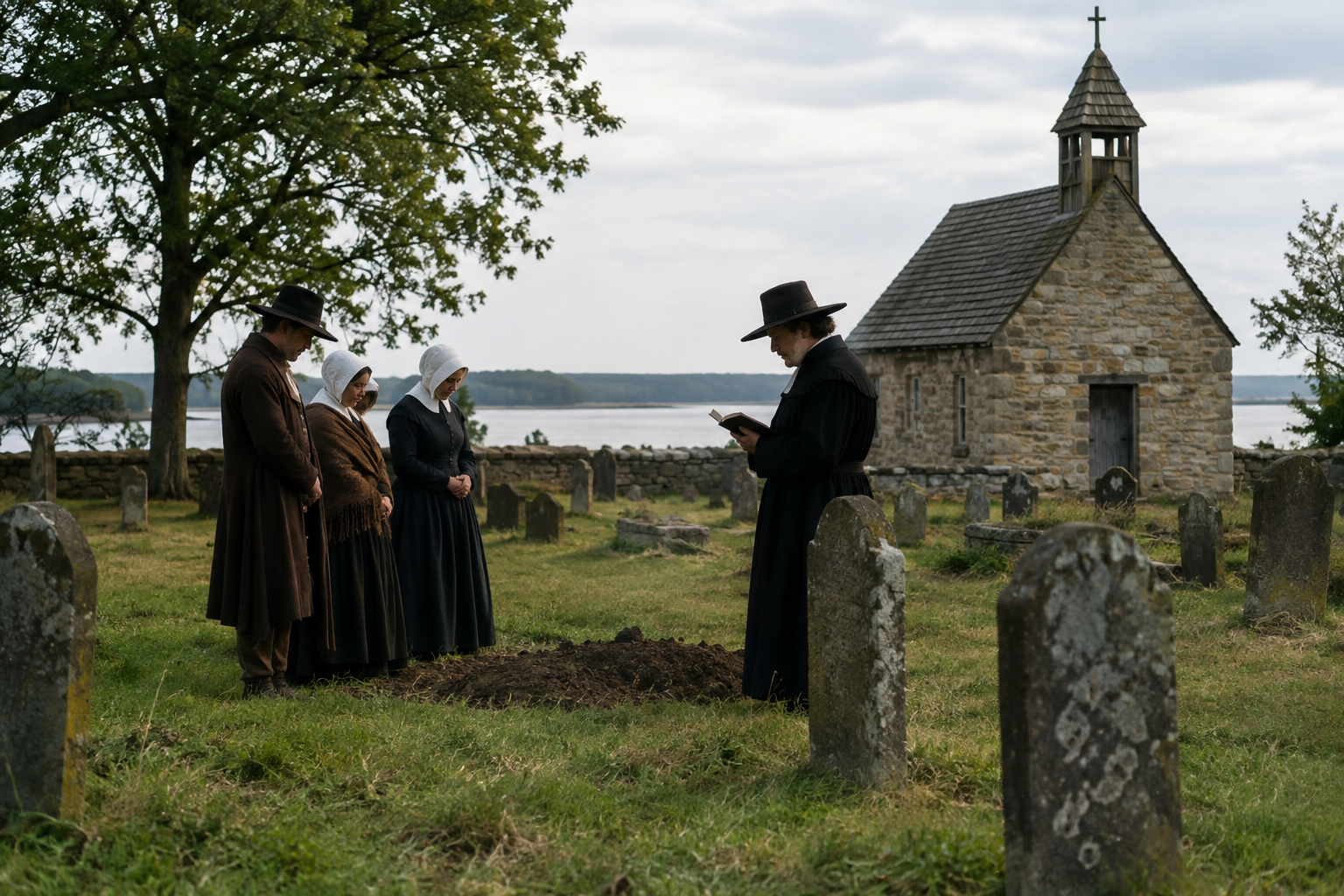
In the chapel field cemetery of Historic St. Mary's City, Maryland, one man buried around 1667 has become an unexpectedly useful guide to haplogroup I2a1b2a2b. He is recorded as sample I15292, and on the face of it this is not a prehistoric warrior, a king, or a legendary founder. He is a colonial-era burial from England's early American world. That is precisely what makes him so interesting: his Y-DNA places a very old European paternal line inside one of the first sustained English settlements in the Chesapeake.
The point is worth making clearly at the start. Y-DNA follows one direct paternal line only - father to son to son - so it is not the same thing as a person's whole ancestry, language, or identity. But when a lineage like I2a1b2a2b appears in a tightly dated archaeological context, it gives us something precious: one firm point where an ancient paternal branch is attached to a real historical community, in this case the fragile, experimental, and deeply unequal society of 17th-century colonial Maryland.
Historic St. Mary's City was the first colonial capital of Maryland, founded in the 1630s. By the later 17th century it was a small but important settlement of chapels, tobacco fields, political offices, servants, laborers, and planters. The chapel field cemetery belongs to that early phase of colonial life, when English institutions were being planted in North American soil, but populations were already becoming more mixed and mobile than old textbook pictures once suggested.
Sample I15292, dated to 1667 AD, belongs in that world. The significance of his association with I2a1b2a2b is not that it proves a single ethnic story, but that it shows this paternal branch was present among the men who helped make up early English colonial society in the Chesapeake. A broader ancient DNA study of St. Mary's City explored precisely this kind of colonial-era ancestry and mixture in the settlement's population; readers can follow that research context in this study of the genetic legacy of 17th-century St. Mary's City.
That colonial setting matters because it shifts the question. With some haplogroups, the temptation is to rush backwards into heroic antiquity. Here, the best documented anchor is much later. We begin not with myth, but with a named archaeological cemetery in early Maryland, and only then ask what sort of European paternal background a line like I2a1b2a2b may represent.
I2a1b2a2b is a narrow branch within the larger Y-DNA haplogroup I, one of the major old paternal lineages of Europe. That larger family has deep roots in European prehistory, but one must be careful here: the history of a vast parent haplogroup is not automatically the history of every one of its later sub-branches. The exact identifier in this article, I2a1b2a2b, is a specific twig on that much older tree.
In practical genealogical terms, branches within I2 today often turn up in different parts of Europe, especially in populations shaped by long local continuity as well as later medieval and early modern movement. For a man buried in colonial Maryland, the most sensible historical frame is therefore not a grand single migration, but the complicated demographic funnel of the British Isles and northwestern Europe feeding people into the Atlantic colonies.
That fits the broader pattern seen in colonial North America. Early settlers were not a biologically uniform "English stock" in any simple sense. They carried lineages accumulated through centuries of movement across Britain, Ireland, the North Sea zone, and the adjacent continent - a background explored from different angles in work on British and North Sea population history.
It is easy to underestimate a single post-medieval skeleton. Yet archaeology is often strongest when it catches ordinary life in a well-defined place. A burial such as I15292 does not stand for all Maryland colonists, still less for all bearers of I2a1b2a2b. But he does show that this paternal line was part of the human reality of a settlement usually described through charters, governors, tobacco exports, and religious politics.
That is one of the quiet revolutions of ancient DNA. It lets us put biological kinship and ancestry back beside the paper archive, especially in periods where written records are selective and socially skewed. Men of middling or low status can disappear almost completely from documents while surviving, unexpectedly, in bone and tooth.
In the Chesapeake world, that matters enormously. Colonial populations were made through migration, coercion, labor contracts, disease, and unequal access to land. Genetic evidence cannot flatten those experiences into one story, but it can restore some of the missing population texture. A branch like I2a1b2a2b enters the record here not as an abstraction, but as the paternal signature of a man buried in a colonial cemetery tied to one of English America's earliest capitals.
If we step back from the individual grave, the historical setting of 1667 offers a plausible social route for this lineage. By the mid-17th century, Maryland was drawing people from England and, indirectly or directly, from the wider archipelago and nearby continental regions. Some arrived with property, some as indentured servants, some through family networks, and some through much harsher systems of labor and dependency.
That is the right scale on which to think about I2a1b2a2b in this context. Not as "the colonial haplogroup," and not as proof of one tribe or people, but as one paternal line among the many threads woven into early modern Atlantic expansion. Research on early medieval and later British population formation has repeatedly shown that lineages circulated through communities shaped by migration, language shift, conquest, and local survival rather than simple replacement.
That broader caution is especially useful with a lineage in haplogroup I. Because the parent haplogroup is old in Europe, readers are sometimes tempted to leap straight from a modern or colonial sample to Mesolithic foragers, Iron Age tribes, or named medieval peoples. History is rarely so obliging. Between deep prehistory and a Maryland grave of 1667 stand millennia of demographic change, including Roman, post-Roman, medieval, and early modern reshaping of European populations.
Roman and early medieval Britain
There is also a methodological lesson here. When ancient DNA from famous prehistoric cemeteries is discussed, readers expect big questions about migration and origins. But colonial cemeteries ask different, equally important questions: who was actually present, how mixed were these communities, and how far do documentary labels match biological histories?
St. Mary's City is an especially good place to ask them because it sits at the intersection of archaeology, written history, and early Atlantic mobility. The cemetery does not merely supply a Y-DNA label. It helps place I2a1b2a2b in a lived environment of chapel burial, colonial settlement, and transoceanic movement. That is a much richer frame than a bare haplogroup map.
It also reminds us that early American populations were assembled quickly, but not from nowhere. Their paternal lines had already passed through long European histories. Some were common and widespread, others more localized, but all arrived in the colonies carrying older demographic stories that archaeology is only beginning to resolve.
For someone researching haplogroup I2a1b2a2b, the most solid lesson from sample I15292 is not a romantic origin tale but a documented historical foothold. This branch was present in a man buried at 17th-century St. Mary's City, linking the lineage to the real population history of the early Chesapeake. In other words, I2a1b2a2b belongs not only to Europe's deeper paternal past, but also to the very human story of Atlantic colonization, settlement, and survival in one of colonial America's first capitals.


Comments