Haplogroup I2a1b1a2b1a2a2

– 5 min read


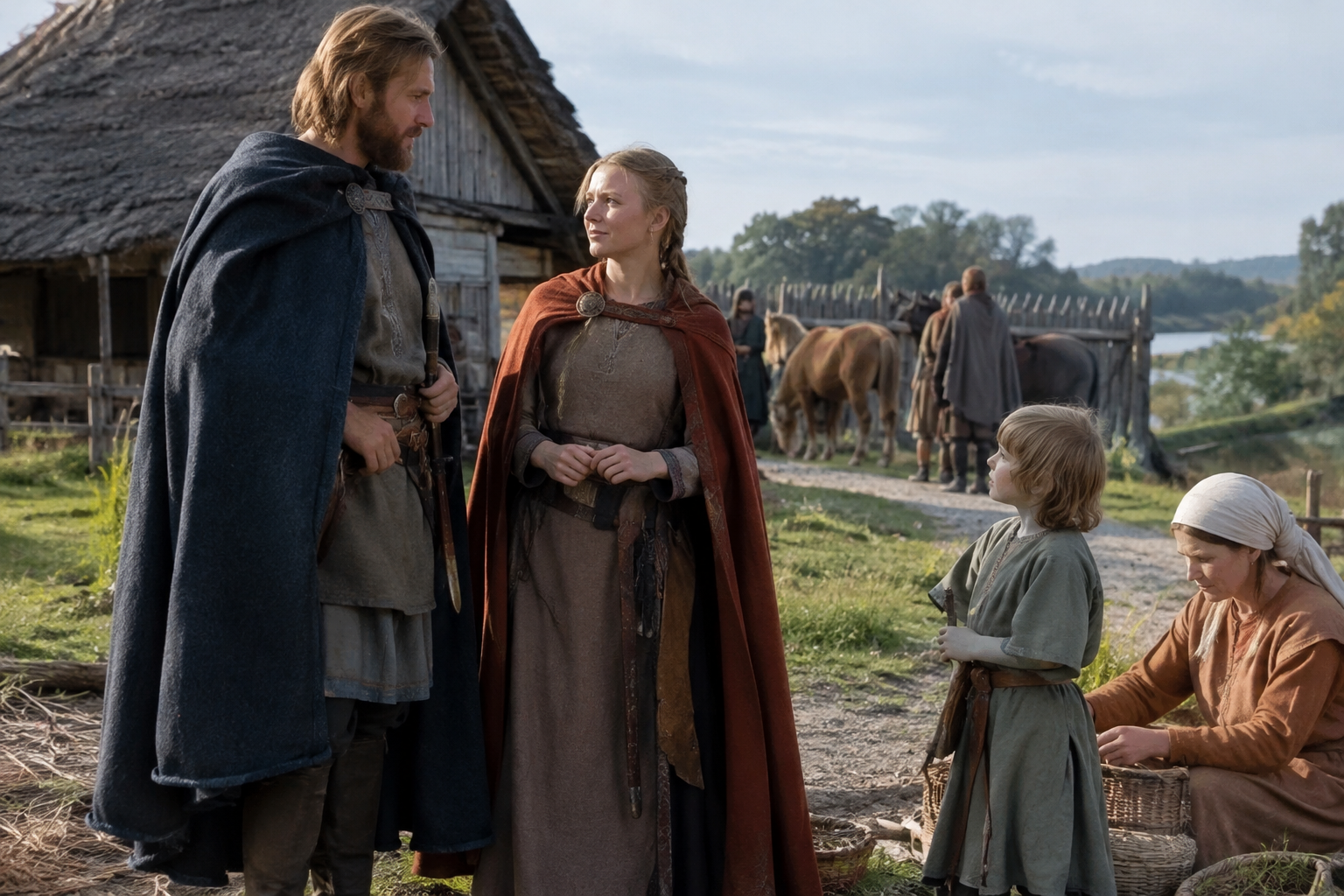
At Altheim in Bavaria, one man buried in the Merovingian period around AD 600 has become a small but telling witness to early medieval paternal history. He is recorded simply as Alh_80, from Altheim, Germany. The Y-DNA lineage associated with him is I2a1b1a2b1a2a2, a very specific branch inside the wider I2 family: the sort of detail that matters because it narrows the paternal story from a broad European lineage to one much more particular.
That may sound very technical, but the historical setting is anything but dry. Bavaria in the sixth and seventh centuries was not a sealed ethnic box. It was a frontier world after Rome, shaped by local continuity, new political identities, Christianization, and movement across the old imperial borderlands. A single Y-chromosome cannot tell us everything about Alh_80 as a person, but it does give one clear line of descent: his direct paternal line. In that sense, I2a1b1a2b1a2a2 places him inside the lived population of early medieval southern Germany, where older European male lineages continued into a new political age.
The most secure starting point here is the site itself. Altheim belongs to Merovingian-period Bavaria, a landscape of villages, church foundations, cemeteries, and local elites emerging in the centuries after the western Roman Empire. By around AD 600, this was a region tied into the Frankish sphere but still very much its own world, with Bavarian identities taking shape through law, kinship, burial custom, and landholding.
In that setting, Alh_80 is valuable precisely because he is ordinary enough to be historically useful. Ancient DNA studies can be tempted by kings and spectacular graves, but most of the real population story lies with people like this: individuals whose burials help show which paternal lines were actually present on the ground. The association of Alh_80 with I2a1b1a2b1a2a2 suggests that this branch was part of the male landscape of Merovingian Bavaria, rather than something visible only in much earlier prehistory or in modern test results.
Research on early medieval populations has increasingly shown that post-Roman Europe was made up of both mobility and persistence. A recent ancient DNA study on this broader period and region, published in Nature, fits into that larger effort to understand how communities in the centuries around AD 400 to 700 were formed from local roots and wider connections.
The haplogroup in this article is not simply "I2" in general. It is I2a1b1a2b1a2a2, a much narrower downstream branch. That distinction matters. The wider I2 clade has a deep and complicated history in Europe, appearing in different forms across many regions and periods, from Mesolithic hunter-gatherers onward. But it would be careless to pour all of that vast backstory directly into this one subclade without sample-by-sample evidence.
What can be said more safely is that Alh_80 shows this paternal branch in early medieval Bavaria, in a world where communities were neither genetically uniform nor wholly replaced by migration-period newcomers. Y-DNA tracks one direct male line only: father to father to father. It does not define a person's entire ancestry, social identity, language, or legal status. Still, because surnames and dynasties came much later than many of these lineages, such a paternal marker can preserve remarkable continuity beneath changing political labels.
Bavaria is an especially interesting place to find a branch like I2a1b1a2b1a2a2 because early medieval southern Germany sat between several historical zones at once. To the south lay the Alpine world and former Roman provinces; to the west, the Frankish realms; to the east, routes toward the Danube and central Europe. This was not an isolated backwater. It was a contact region where ancestry from older local populations could sit alongside lineages linked with migration-period movement.
That is one reason a single Bavarian sample can matter more than its brevity suggests. A Y-line found in a Merovingian cemetery reminds us that the making of medieval Europe was not just a matter of one people replacing another. It involved absorption, intermarriage, local survival, and new loyalties built on older populations. In practical terms, if you carry a branch close to I2a1b1a2b1a2a2 today, Alh_80 offers evidence that men from your paternal line, or a neighboring branch, were present in the social world of early medieval Bavaria around AD 600.
One of the most misleading habits in popular history is to speak of the early Middle Ages as if whole populations moved under a single tribal label. Archaeology and genetics keep complicating that picture. Cemeteries assigned to broad historical periods such as "Merovingian" can contain people of varied ancestry, and yet they were living together within the same local communities and institutions.
That is the larger significance of Alh_80. His lineage does not need to belong to a famous royal house to be historically important. Instead, it helps document how male lines persisted within the communities that built early medieval Bavaria. The Merovingian period is often framed through kings, bishops, and law codes, but the demographic foundations of that world were laid by thousands of men and women in settlements and cemeteries like Altheim.
Seen this way, I2a1b1a2b1a2a2 is less a badge of conquest than a clue to continuity within change. The region was politically transformed after Rome, but not emptied and repopulated from scratch. Paternal branches already rooted in Europe could be carried forward into new Christian and post-Roman societies, where identities shifted faster than chromosomes did.
For MyTrueAncestry users, the attraction of a lineage like I2a1b1a2b1a2a2 is not that it produces a neat heroic tale. In fact, the opposite is true. Its value lies in anchoring a paternal line to a real person in a real archaeological setting: Alh_80, at Altheim, in Merovingian Bavaria, around AD 600. That is a modest claim, but a solid one.
It also gives helpful historical context. If your paternal line falls on or near this branch, the ancient evidence currently points toward participation in the population history of central Europe, and specifically in the post-Roman societies of the Bavarian region. That does not prove descent from this individual, nor from any named tribe or noble line. What it does offer is something better than fantasy: a documented foothold in the early medieval world.
Alh_80 is only one man, and I2a1b1a2b1a2a2 is only one paternal thread. Yet that thread runs through a highly revealing period: the centuries when Roman provinces gave way to medieval kingdoms and local populations were folded into new political worlds. In that transition, this haplogroup appears not as an abstraction but as a lived male line in Merovingian Bavaria.
For anyone exploring this branch today, that is the most responsible and interesting takeaway. Your Y-DNA does not tell the whole story of your ancestry, but it can place one direct paternal line inside a genuine archaeological landscape. Here, that landscape is early medieval Altheim: a Bavarian community where older European lineages endured into a new age.



Comments