Haplogroup I2a1a2b2
– 5 min read


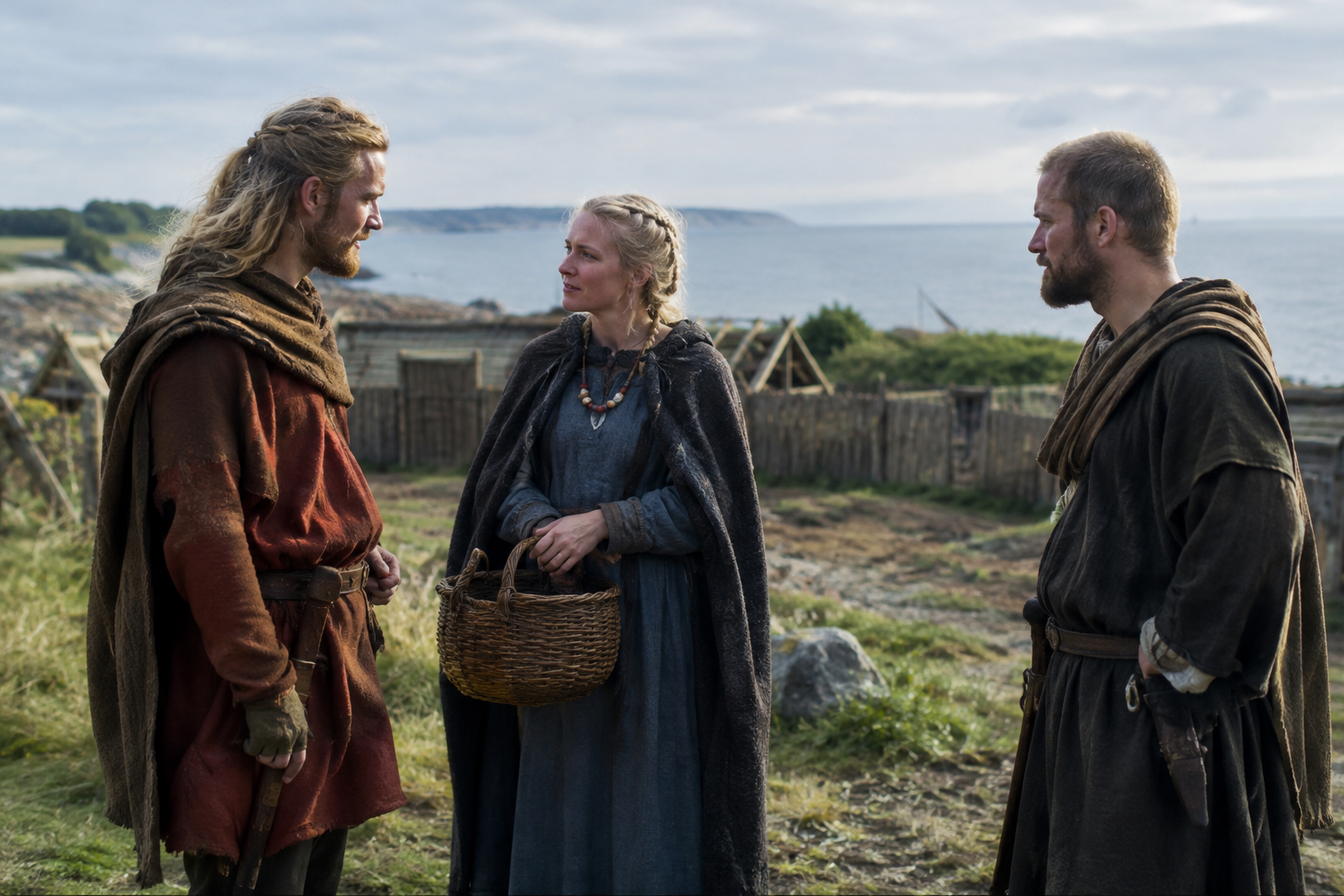
On Bornholm, the Danish island set in the Baltic between Scandinavia and the southern coasts, one man from Slusegard has become a useful anchor for thinking about Y-DNA haplogroup I2a1a2b2. The sample, CGG106750, is dated to around AD 275, in the Iron Age, and it matters precisely because it is not some legendary king or saga hero. It is an ordinary ancient individual from a real burial landscape, living in a period when the Baltic was already a zone of movement, exchange, and local continuity.
He is not alone. Another reported match to this branch, CGG105934, comes from Skane at Trelleborg in southern Sweden, also dated to around AD 275, in the pre-Vendel Iron Age. Taken together, these two finds place the haplogroup in a very specific world: southern Scandinavia in the later Roman Iron Age, before the Viking Age and before the better-known medieval dynasties. That is the real interest of I2a1a2b2 here. It appears not as a grand imperial signature, but as part of the paternal landscape of communities facing the Baltic.
Y-DNA tracks one line only: father to son across many generations. So when we talk about I2a1a2b2, we are talking about one narrow paternal branch, not the total ancestry, language, or identity of the men who carried it. A man with this Y-lineage could still have had most of his ancestors from many other lines, as indeed all ancient and modern people do.
The wider haplogroup I is one of the deep old European paternal families, with various branches appearing across different regions and periods. But one must be careful here. The presence of I2a1a2b2 in these two Scandinavian Iron Age individuals does not mean the whole history of haplogroup I can simply be poured into this subclade. What we can say, more modestly and more usefully, is that this particular branch is attested in southern Scandinavian contexts around the third century AD.
Bornholm is one of those places archaeologists love because it sits at a crossroads without needing to be a capital. It is an island, yes, but hardly isolated. Positioned in the Baltic, it had long been tied into maritime contacts linking Denmark, southern Sweden, and lands farther south along the sea routes that connected northern Europe to the Roman world indirectly through trade.
The individual CGG106750 from Slusegard belongs in that setting. Even with sparse public detail, the site itself matters. A burial from Bornholm in the later Iron Age is evidence from a lived community at the edge of multiple contact zones, where local traditions and wider regional networks met. If I2a1a2b2 appears there, it suggests that this paternal branch was part of the ordinary demographic fabric of Baltic-facing Scandinavia, not some late or accidental intrusion.
That point is easy to miss when people think only in terms of famous migration eras. The third century AD was already dynamic. Southern Scandinavia was not waiting passively for the Vendel or Viking periods to begin; it was already full of local societies with their own histories, connections, and inherited male lines.
Denmark's deeper DNA background
The second ancient individual, CGG105934, comes from Skane, the southernmost part of present-day Sweden, at Trelleborg, again around AD 275. Today we often sort Denmark and Sweden into neat national boxes, but that is a very modern habit. In the Iron Age, the western Baltic and the Oresund region formed a connected human landscape in which coasts, islands, and short sea crossings linked communities as much as they separated them.
That makes the pairing of Bornholm and Skane especially interesting. We are not looking at a single isolated paternal line from one graveyard. We are looking at the same haplogroup appearing on both sides of the southern Scandinavian seaways at roughly the same time. This does not prove close kinship between the two men, nor does it establish a local dynasty. But it does make I2a1a2b2 look like a real regional presence rather than a one-off curiosity.
In historical terms, this is the world often called the Roman Iron Age in Scandinavia: a period when Roman goods and influences reached the north, but local societies remained unmistakably their own. People in Skane and Bornholm were not Romans, yet they were not cut off from the larger European story either. Their paternal lineages, including I2a1a2b2, belonged to this northern zone of continuity and contact.
The dating of both individuals to around AD 275 is one of the most striking features of the evidence. This is a period before the better-known political formations of early medieval Scandinavia, and well before written sources begin saying much of value about the region's internal populations. Ancient DNA therefore gives us a rare kind of evidence: not retrospective legend, but biological traces from actual men who lived in that earlier landscape.
It also means that I2a1a2b2 is visible in southern Scandinavia before the famous transformations of the first millennium's later centuries. When later societies formed, with new elites, stronger kingdoms, and eventually Viking expansion, they did so on top of older local population structures. These two individuals hint that one strand of those structures included this paternal branch.
A broader ancient DNA investigation of Scandinavian populations has been circulating in preprint form at this research publication. Even without overstating what any one paper proves, work of this kind is helping place individual burials like those from Bornholm and Skane into a fuller regional genetic picture.
Baltic connections in the north
There is a persistent temptation in popular history to treat pre-Viking Scandinavia as a sort of dim prologue, waiting for longships and saga names to arrive. Archaeology tells a more sensible story. Communities in Denmark and southern Sweden had long-established settlement systems, exchange networks, burial customs, and local identities centuries before the Viking Age.
The two I2a1a2b2-linked individuals fit neatly into that older Scandinavian world. Their value lies less in glamour than in placement. They show that this paternal line was already embedded in southern Scandinavian populations in late Iron Age settings, in an area that would later become central to medieval Nordic history.
And there is another point worth stressing. These are coastal and island-facing contexts. That matters because the Baltic was not a barrier but a medium. A lineage found in Bornholm and Skane belongs to a maritime region where movement could be regular, seasonal, and local, not always some dramatic migration from far away. Ancient DNA is at its most useful when it helps us recover those quieter patterns.
For a present-day man whose paternal line falls under I2a1a2b2, the most grounded takeaway is not a fantasy of named kings, but a connection to an attested male lineage in southern Scandinavia during the Iron Age. CGG106750 on Bornholm and CGG105934 in Skane show this branch in real communities around the western Baltic at about AD 275. That makes I2a1a2b2 a lineage with a documented place in the pre-Viking north: local, maritime, and older than the dynasties that later dominate written history.
Comments