Haplogroup I2a1a2b1a1a

– 6 min read


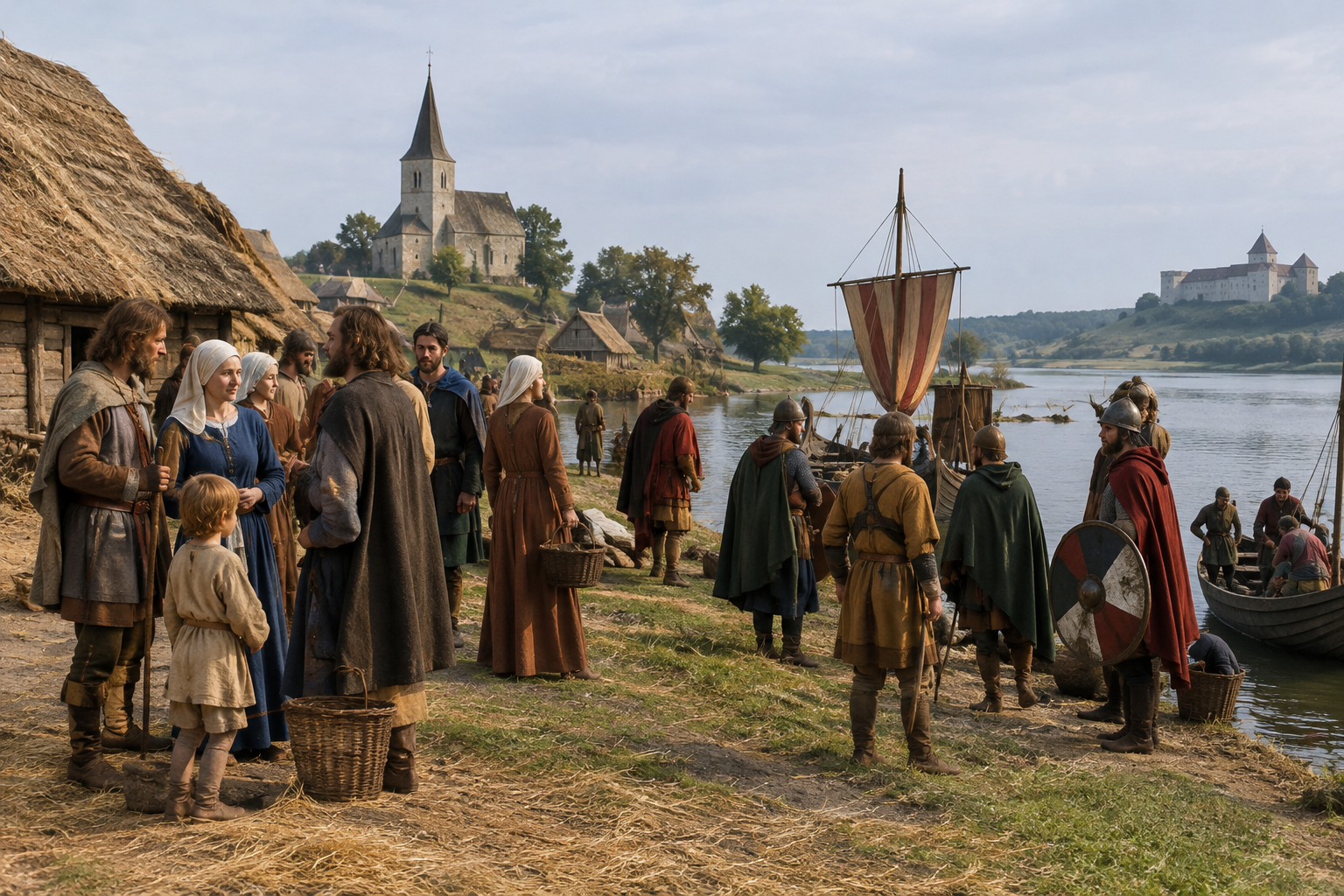
Some Y-DNA haplogroups arrive in the record with trumpets. Others appear more quietly, in churchyards, riverine settlements, frontier villages, and cemeteries where the dead tell us, if not a grand national saga, then something often more interesting: how paternal lines actually moved through lived history. Haplogroup I2a1a2b1a1a belongs to that second category.
This is a very specific branch within the wider Y-chromosome tree, and that matters. Y-DNA tracks a direct paternal line only - father to son to son over many generations. It does not describe a person's whole ancestry, culture, language, or identity. Still, when a narrow branch like I2a1a2b1a1a appears across medieval Croatia, Hungary, Austria, Thuringia, Denmark, and later Belgium, it gives us a valuable window into male-line continuity, migration, and settlement across central and southeastern Europe.
Broadly speaking, haplogroup I is one of the old European Y-chromosome lineages, with deep roots on the continent long before the medieval period. But one must be careful here: the full prehistory of haplogroup I cannot simply be pasted onto a narrow branch such as I2a1a2b1a1a. What we can say responsibly is that this lineage belongs to a wider paternal family long associated with Europe, and that its currently supplied ancient matches place it firmly in the medieval world of Slavic expansion, frontier settlement, and regional mixing.
The supplied ancient samples suggest a branch that was present in zones where the Balkans, the Carpathian Basin, and central Europe overlapped politically and culturally. That is an important historical landscape: not neat ethnic boxes, but marching routes, mixed villages, converted strongholds, and contested borders. In other words, exactly the sort of places where Y-DNA becomes historically interesting.
The strongest pattern in the supplied evidence is not prehistoric but early medieval. Several of the most revealing individuals come from areas connected with Slavic settlement and post-Roman political change.
At Velim-Velistak in Croatia, four early medieval individuals dated to 750 AD - VEM018, VEM052, VEM001, and VEM007 - place this paternal line in the eastern Adriatic world at a formative moment. This was a period when the old Roman order had long since fragmented and new local societies were taking shape. These Croatian finds do not prove that every bearer of this haplogroup was "Croatian" in any simple sense, but they do show that the lineage was established in a South Slavic setting by the 8th century.
A closely related geographical signal appears in CGG021918, from Kiskundorozsma in Hungary, dated to 797 AD and described as South Slavic Migration Period Hungary. That is a particularly telling label. It places this paternal branch in the movement of people north and west of the Balkans into the Carpathian Basin, a reminder that medieval Hungary was never a sealed container but a contact zone drawing in different communities.
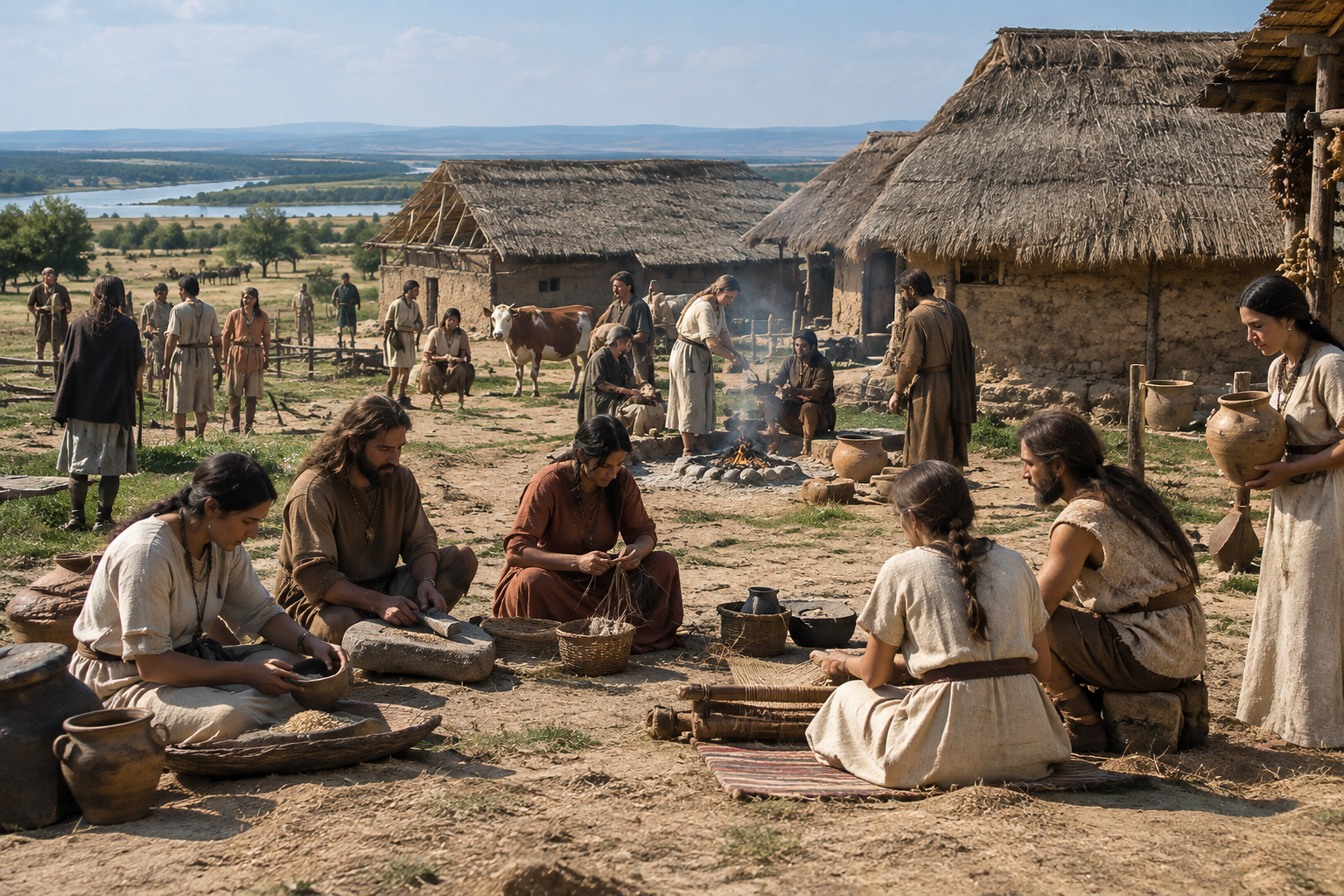
Then there is GAT004a, from the Medieval Austria Gars-Thunau Riverine Settlement, dated to 900 AD. Riverine settlements are exactly the kind of places one would expect to find mixed populations: traders, farmers, craftsmen, soldiers, and families living along communication routes. The presence of this lineage there hints that what we see in the Balkans did not stay in the Balkans.
By the 11th century the picture sharpens further in Thuringia. At Obermoellern in Germany, four individuals - OBM045, OBM043, OBM029, and OBM031, all dated to 1050 AD - are explicitly associated with Western Slav settlers. This is one of the most historically useful clusters in the whole dataset. It shows the branch in a settlement context tied to Slavic communities in what is now central Germany, reflecting the complicated medieval history of the Elbe-Saale frontier, where German expansion and Slavic settlement overlapped rather than replaced one another overnight.
If that were the whole story, one might be tempted to label I2a1a2b1a1a as simply a "Slavic" paternal line. But ancient DNA is often most useful precisely when it stops us being too tidy.
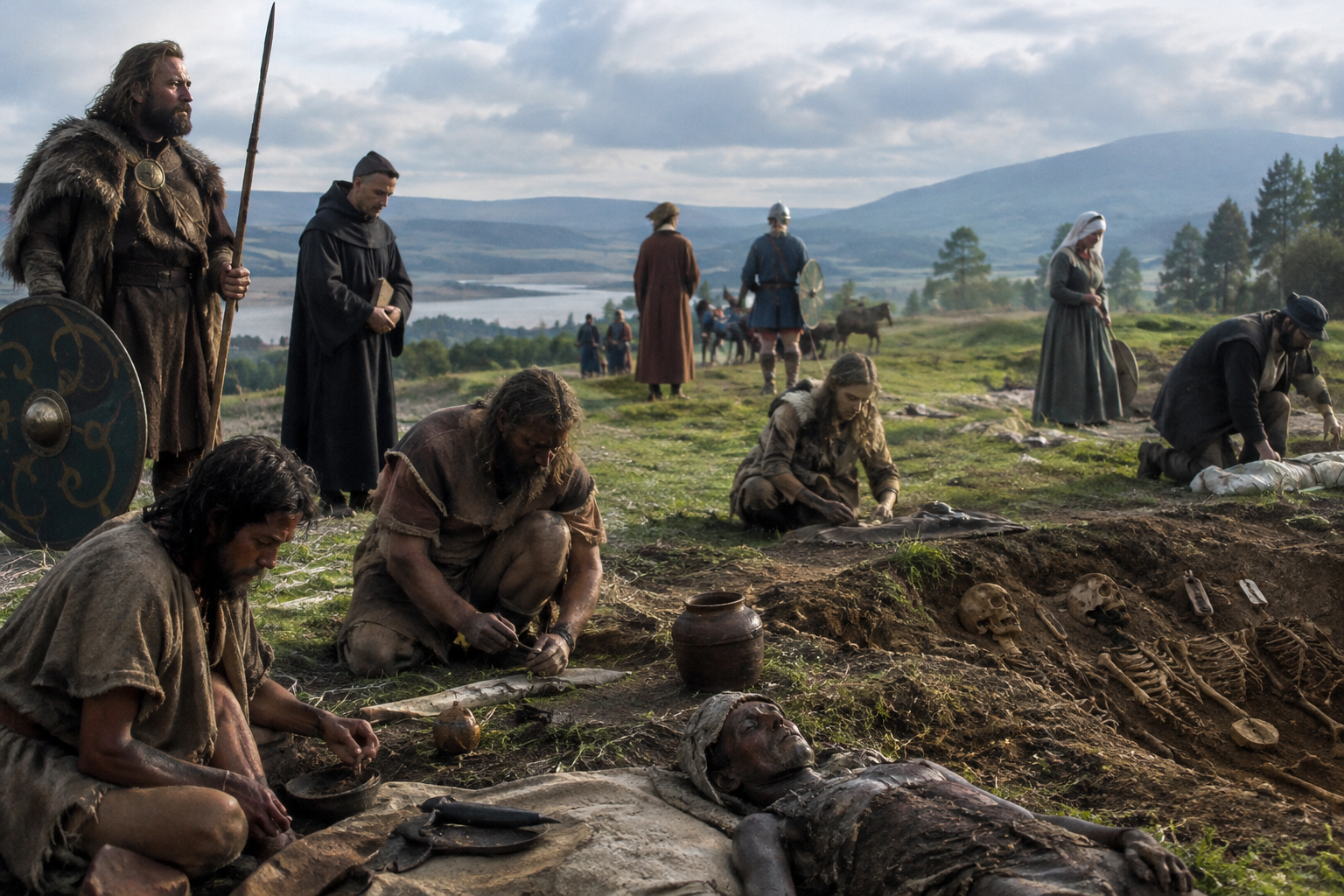
One striking case is MH1-4, from Magyarhomorog-Konyadomb in Hungary, dated to 950 AD and described as a Medieval Elite Hungarian Conqueror. That places the lineage in a very different political and social setting: the world of conquest-period Hungary. This does not mean the haplogroup was somehow "Magyar" by essence, nor that one elite burial can stand for a whole ruling class. But it does show that this paternal branch was present among people participating in the formation of medieval Hungary's power structures.
Even more intriguing is CGG107580, from Kalmargorden in Denmark, dated to 1090 AD in the Late Viking Age. Now the map stretches to Scandinavia. Was this the result of mobility through trade, warfare, marriage, slavery, settlement, or earlier movement through the Baltic sphere? Ancient DNA alone cannot answer that. But it does show that by the late 11th century, the branch had reached - or persisted in - a Danish setting.
And then, much later, we find STR105e from St. Rombouts in Belgium, dated to 1800 AD. By that point we are in the early modern world of churches, towns, bureaucracies, and much denser written records. The significance of STR105e is not that it solves the haplogroup's origin, but that it shows its continued presence in the Low Countries long after the medieval migrations that may have helped distribute it.
Put these finds together and a plausible pattern emerges. The branch appears repeatedly in early medieval and medieval contexts stretching from Croatia and Hungary into Austria and central Germany, with a later appearance in Denmark and an early modern example in Belgium. That does not prove a single migration route. It does, however, fit the broader historical reality of population movement across central Europe during the early Middle Ages.
The 8th to 11th centuries were full of such movement: South Slavic settlement in the Balkans and Pannonian zone, the reshaping of the Carpathian Basin, the western spread of Slavic communities into regions like Thuringia, and the circulation of men through military and political networks linking the Baltic, Danube, and Adriatic worlds. I2a1a2b1a1a seems, on current evidence, to be one of those paternal branches that turns up in the middle of these processes rather than standing outside them.
That is worth stressing because people often want haplogroups to behave like labels from a history textbook. They do not. A Y-line can pass from one linguistic or political setting into another without changing its biology. What changes are the worlds through which that paternal line travels.
In this case, the supplied field for associated noble families and castles is empty. That absence is actually a useful reminder of good method. Not every haplogroup article should force a link to a dynasty, a castle keep, or a heraldic pedigree simply because readers enjoy them. Quite right too.
Where noble houses are connected to a Y-DNA lineage, the connection still needs caution. A family association does not prove that every branch of that house carried the same Y-line, and a shared broad haplogroup never proves close kinship. Without specific supplied noble data here, it would be irresponsible to invent castles or attach I2a1a2b1a1a to a medieval dynasty by guesswork.
Still, the historical backdrop is full of strongholds. Gars-Thunau in Austria, frontier settlements in Thuringia, elite burials in conquest-period Hungary, and ecclesiastical centers like St. Rombouts in Belgium all belonged to worlds structured by lordship, fortification, and church power. Even without naming a specific family, we can see the landscape in which lineages like this one survived: local, regional, and repeatedly reshaped by politics.
What makes I2a1a2b1a1a fascinating is not a single royal claim or a dramatic origin myth. It is the opposite. This branch helps illuminate the ordinary but consequential movement of paternal lines across medieval Europe: from Balkan contexts to the Carpathian Basin, from Slavic settlement zones into central Germany, and into wider northern and western networks.
Ancient DNA gives us something written genealogy usually cannot. It lets us spot paternal continuity where documents are silent, and it shows that medieval Europe was not built out of isolated peoples neatly staying put. It was built out of movement, mixture, resettlement, and local persistence. This haplogroup is one small but vivid example.
If your own Y-DNA or autosomal results point toward central, eastern, or southeastern Europe, MyTrueAncestry may help you discover whether your deeper ancestry shows similarities to ancient individuals like VEM018, CGG021918, GAT004a, OBM045, or MH1-4. Such matches do not prove direct descent from a specific ancient person or membership in a noble lineage, but they can offer a remarkable historical perspective on where your paternal story may fit into the wider human past.
Comments