Haplogroup I1z

– 4 min read


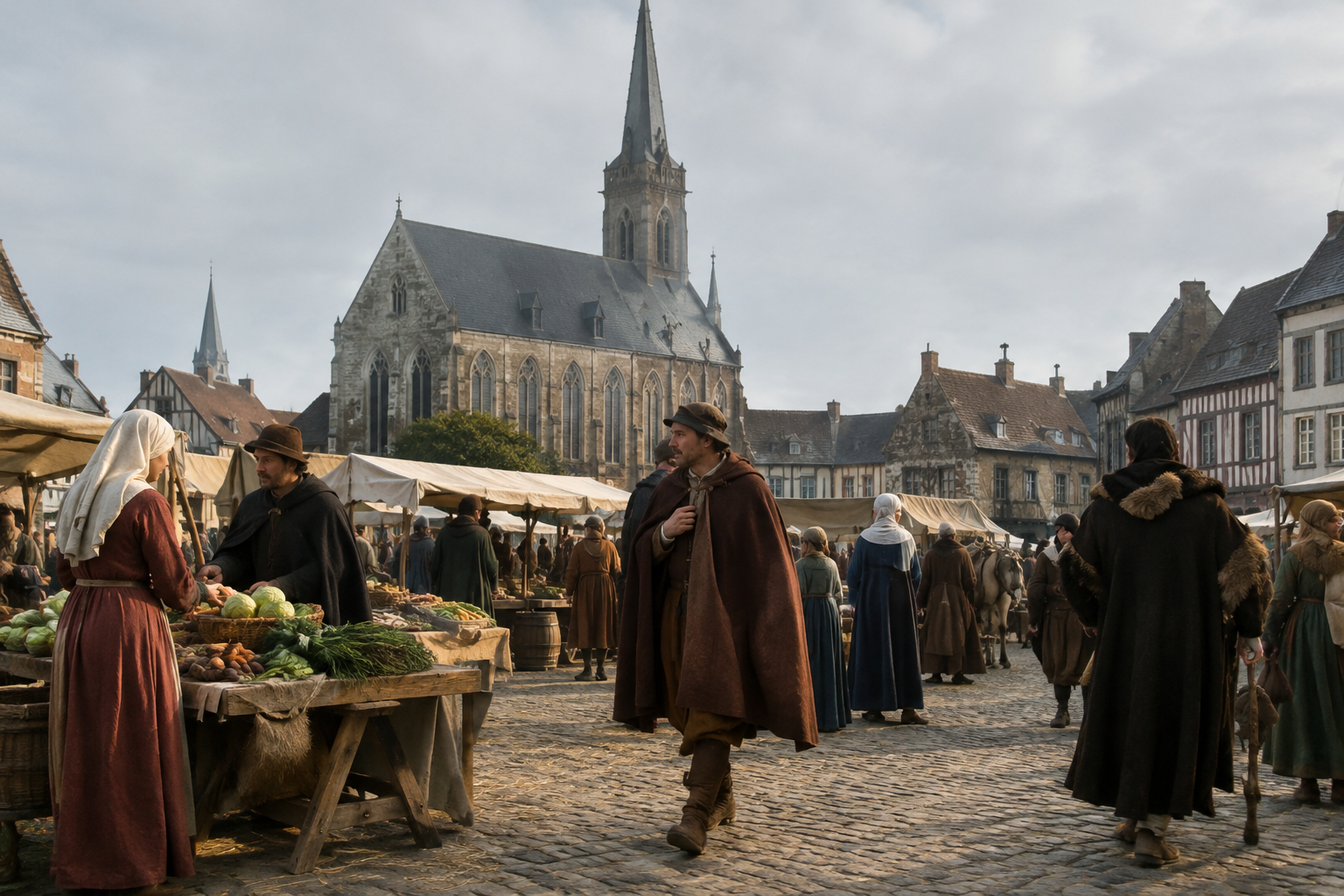
At Sint-Truiden in present-day Belgium, one early medieval burial has become an unexpectedly useful signpost for the Y-DNA haplogroup I1z. The individual identified as ST2954, dated to around AD 795, comes from the Groenmarkt cemetery in a Carolingian town that was growing around one of the great monastic centres of the region. That matters because Sint-Truiden was not some remote village at the edge of events. It sat inside the political and cultural world of the Carolingians, in a landscape where Roman legacies, Frankish power, local communities, and Christian institutions were all being folded together.
The value of ST2954 is not that one man can explain an entire haplogroup. He cannot. But he does give us a documented early medieval appearance of I1z in a place where urban life, religion, and regional mobility were being actively reshaped. Y-DNA traces one direct paternal line rather than a person's total ancestry, yet even that single line can become historically illuminating when it turns up in a well-dated archaeological context.
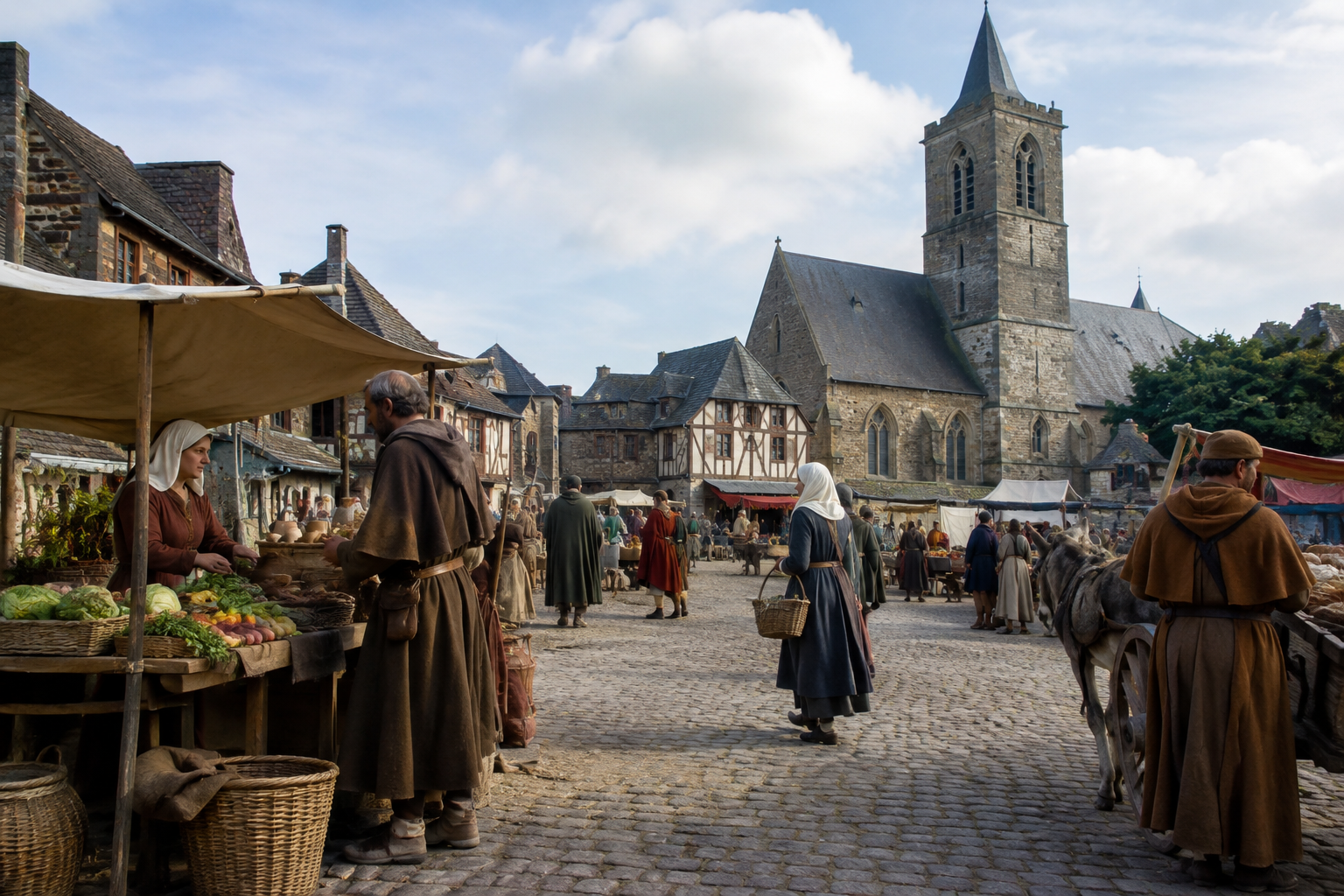
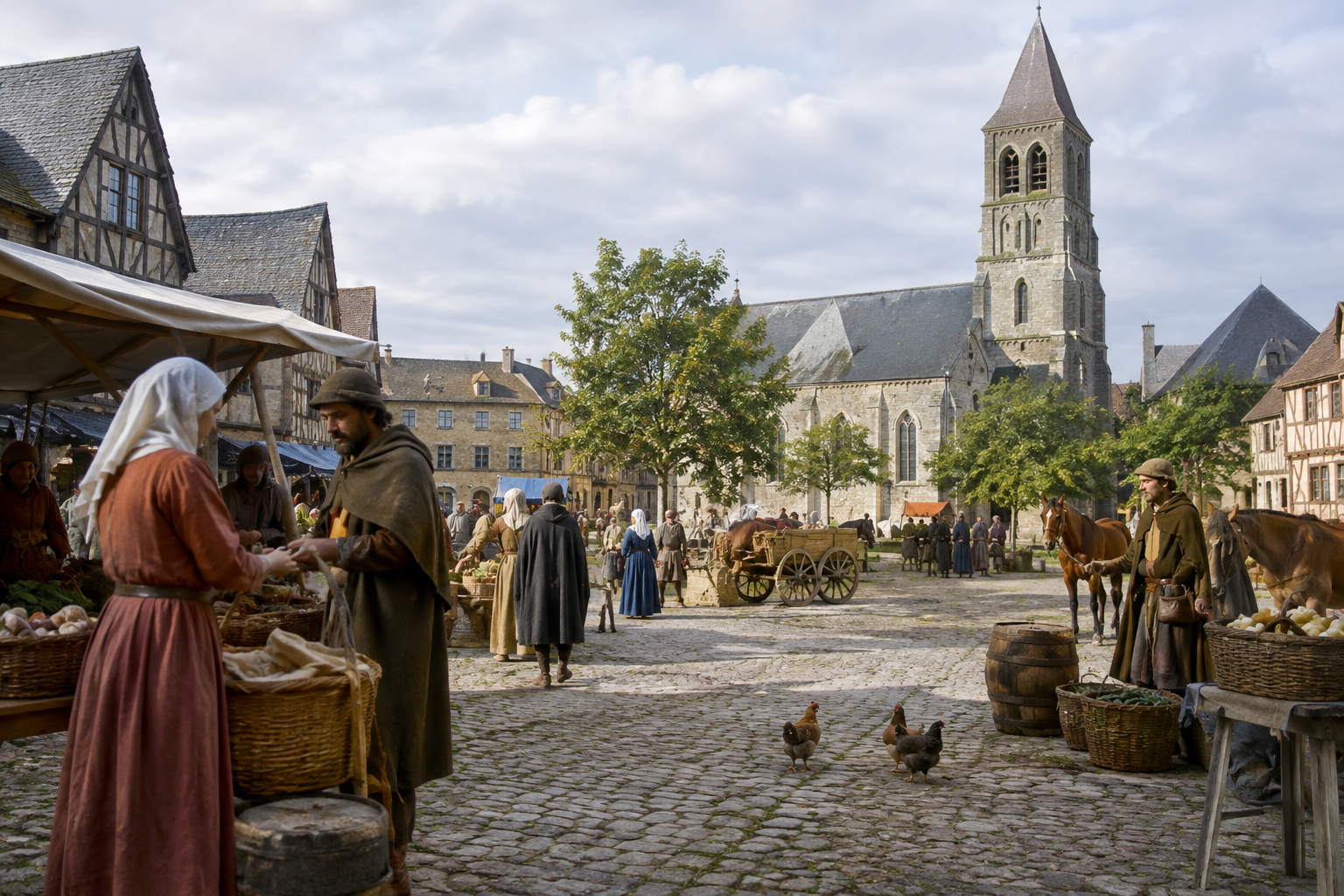
Sint-Truiden, known historically as Saint-Trond, was one of those places where early medieval Europe becomes much more interesting than the old textbook caricature of a "dark age". By the late eighth and early ninth centuries, it was tied to an influential abbey and to the wider Carolingian world. The cemetery at Groenmarkt belongs to that moment when settlements in the Low Countries were being reorganised around churches, monasteries, markets, and new political authority.
Sample ST2954 is therefore best understood not as an isolated genetic curiosity, but as part of an urbanising Christian community in the heart of the Frankish realm. A recent ancient-DNA study of medieval Sint-Truiden, published in Genome Biology, examined how population structure changed in this setting. The broader significance is not that everyone at Sint-Truiden shared the same paternal heritage, but that lineages such as I1z were present within a community shaped by both continuity and movement.
I1z is a branch within the wider Y-chromosome haplogroup I1, a lineage most often associated with northern Europe in both ancient and modern genetic discussions. But this is exactly where caution matters. The large umbrella branch I1 has a long and complicated history, and it would be wrong to pour every general statement about I1 straight into the narrower label I1z.
What we can say responsibly is that ST2954 places I1z in an early medieval community in the eastern Frankish cultural orbit of the Low Countries. That fits a broader picture in which some paternal lines with northern European associations were part of the populations moving through, settling in, or reproducing within post-Roman and Carolingian societies. It does not by itself prove ethnicity, language, or membership in any named people from the written sources.
The most interesting historical backdrop here is the transformation of the Low Countries after the Roman period. This was a region where imperial frontiers, military movement, rural settlement, Christian conversion, and elite patronage all left their mark. By the time of Charlemagne, the area was deeply embedded in a political order that liked to present itself as universal and Christian, but was built from very local communities with varied histories.
That makes an I1z result from Sint-Truiden especially suggestive. It reminds us that early medieval populations in this part of Europe were not genetically blank slates created by a single migration. Instead, they were made from overlapping strands: descendants of earlier local groups, people tied to post-Roman population shifts, and families whose paternal lines may have deeper links to the northern European world often associated with Germanic-speaking populations.
Whenever an I1 branch turns up in the early medieval north-west European record, readers naturally wonder about Germanic languages. That is a sensible question, but the answer has to be kept tidy. Genes do not "speak" a language, and one paternal lineage cannot serve as a badge for Franks, Saxons, or any other historical group. Still, Y-lineages can help map the demographic settings in which languages spread.
In the centuries before and after AD 795, the Carolingian world brought together populations speaking different vernaculars under a shared political and ecclesiastical framework. In regions like modern Belgium, that meant contact zones rather than neatly bounded ethnic blocks. Findings such as ST2954 are best read as part of that broad north-west European demographic background in which lineages linked to the wider I1 family were among the paternal threads present. For readers wanting the larger backdrop, MyTrueAncestry has also explored the spread of Germanic languages using ancient genomics.
There is a temptation, when evidence is sparse, either to say too much or too little. The right middle course is to notice what a site like Groenmarkt actually offers. It gives us chronology. It gives us place. It gives us a social setting inside a documented Carolingian town. And it gives us a paternal lineage, I1z, anchored to that setting through sample ST2954.
That is more useful than a floating modern distribution map with no archaeology behind it. Ancient DNA works best when it is tied to real burials and real historical landscapes. Even a single named sample can help researchers move from abstract lineage labels to the lived world of cemeteries, monasteries, market towns, and families whose descendants would eventually vanish into the anonymity of later medieval populations.
If your own direct paternal line falls under I1z, ST2954 does not hand you a ready-made story of kings, tribes, or a single migration route. What it does offer is something more solid: a documented early medieval appearance of this lineage in a Carolingian-era community in the Low Countries. That places I1z, at least in this evidence, within the ordinary but historically important population fabric of north-western Europe as towns, churches, and post-Roman societies were taking shape.
For family historians, that is often the most valuable kind of clue. Not a fantasy pedigree, but a real man in a real cemetery, living around AD 795 in a place where Europe was being rebuilt.
Comments