Haplogroup I1a3c

– 5 min read


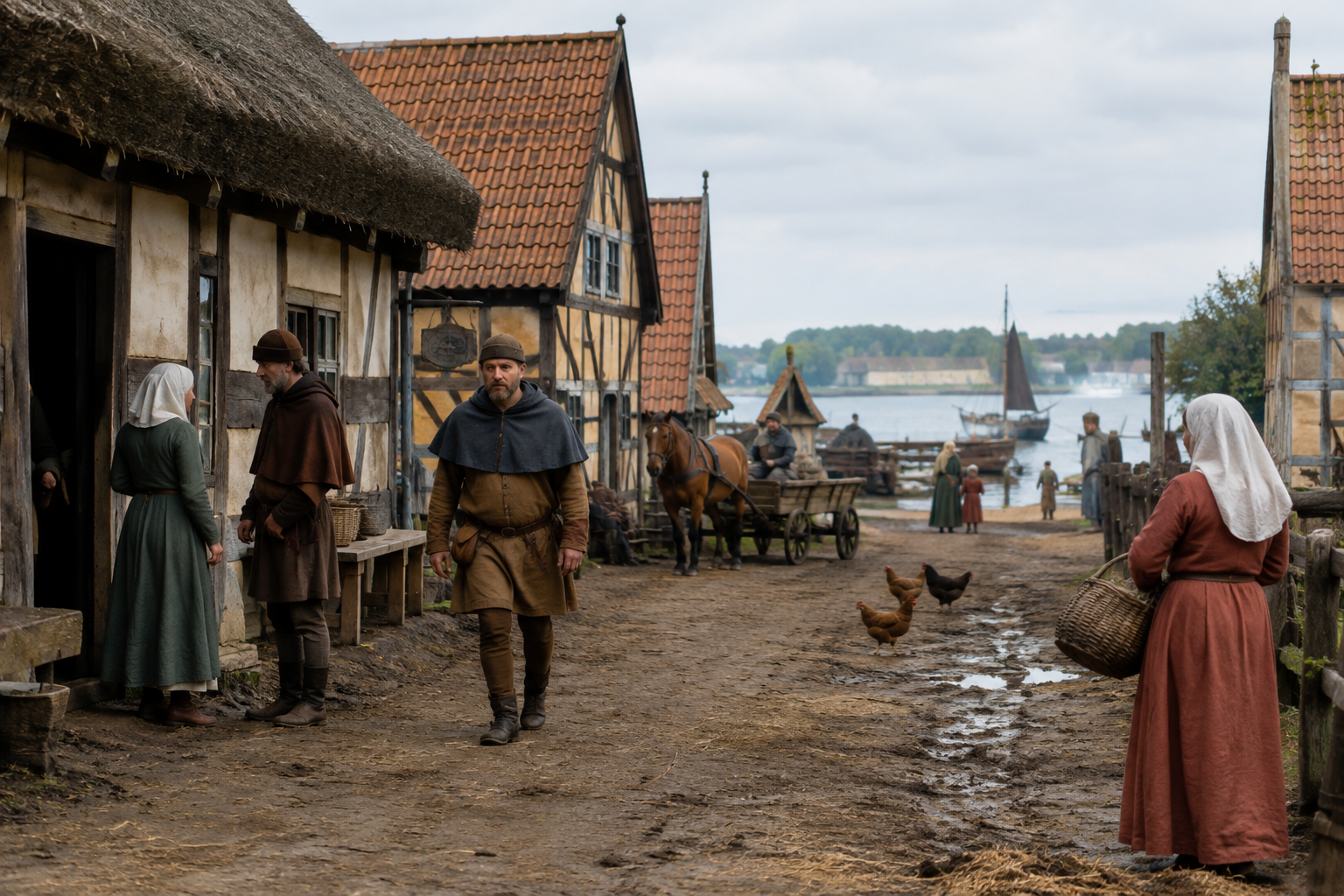
In late medieval Holbaek on the island of Zealand, one excavated individual offers a small but unusually tangible foothold for haplogroup I1a3c: sample CGG101809, dated to around 1375 AD from Ahlgade, Holbaek in Denmark. That is not a saga hero, not a king in a famous tomb, and not a convenient founding ancestor. It is, in some ways, better than that: a real man from a documented medieval town, placed in a time and landscape we can recognize with some confidence.
The interest of I1a3c here lies precisely in that modesty. Y-DNA traces one direct paternal line only, not a person's whole ancestry, but even a single securely placed medieval example can help anchor a lineage in the historical world of Scandinavian towns, parishes, kin groups, and North Sea connections. For this branch, the Holbaek evidence points not to a mythic origin story, but to a lived medieval setting in Denmark.
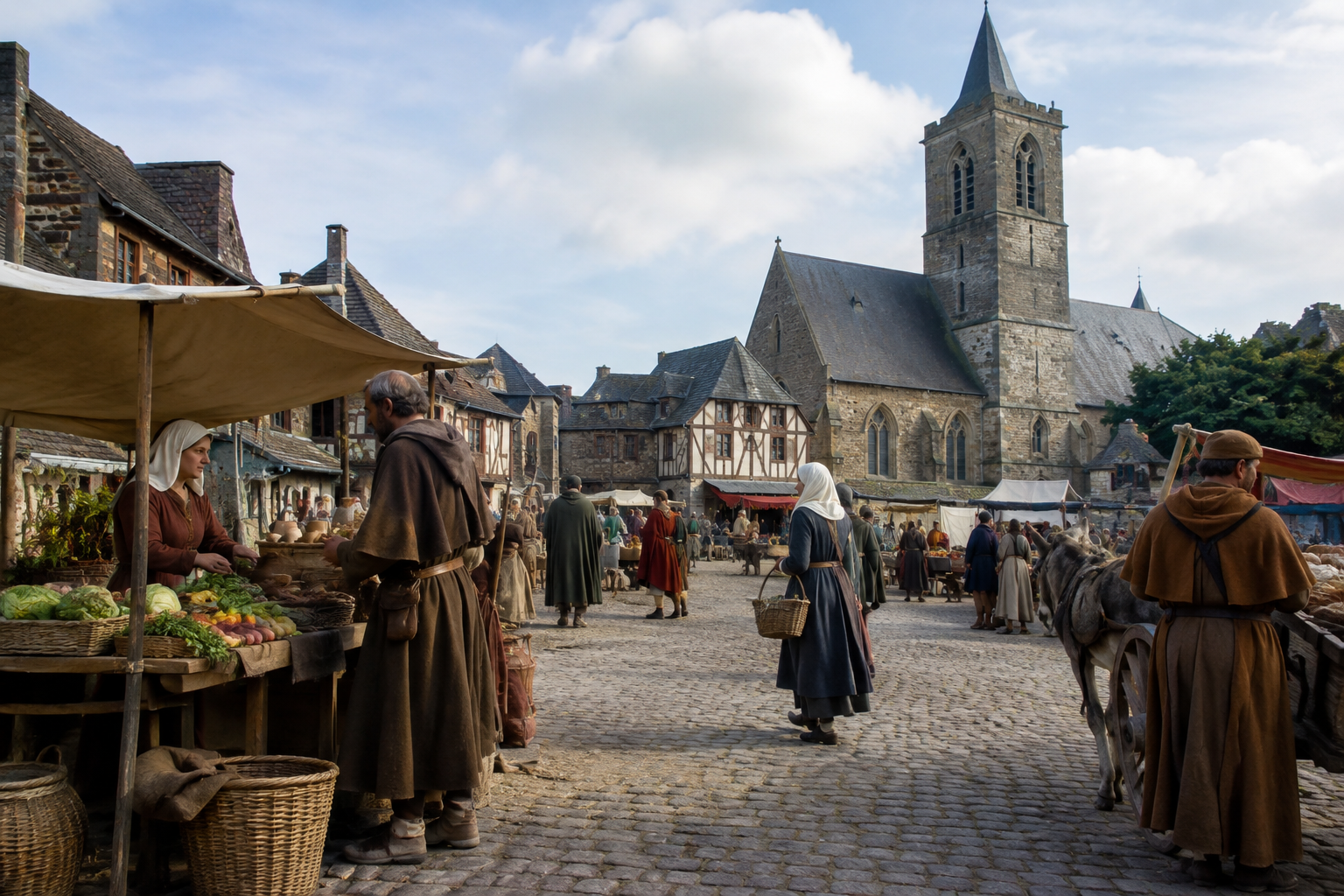
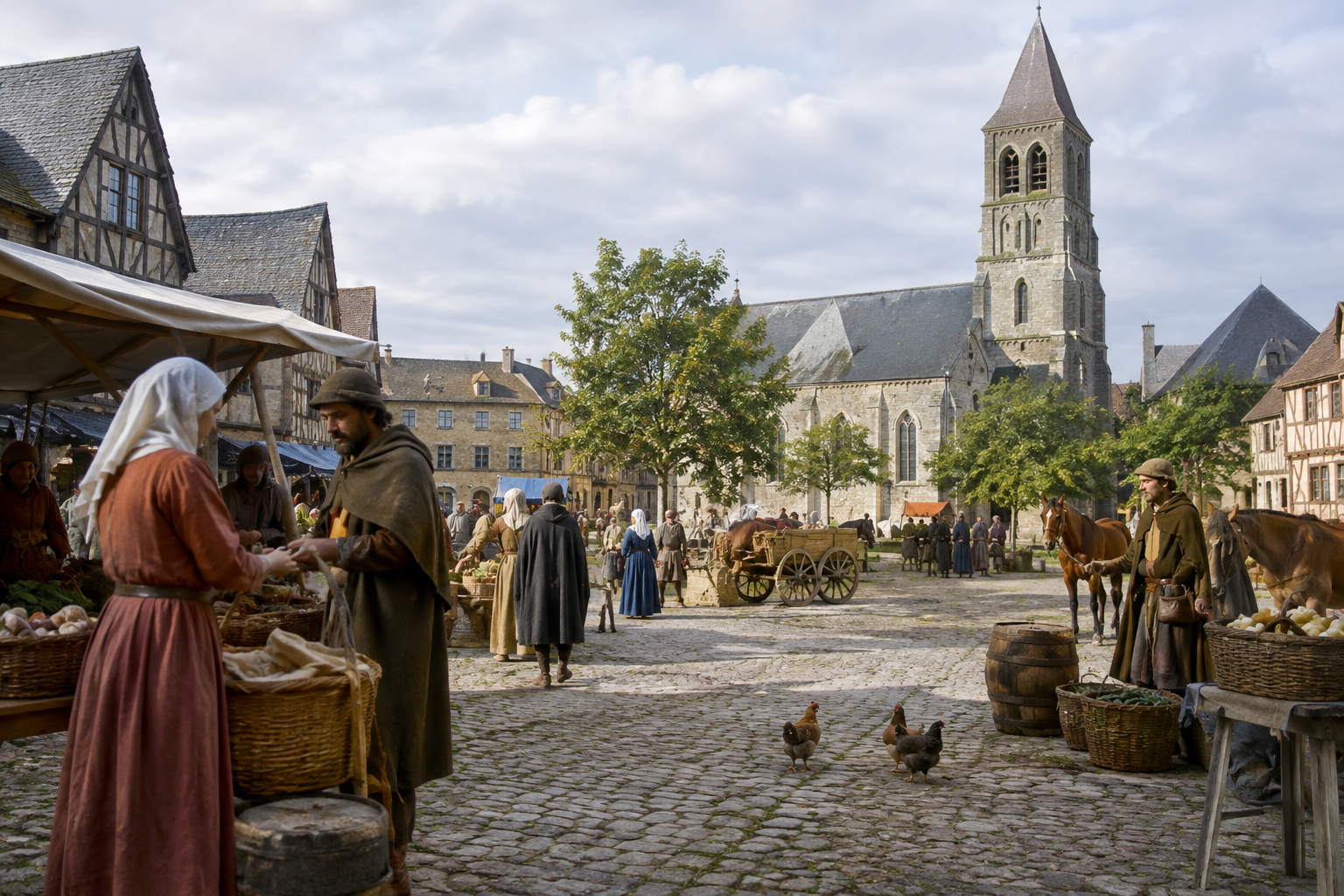
Holbaek was not an isolated hamlet. By the 14th century, Zealand sat inside a dense network of royal administration, church life, local trade, and Baltic movement. Ahlgade, today a central street in Holbaek, preserves the memory of an urban environment that belonged to the later medieval kingdom of Denmark rather than the Viking Age usually imagined whenever Scandinavian Y-DNA is discussed.
Sample CGG101809 matters because it gives haplogroup I1a3c a concrete archaeological context in that world. Instead of speaking vaguely about "Germanic" or "Nordic" ancestry, we can point to one man living in medieval Denmark, in a period shaped by Christianity, market exchange, and the after-effects of the great demographic shocks of the 14th century. The lineage was not simply ancient; it was still there, embedded in ordinary urban society.
Research on medieval Danish and wider Scandinavian populations has increasingly shown how useful later burials can be for understanding continuity as well as change. A recent ancient DNA preprint linked to this Holbaek material, published on bioRxiv, points to exactly the kind of regional sampling that allows paternal lines to be placed in real settlements rather than treated as abstract labels.
The haplogroup name in this article is I1a3c, a sub-branch within the broader Y-DNA family I1. That broader lineage is strongly associated with northern Europe, especially Scandinavia, in both modern and ancient population studies. But it is important not to smuggle all the history of I1 into one narrower branch without direct evidence.
In practical terms, that means we should be careful. The Holbaek individual gives us a defensible medieval Danish occurrence for I1a3c, but one sample does not by itself establish where the branch first formed, how common it was across Denmark, or whether every later carrier descends from a specifically Danish medieval ancestor. The sample anchors the branch in one place and time; it does not write the whole biography.
That may sound cautious, but in archaeology caution is often where the real interest begins. Once a branch appears in a securely dated burial, it can be discussed in relation to settlement history, mobility, and social continuity. It stops being just a code on a phylogenetic tree and starts becoming part of a medieval human landscape.
If your imagination runs immediately to longships, the date of 1375 AD offers a useful correction. This was long after the classic Viking Age. Denmark in the later 14th century was a Christian kingdom of towns, estates, parishes, and legal institutions, though it still carried the deep inheritance of earlier Scandinavian population history.
That is one reason the Holbaek sample is so helpful. It suggests that a paternal line associated with the wider I1 family remained present in eastern Denmark not just in prehistoric or early medieval settings, but into the mature urban Middle Ages. For family historians, that matters: the bridge between ancient population history and later surnamed society is often built from exactly these less glamorous medieval individuals.
Zealand was also central to the political and economic life of the kingdom. Copenhagen was rising, Roskilde remained important, and smaller towns like Holbaek formed part of the local fabric that sustained crown, church, and commerce. A Y-line found here belongs to a region deeply tied into wider Scandinavian and Baltic history, not a remote edge of it.
Denmark Before the Middle Ages
There is a temptation, whenever a Scandinavian-associated paternal lineage appears, to draw a straight line from prehistory to the individual in the grave. Real history is messier. Denmark had already seen profound changes by the 14th century: the Mesolithic foragers, the arrival of farming, Bronze Age transformations, Iron Age regional societies, Roman-period contacts, Migration Period upheavals, and the Viking and Christian centuries after that.
So what can be said responsibly? The broader I1 background makes a Scandinavian context unsurprising, while CGG101809 shows that this particular paternal branch was part of medieval Denmark's human story. It fits a picture of long-term northern European continuity mixed with all the local reshaping that towns, marriage networks, disease, and migration bring over centuries.
That is especially worth stressing because medieval towns were rarely static. Even where many inhabitants were local or regional, urban places drew in newcomers from surrounding countryside and, at times, from farther afield. A Y-line present in Holbaek could represent continuity from earlier Danish populations, movement within Zealand, or links across the wider Danish realm. The sample itself cannot choose among those possibilities, but it makes them historically discussable.
Sometimes a lineage article has dazzling material: princely tombs, named dynasties, or multiple related burials. This one does not, and that is perfectly fine. Ancient DNA is not only about spectacular finds. Much of its value comes from restoring ordinary people to history and showing that the medieval past was made up of individuals whose names are lost but whose biological traces remain.
For haplogroup I1a3c, the current ancient evidence here is sparse but useful. A single medieval Danish sample can serve as a fixed point against which future discoveries are compared. If more Scandinavian, North Sea, or Baltic individuals are later assigned to the same branch, Holbaek may come to look less like an isolated dot and more like part of a recognizable historical distribution.
This is also where MyTrueAncestry readers can think sensibly about paternal matches. A result linked to I1a3c does not certify Viking identity, noble descent, or a direct line to any one excavated man. What it can suggest, more modestly and more usefully, is a paternal ancestry with at least one documented foothold in medieval Denmark.
The distinctive value of haplogroup I1a3c, as presently documented here, is not grandeur but placement. Sample CGG101809 anchors this paternal branch in late medieval Zealand, in the townscape of Holbaek, where Scandinavian population history had already passed through pagan, Viking, and Christian phases and entered the urban Middle Ages. For anyone researching this line today, that is a meaningful clue: not a legend, but a location in real historical time.

Comments