Haplogroup I1a2a2a4b2b

– 5 min read


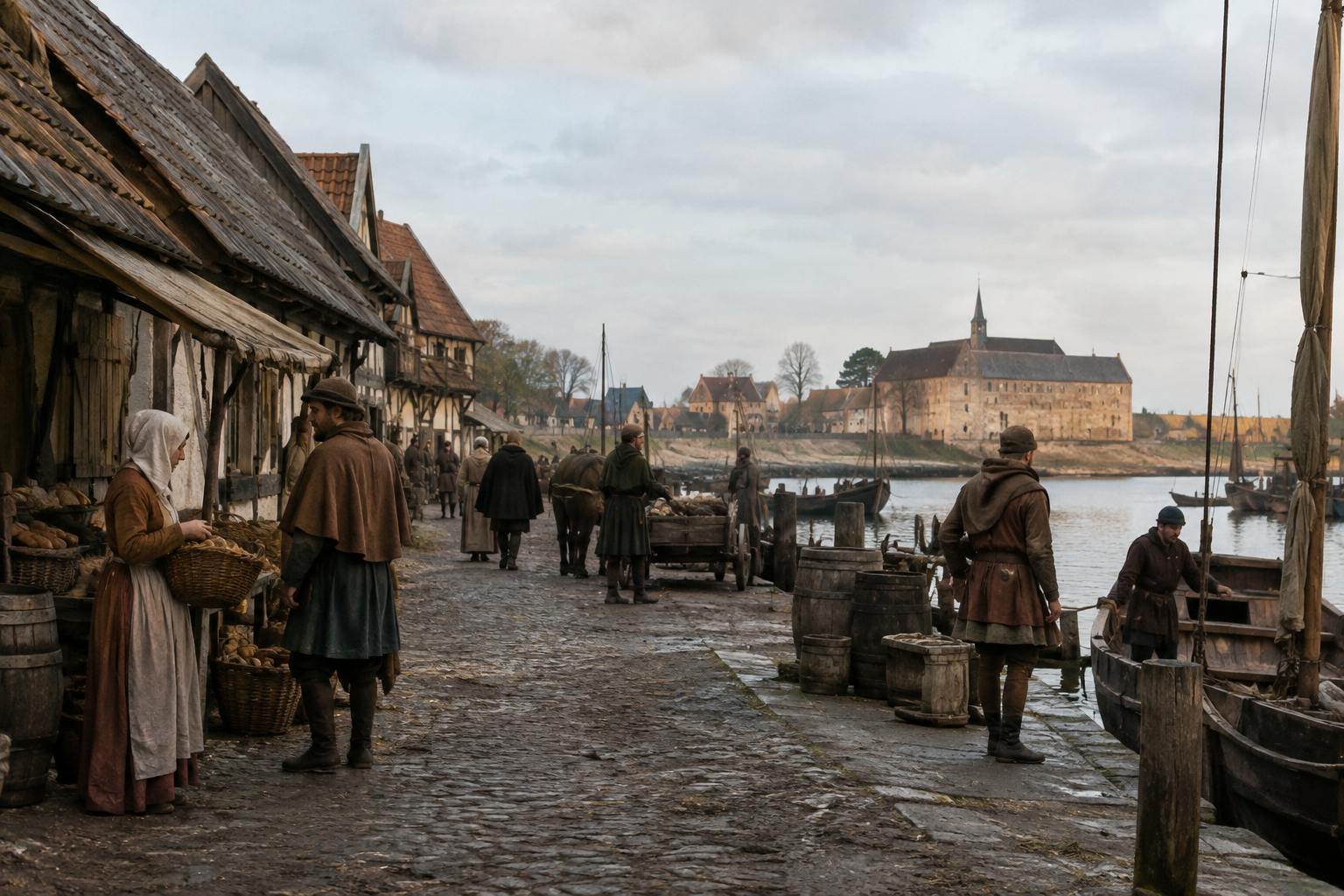
In medieval Holbaek on Zealand, one excavated man dated to around AD 1375 has become a small but useful anchor point for a very specific paternal line: sample CGG101835, reported here under Y-DNA haplogroup I1a2a2a4b2b. That is a long name for a very narrow branch, but the archaeological setting matters just as much as the genetics. This is not a saga hero or a king in a famous tomb. It is a person from a late medieval Danish town, living in a period when Denmark was deeply tied into the Baltic world, Christian Europe, and the long afterlife of earlier Scandinavian population history.
The value of a sample like this is precisely its ordinariness. Y-DNA follows one direct paternal line only, not a person's whole ancestry, but when a branch such as I1a2a2a4b2b appears in a documented medieval context, it helps place that line in the real human landscape of towns, churches, trade, disease, kinship, and everyday life. In this case, the branch sits inside the much broader haplogroup I1, a lineage long associated with northern Europe and especially Scandinavia, though the exact history of this particular downstream twig must not simply be assumed from the fame of its parent.
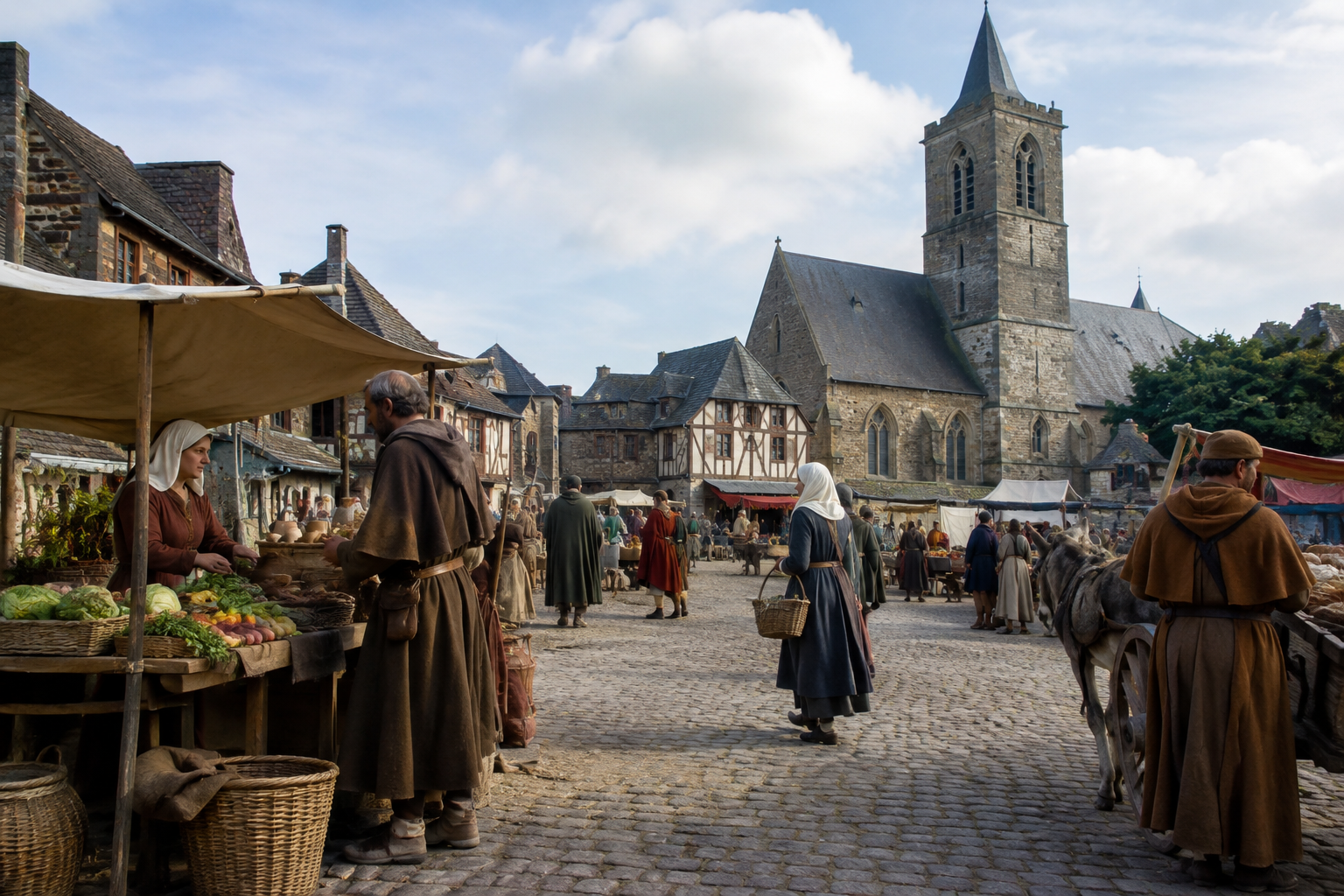
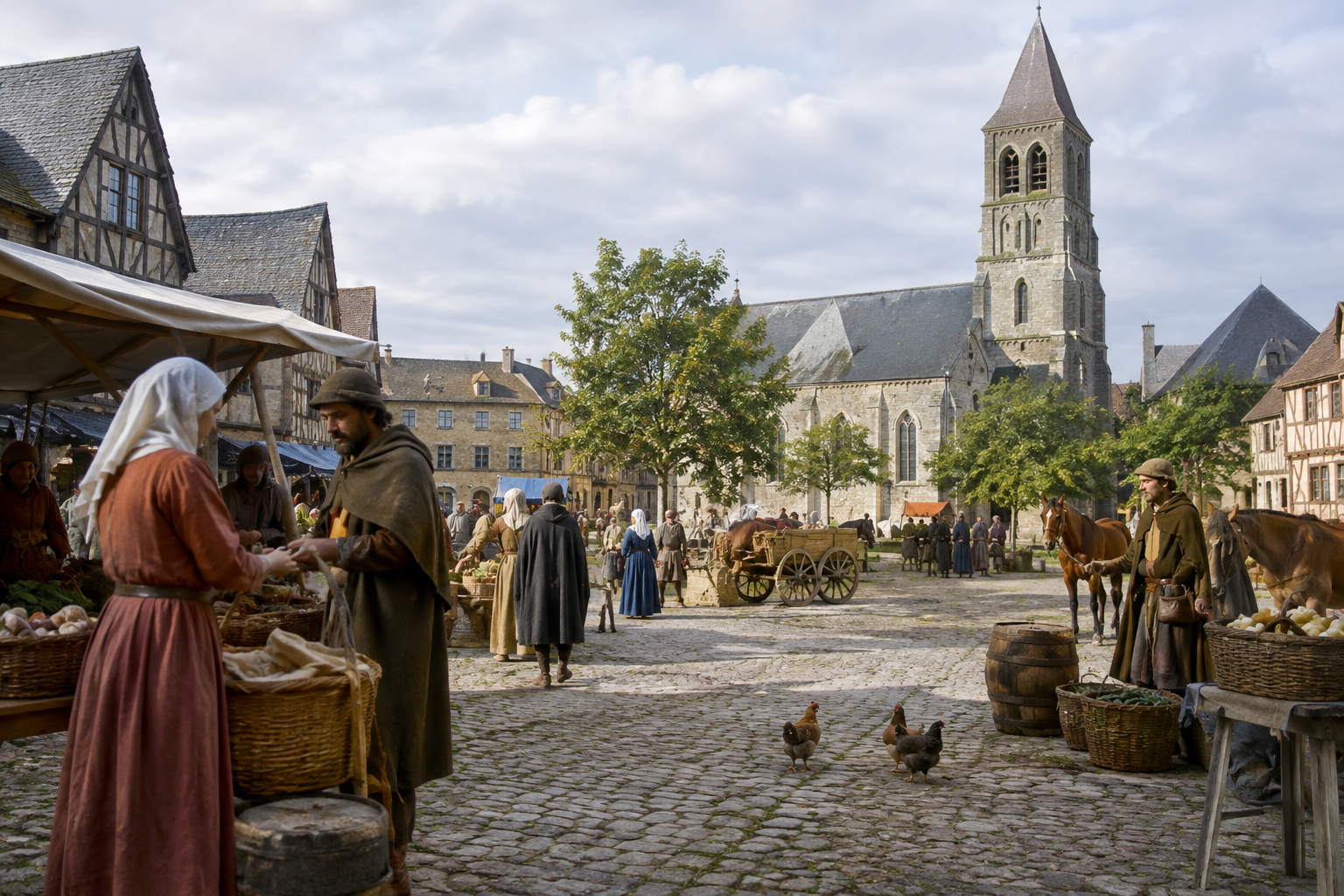
Holbaek was not a remote hamlet. By the later Middle Ages, Zealand was one of the political and economic centers of the Danish kingdom, linked to Copenhagen, Roskilde, the Sound, and the wider Baltic trading world. A man buried in this setting around AD 1375 belonged to a society shaped by parish life, royal administration, regional exchange, and the social stresses of the 14th century.
That date is important. It places CGG101835 well after the Viking Age and firmly in Christian medieval Denmark. So this sample does not show us an early expansion of I1 as such; rather, it shows the survival of one paternal branch into an urbanized, literate, church-organized society centuries after the great transformations of the first millennium. In other words, this is evidence for continuity as much as for origin.
Post-Viking Christian Scandinavia
The temptation with any Scandinavian-looking Y lineage is to leap straight to Vikings, migrations, and warrior ancestry. Archaeology is usually less melodramatic and more interesting. Haplogroup I1a2a2a4b2b is a very fine-grained designation nested within I1, but a narrow subclade is not automatically a badge of one named tribe, one language shift, or one famous migration episode.
What can be said more securely is that branches within I1 became well established in northern Europe over the long term, and that medieval Danish evidence fits comfortably within that broader pattern. A late medieval man from Holbaek carrying this paternal line suggests that one strand of northern European male descent persisted through the major reshaping events of Scandinavian history: the conversion to Christianity, the consolidation of kingdoms, the rise of towns, and the tightening of Baltic connections.
That is especially useful for family historians. A branch like I1a2a2a4b2b does not by itself identify a surname origin or noble house, but it can place a paternal line within a historical zone where medieval Denmark and the wider Scandinavian world become highly relevant.
AD 1375 is not just another medieval date. It falls in a century marked by upheaval across northern Europe: demographic shocks, changing lordship, growing commercial networks, and political reorganization. Denmark in this period was still unmistakably Scandinavian, but also deeply entangled with continental currents. A paternal lineage found here was part of a society far removed from the world of rune stones and ship burials, yet descended from populations shaped by that earlier past.
This is one of the virtues of ancient DNA from medieval cemeteries. It reminds us that lineages did not vanish when one archaeological period gave way to another in our textbooks. Men carrying branches of I1 were not frozen in the Viking Age. They became townsmen, peasants, clergy, craftsmen, merchants, and subjects of medieval kings. The sample from Ahlgade, Holbaek, offers exactly that kind of grounded historical perspective.
A research preprint connected with this material can be found here: https://www.biorxiv.org/content/10.1101/2025.02.28.640770v1. Without overclaiming details beyond the sample information at hand, the broader significance is clear enough: medieval Danish burials are becoming part of a much sharper map of how northern European paternal lines persisted across time.
Germanic Languages and Genomics
Zealand is a particularly revealing setting because it sits at the crossroads of several different historical scales. On the very long timescale, Denmark preserves evidence for Mesolithic foragers, Neolithic farmers, Bronze Age networks, Iron Age communities, and the later societies that classical and medieval sources begin to name more clearly. On the shorter medieval timescale, Zealand was central to a kingdom facing both inward to local communities and outward to the Baltic Sea.
That matters for interpreting I1a2a2a4b2b. A paternal branch found on Zealand in the late Middle Ages may represent local continuity over many centuries, but "local" in Denmark never meant isolated. Scandinavian populations were mobile, and medieval Danish towns were plugged into shipping lanes, marriage networks, ecclesiastical structures, and political alliances stretching well beyond one shoreline. So the sample is best read not as a relic of isolation, but as part of a living northern European population.
Denmark's Deep Population History
I1 is well known in genetic genealogy because it appears at notable frequencies in parts of Scandinavia and regions influenced by later Scandinavian and Germanic movements. But broad fame can be misleading. The history of I1a2a2a4b2b is not automatically identical to the history of all I1 men, just as the history of one medieval Dane is not the history of all Danes.
This is where ancient DNA is so useful. Instead of relying on modern distributions alone, it supplies dated people in real places. CGG101835 gives this branch a firm medieval foothold in Denmark. Even one such placement matters because it turns an abstract phylogenetic label into a historical observation: by the later 14th century, this paternal line was present in Holbaek on Zealand.
That does not prove where the branch first formed, nor does it connect every modern carrier to one medieval household in Holbaek. What it does offer is a historically sensible frame. If you carry this haplogroup, one plausible arena for your paternal story is the long continuity of Scandinavian male lines into the later medieval world, rather than only the more romanticized horizons of the Viking Age.
North Sea Migrations to Britain
The most distinctive thing about I1a2a2a4b2b here is not imperial grandeur or a legendary pedigree. It is the fact that this branch appears in a documented medieval Danish individual from Holbaek, showing that one direct paternal line within the wider I1 family was part of ordinary life in late medieval Scandinavia. For anyone researching this haplogroup today, that is a solid and meaningful clue: your paternal line belongs in the history of real Scandinavian communities, where continuity, mobility, and local belonging all mattered at once.
Comments