Haplogroup I1a2a1b1a

– 4 min read


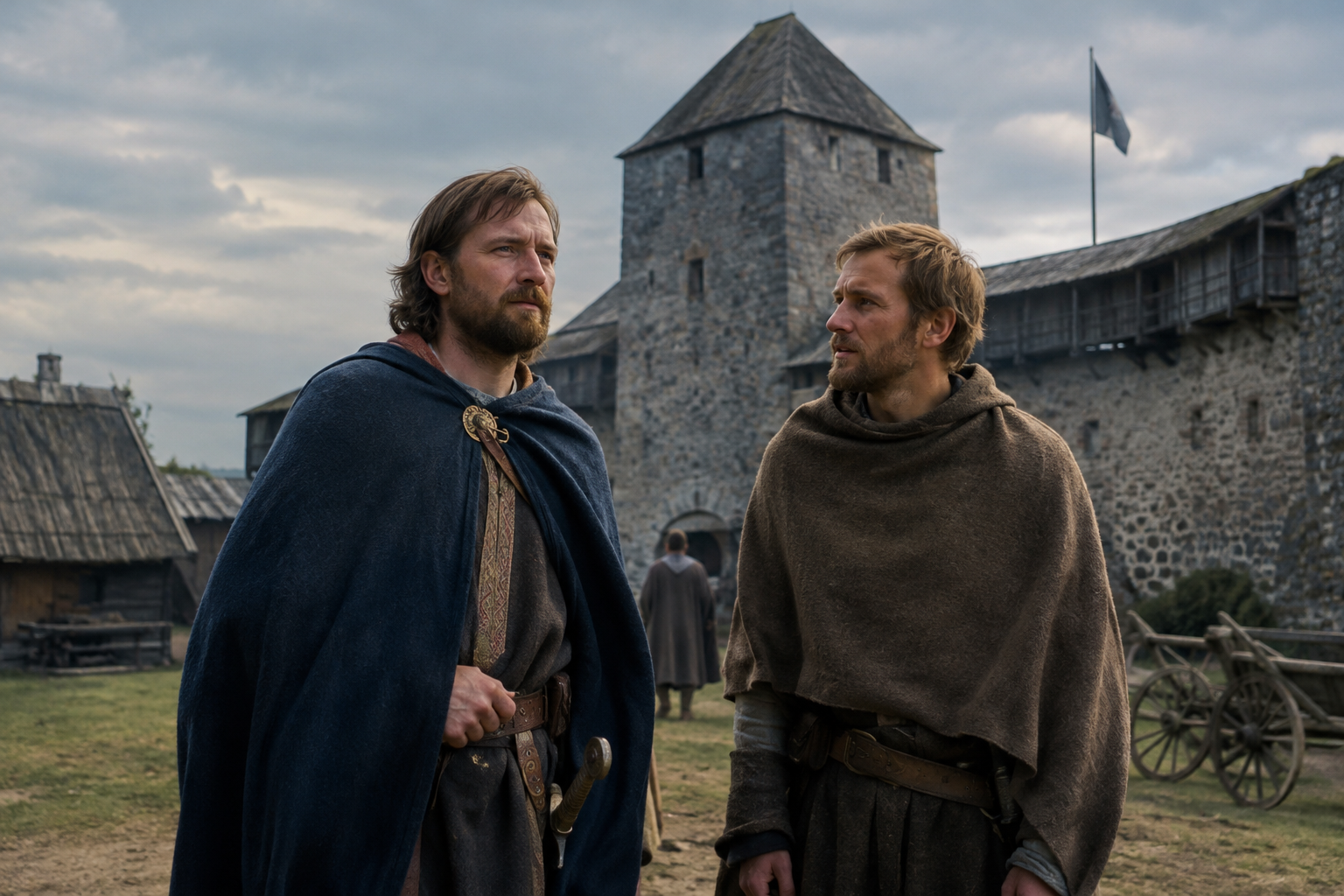
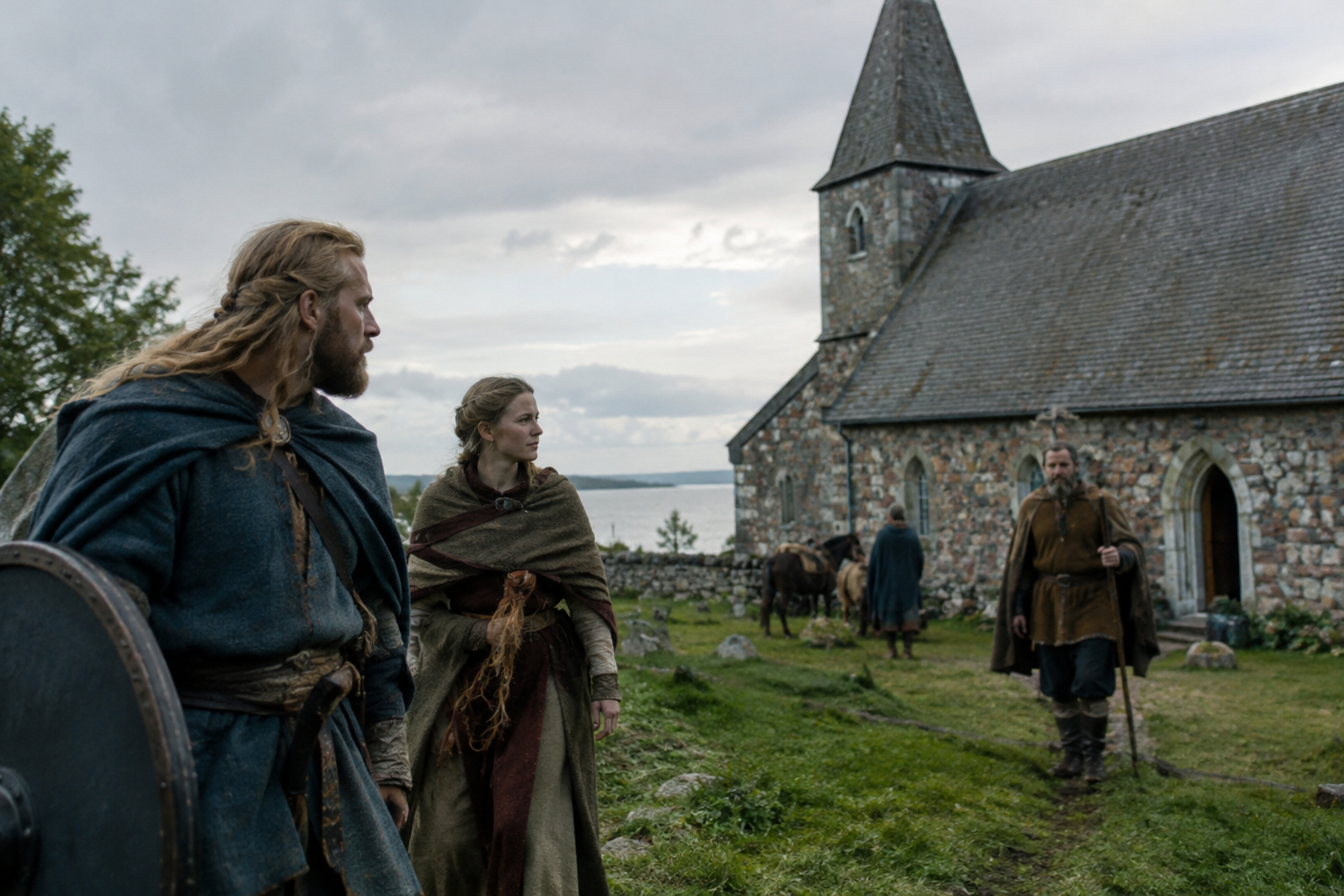
In the churchyard at Vasterhus in central Sweden, two men buried in the early 14th century, samples mbv301 and mbv291, bring us very close to the lived reality of haplogroup I1a2a1b1a. They are not saga heroes, not kings, not conveniently labelled founders of a people. They are better than that for archaeology: real medieval individuals from a known place, dated to about 1313 AD, preserved in a burial ground used by an established Christian community.
That matters because Y-DNA lineages are often discussed as if they floated above history. Here, by contrast, the branch appears in a precise social landscape: medieval Jamtland, on the Scandinavian inland frontier, where church, kinship, inheritance, and regional ties all met in the cemetery soil. If I1a2a1b1a appears in these Vasterhus men, it places this paternal line within the ordinary but important world of late medieval Sweden.
The haplogroup name here is very specific: I1a2a1b1a. That sits inside the wider Y-DNA haplogroup I1, a lineage strongly associated with northern Europe and especially with Scandinavia in both modern and ancient discussions. But it is worth keeping the levels separate. A man assigned to I1a2a1b1a belongs to one narrow paternal branch within that larger tree, not to every historical movement ever associated with I1 as a whole.
Y-DNA traces a direct male line only: father to father to father. It does not sum up a person's whole ancestry, language, identity, or social rank. What it can do, when anchored to excavated individuals, is show that a particular paternal branch was present in a particular community at a particular time. That is exactly the value of Vasterhus.
Vasterhus is one of those sites that repay close attention because it is not famous for royal drama. Its interest lies in population history at human scale. A medieval churchyard gathers together the dead of a local society, and that makes it a powerful setting for studying how biological kinship and social community overlapped.
An ancient DNA project focused on these burials, linked through research on biological and social kinship in medieval Swedish multiple burials, has helped frame precisely these kinds of questions. Even without inflating the evidence, the site offers something unusually valuable: not a stray warrior burial or a single spectacular grave, but a window onto the paternal lines circulating within a medieval Scandinavian population.
That is where mbv301 and mbv291 become useful. Their shared setting matters as much as their labels. Two men from the same burial ground, the same broad date, and the same regional world suggest that this was no isolated appearance of the lineage. That still does not prove they were close paternal relatives, nor that the branch dominated the cemetery. But it does show that I1a2a1b1a belonged to the fabric of that community.
Geography sharpens the picture. Vasterhus lies in Jamtland, a region that in the Middle Ages sat between larger Scandinavian spheres rather than simply at the centre of one. It had ties east and west, inland and coastal, and its history reflects the long integration of older regional societies into a Christian, tax-paying, church-organised medieval order.
That makes a lineage like I1a2a1b1a historically interesting here. In popular imagination, Scandinavian paternal lines are often pushed back automatically into the Viking Age, as if every medieval man carrying an I1 branch must be a direct historical emblem of Viking expansion. The reality is less theatrical and more informative. By the early 1300s, such a lineage was part of settled Christian rural life: parish structure, burial custom, property transmission, and local kin networks.
In other words, the Vasterhus evidence places this branch firmly in the world that followed the Viking Age. It shows continuity of northern paternal lines into a mature medieval society, not simply movement or conquest.
With only two named ancient individuals in the present evidence, the temptation is to over-read them. Better to do the opposite and ask disciplined questions. Were men of this branch common in the cemetery or merely present? Did they belong to one extended paternal family, or to separate households whose lines converged only deeper in time? Did local marriage patterns preserve certain male lines over generations?
Those are exactly the kinds of questions cemetery genetics can raise, even when the answers remain partial. Medieval burial grounds are not just collections of skeletons; they are social maps. When Y-DNA recurs within one place, it invites us to think about inheritance, landholding, and the persistence of local paternal ancestry across centuries.
And this is where archaeology usefully resists fantasy. There is no need to invent chieftains, clan founders, or dramatic migration episodes. The real point is that lineages survive because communities survive. I1a2a1b1a at Vasterhus looks less like a romantic relic than like a durable thread in the male ancestry of medieval Scandinavia.
Post-Viking Christian Scandinavia
Although the featured samples are medieval, their broader significance sits within the longer population history of Sweden and its neighbouring regions. Scandinavia did not spring into being genetically in the Middle Ages. The paternal lines visible in medieval cemeteries were the outcome of much older demographic processes: prehistoric settlement, later regional differentiation, and the reshaping of society through Christianisation and state formation.
That broader backdrop is one reason I1 branches appear so often in discussions of northern European paternal history. But the narrower subclade in this article should not be casually projected back into every earlier period. What the Vasterhus men demonstrate securely is presence in medieval Sweden. Any deeper reconstruction has to be built carefully, with more ancient samples and more securely resolved branching evidence.
Still, there is a reasonable historical suggestion here. A paternal line found in two men from the same Swedish medieval cemetery likely belonged to a lineage already well established in the region, rather than to some fleeting arrival. That is not a sensational conclusion, but it is often how real population history works: continuity is usually quieter than conquest.
If your paternal line falls under I1a2a1b1a, the strongest ancient anchor here is not an imperial dynasty or a legendary warrior, but two real men from Vasterhus, Sweden, around 1313 AD: mbv301 and mbv291. That is enough to place the branch in medieval Scandinavia with confidence, and in a context shaped by churchyard burial, local society, and enduring paternal continuity.
For family historians, that is often the more useful kind of evidence. It suggests a branch at home in northern Europe's medieval world, rooted in community rather than myth. The Vasterhus cemetery does not tell the whole story of I1a2a1b1a, but it does give this lineage something precious: not abstraction, but place.
Comments