Haplogroup I1a1a1a1a3a

– 5 min read


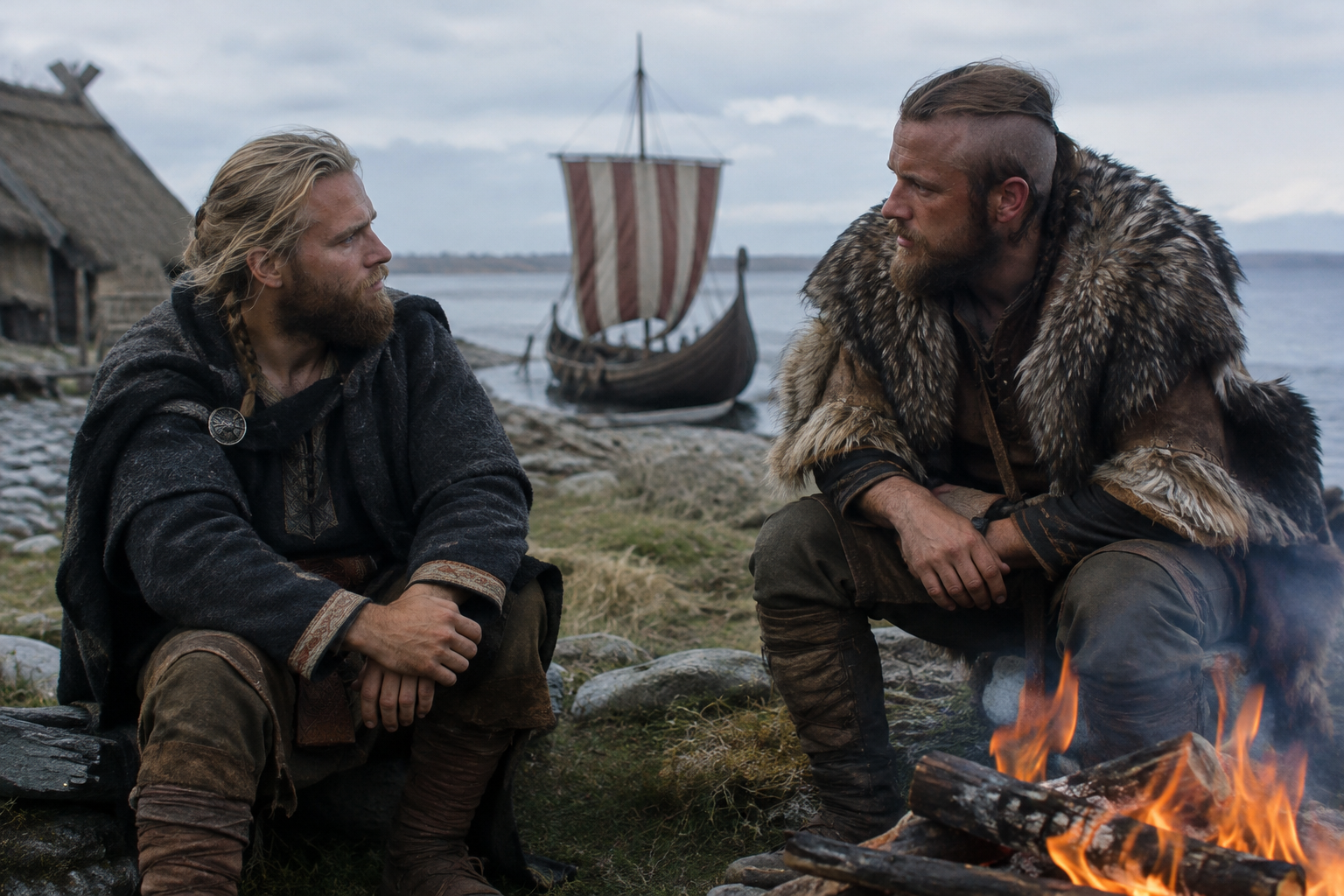
On Viking Age Gotland, at Kopparsvik in Sweden, one male individual dated to about AD 975, sample VK50, has been associated with the Y-DNA haplogroup I1a1a1a1a3a. A second man, VK380, from Viking Age Oland and dated to about AD 1000, points in the same broad direction. That is a small amount of evidence, but it is exactly the sort of evidence that matters: not a grand legend, not a later pedigree, but two excavated men from two important Baltic islands at the end of the Viking Age.
That makes this branch interesting at once. Haplogroup I1 is well known as a northern European paternal lineage, especially in Scandinavia, but I1a1a1a1a3a is a much narrower twig on that larger tree. Y-DNA follows one direct paternal line only, so it does not sum up a person's whole ancestry. Still, when a specific branch appears in Viking Age island communities such as Gotland and Oland, it gives us a grounded glimpse of how certain male lines were present within the maritime world of late first-millennium Scandinavia.
Gotland was not some remote backwater sitting passively in the Baltic. In the Viking Age it was one of the great nodal points of exchange, travel, and contact, linking Scandinavia with the eastern Baltic, the river routes into eastern Europe, and trading zones far beyond. Kopparsvik, where VK50 was found, belongs to that larger story of an island deeply tied to movement across the sea.
For that reason alone, VK50 matters. A man carrying a lineage associated with I1a1a1a1a3a was living on Gotland around AD 975, right in the period when the island was active in trade and cultural exchange. We should not leap from one grave to claims about a dynasty, a merchant family, or a named saga figure. But we can say that this paternal branch was present in a real Baltic setting at a historically charged moment.
Ancient DNA research on Viking Age Scandinavians has helped place such island communities into a wider genomic picture, showing that the Viking world was neither biologically uniform nor historically simple. A preprint examining Viking population history is linked here as relevant background for the broader context in which finds like VK50 and VK380 have been discussed: research on Viking Age ancient genomes.
The second sample, VK380, comes from Oland and is dated to about AD 1000. Oland sits off Sweden's southeast coast and, like Gotland, occupied a strategic position in the Baltic sphere. It had its own local history, of course, but it also belonged to the same larger Scandinavian seaborne world in which people, goods, and ideas moved constantly.
What makes VK380 useful is not that it proves a migration route all by itself, but that it adds a second island context for the same haplogroup branch. When a narrow paternal lineage appears in both Gotland and Oland at the close of the Viking Age, the pattern begins to look less like an isolated curiosity and more like part of the ordinary male-line diversity of Baltic Scandinavia. That is often how ancient DNA works in practice: not through one sensational burial, but through repeated appearances in meaningful places.
These two men were near-contemporaries, but that does not make them close kin. The islands were connected, yet distinct, and there is no basis here for turning them into members of one immediate family. What the evidence does support is more modest and more useful: I1a1a1a1a3a was present in late Viking Age eastern Scandinavia in communities that lived by the sea and were tied into Baltic networks.
It is worth pausing over the larger haplogroup. I1, as a parent lineage, is strongly associated with northern Europe and especially Scandinavia in both modern and ancient studies. But one of the easiest mistakes in public discussions is to let the fame of a parent branch do all the work for a much narrower subclade. I1a1a1a1a3a is not interchangeable with all of I1, and the evidence for this article's branch is specifically tied to the Viking Age samples named here.
That said, the archaeological setting is telling. Both Oland and Gotland were islands with dense connections to mainland Sweden and the wider Baltic. If a paternal line turns up in such places around AD 975-1000, that places it in one of the busiest contact zones of northern Europe. This was the world of harbours, market sites, seasonal travel, raiding and trading circuits, and increasingly Christianized political landscapes. A lineage found here belonged to men living amid those changes, not in a frozen ethnic postcard.
With only VK50 and VK380 named here, caution is not a nuisance; it is the whole method. Two samples are enough to show documented presence. They are not enough to define the full age, place of origin, or social status of the branch I1a1a1a1a3a. Nor can they tell us whether this subclade was common or rare across all Viking Age Scandinavia.
Yet even sparse evidence has historical value when it is archaeologically anchored. One man on Gotland around AD 975 and another on Oland around AD 1000 place this paternal line in the eastern Scandinavian-Baltic zone at the very end of the Viking Age. That is far better than treating haplogroups as abstract labels floating free of time and place. Ancient DNA works best when it stays close to actual people and actual sites.
There is also a broader regional interest here because Sweden's islands have yielded evidence from many different periods, allowing scholars to compare long-term continuity and change. Gotland in particular has become a key place for studying how population history, trade, disease, and burial practice intersect over millennia.
One reason these two island finds deserve attention is that they sit in a period often flattened into caricature: either fearless Vikings sailing outward or neat proto-national populations staying put. The archaeology says otherwise. Late Viking Age Scandinavia was connected in several directions at once, and island communities were especially exposed to that traffic.
That does not mean every lineage found there came from far away. In fact, a branch within I1 appearing in Sweden is entirely compatible with local or regional Scandinavian roots. But the historical importance lies in context. Men carrying this lineage were part of societies shaped by exchange across the Baltic, by shifting power structures in the Scandinavian kingdoms, and by the gradual religious and social transformations around AD 1000.
For readers interested in how nearby regions fit into this same northern world, early medieval Finland offers another useful Baltic perspective on mobility and population change.
The most solid insight for I1a1a1a1a3a is not a glamorous royal claim but a sharper archaeological one: this paternal branch is attested in two late Viking Age Swedish island settings, on Gotland and Oland, around AD 975-1000. That places it squarely in the Baltic Scandinavian world at a moment of intense contact and change. For someone researching this haplogroup today, the evidence most responsibly points toward a place within that northern historical landscape, while reminding us that every Y-line is only one thread in a much larger human ancestry.



Comments