Haplogroup I1a

– 6 min read


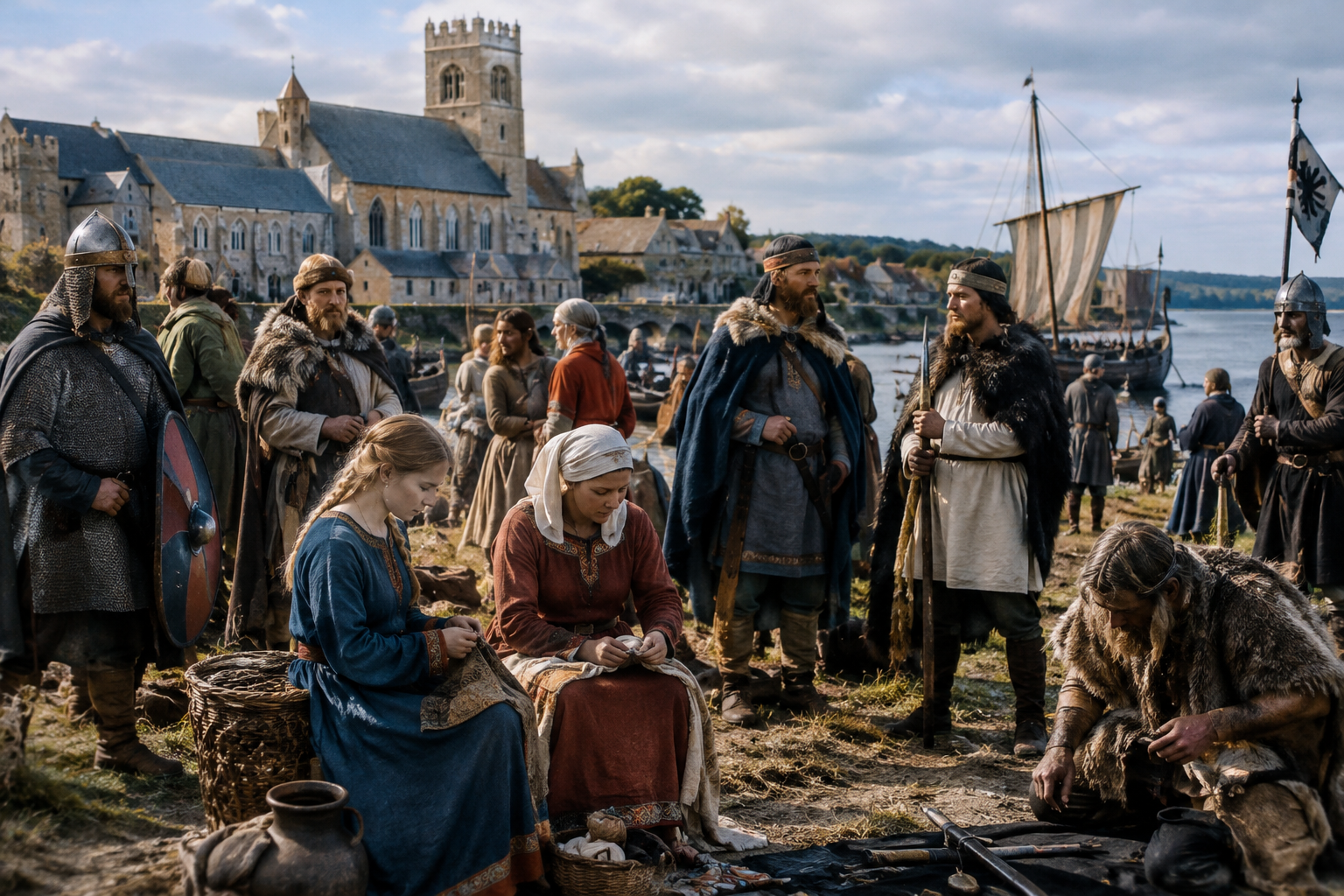
There are some Y-chromosome haplogroups that seem to sit quietly in the background of European history until ancient DNA starts turning up and suddenly they are everywhere: in Bronze Age burials, among Iron Age communities, in Viking Age graves, and even in medieval hospitals and war dead. I1a is one of those lineages. It is historically interesting not because it belongs to one people, one kingdom, or one heroic saga, but because it repeatedly appears across the northern European world in a way that lets us watch paternal continuity and movement over a very long stretch of time.
As ever, a caution first. Y-DNA haplogroups trace only one line of descent: the direct paternal line, father to son across generations. They do not describe a person's whole ancestry, and they do not by themselves prove identity, ethnicity, language, or noble descent. But they are enormously useful for asking a more focused question: how did particular paternal lineages move, persist, or spread in the past? In the case of I1a, the ancient samples supplied here place that question squarely in Scandinavia and its neighboring worlds.
I1 belongs within the wider haplogroup I branch of the Y-chromosome tree, a lineage long associated in broad terms with parts of prehistoric and historic Europe. The more specific label I1a points us toward a paternal history especially notable in northern Europe. Without inventing a precise age or single founding event, it is fair to say that ancient DNA has made I1 increasingly visible in Scandinavian contexts from the Bronze Age onward.
That matters because older discussions of northern European ancestry often leaned too heavily on later written sources - Tacitus, sagas, medieval chronicles - while the DNA evidence now lets us peer behind them. Instead of beginning with Vikings and working backwards, we can start with real men buried centuries or millennia earlier and ask where these paternal lines were already established.
The concentration of early and later I1a-linked samples in Denmark and Sweden suggests that Scandinavia was not merely a late-stage refuge for the lineage but an important center in its documented history. That does not mean every branch of I1 was born there, nor that every Scandinavian male belonged to it. It means that when the ancient evidence begins to sharpen, northern Europe is where I1a repeatedly comes into view.
Some of the most revealing finds come from the Bronze Age. At Ollsjo Battleaxe Sweden Year:1840 BC ID:oll009, I1a appears in a Swedish context linked to the old Battle Axe horizon. In Denmark, we see the lineage again in Early Nordic Bronze Age Denmark Lolland Uglemose Year:1675 BC ID:CGG106712 and Nordic Bronze Age Denmark Sjaelland Magleo Year:1347 BC ID:NEO590. These are not medieval Norsemen striding out of saga literature. They are much earlier men from the southern Scandinavian landscape of barrows, wetlands, farms, and exchange networks.
Already that tells us something important. I1a was present in the north long before the Viking Age made Scandinavia famous. By the Iron Age the pattern becomes even clearer. The lineage appears in Iron Age Denmark Jutland Hestehavens mose Year:237 BC ID:CGG106524, Danii Tribe Denmark Sjaelland Kalundborg Simonsborg Year:175 AD ID:CGG106718, Iron Age Denmark Asnos Year:188 AD ID:CGG107392, and Nordic Tribe Sjaelland Denmark Bredebjerggord 8 Year:350 AD ID:CGG106822. Add Pre-Vendel Sweden Oland Stoerlinge Year:175 AD ID:CGG024145, and the picture is not of a single isolated clan but of a lineage moving through several northern settings over many centuries.
What ancient DNA gives us here is not a romantic national origin story, but something more useful: a sequence. Bronze Age appearance, Iron Age persistence, then later expansion into the mobile world of early medieval and Viking Age Europe.
Read About Battle Axe Scandinavia
Once we move into the first millennium AD, I1a begins to appear in exactly the sort of places historians would want to examine for northern mobility. In central Europe, we have Thuringii Tribe Germany Obermoellern Year:500 AD ID:OBM052 and Thuringii Tribe Germany Deersheim Saxony-Anhalt Year:500 AD ID:DRH024, as well as Dark Ages Baiuvarii Tribe Bavaria Year:485 AD ID:AED249. These finds matter because they show that this paternal line was not confined to the Scandinavian peninsula. It also turns up among communities involved in the reshaping of post-Roman Europe.
That does not let us label I1a as "the" Thuringian or "the" Bavarian lineage; history is never that neat. But it does fit a wider picture in which lineages prominent in the north also appear in Migration Period societies farther south, whether through movement, elite contacts, recruitment, marriage networks, or settlement.
The eastern reach is just as striking. Gothic Kecskemet-Mindszenti Transtisza Hungary Year:450 AD ID:A181017 places I1a in a Gothic context on the Great Hungarian Plain, while Early Medieval Croatia Velim-Velistak Year:775 AD ID:VEM059 shows the lineage in the Adriatic hinterland. Neither sample proves a single grand migration route from one grave to the next. But together they show that paternal lines seen earlier in the north had become part of a much wider European story.
Then comes the Viking Age, where the evidence becomes almost satisfyingly expected - though still important precisely because it is evidence and not assumption. We find I1a in Viking Age Bogovej Langeland Denmark Year:900 AD ID:VK367, Viking Age Hessum Funen Denmark Year:950 AD ID:VK316, and Viking Age Denmark Bogovej Year:975 AD ID:CGG106776. It also appears in Danish Viking Clan St. Brice Massacre Oxford Year:1002 AD ID:VK144, linking this northern paternal history to one of the most dramatic episodes of Anglo-Danish conflict in England.
Even farther afield, Viking Age Staraya Ladoga Year:1000 AD ID:VK409 shows the lineage in the great eastern contact zone of the Viking world. Staraya Ladoga was no provincial outpost; it was one of the key gateways linking Scandinavia with the river routes of eastern Europe. So I1a is not only a Scandinavian story. It is also a story of how Scandinavian-connected lineages entered the trading, raiding, and settlement webs of a much broader world.
The English material is particularly evocative. Medieval England Cambridge St Johns Hospital Year:1049 AD ID:ATP_PSN_351 reminds us that by the eleventh century northern paternal lines were part of ordinary medieval life in England, not only of invading armies. A hospital burial is a useful corrective to the usual heroic framing. Haplogroups do not belong only to kings and conquerors; they also belong to patients, townsmen, laborers, and the anonymous dead.
At the other chronological extreme sits Stora Kronan Shipwreck Battle of Oland Sweden Year:1676 AD ID:kro008. The gap between Bronze Age Ollsjo and a seventeenth-century shipwreck casualty is enormous, yet that is exactly the point. The same broad paternal lineage can remain visible across vast spans of time while the societies around it change beyond recognition - from Bronze Age chiefdoms to early modern naval warfare.
The supplied field for associated noble families and castles is blank here, and that absence is worth stating plainly rather than padding it with guesses. We therefore should not attach I1a to any particular dynasty, aristocratic house, or ancestral stronghold in this article. That is more responsible, and in its own way more interesting, because it keeps the focus where the evidence is strongest: on excavated individuals whose dates and locations are known.
Still, the broader historical connection is easy to see. Many later noble houses of Denmark, Sweden, northern Germany, and the Danelaw world emerged in landscapes where I1a is already visible in earlier burials. Castles, manor sites, and dynastic genealogies preserve political memory; ancient DNA preserves biological fragments of older populations living in the same regions. Sometimes the two kinds of evidence converge neatly, sometimes they do not, and often they simply illuminate the same geography from different angles.
That distinction matters. Sharing a broad haplogroup with ancient Scandinavians does not make someone a Viking in any meaningful historical sense, and it certainly does not prove descent from a noble family. What it does do is place one direct paternal line within a documented pattern that stretches from Bronze Age southern Scandinavia into Iron Age Denmark, Migration Period central Europe, the Viking diaspora, and medieval England.
I1a is a good example of why Y-DNA can be so compelling when handled carefully. It offers a narrow but powerful line of sight. Through samples like NEO590, CGG106712, CGG106524, OBM052, AED249, VK144, VK409, and ATP_PSN_351, we can watch one paternal lineage appear in different times and places without pretending that all these men were close kin or that history can be reduced to haplogroups.
For MyTrueAncestry users, that is the real excitement. Ancient DNA does not hand you a fairy-tale pedigree. It gives you context: a chance to see whether one strand of your ancestry resembles lineages found among Bronze Age Scandinavians, Iron Age Danes, Migration Period communities, or Viking Age travelers. That is not proof of direct descent from any excavated individual, but it is a remarkable way of situating your DNA in the human past.
If you want to explore whether your own results connect with ancient individuals, historical populations, and the deep paternal history discussed here, MyTrueAncestry can help you compare your DNA with archaeological discoveries across the ancient world.
Comments