Haplogroup I?

– 5 min read



At Sint-Truiden in medieval Belgium, one excavated individual stands out precisely because he seems, at first glance, so ordinary. Sample ST0055, dated to around AD 1300 and recovered from the Onze-Lieve-Vrouwekerk, belonged to a man whose Y-DNA was reported only at the broad level of I?. That little question mark matters. It tells us we are looking not at a neat dynastic label or a finely resolved paternal twig, but at a fragment of a larger and very old European story.
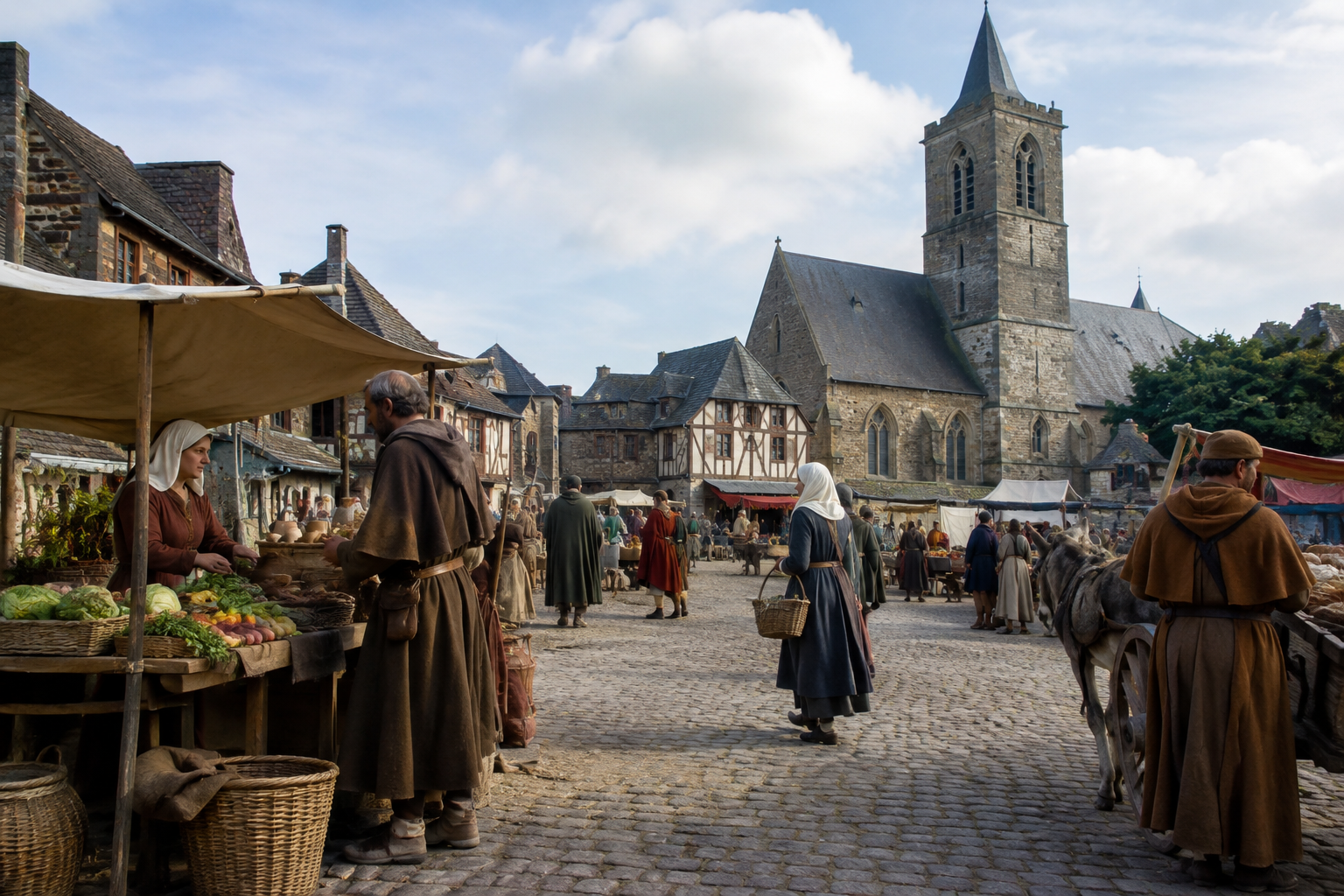
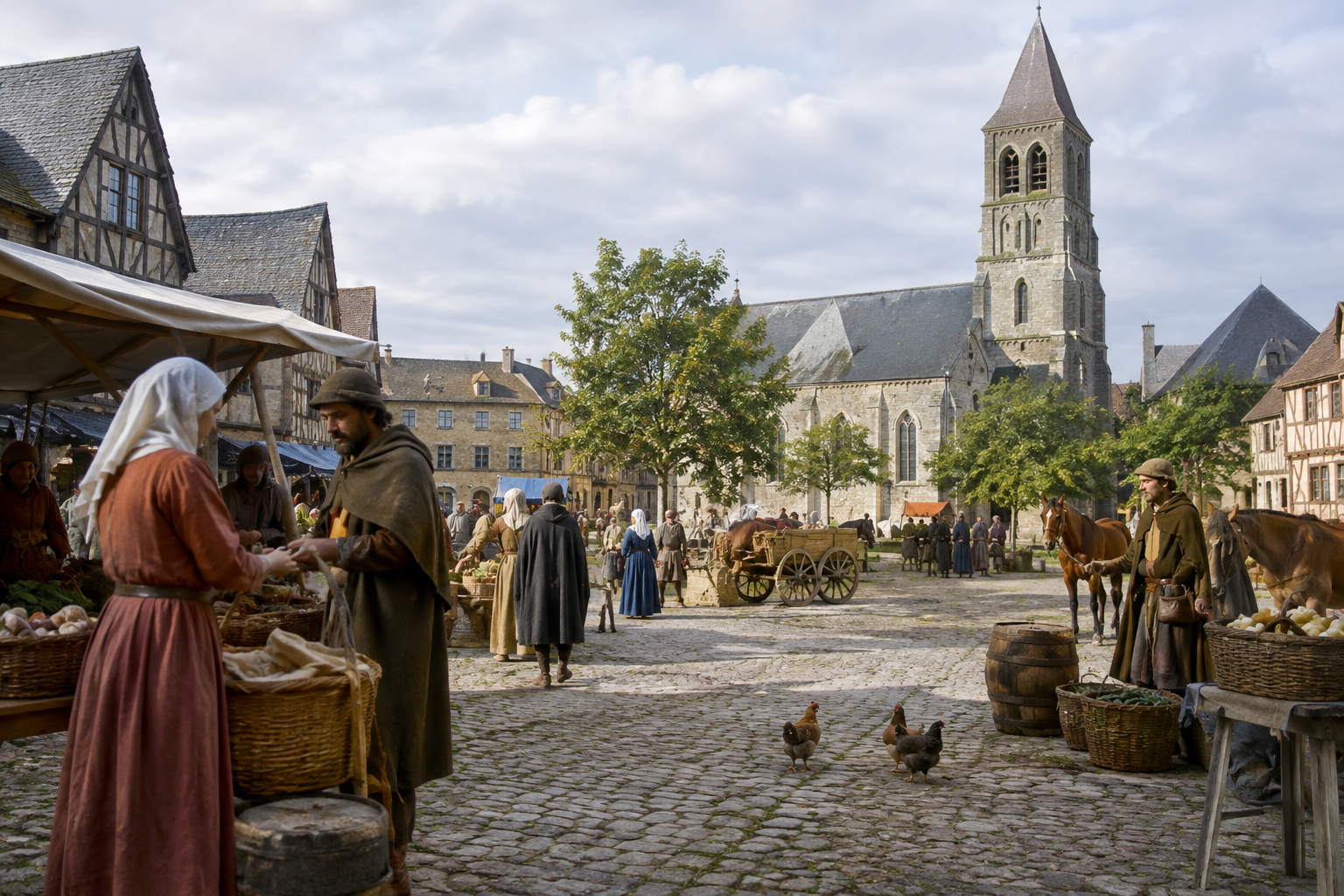
That is what makes this kind of evidence interesting. A medieval burial in a church at Sint-Truiden is not a saga hero or a crowned prince. He is a man from an urban community in the southern Low Countries, living in a town shaped by churches, markets, lordship, craft, and regional movement. His Y chromosome traces one direct paternal line only, not his whole ancestry, but even that single line helps place him inside the long and complicated history of male descent in northwestern Europe.
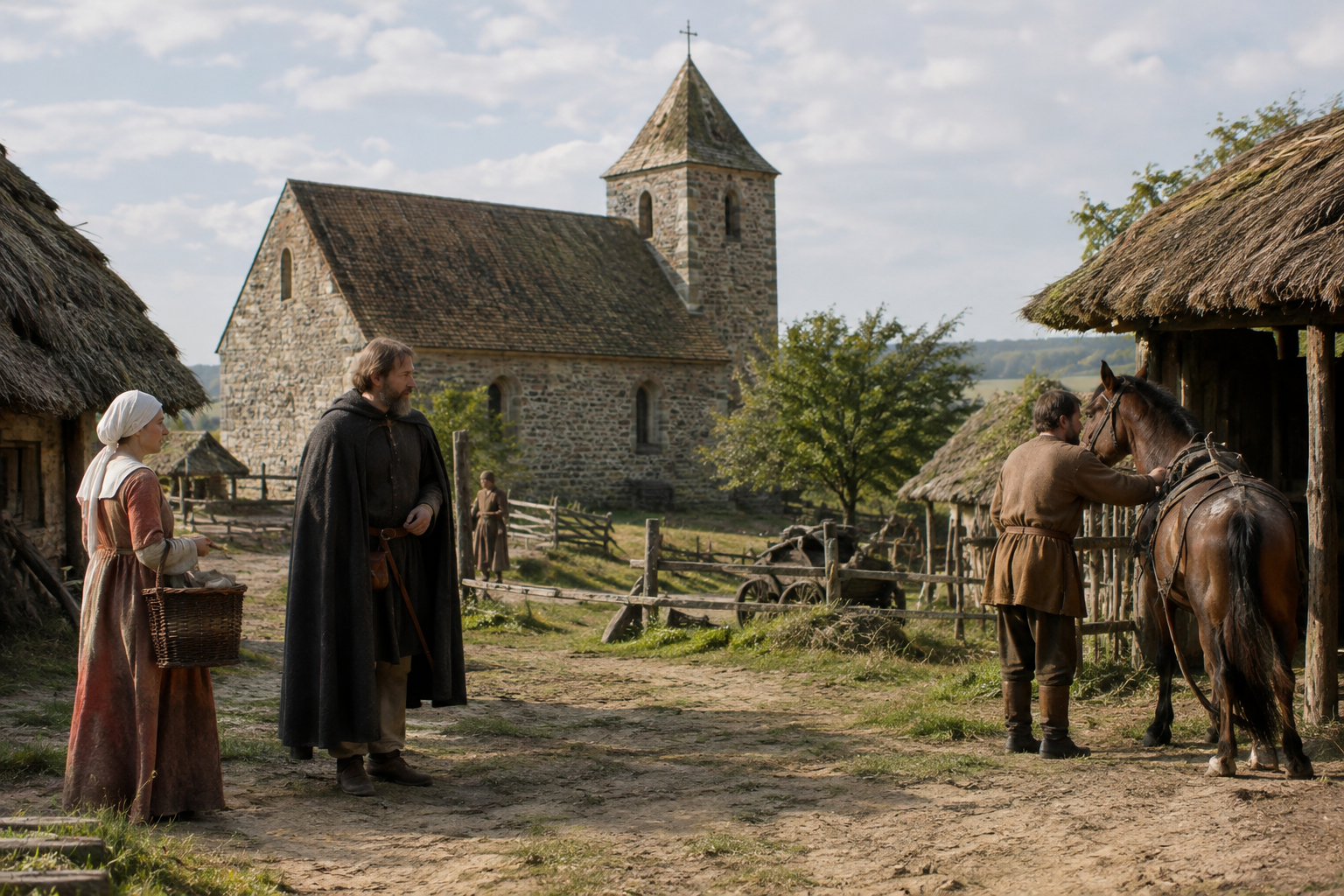
Sint-Truiden was an important town in the medieval Prince-Bishopric of Liege, with religious institutions at its core and a landscape tied to trade, agriculture, and local power. A burial from the Onze-Lieve-Vrouwekerk belongs in that urban world. By around AD 1300, this was not a frontier settlement or an isolated village. It was a place where generations of local families mixed with newcomers from nearby regions, exactly the sort of setting where broad haplogroups like I might persist while the population as a whole became increasingly interconnected.
The recent ancient-DNA work on medieval Sint-Truiden has been framed around just that question of urbanization and biological continuity. Research on these burials, published in a genetic study of medieval Sint-Truiden, points to the value of looking at ordinary townspeople rather than only spectacular graves. ST0055 fits that wider picture: not a solitary curiosity, but part of the human fabric of a growing medieval town.
Here we need to be careful. I? is not the same as a securely resolved branch such as I1, I2, or one of their many downstream subclades. It signals a likely placement somewhere within haplogroup I, but without enough confidence or detail to assign ST0055 more narrowly from the information at hand.
That broader haplogroup, however, is historically important. Haplogroup I is one of the major paternal lineages deeply rooted in Europe, with branches found in ancient and modern populations across the continent. Yet one must not smuggle in more certainty than the evidence allows. With ST0055, we are not entitled to declare a precise migration route, a tribal identity, or a family connection to later noble houses. The honest value of the sample lies elsewhere: it shows that a paternal line within this old European haplogroup was present in a medieval ecclesiastical burial ground in Belgium around AD 1300.
If one wants a tidy ethnic label for medieval Belgium, archaeology and genetics both tend to spoil the plan. The Low Countries sat at the meeting point of Latin-speaking, Romance-speaking, and Germanic-speaking worlds; of former Roman territories and post-Roman polities; of riverine exchange networks and inland agricultural communities. Over many centuries, people moved through this landscape for work, marriage, faith, war, and trade.
That is why a broad paternal assignment such as I? is revealing in its own modest way. It sits comfortably in a region where older local lineages could survive alongside lineages introduced or reshuffled in Roman, post-Roman, and medieval times. A church burial at Sint-Truiden does not represent all of Belgium, still less all carriers of haplogroup I, but it does remind us that medieval towns were built from accumulated local histories rather than from one single founding population.
One reason haplogroup I catches the eye is that it has such deep time depth in Europe. Different branches of I appear in ancient European contexts stretching back long before the Middle Ages. But that does not mean a medieval man from Sint-Truiden can be treated as the straightforward continuation of any one Mesolithic hunter-gatherer or any one later archaeological culture. The branch is too broad here, and European population history is far too entangled for that.
Still, the broad outline is historically useful. By the Middle Ages, paternal lineages belonging to haplogroup I had already been through the great demographic upheavals of European prehistory and history: the spread of farming, the Bronze Age transformations, Roman expansion, post-Roman mobility, and the growth of medieval towns. ST0055 therefore belongs at the far end of a very long chain of survival and reshaping, where ancient paternal depth meets the practical realities of an urban cemetery.
Deep Roots of European Foragers
It is tempting, when confronted with Y-DNA, to think immediately in terms of surnames, dynasties, and inherited status. But ST0055 is more useful historically when left in his actual setting. He was buried at the Onze-Lieve-Vrouwekerk, in a Christian urban environment where burial location reflected community, faith, and local institutional life. That context is already significant without turning him into a founder or a patriarch.
Indeed, some of the most valuable lessons from medieval ancient DNA come from seeing how ordinary burial grounds record population mixture and continuity at once. Townspeople could be local in upbringing yet genetically varied in deeper ancestry. A man carrying a paternal line within haplogroup I might have maternal ancestors from quite different backgrounds, and his descendants might soon blend into lineages that no longer look neatly "local" on paper. Medieval society was full of such quiet complexity.
For a broader comparison, this sits well beside other studies of medieval urban populations in northwestern Europe, where genetic evidence often complicates old assumptions about fixed, homogeneous communities. The point is not that everyone was highly mobile all the time, but that even apparently settled places were the result of centuries of movement and intermarriage.
If your own paternal line falls somewhere within haplogroup I, ST0055 offers something modest but real: evidence that such a lineage was present in a medieval burial community at Sint-Truiden in the southern Low Countries around AD 1300. That does not make him your direct ancestor, and it does not narrow your line to a specific noble origin or ethnic label. What it does suggest is that broad I-lineages were part of the living male population of this medieval town, embedded in the ordinary history of Europe rather than standing apart from it.
And perhaps that is the most useful lesson of all. Ancient DNA is not only about famous burials and glittering elites. Sometimes the most revealing figure is a man like ST0055: a church burial, a broad paternal assignment, and a reminder that the past was built by countless people whose lineages endured without leaving a chronicle behind.
Comments