Haplogroup G2a2b2b1a2

– 4 min read


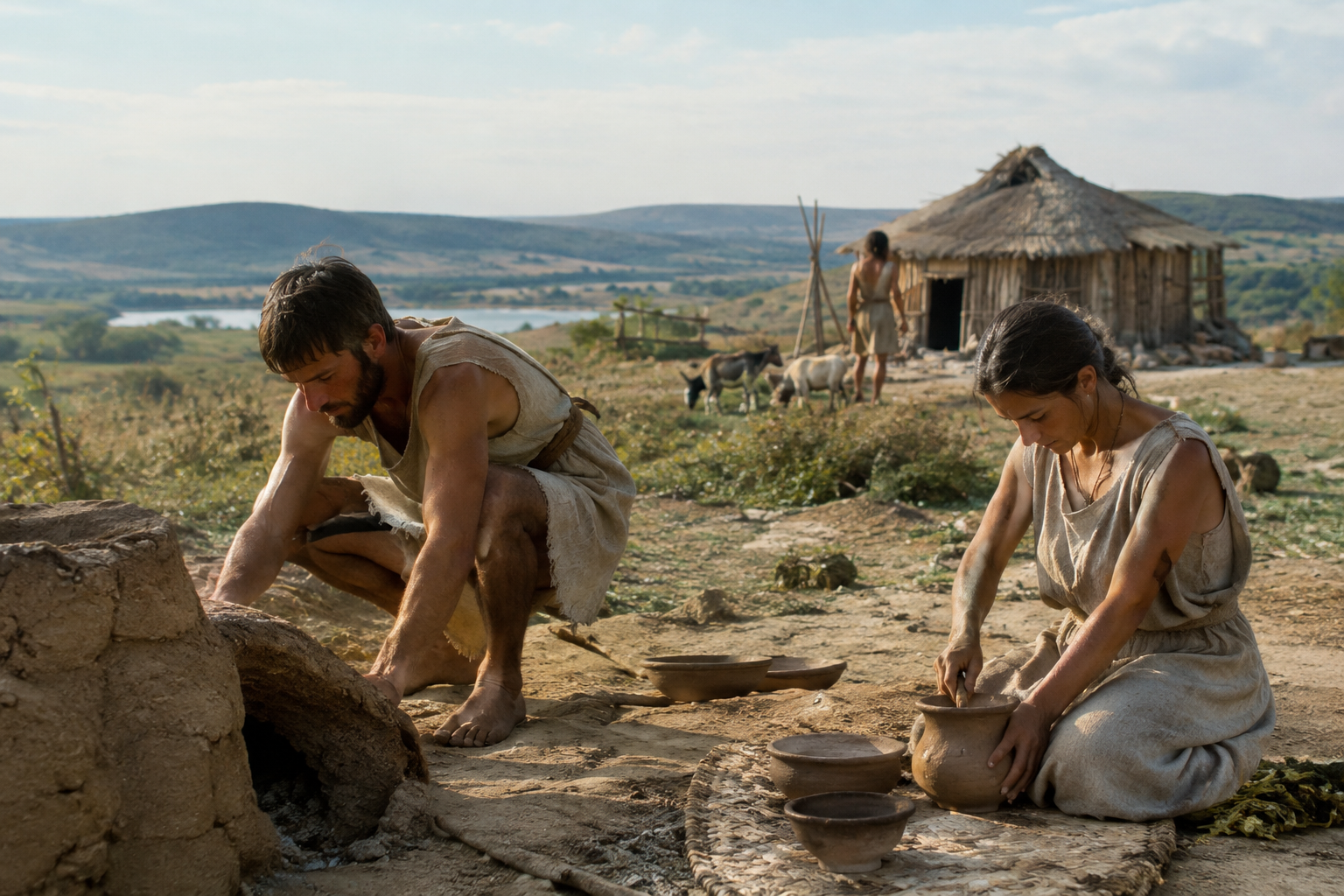
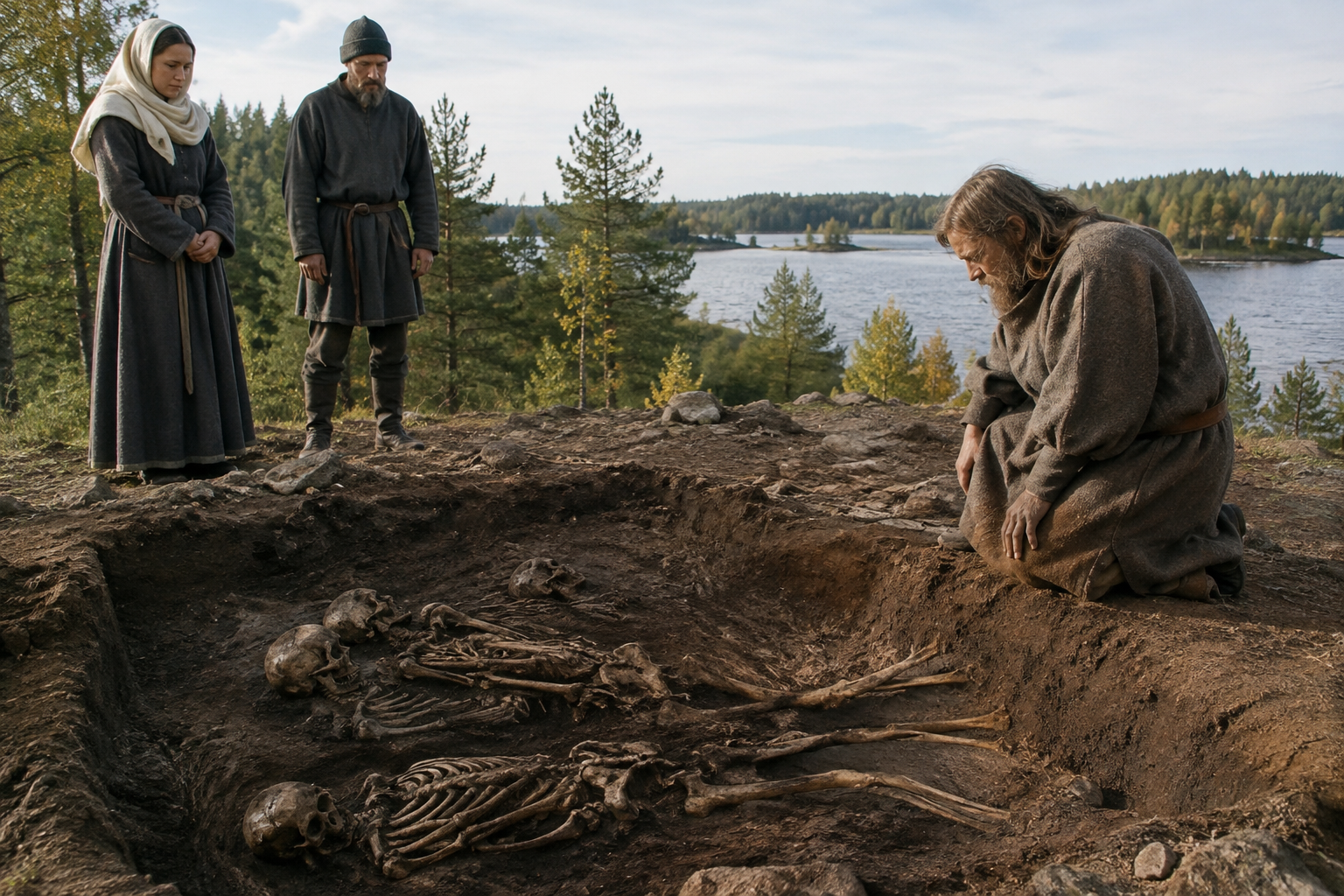
At Yunatsite in Bulgaria, archaeologists uncovered the remains of an Early Bronze Age man identified as YUN009, dated to around 3120 BC. He belongs to the Y-DNA haplogroup G2a2b2b1a2, a very specific paternal line carried on the direct male line from father to son. That single result is modest in one sense, but historically it is rather revealing: it places this branch in the Balkans at a moment when southeastern Europe was being reshaped by new social worlds, new burial traditions, and major population change.
The interest of YUN009 lies precisely in that timing. By the early 3rd millennium BC, Bulgaria was not a quiet backwater. It sat in one of the great contact zones of prehistoric Europe, between the lower Danube, the Aegean, the Black Sea, and the interior Balkans. A man carrying G2a2b2b1a2 at Yunatsite suggests that some paternal lines associated with earlier farming populations were still present there even as the broader genetic landscape was changing.
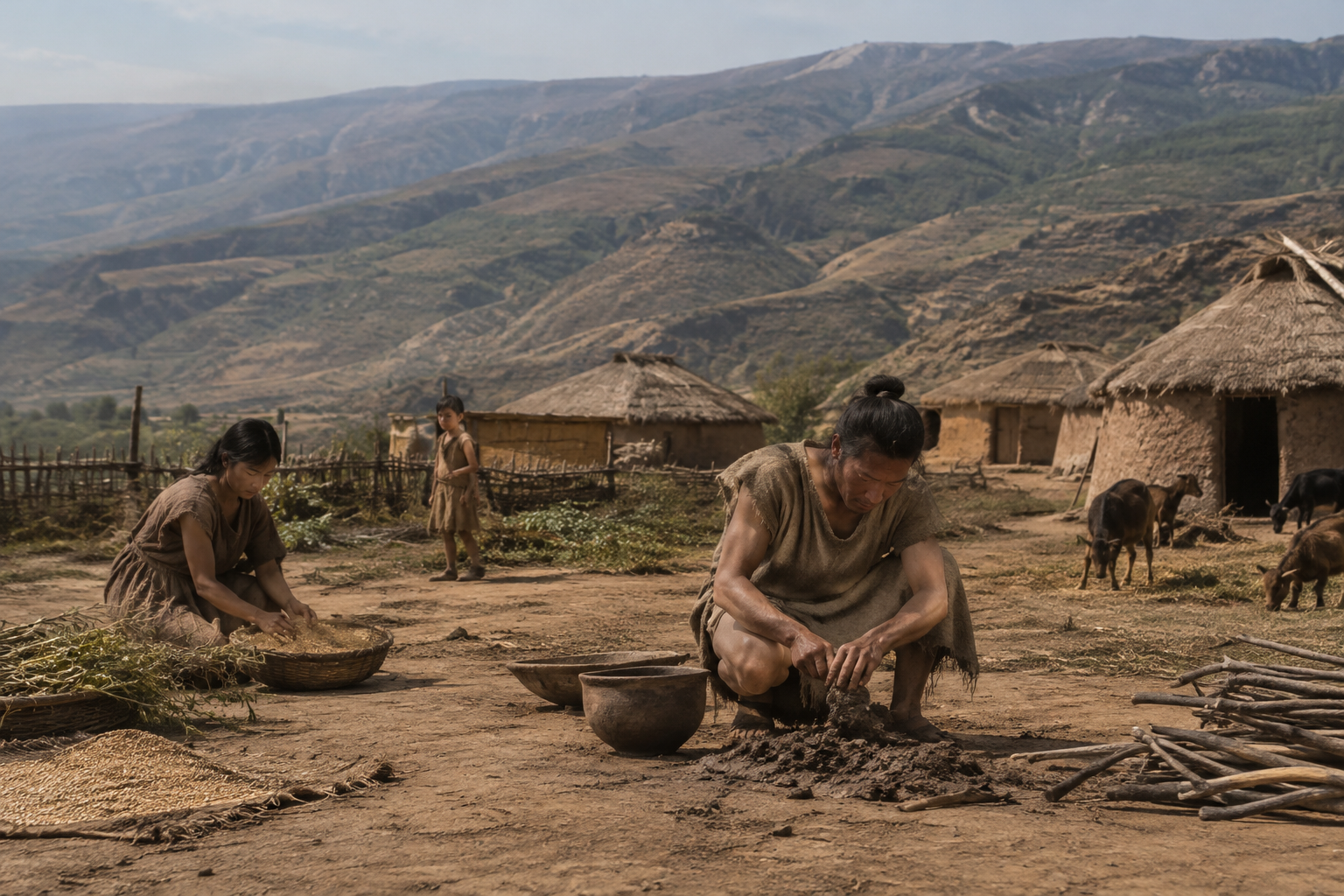
Yunatsite is one of the important prehistoric sites of the central Balkans, known for deep occupation stretching back well before the Bronze Age. That matters because a lineage found there is not appearing in an empty landscape. It appears in a place with a long local past, in a region where farming communities had flourished for millennia before Bronze Age transformations gathered pace.
For haplogroup G, the broader background is well known in European archaeogenetics. Various branches of G2a are strongly associated with many early farming groups that spread into Europe from Anatolia and the Aegean during the Neolithic. That does not mean every later G lineage can simply be treated as a surviving "first farmer" marker without qualification. But it does mean that a branch like G2a2b2b1a2 at Yunatsite belongs in a long conversation about continuity, survival, and local persistence in southeastern Europe.
A major ancient DNA study of the region, published in Nature, examined population history across the North Pontic and neighboring zones during the 6th to 3rd millennia BC. One of the broad lessons from this work is that the Balkans and nearby regions were not genetically static. They saw repeated episodes of contact, mixing, and movement, which makes any surviving paternal lineage especially interesting when it appears in a securely dated archaeological context.
It is worth being precise here. G2a2b2b1a2 is not the same thing as all of haplogroup G, and it certainly is not a shortcut for an entire people, language, or culture. Y-DNA tracks only one ancestral line out of many: your father's father's father, and so on. A Bronze Age man with this haplogroup could still have had ancestors from many different communities when one looks beyond that single paternal thread.
Even so, paternal lines matter because they can show which male lineages endured through moments of upheaval. Across much of Europe, the Bronze Age saw the dramatic spread of new ancestry profiles and, in many places, major turnover in Y-chromosome lineages. Against that backdrop, a G2a-derived lineage in Early Bronze Age Bulgaria can be read as evidence that older local male lines did not simply vanish everywhere at once.
The period around 3120 BC was one of transition. Earlier Copper Age societies in the Balkans had already experienced disruption, and the centuries that followed brought new patterns of settlement, exchange, and mobility. Bulgaria, with its river corridors and access to both inland and maritime networks, was deeply involved in these developments.
This is why YUN009 matters beyond his own burial. He represents a man living after the great florescence of earlier Balkan farming cultures, but before the later historical worlds of Thracians, Greeks, and Romans. In other words, he belongs to a stretch of time that is often discussed in sweeping terms, yet rarely seen clearly at the level of an individual paternal line.
Ancient DNA from the Balkans increasingly shows that this was a period of mixture rather than replacement by a single, uniform population. Some lineages associated with earlier farmers continued locally, while others linked to populations from the steppe and surrounding regions entered the scene. G2a2b2b1a2 at Yunatsite fits neatly into that more complicated picture.
There is a temptation, with ancient DNA, either to overstate a single sample or to dismiss it as too slight to matter. Neither reaction is very helpful. YUN009 does not prove that G2a2b2b1a2 was common in Bronze Age Bulgaria, nor does he define the whole population of Yunatsite. But he does provide a fixed point: this lineage, at this level of resolution, was present in this place at this time.
That kind of fixed point is how archaeogenetic history is built. One securely placed individual can anchor a branch in time and space, especially when set against the larger record of G2a lineages among Neolithic and Copper Age farmers in southeastern Europe. The result is not a grand myth of origins, but something better: a cautious, usable historical clue.
That clue also sits well beside broader discussions of prehistoric farming ancestry in Europe. The Balkans were central to the arrival and development of early agricultural populations, and later populations in the region often preserved elements of that deep ancestry even after substantial Bronze Age change.
Neolithic Expansion in the Aegean
If your own paternal line falls under G2a2b2b1a2, the strongest responsible historical comparison here is not to a named tribe or dynasty, but to the long-lived farming world of southeastern Europe. The broader G2a family is one of the classic signatures of Europe's first agricultural centuries. What YUN009 hints at is that some quite specific descendant branches were still present in Balkan communities long after those first farmers arrived.
That makes this haplogroup especially interesting for MyTrueAncestry users because it speaks to endurance. Not political fame, not royal pedigree, but survival through successive prehistoric transformations. A line like this may have passed through village communities, local marriages, and shifting Bronze Age societies while more visible historical identities were still far in the future.
That is often how the deeper past really works. The lineages we recover from ancient graves are not always the loudest in later history, but they can be among the oldest rooted in a landscape.
For haplogroup G2a2b2b1a2, the clearest ancient window here is Early Bronze Age Yunatsite. YUN009 shows that this paternal branch was present in Bulgaria around 3120 BC, in a region where very old farming traditions met the disruptive currents of the Bronze Age. That does not give us a simple ethnic label, but it does place the lineage in one of prehistoric Europe's most important crossroads, where continuity and change lived side by side.
Comments